This journey has really been revealing. Actually, no mysteries about the Atlantic Crossing were unveiled- except I did see a whale and it seems that only American Men deem to wear baseball caps to the dining room. The reveal, was personal, very personal. It helped me appreciate my grandmother even more. The revelations started when I discovered SS Madonna, the ship Maria Rosaria Solla, Caterina Guerrera, Nicola Santo Pietro and Salvatore Guerrera took across the sea.
Even though both were built in Europe, SS Madonna by Swan, Hunter and Wigham Richardson Ltd on The Tyne in Northern England and the Queen Mary 2 by STX Europe in Saint Nazaire, Brittany, they had nothing in common. SS Madonna was built specifically to carry cargo and 1,650 emigrants in steerage between Liverpool and New York. (I’m thinking the emigrants were considered cargo too.) There were accommodations for 54 first class passengers. The QM2 carries 2,695 passengers in luxury.
SS Madonna left Napoli on December 3, 1920. A scant 17 days later it arrived at Ellis Island. The Queen Mary 2 powered out of Brooklyn, New York on the evening of May 23, 2025 and will dock in South Hampton seven days later. What a difference one-hundred years of design innovation can do.
Queen Mary 2 – Stunning ship.
The class system on the Madonna was very clear. Fifty four people crossed the Atlantic in cabins, with access to the outside deck and real meals. The hordes of emigrants down below were given bread. Aunt Cat said, they had carried cheese with them and would have starved without it. As I researched this, I couldn’t help but think of the slave ships also built in Europe to carry human cargo. Cripes, the things humans do for profit.
We will never starve on the QM2. Actually, every meal except the over crowed first night buffet has been exceptional. We were assigned – based on our ticket class – the Britannia Dining Room. Others, with more expensive tickets go to the Queens Grill or Princess Grill. That said, we all meet and mingle in lounges, bars and entertainment venues. Frankly, we haven’t had one bad day of eating. Please do not tell anyone, but we never get up in time for breakfast and are addicted to room service. Sigh, does that make me a princepessa? I hope so. My room service eggs scrambled with salmon are light fluffy and downright heavenly. I order them daily.
Find Solla and Guerrera. For a challenge find others from Pontelandolfo.
Studying the SS Madonna’s manifest, I was smacked again with the constant disparaging of Southern Italians. Southern Italians are farmers, stupid, lack initiative – all stereotypic BS. The Northern Italy versus Southern Italy conflicts were intensified during the unification of Italy. Pontelandolfese remember the summer of terror. On August 14, 1861 rape, pillage, murders and fires consumed Pontelandolfo – all in the name of unification. Nothing like genocide to get one to agree to a concept. It all still angers me.
Therefore, I was horrified to see the classifications on the List or Manifest of Alien Passengersfor the United States. There was a category for nationality and one for race. My family was listed as Italy for nationality and – gag me now before I scream – SoItalian for race. What race is SoItalian? The green people? My grandmother had blue eyes – the blue eyed people?? As opposed to NoItalian for race – the fancy people? Guess what, on this manifest I didn’t find anyone whose race was NoItalian. Maybe if you were from the north you could afford one of the 54 first class tickets.
Rosaria Solla’s occupation is listed as peasant. Peasant is better than bonbon eater. Other trades I found were tailor, laborer, housewife.
Accompanied by a 9, 7 and 16 year old, my nonna was rejoining her husband, my grandfather Francesco Guerrera. It was a treacherous experience. The December sea pounds all ships. I can imagine the wild ride my family had on the SS Madonna. The contemporary design of the QM2 keeps it stable.
We easily adjust the thermostat in our cabin. My grandmother, freezing was saved by the generosity of strangers sharing their coats.
The more I researched the ship, the prouder I was of my grandparents. Both went on harrowing adventures, holding their love strong until they could be reconnected.
Jack and I are rejoining our Italian family of Pontelandolfese. I’m proud of us for discovering this transportation solution to the current chaos of air travel. Will we cross the Atlantic this way again? We shall see. I know my nonna felt that once was enough.
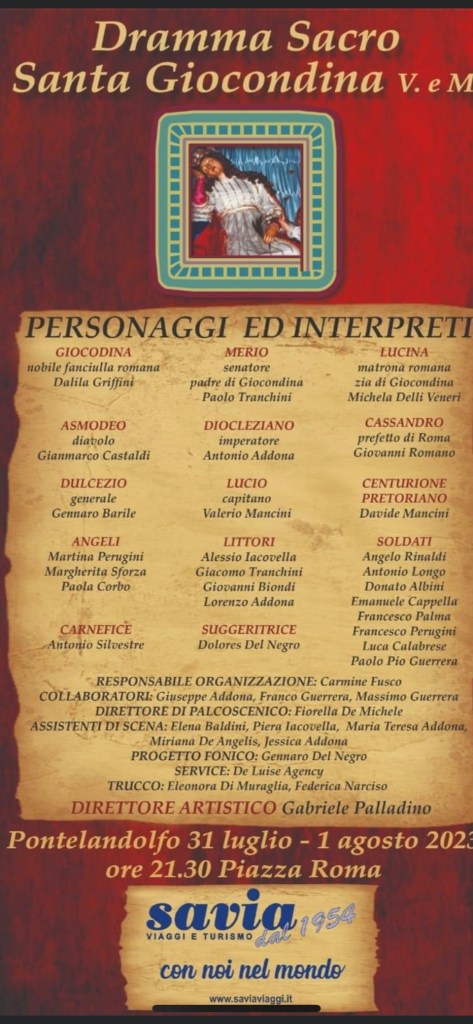
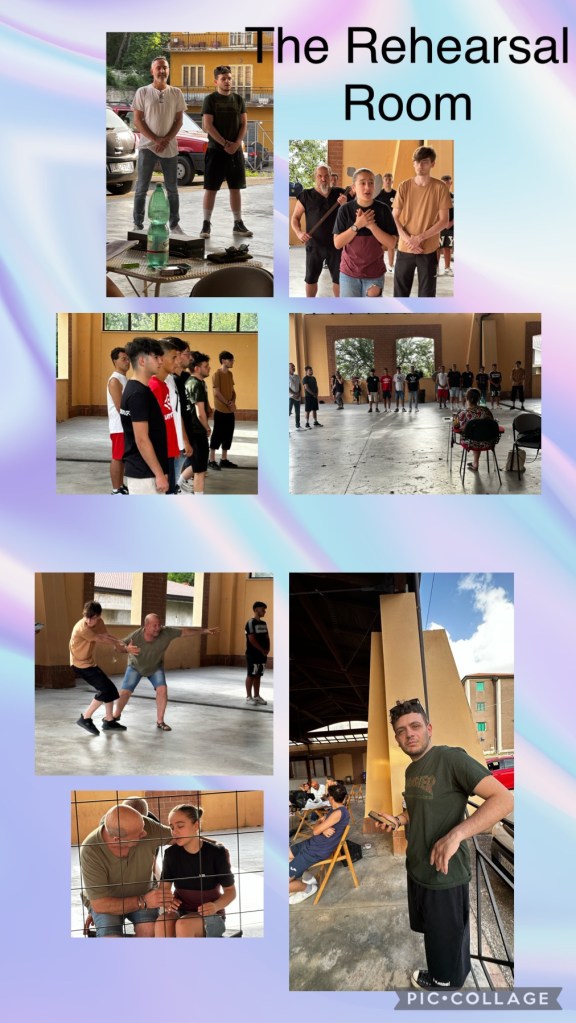
If you are in Italy and anywhere near Pontelandolfo (BN), put July 31st and August 1st on your calendar – immediately. Even if you are not nearby – put it in your calendar and come to Pontelandolfo. At 9:30 PM in Piazza Roma you will be astounded by an incredible theatrical spectacle. It will be worth the ride. I am a theatre kid and it takes a lot to make me gasp. This community wide production of Dramma Sacro Santa Giocandina has done that. This week, I went to a rehearsal and was impressed by the focus and passion this group of players have for the script, rehearsal process and the traditions of their village.
In Pontelandolfo for over one year, a band of community actors, designers, musicians and technicians have been focused on bringing an historic story to life. Their focus and commitment is as powerful as the faith of the play’s heroine, Giocondina. Dramma Sacro Santa Giocandina, the Sacred Drama of Santa Giocondina, has been performed in the Sannio Hills since 1872. Originally, it was produced every seven years, then every four years. It has been seven years since Covid made the four year repetition impossible. Interesting that seven years brings the play full circle to its roots.
The story, of the ultimate sacrifice, is a familiar one. Giocondina, the young daughter of a Roman Senator converts to Christianity. Even though her father and family implore Giocondina, she refuses to abandon her faith. Roman Emperor Diocletian condemns her to be beheaded. Giocondina chooses to save her soul and live on in the kingdom of heaven. Continuing a sacred and socio-community tradition, the role of Giocondina is entrusted to a young woman from Pontelandolfo.
Pontelandolfo Actress Dalila Griffini in rehearsal as Giocondina.
The original script, crafted in 1872 by Ulisse Rinaldi, drew on an ancient tale of unmitigated Christian faith. In 1964, a Priest, Don Nicola D’Addona, revised the original seven act play into four acts. The play that continues to this day is a revision done by Professor Michele Rossi.
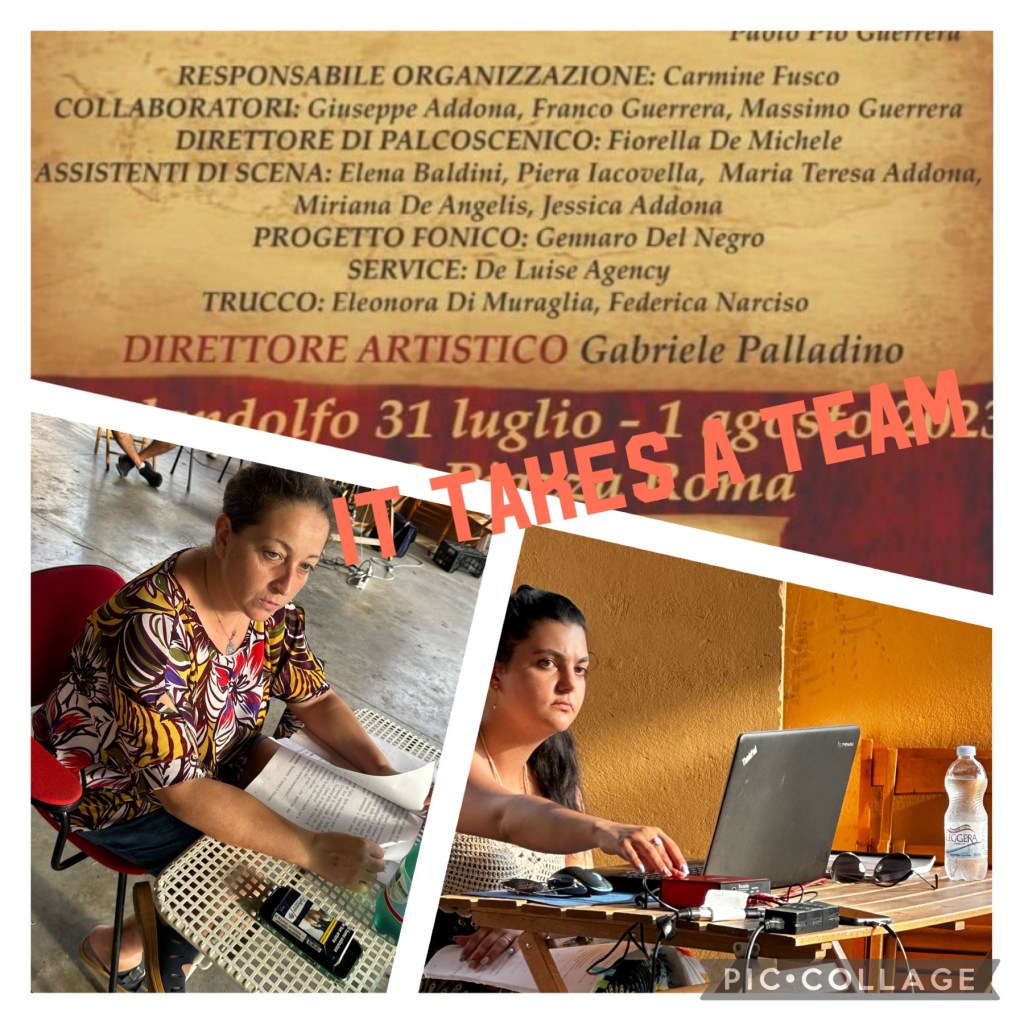
Direttore di Palcoscenico, essential the person in charge of all technical aspects, Fiorella De Michele, explained that the presentation of the sacred drama is very important for the Pontelandolfo community. Demonstrating the tradition of the production, the troupe of actors represents the play’s past and present. Many revise roles they have played in the past. Others, new to the show, become part of the future of continuing productions of Dramma Sacro Santa Giocondina.
Actor, Valerio Mancini, my handsome cousin, who has been in a number of independent films told me: “Quella di partecipare è stata una scelta non ponderata, non voluta ma dettata dall’istinto. Da buon Pontelandolfese sento come una responsabilità nei confronti del dramma. Farò di tutto per onorare il mio ruolo. In un mondo in cui regna l’incertezza, ogni piccolo gesto, ogni emozione suscitata, ogni sorriso strappato avrà conseguenze positive nel lungo periodo, in un altro luogo o su altre persone.”
Don’t worry – Valerio translated it for me: “To participate was an unconsidered choice, not wanted but dictated by instinct. As a good Pontelandolfese, I feel a responsibility towards the drama. I will do everything to honor my role. In a world where uncertainty reigns, every small gesture, every emotion aroused, every smile torn will have positive consequences in the long run, in another place or on other people.”
It does take a village to create this work of art, at the helm is Gabriele Palladino. He has been the artistic director of the spectacular a few times. I asked him to tell me about this year.
“The careful study of scenic solutions, delicate theatrical taste, the all-round interaction between the characters and the location, make this year’s drama original and innovative.”
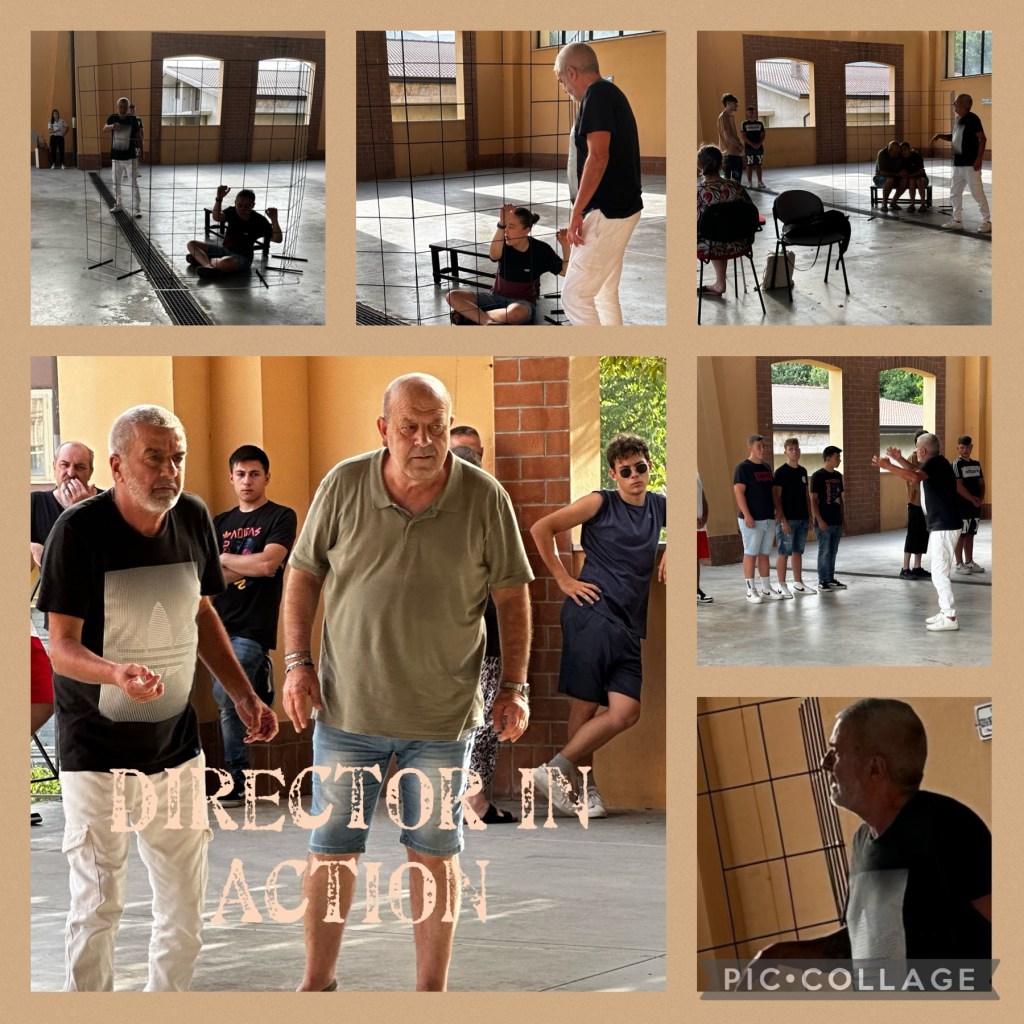
He feels that he is creating an avant-garde theatrical experience, which paints itself with spectacular plays of light and shapes. I will tell you, that based on the rehearsal I saw, the musical mix created by Gennaro Del Nero also became a principal member of the cast. I watched Gabriele bring his arms up and down to cue the sound operator. The music is absolutely cued to the lines of the script.
Gabriele feels that the audience for this production has a more participatory and engaging role. He is an interesting director. I watched him join his actors in the rehearsal space, guiding them with words and movement. He traverses the space and becomes one with his performers. Gabrielle is a director, I wished I could have worked under.
Director Palladino said, “Two magical evenings, where the archaic lemmas of great literature, weight of the script and the glittering guise of the advancing new, will combine the past and the modern. The tradition of past centuries melded with a three thousand-year cultural proposal will manifest in a “fusion” of the drama. An intriguing, desired, sought-after, unforced “fusion”, which is the result of a long and passionate work.”
Artistic Director Gabriele Palladino at Work.
The team of Pontelandofese who may not be on stage but absolutely contribute to the event, include the sound, lights, and off-stage crew who make the magic happen. I applaude everyone involved in this production. You can applaud them too, on July 31 and August 1.
As I move from continent to continent, I often tap into my philosophical self. Maybe the air pressure in the plane makes my head woozy doozy or maybe, just maybe, flying from New Jersey to Italy provides me with the quiet time to reflect on what is important or not. A few years back, I lobbied to get a street in Flagtown, NJ named after my family. Some folks looked askance at the concept and told me that sticking your name on something was pretentious. Actually, they said it was *&^%! stupid. I beg to differ. Who we are and what we have become is based on those who came before us. What better way to help those who come after us to discover their heritage than with a named place and all it connotes. It becomes a visible touchstone to the past.
A year or so ago, my friend Dr. Adele Gentile, invited me to an event that was a link to her past and the history of Morcone – the village next door to Pontelandolfo. We went to the dedication of a Morcone Library section named for her dad, Dr. Girolamo Gentile. I was touched to be invited and honored to go. Also, I had seen her dad’s and her last name on streets and buildings in both Morcone and Pontelandolfo and wondered just who this man was. Her father, as you can see by his name on the walk-in clinic wall, was incredibly loved and respected as a doctor by the citizens of Morcone and the area. People tell me he was a “doctor of the past.” The Doc who went out in a blizzard to make house calls and took care of everyone equally. I also discovered that night that Dr. Gentile was intuitive and did everything he could to help his patients. If that meant find them shoes to go to school or wood for their stove, he would do that too. An avid reader and perpetual student he left a huge collection of books dealing with medicine, science, fiction, non-fiction etc. Adele and her brothers donated them to the Morcone Library. It made sense to name a section of the library after Girolamo Gentile, not only because of the wealth of information shared in the books but because he was an incredible force in a community and should be remembered. Justifiably, the library was packed the night of the dedication. People swapped tales about Dr. Gentile. We hope that medical professionals of the future will ask who he was and take a lesson in going the extra mile for a patient.
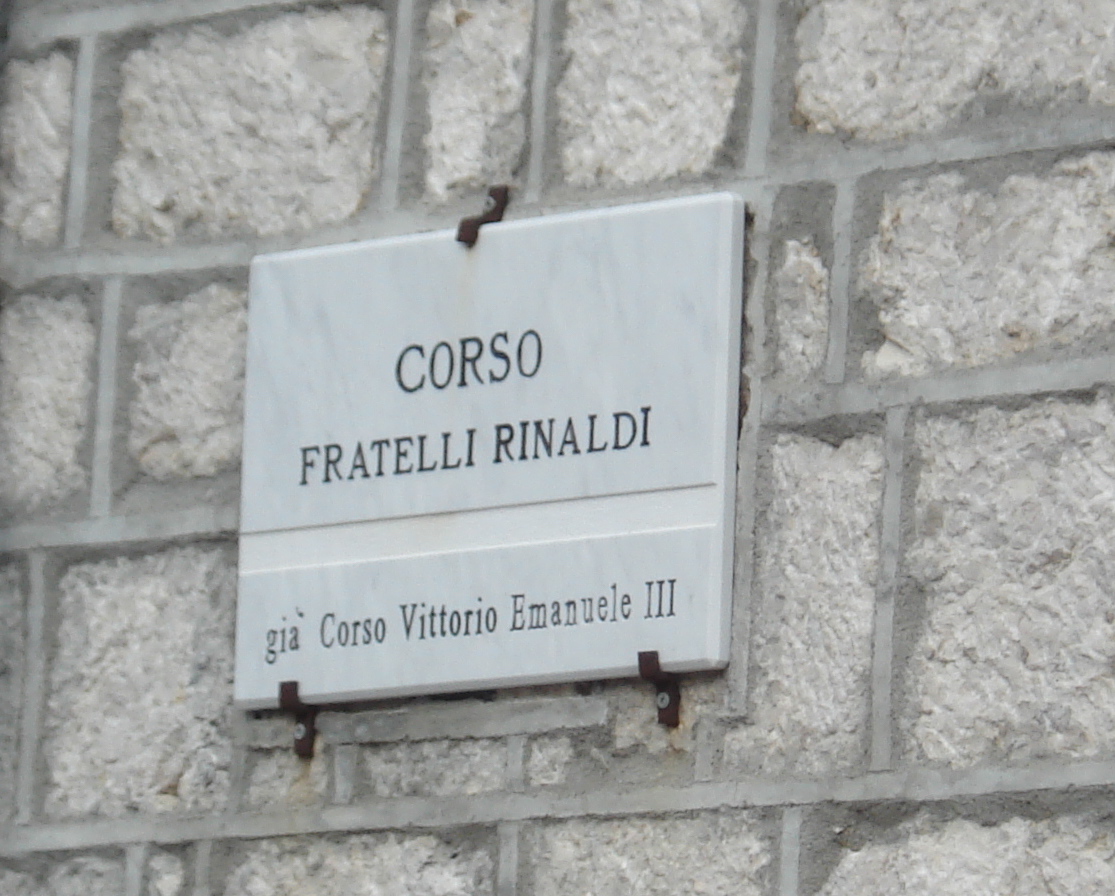
All over Pontelandolfo there are streets named after people.
OK, my great grandmother’s surname was Rinaldi, but that is not why I chose this picture. The Rinaldi brothers were massacred during that heinous night, August 14, 1861, when in the name of Italian unification, hundreds of Pontelandofese were killed in their sleep. We hope that when visitors see the names of the streets in Centro Storico they might ask a question or too. Before becoming involved in my little village I had no idea that Southern Italy wasn’t enthralled with unification. The mass slaughtering could be a reason. That sure as heck wasn’t in my American history books.
At this point you might be wondering why I felt it was important to get at minimum a street in Flagtown named after my family – Guerrera. The specific location is particularly meaningful because my grandparent’s subsistence farm was just a spit away. Actually, I grew up on a piece of their property across the street.
May 4, 2015 Ribbon Cutting and Opening of Guerrera Court, Flagtown, NJ 2015
Guerrera Court is specifically named in honor of my pop, former Hillsborough Township Democratic Mayor, John F. Guerrera and Flagtown Postmistress, my life saving aunt, Catherine Guerrera. To me that sign honors all of us Guerreras who lived, worked and contributed to our community.
I orchestrated that the ribbon be cut by former Republican Mayor, Bill Jamieson. During the 1960’s, Jamieson and my dad served the township from different sides of the political aisle, often arguing vociferously at meetings and then heading to Farley’s Tavern in Flagtown to share a drink and strategize for the good of the community. According to Jamieson, “John was a progressive leader who moved boulders to bring Hillsborough into the 21st century.”
My dad was a powerful force and cut a bella figura! A Democratic operative, he was active in county, state and national campaigns. He is credited with starting our community police force, seeing that sewers were installed, a Municipal Utilities Commission formed, zoning updated and lots more.
Born in Pontelandolfo, Italy, my resilient aunt, Catherine Guerrera, had contracted polio at 2. She, my grandparents and uncles immigrated to America. In 1926 they bought a 15-acre subsistence farm in Flagtown. After graduating from Somerville High School in 1933, Aunt Cat discovered that jobs for the handicapped were limited. My ballsy aunt sat down and penned a letter to then First Lady, Eleanor Roosevelt. Zap! The letter was answered. The Roosevelt Administration assisted in her having numerous operations done by the famous Dr. Kessler himself. She was later appointed the first postmaster of Flagtown and paid only a commission. Her tenacity and work ethic built the post office to first class status.
Now as folks buy a house on that street or drive by they might just wonder who that family was. It is a visible link to our community’s past. They might ask the who, what, where and why. I know I would.
This morning when I got up there was a line of cars outside our house.
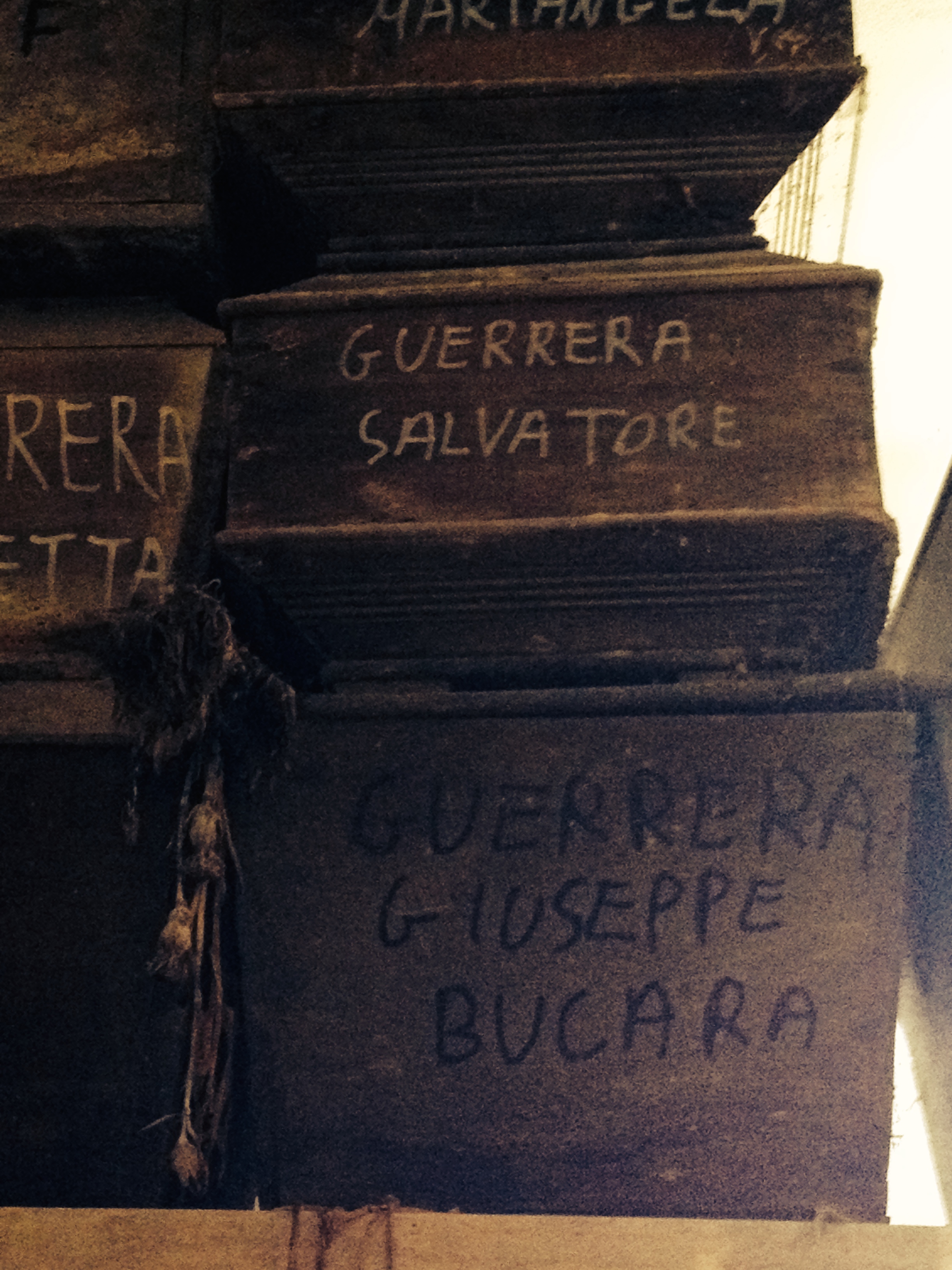
That is the line that starts the post I thought I was going to write. You’ll get that one tomorrow or dopo domani. It is about a funeral and the funeral/burial traditions of Pontelandolfo. I can’t finish it today. Because today in the basement of the Pontelandolfo Cemetary “Cappella” – Chapel, where the bones of the poor are stacked in wooden or tin boxes, I found my great grandfather. Don’t ask me how I know it was him or how I found him. When I saw the wooden box with the handwritten “Salvatore Guerrera” I just knew. It doesn’t have a date – he died in the 1920’s – but I knew.
There are hundreds of stacked boxes. I may be wrong, but when I saw this box – I knew.
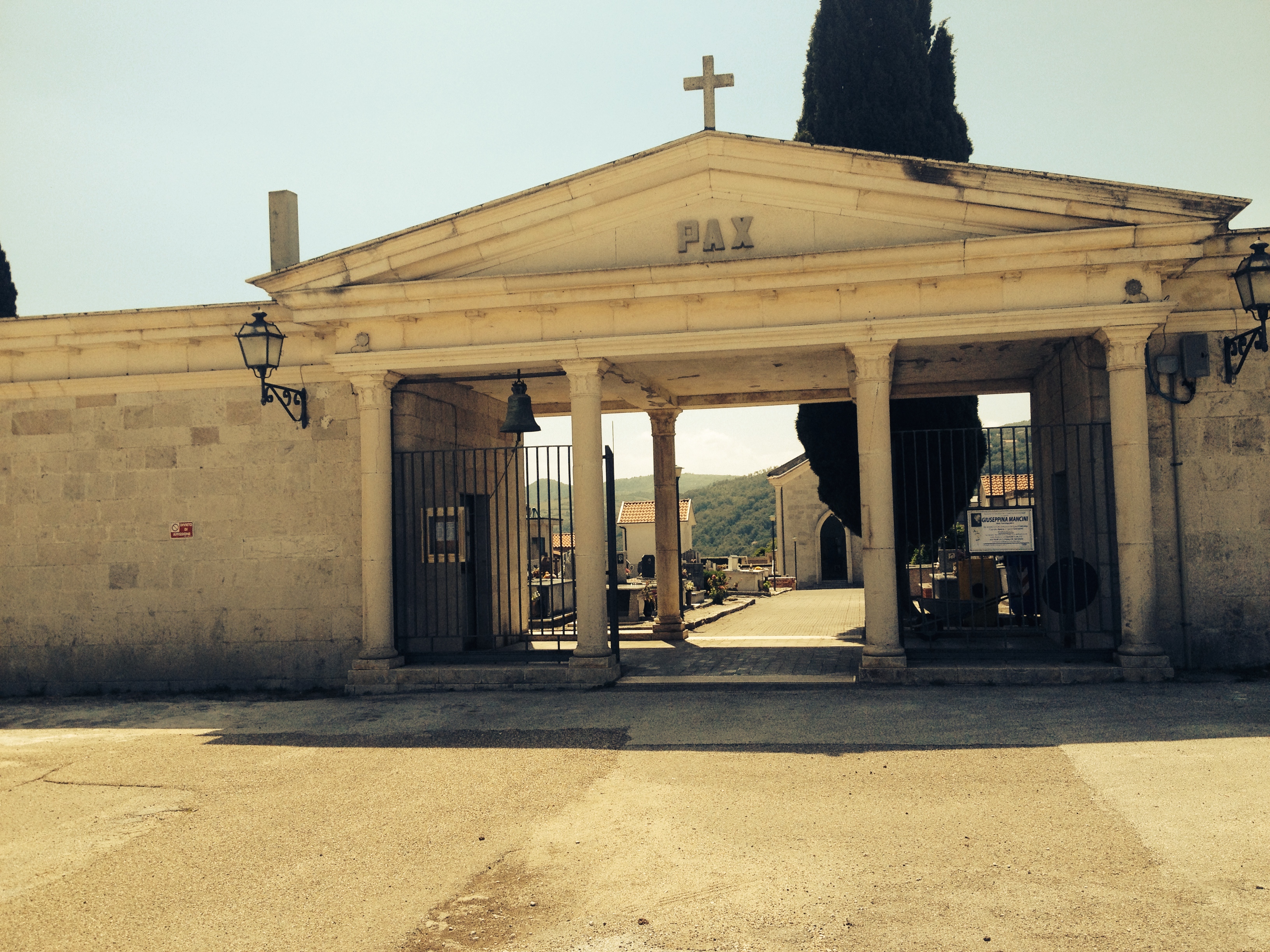
My great friend, Nicola Ciarlo, had taken me to the cemetery to explain the rules, regulations and traditions of a Pontelandolfo funeral. It is as unlike a New Jersey funeral as you can imagine. The mountain is made of soil that is rocky and hard. The cemetery has been used for generations and hasn’t grown in size. People die – how could the cemetery not expand? Simple, after a number of years, the coffin’s are dug up, bones prepared and then placed in a little box that is placed in a nice marble drawer. That’s if you can afford the nice marble drawer to share with your loved ones. But you’ll read that tomorrow. Today I need to think about my bisnonno.
Nicola took me to the church basement to show me where the bones of the lost ones were housed. The place is called “il ossario” – that is fitting because “ossa” means bone. The lost ones either didn’t have family to reclaim their bones or they were too poor to be placed somewhere else. In the 1920s in Pontelandolfo everyone was poor – my family was no exception. They were contadini – farmers who worked the land for a rich dude. Back then, after World War I and the ravaging of the mountain by the troops, the poverty caused a mass exodus to the Americas. Noone had the money to come back for funerals or even knew that loved ones had died. So, in the ossario there are stacks and stacks of wooden boxes. Some were dated from the early 1900’s. Most didn’t have any dates, just a name scrawled across one side. Little white boxes held the bones of poor children.
The bones of children are nestled in white wooden cradles for perpetuity.
As I covered my nose from the damp, moldy smell and looked around, I realized that the boxes had been piled in alphabetical order. I kept walking and found a shelf containing the remains of Guerreras. Since Guerrera is as common here as Smith, I didn’t think anything of the shelf. Then, as though an arrow shot through my core, my entire being was pulled toward the box that said “Salvatore Guerrera.” It has been 5 hours and I am still crying – though now I am crying in my scotch. At first, I thought the overwhelming sadness was because the root of my family tree was tossed in a box and stacked on a shelf. Or I was crying because of how very poor my family had been. Then I realized that I was crying and felt an overpowering sense of loss for all the elders in my family that I didn’t know, haven’t found and haven’t taken the time to discover. I cried from the depth of my soul. The tears refused to stop. Suddenly, I realized that I was mourning. Mourning for my father, my Aunt Cat, my mommy, my Uncle Sally, grandma, Uncle Tony, Uncle Nick, cousin Roseann, Aunt Julie – mourning for all of the people I have loved, who had loved me unequivocally and died. All of the sadness I had bottled up had been released by my great grandfather, Salvatore. My sadness sits inside me and maybe that’s a good thing. Maybe in order for the sadness to escape I need to start whacking away at the memoir about finding my family.
Enough about me. Let’s talk about Salvatore Guerrera. He was born on April 5, 1848 to Giovanni Guerrera and Maria Guerrera – since women here don’t change their names when they marry seeing the Guerrera married to a Guerrera was a wee bit disconcerting. But hey, it was a small village and Guerrera is like Jones. The Guerrera infusion in my body is even stronger – Salvatore married Caterina Guerrera. Writing this makes me realize that my blood must also flow in over 50% of the people that I meet. That connection is visceral for all of us and explains why I feel so accepted here. My great grandparents had five children that lived – Francesco – my nonno, Maria Vittoria, Anna, Nicola, and Giovanni.
What I discovered years ago peering through the dusty books in the town hall was that Salvatore had a whole second family! He also married Giuseppa Iannicelli and had four more kids- Caterina Maria ( who died as a baby), Caterina, Michele Nicola and Antonio. It is interesting that Salvatore’s first wife’s name was Caterina and he named his daughters with his second wife Caterina! I wish I could flash back in time and hear that story.
Salvatore was a small man who was larger than life – a fighter, lover, leader. I have only met him through the tales that others have shared. It isn’t the same as seeing his face and hearing his voice but it still links me to him. Here are stories my Zia Caterina, Daddy John, and Carmine Manna told me.
Salvatore Guerrera was Robin Hood. He stole from the rich and gave to the poor. In those days everyone was a poor sharecroppers – like a slave – worked the fields for the rich. They had very little food or money. Salvatore took and gave. No one starved.
During World War I, Salvatore was out hunting and he heard some local women screaming. German soldiers were “having their way with them.” Salvatore shot the soldiers. He then dressed as a soldier, took their German guns and walked past the Germans – right back through the lines. That took amazing balls.
With safety in numbers, peasants then lived in stone attached dwellings. The bottom floor was used to house the family’s animals and farming tools. The heat from the animals rose and warmed the second floor which was inhabited by the family. It was one room. The space was very small and yet everyone managed to live together. The structure still stands in the Santa Caterina section of Pontelandolfo.
Here is the set of row houses that date back hundreds of years. Now they are empty or used as storage space.
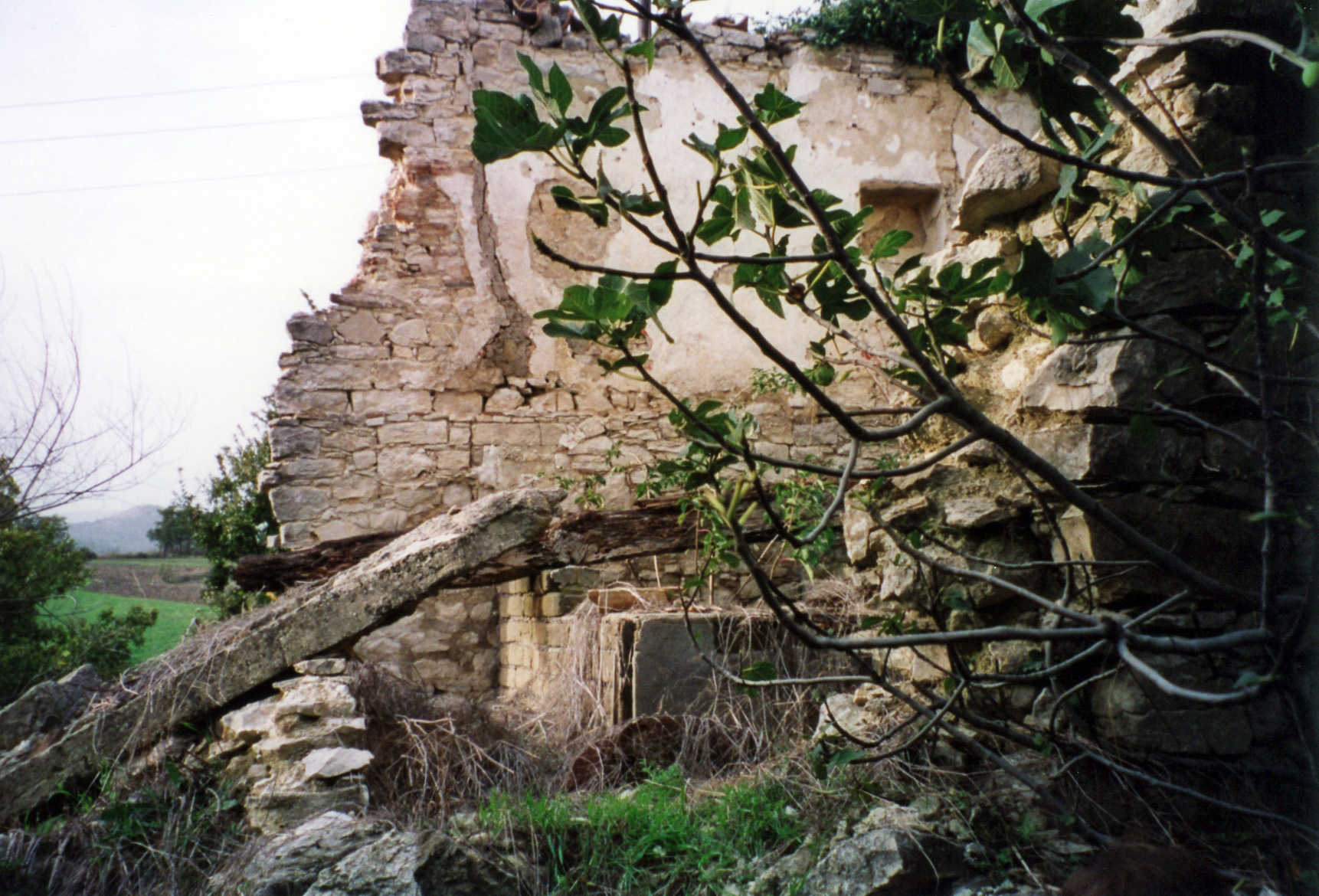
Here is what is left of Salvatore’s. It was the end of the row and looks like I felt today.
Zia Giuseppina Guerrera, my dad’s first cousin, told me these stories:
Salvatore needed wood for a fire to bake bread. In this time there were no trees left for wood. (My grandmother told me that during World War I everything was taken from them and they started to make soup from the bark of trees.) Everyone was poor and hungry. Salvator wanted to cut down the tree of the the padrona. Remember, Salvatore, like many others, was a serf and worked the land for the padrona. The tree was incredibly large and the padrona said “No, you can’t cut it. I need to tie my donkey to that tree. So in the dark of night Salvatore cut off the just the top of the tree and tied the donkey to the bottom!
Tobacco was grown in the fields to make cigarettes. The police – working for the rich – said don’t take this tobacco, it is to be sold. Of course Salvator took a leaf of the tobacco, looked at the police and said, ” Beh, don’t talk to me about this tobacco. I will smoke if I want to – so get the hell out of here.” Since he was as strong as a giant, the police went away. The next day the police came back and Salvatore was smoking. He was so very very strong and carried himself like a man of power. There was no arrest. They were afraid of him.
He was so strong that he would take things from the rich man to give to the others. The rich man would say – “I’ll give you money to stop taking things. Salvator laughed and said – “I’ll just take it.” The rich man too was afraid of the very strong and persuasive Salvatore.
When Salvatore was very old he told Giuseppena’s father, Antonio, to bring him his cane. “I want the cane. Give me the cane because I want to beat these children.” No one would bring him his cane. He was still really strong – even as an old man and everyone knew if he got a hold of that cane…
I obviously never met Salvatore Guerrera, the father of my father’s father and the very strong root of my personal family tree. Those traits of his I have seen – in my father, my aunt and gulp – I hate to admit it but – myself.
“L saugu t chiama,” Zia Giuseppina, my father’s first cousin, constantly tells me in the dialect of Pontelandolfo, that “the blood calls.” “L saugu t’altira.” Blood like a magnet is drawn to like blood. My saugu, is strongly attracted to the saugu here. She hugs me and reminds me, that I am the only one who came back from America to search for those left behind.”
Finally – the story you may or may not have been waiting for – the funeral traditions of my Italian home town. A shout out on this topic to Art Adair of Somerville’s New Cemetery, Jimmy Cusick of Cusick’s Funeral Home and Mayann Carroll, former ace lobbyist for the Funeral Director’s Association. Sorry that this particular blog was usurped earlier by my finding my great grand daddy’s bones and turning into a pile of weepy. (https://nonnasmulberrytree.com/2014/06/06/finding-my-great-grandfather/)
This morning when I got up there was a line of cars outside our house. (Thats a lie, it’s been a week since this happened but I didn’t want to mess with the story.) I mentioned the cars to Jack and he said they had been there late last night too. An all night bash and we weren’t invited? Of course we are usually asleep by 10:00. Our house is really close to the cemetery but it has a parking lot and this car line started further up the hill. H’mmm.
The yellow house on the left is ours – surrounded by cars.
Our neighbor and friend, Nicola Ciarlo, stopped over for caffè. Nosey Jack asked why Nicola wasn’t working. “There’s a funeral, he said, don’t you see the cars?” What cars, I said? (Hey I’m not the nosey one.) Looking at me like I had Campari for breakfast, Nicola said, “The ones on the road by the house?” Oh those cars. Why are they here? “People are visiting the family.” We do that in the New Jersey too. “With the body?” he asked. I retorted, The real body – the dead body?
According to Nicola, here in Pontelandolfo they bring the coffin to the house, arrange the body in the bedroom or another room and everyone comes to the house to pay their respects. People bring food and many kiss the dead person goodbye. (Try bringing food to a NJ funeral parlor – I’ve gotten my hand slapped trying that one – right Jimmy.)
The family stays up all night with the corpse. My first response was YUCK will I ever use that room again. Then, thinking about it, the idea resonated with me and actually sounds more civilized than schlepping the corpse from a drawer in the morgue to the paid company’s home. (Sorry Jimmy, your funeral parlor often feels like my home away from home.) They don’t have funeral parlors in Ponteladolfo – they have funeral facilitators. So unless you want to cart the body to – well I don’t know to where – you have to use your own parlor. H’mm that could be a lot of work. I mean, how long is the body in the house — I’m thinking three visitation days – two hours in the afternoon and two or three in the evening – or something like that. “Oh”, Nicola said, “its only 24 hours then the funeral at the church and burial. People visit most of that time.”
I was blessed to be present when my dad died and moments after my precious Aunt Cat died. During that period of time, I could feel the force of their spirits leaving. It wasn’t ugly or scary – it was an opportunity to share yet another moment with someone you loved. So maybe taking the process one step further and having your loved one pass on from their home isn’t’ so bad. Years ago that was the American tradition too.
I only saw the sign for one “organizzazione funerali a Pontelandolfo” – notice it is not a “home or parlor.” The company, Agenzia Funebre Diglio, located on Piano della Croce, 8 – 82027 – Pontelandolfo, BN, organizes funerals. They do not embalm! Bodies here are not embalmed. I’m thinking the NJ Funeral Directors lobby would have a hissy fit if folks started screaming for our laws to change and bodies in their natural state were allowed to be viewed for 24 hours and interred.
Conveniently located just down a hill from the cemetery.
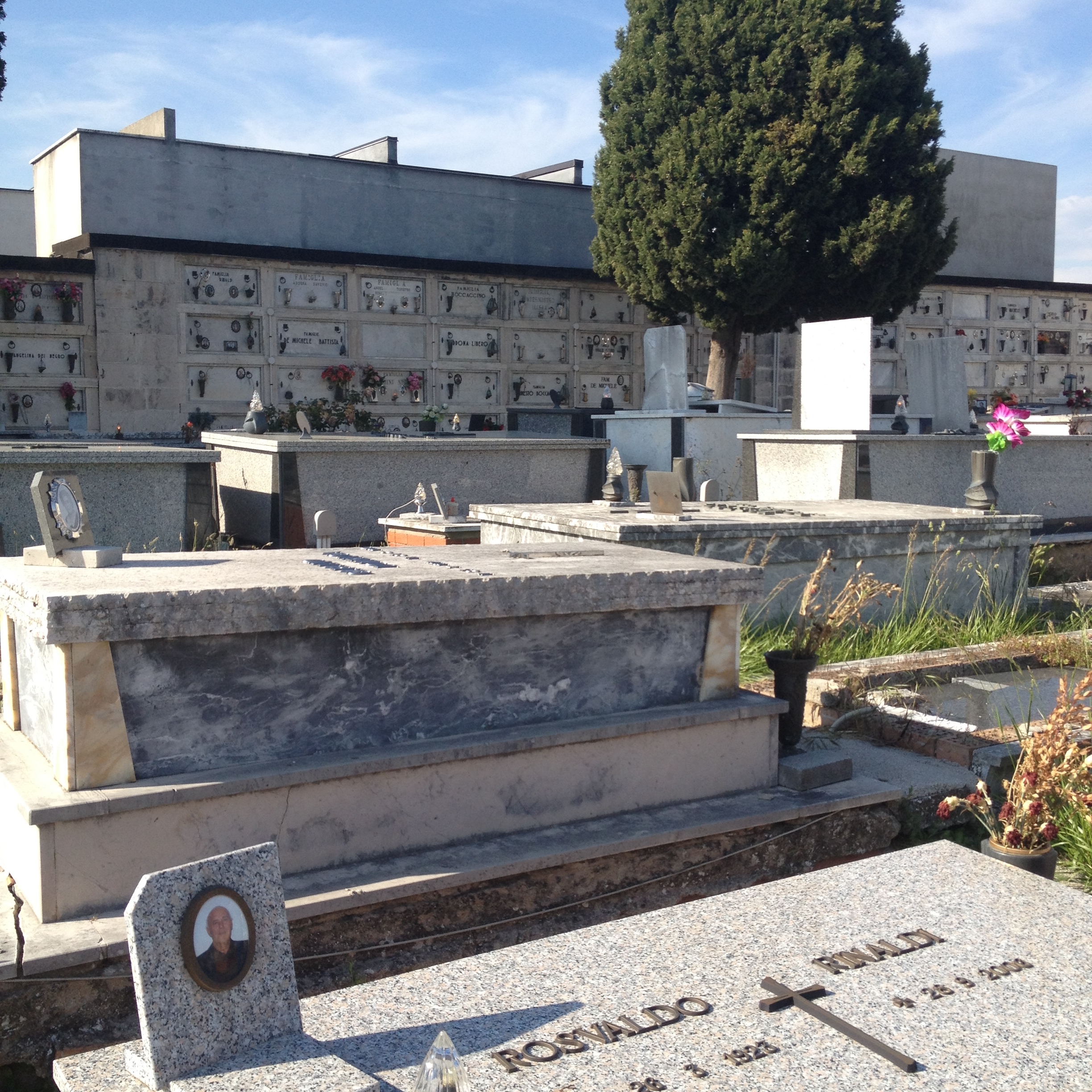
My Italian is not the best so I may have misunderstood some of Nicola’s nuances but research and Jack’s memory of his Italian teacher saying the same thing confirms what follows – sort of. Here you only lease a spot for a coffin. If you have a lot of money you build a zinc box like thing and your coffin rests on a cement pad. You then have thirty years to decompose peacefully. If you have less money your coffin is partially buried in the dirt and you have a small shell of an exterior box. You get ten years of a cozy spot.
The tall zinc model is on the left and next to it is the lower model.
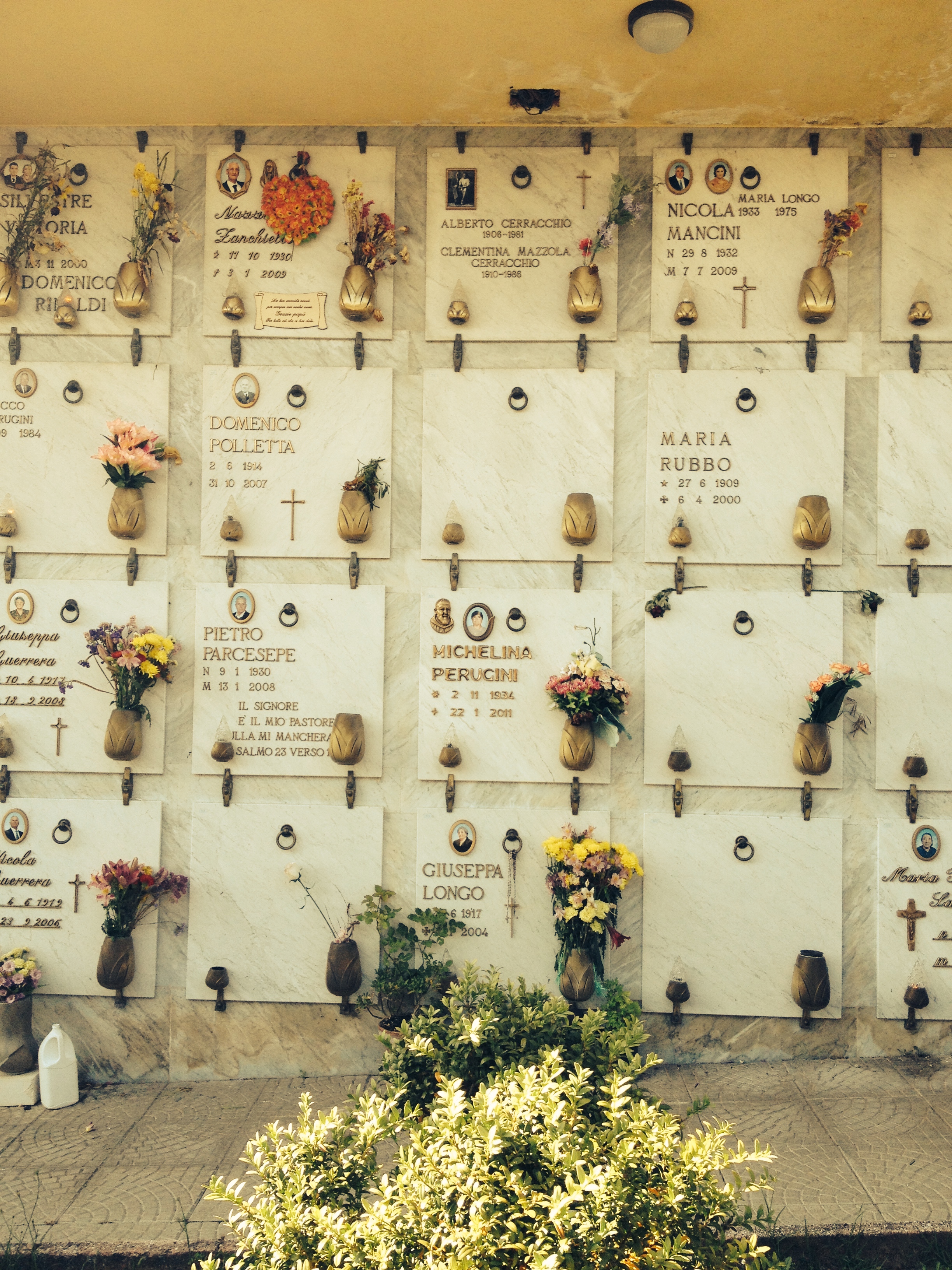
After thirty years – or ten – the body is exhumed, bones are cleaned and put in a small box. Often, there is another ceremony for the bones. The bones are then placed in a smaller spot on one of the long walls of marble. Poor folks who don’t have family drawers on the wall are placed in the basement of the cemetery chapel. Those of you who read my last post, heard that story.
You can see how the coffin is not really deep in the ground.
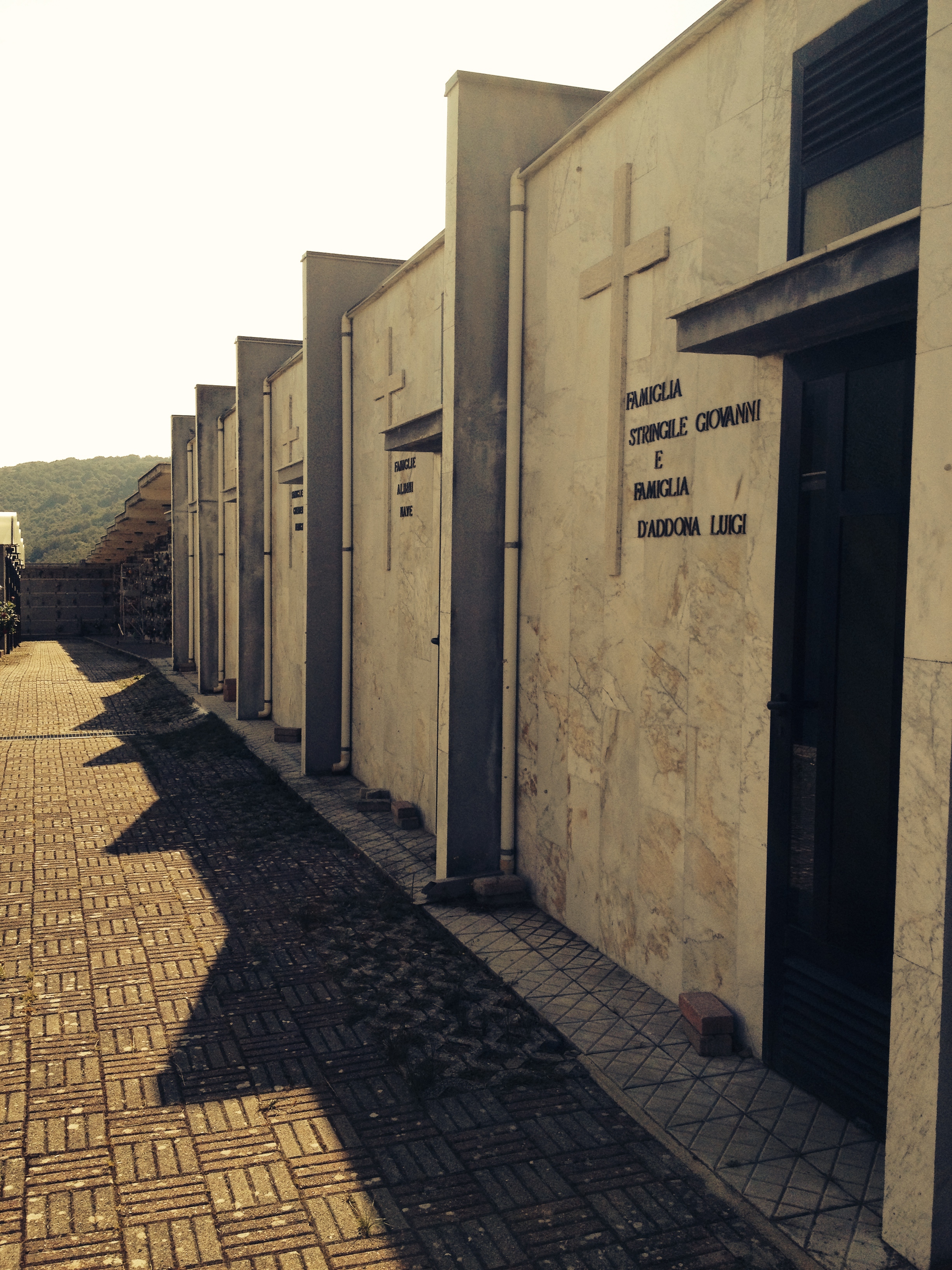
Here is a wall of family alcoves.
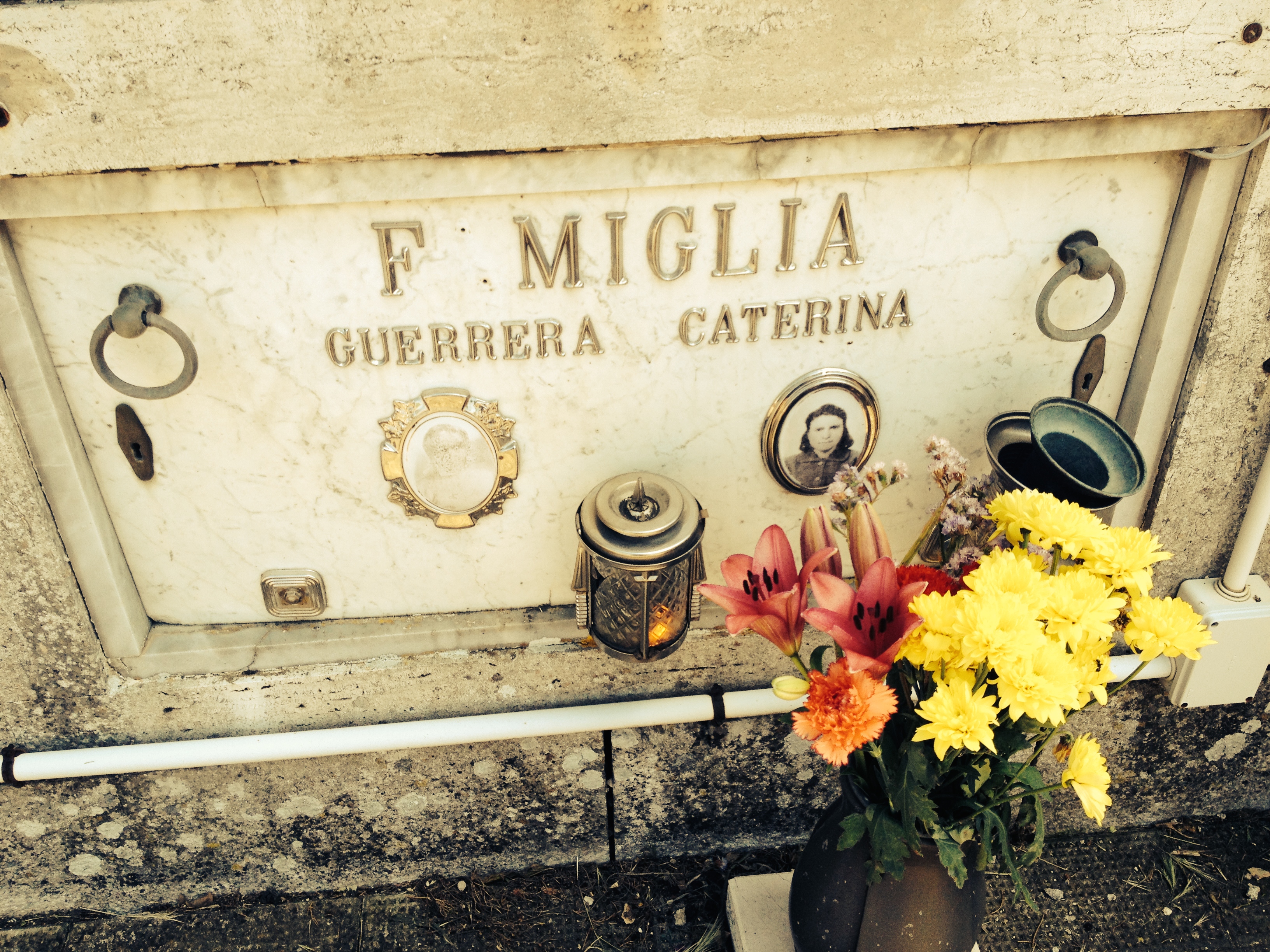
Here is a close up of a spot. It reminded me of my favorite Aunt Cat. Note the fresh flowers.
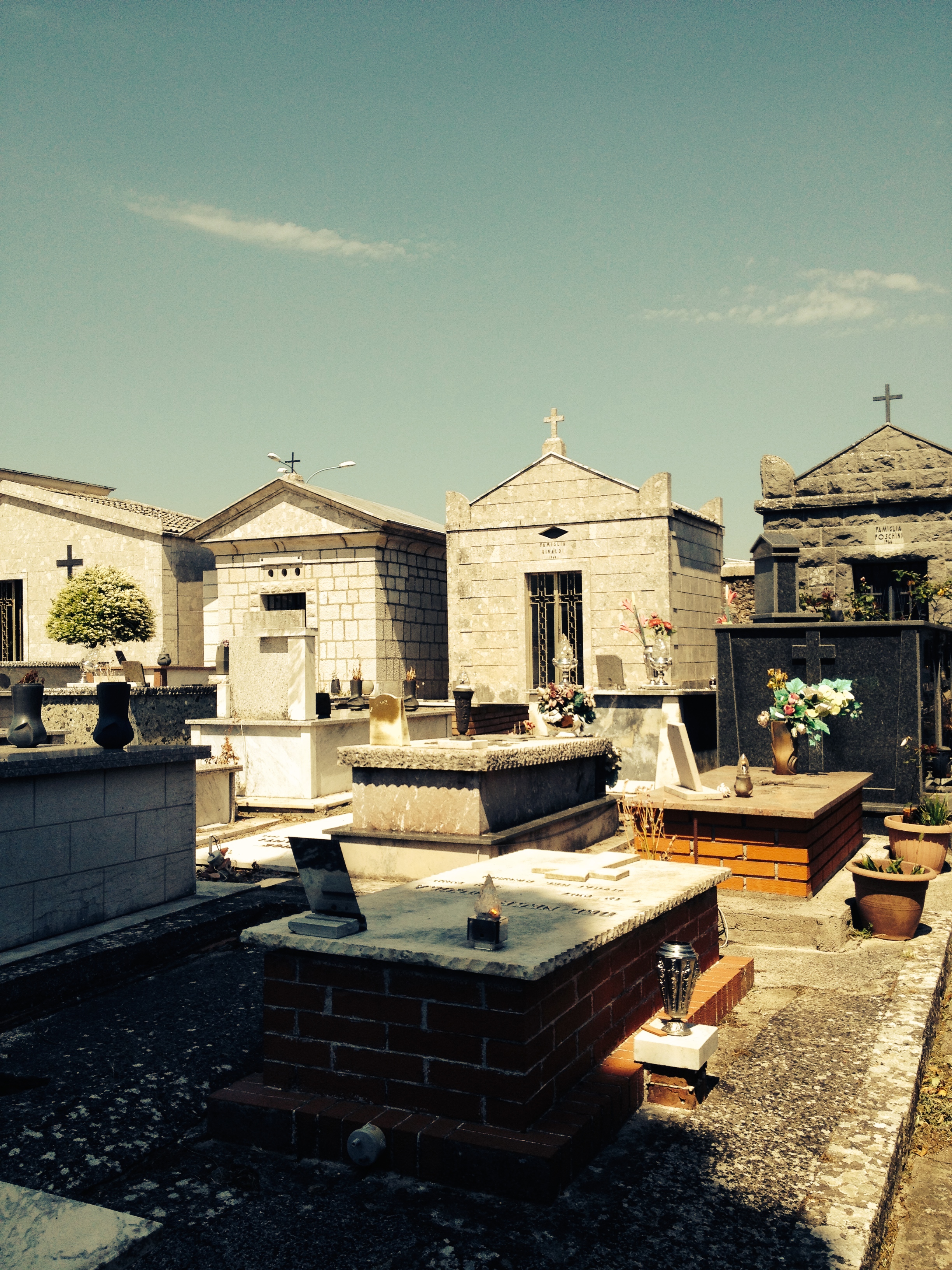
People of means have little private burial houses – what do we call those – memorials? (If you know what these things are called leave a comment.) The family’s remains can stay in the coffin in a place permanently or be removed later to make space for younger relatives, their bones placed in a glass box and put to rest in a smaller spot.
There is a little village of these houses.
This is the modern version.
I peaked in side one of the houses. The flowers are fresh and changed often.
The people here visit their deceased family often. I see families come bringing new flowers weekly. There is a real connection to the past.
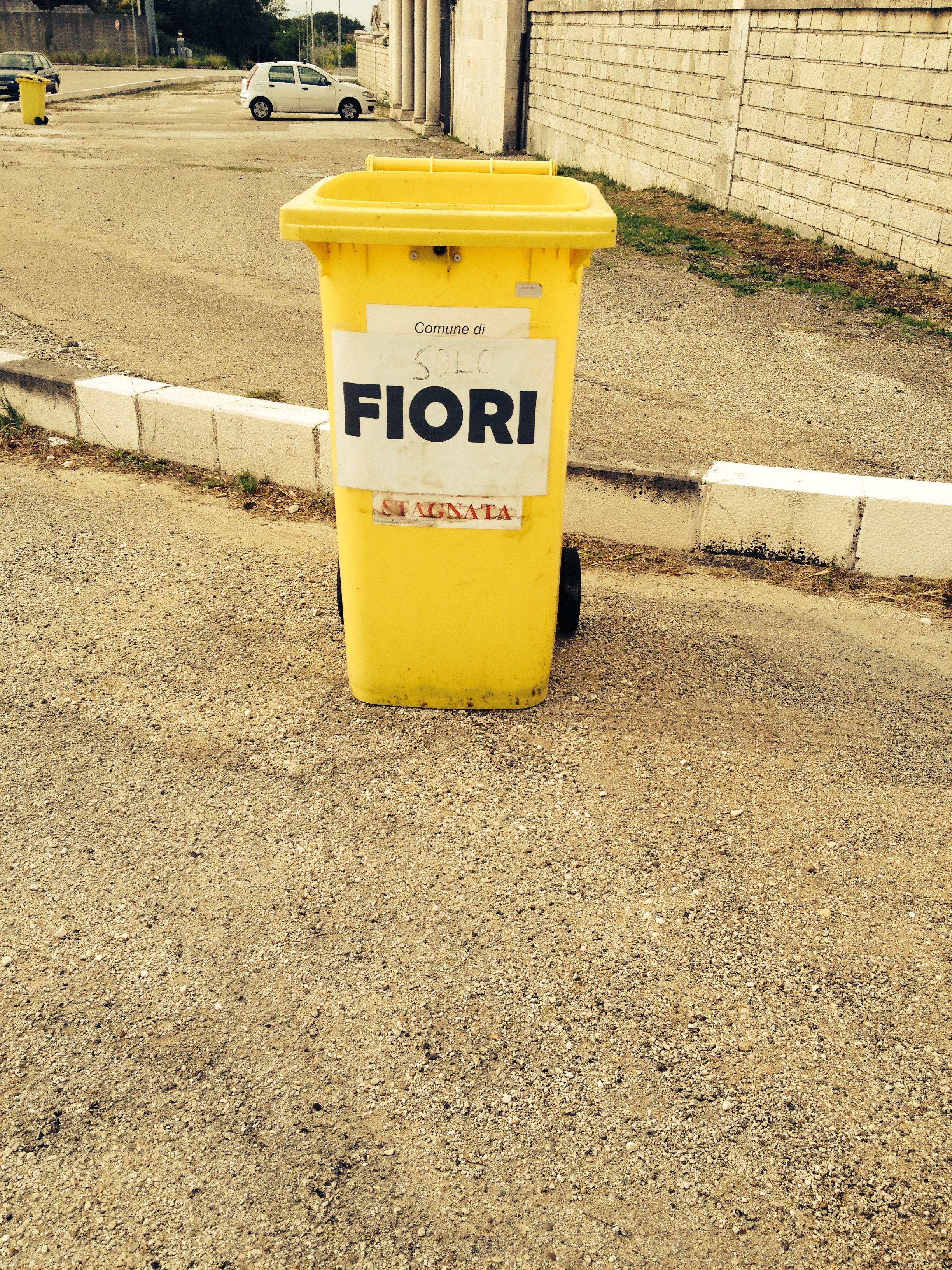
The cemetery association has these flower recycling bins to hold last week’s buds.
This exhumation and re-burial in a smaller spot is far from barbaric. It is done with love and a understanding of the cycle of life. The mountain’s rocky soil makes interment difficult. Usable land is farmed to bring food and income to the residents. The re-interment of remains has been going on for hundreds of years – think of all the bones found in ancient church lower basements- catacombs. More important than the burial process is the honor that is given to the dead – ongoing by even the younger generations.
You can really see the height differences in the burial plots.
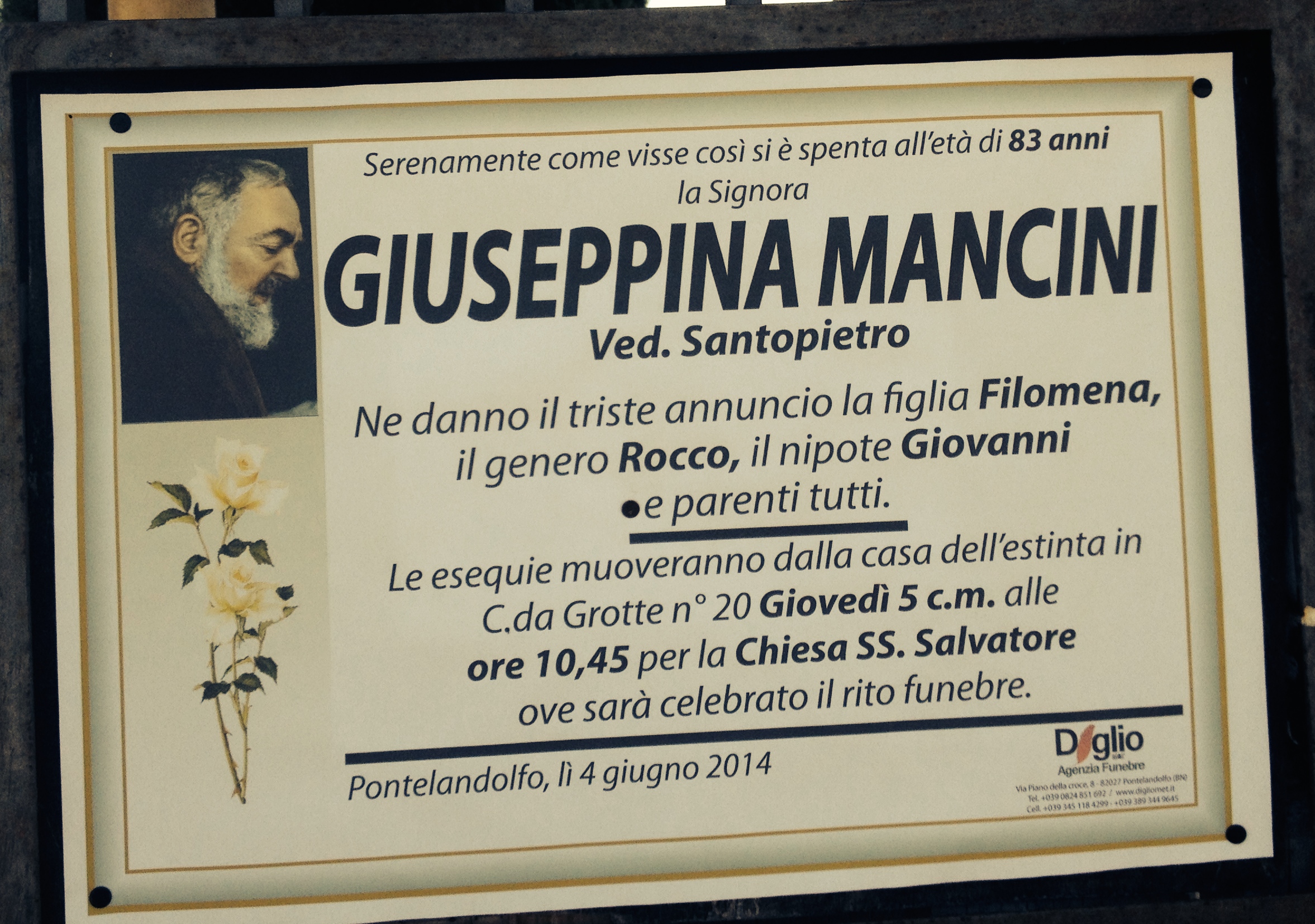
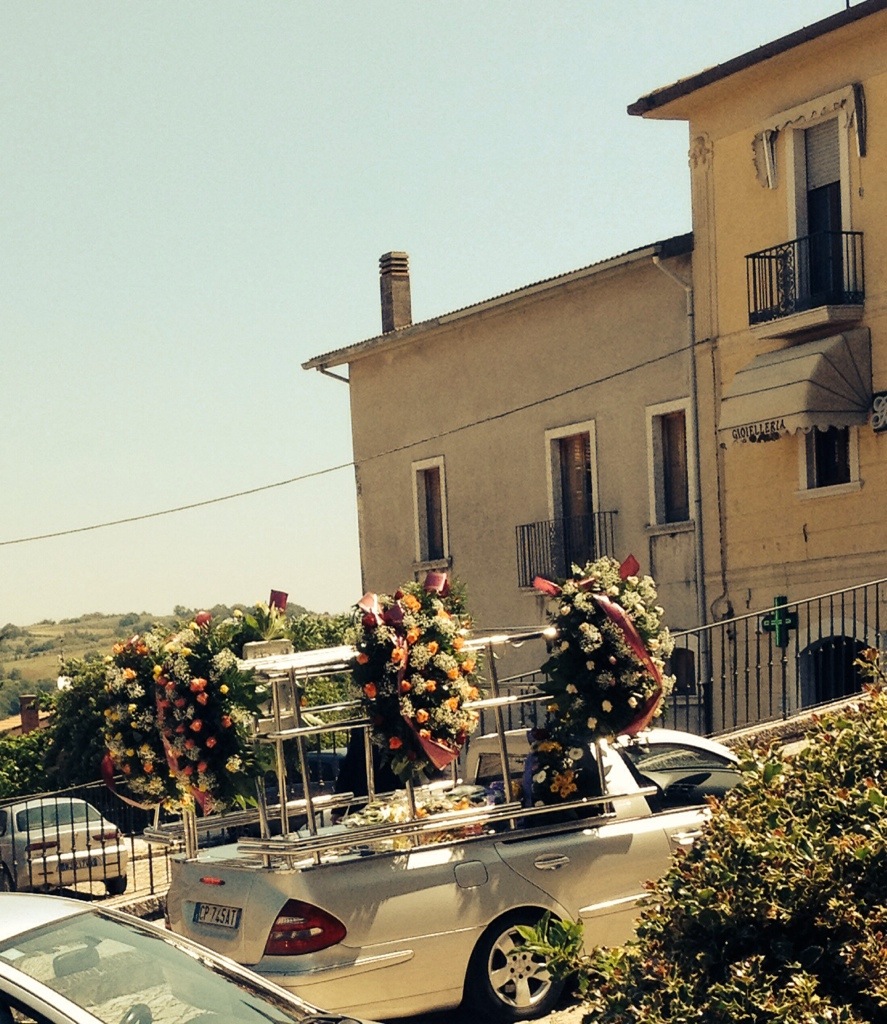
After Nicola patiently explained all that to me, I decided to walk down the hill and see the funeral precession for our neighbor. I chose to watch from the great patio at Bar Mixed Fantasy. Whew, I got here just in time to watch the lead flower car slowly move up the hill to the old church. The hearse followed and following the hearse, just like in every old movie of an Italian funeral, people from the village slowly marched up the hill too. Wait a second – the person dies, is laid out at home and within hours folks are visiting, bringing food and clearing their calendars for the next day’s funeral. How does the news spread that fast? One of the services provided by the Funeral Agency is the immediate printing and posting of the large death notices.
These notices go up instantly.
The first time I came to Pontelandolfo – years ago – I saw plastered on the wall a death notice for Giovanni Guerrera. It was a little freaky since I had spoken to my dad the day before and he was fine. The death notices are either simple or adorned with art. Within hours of the persons passing the notices are posted on the villages walls and posted at the cemetery.
Ok, back to my glass of succo d’arancia rossa and the procession. I will admit I wanted to take pictures but I thought that it would be incredibly tacky. It was a very quiet and somber movement towards the church. OK,OK, I snuck one picture of the flower car. (This is for Cusick’s Funeral Home.)
After the mass, the procession moved slowly down the hill to the piazza and on towards the cemetery. Where the loved one will be interred undisturbed until the lease runs out and they are moved to their final resting place surrounded by those that loved them.
Hemingway had Soppy Joe’s Bar in Key West. F. Scott Fitzgerald had the Ritz Bar in Paris. Dylan Thomas had the White Horse Inn in Manhattan’s West Village, I have Bar Elimar in Pontelandolfo, Italy.
Some folks work at Staryucks. I prefer the joint that makes the 90 cent real cappuccino.
Hey, reality check – I know I am not in the same league as those major writing players but I am willing to learn from them. The first lesson – find a home away from home that will jump start your creative juices. Or in my case, provide me with a tribe. Some folks can work alone – I need the constant buzz of other folks around me. They don’t even have to talk to me – just be there.
Sure I could sit at my desk, stare out the window at incredible mountains and maybe even pretend to write while I wallow in self pity and loneliness. Or I could walk down the mountain to Bar Elimar – today I drove- have an incredible cappuccino, whip out my Macbook Air or iPad mini, stare at cool stuff and write about the people places and things I see. A win win.
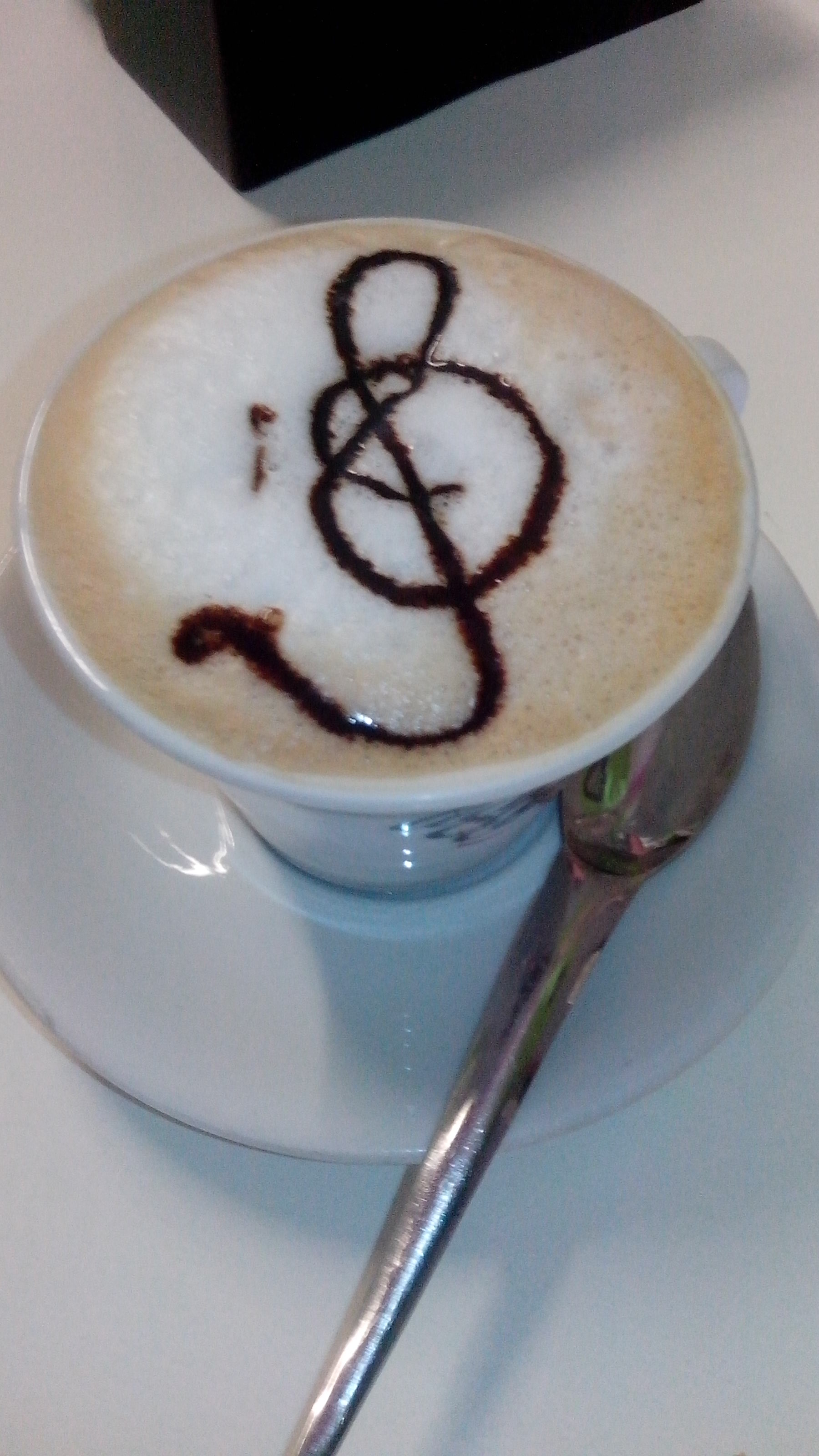
The first thing I see is the cool art Marilina has drawn on my cappuccino foam. Yes, that is blood orange juice.
Some days, when my 6th decade body is dragging, I swear I steal an infusion of energy from the bar’s owners, Marilina Mazzamauro and Elio Di Muraglia. This duo works from dawn until 4:30 the next morning. Granted they do take shifts and it is a wee bit slower life in the winter but come warm nights the place is jumping. ( Did you figure out that Bar Elimar is the cute combining of the couple’s names?)
Most mornings, Marilina makes me that double, taking care to paint a flower, treble clef or fluid design in chocolate on the top of the steaming milky foam. That art as part of my daily life is all I need to get inspired to slap my fingers on the keys.
The treble clef is my favorite. Music in the morning!
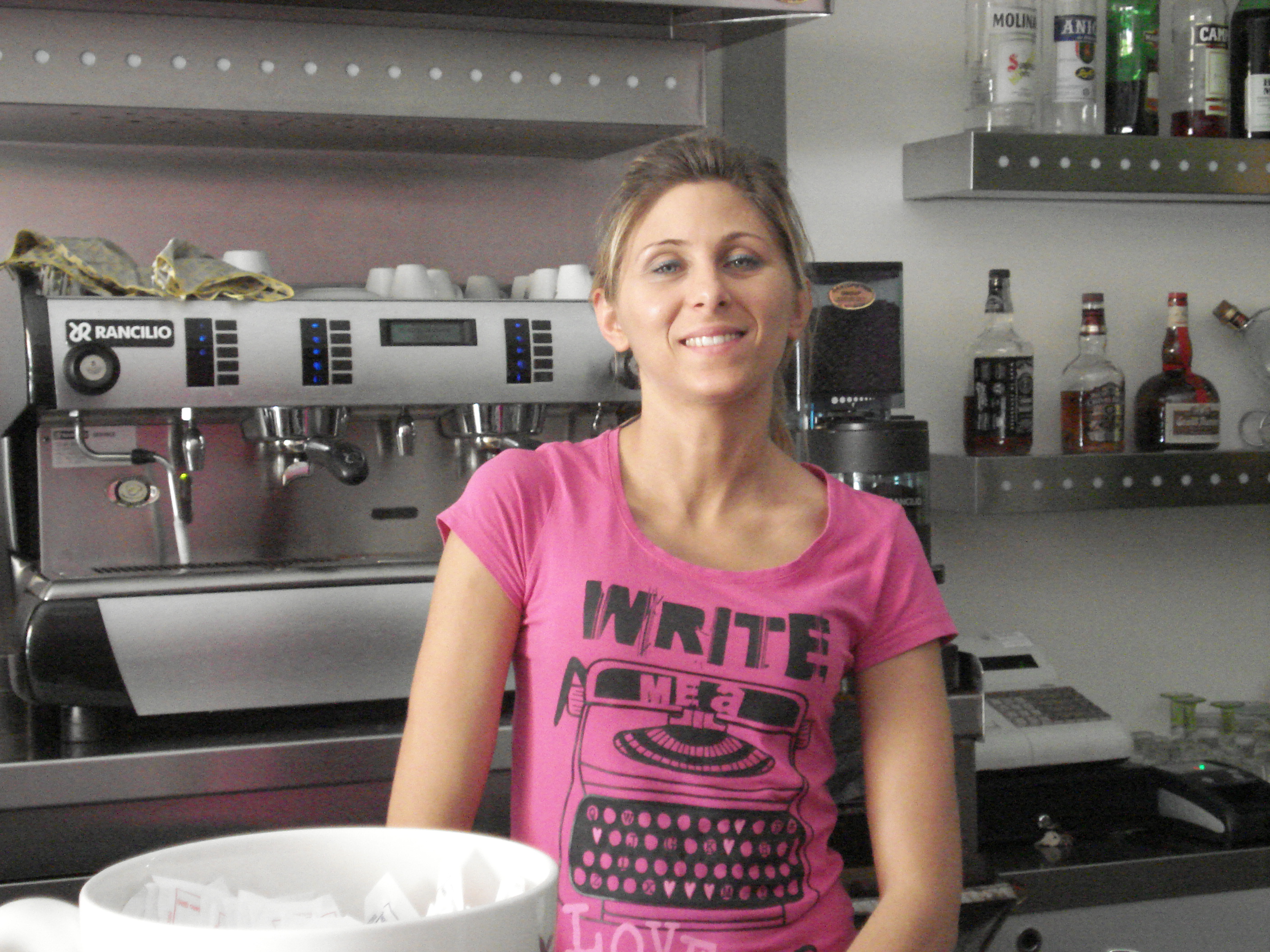
Marilina Mazzamauro, the artiste of cappuccino. Notice her writer’s T-shirt! I just did!
Bar Elimar is about four years old and a fixture of piazza life. Located on Piazza Roma in Pontelandolfo (BN) it is often filled with pensioners shouting and slapping down cards in frenetic games. Hey – didn’t I write about them? Yikes, I do steal stories from the bar.
Outside on warm days, the comfortable whicker couches, umbrellas and tables attract all from tweens to adults.
What I like about the place, besides the morning coffee art, is that everyone feels welcome and the place is spotless. I always feel secure enough to leave my MacBook Air on the table inside and go to the bathroom – ain’t no one going to steal my stuff with Marilina behind the counter. Some days, my new friend Rocco – he’s about 8 years old – will plop next to me and pummel me with questions. He also likes playing with my iPad – h’mm maybe that’s the attraction. It is that feeling of inclusion – being part of the community that really resonates with me.
An afternoon visit by my nephew Nick Losardo – the $.80 prosecco was mine.
Bar Elimar has music often during the summer. Marilina, how can you work until 4 a m and open at 7:30? Children and adults – including this crazy American – sit around, order a drink or thee under the moon and sway to the music. My question is after they pay the bands, rent the tables, rent the stage and hire the waitstaff do they make any money. Some times I think that the good life of the village,is more important to the village merchants than the bottom line. Could that be true?
Since I started back to my writers room, all the projects that I played with while in New Jersey have been percolating in my brain and my keyboard. The work may not make me a star but writing for a few hours at Bar Elimar sure makes me feel like one.
Mia nonna coraggiosa e zii. One woman alone with three kids in steerage.
Before we can talk about my nonna’s trip to America, I thought we’d take a peak at where she came from. There isn’t much left of il casolare in pietra – the stone cottage my nonna, Mariarosaria Solla left behind. I was going to say hut – stone hut – but it was a tad bigger than that. Imagine a stone one-car garage built when all cars where VW Beetles. When Rosaria (I never heard the Maria part of her name) left for America, she had been living in a one-room house of stone that dated back to the Middle Ages. Obviously, houses constructed of huge rocks were built to last. This one did until an earthquake took out most of the town.
Following sprightly nonagenarian Filamena as she scampered over rocks, past thistles and up the hill, my stomach gave a twitter. It might have been because I haven’t been able to scamper like a goat since I was ten and here was Filamena sporting the traditional kerchief, dark stockings, long dress and nun’s shoes laughing as she guided us to my nonna’s house. Or it could have been because with every step I took I felt more and more rooted in this community.
We found the house at the top of a hill in the section of Pontelandolfo called Brecciale. From the remains of the cottage, one can see the village center, tower and church steeple. The view is spectacular! The thought of walking down the hill through the valley and up the hill to the central piazza carrying goods to barter or sell brought tears to my muscles. It was my nonna’s parent’s home – Liberantonio Solla and Mariantonia Rinaldi. Story has it that my bisnonno, Liberantonio, was a musician! The vein of artists in my family obviously can be traced back to our beginnings. Accepting wages of wine, Liberantonio would play his concertina in the piazza. He’d make it down hill number one, across the small valley and be crawling by the time he was mid-way up hill number two. That’s when my bisnonno would bellow for bisnonna, Mariantonia, to drag him up the hill home. She’d ignore him. Good for her. I come from great stock!
Nonna did what the children of every other poor family did than and still do today, lived with her parents. As I explore the village that sprouted my family and meet cousins I didn’t know I had, I’m meeting families that still have two or three generations living under one roof.
Up a piece from nonna’s house was a patch of rock that the local farmers used to grind wheat. The marks from a heavy stone wheel are permanently imbedded in the rock. An oxen or mule was harnessed to a contraption that smacked on the grain. You can also still see the circular track of decades of animals walking round and round and round and round.
Living on the top of a hill, means to fetch water from the river or the nearest fountain Nonna Rosaria walked down steep paths. Easy for Jack and Jill to go down the hill – but with buckets full – it is up hill to home. Even though life was tough, nonna and her children loved living there. I understand now why my nonna’s farmhouse and land in New Jersey looked the way it did. She and my nonno, Francisco Guerrera, tried to remake their little piece of New Jersey into a little piece of Pontelandolfo.
Take a peek at the video of her house today – Nonna’s House
To find out more about my grandmother’s trek across the ocean to America, we took my Zia Caterina to see Ellis Island. She had made that journey with her mother and two brothers. When we walked into the great hall of the immigrant’s reception center her face turned grim and she started shaking. Like a soldier suffering Post Traumatic Stress Syndrome, residual fear racked her body. It was the same fear she felt when the line watchers at Ellis Island ripped her away from her mother and put her in quarantine. We passed a door and she shouted, “that’s the room – the room they put the sick ones in.” “They left us there and no one could speak our kind of Italian and tell me anything.” “I was scared but looked them in the eye and said sto bene – I’m well.”
Caterina’s Story:
When I was two in Italy I got polio – they didn’t know what to do then – not many got polio. My mother, put hot rags on me and massaged and massaged my leg and arm. She said I just cried all the time. I walked when I was 9 months old – I talked at 12 months. Then at 2, it was over. The priest wanted to send me away – he said cripples couldn’t stay. My mother wouldn’t let them take me. She kept rubbing my legs and rubbing my arms. She never wanted to come to America. My father came first and worked in the Patterson silk mills. Mamma was afraid that if we stayed in Pontelandolfo they would take me and put me away with the crazy people. The priest kept coming to look at me – he’d shake his head. When papa saved enough to rent a place to for us to live in, he sent for us. The Pontelandolfesi women told my mother to only pack her nicest clothes for America – in America everyone was rich. What nice clothes? They were contadini – kind of like sharecroppers. (Serfs – I told you I come from good stock.)
Mamma was a fool and listened. She left her good wool skirt, heavy wool shirt and shawls. Beh, those stupid women kept saying only peasants dressed in those. I think the other women wanted her warm clothes. On the ship it was so cold mamma couldn’t stop shaking. She didn’t have anything heavy to wear.
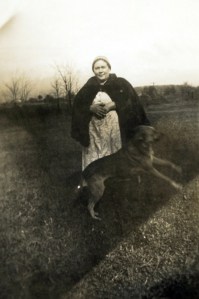
She promptly made a warm cape in NJ!
Mamma was shivering and had a fever. She just stayed in the bed – we were all way down in the bottom of the ship – hundreds of us. My brother Nick, Sal and me – mamma was so sick – we were kids. We didn’t know what to do. They didn’t give us good food only bread. We had a piece of cheese in our bag. An old man felt sorry for mamma and took care of her. He got coats from the other men and piled them on her. Somehow she lived.
When we got to Ellis Island because I had polio mamma was scared that they wouldn’t let me in America. She made me stand between her and Nick in the long line – close so you couldn’t see my little arm and shriveled leg. Men in white coats walked up and down the line and looked at us – even made some people open their mouths. A man stopped and took me. I could hear my mother screaming. They took me away to quarantine and she didn’t understand what was going on. None of us did. They kept me at Ellis Island for a couple of weeks. She and papa came every day to ask for me. They told her nothing. Finally they let me out – I thought I would never get out. My mother cried that day until there were no more tears inside her.
My nonna, Mariarosaria Solla, overcame her fear and was the rock that my family was built on. She learned English immediately – I was never spoken to in Italian by anyone – we were Americans. Also, I was born just as WWII was ending and even though young men like my dad served in the military – Italians had been persecuted in America – many put in interment camps and others sent back.
This woman of the country was now living in an industrialized part of New Jersey. The long shifts that my grandfather worked at the silk mills meant that she had to learn to be self-sufficient in a new place. Eventually, my grandfather and Great-uncle John bought a farm together in Neshanic, New Jersey. Later nonno and nonna bought their own fifteen acres in Flagtown – where I was raised with the sheep, chickens and goats. Nonna was an incredible farmer – my family continued to be subsistence farmers – just like they had been in Italy. Nonna and Zia Caterina could grow just about anything. Those skills came from Pontelandolfo. Yes, nonna did snap a chicken’s neck so we could have a roast and butchered goats, sheep etc. I only learned how to kill and clean fowl – not sure if I could even do a rabbit. But hey, life brings new adventures for all of us. I just hope that I have inherited a piece of her courage for my journey.
15 acres to farm – and just like what I see today in Pontelandolfo – the women are in the fields. Nonno worked for the railroad.
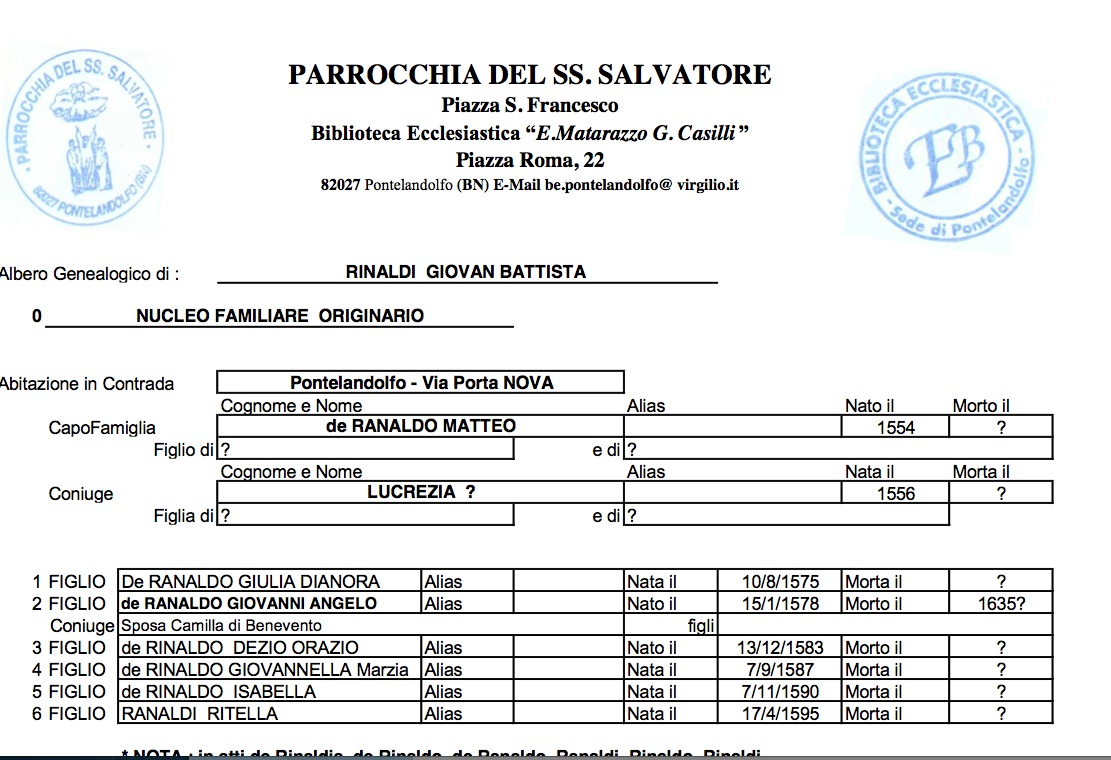
Chased by the emotions welling from a simple e-mail subject line – Invio Ricerca Famiglie Rinaldi e Solla (Search for Families Rinaldi & Solla), – tears race down my cheeks. An incredible gift was soaring over the mystical internet highway. I took a breath, double clicked and read –
Come eravamo rimasti, finalmente posso inviarti la ricerca delle due Famiglie Rinaldi Mariantonia e Solla, spero che il tutto sia soddisfacente. (As we left it, finally I’m sending you the documents about the Rinaldi and Solla Familes – I hope this is satisfactory.)
Una caro saluto
Antimo Albini
How could it not be satisfactory? It was so much more than satisfactory! Attached were two incredible documents – documents tracing my grandmother’s family back to the 1500’s!
Little boxes of wonder! Pages of them waiting to be entered in my Family Tree software. Anyone want to help?
Immediately I sent PDF’s flying through space to my family. With a little more digging, my newly found ancestors will share incredible stories. But I am getting ahead of myself. Let me start at the beginning –
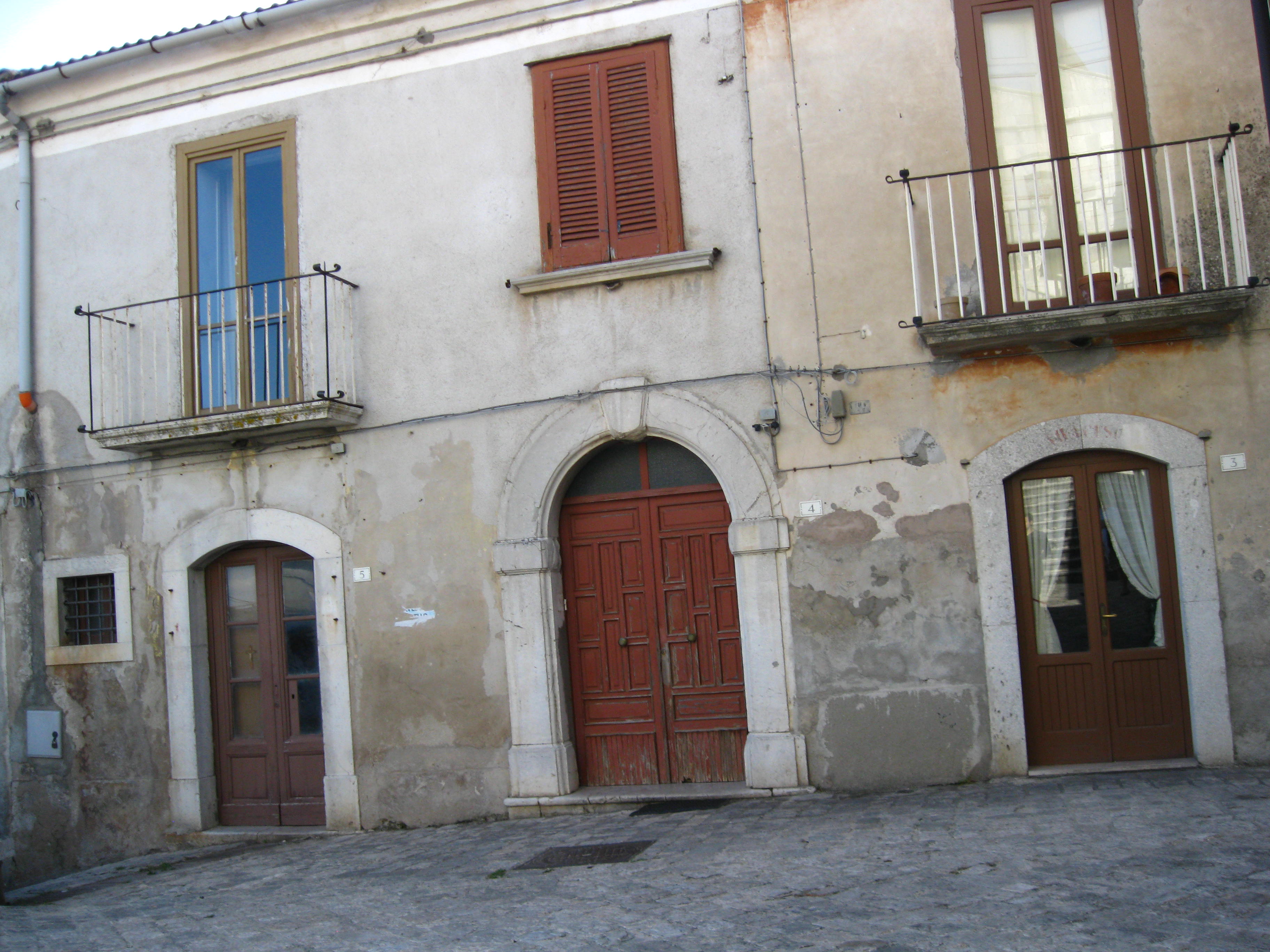
One beautiful morning Annarita Mancini and I walked up Via Municipo and stopped in front of a small attached stone row house. This part of the Pontelandolfo dates back to the 1600’s. Annarita rang the bell.
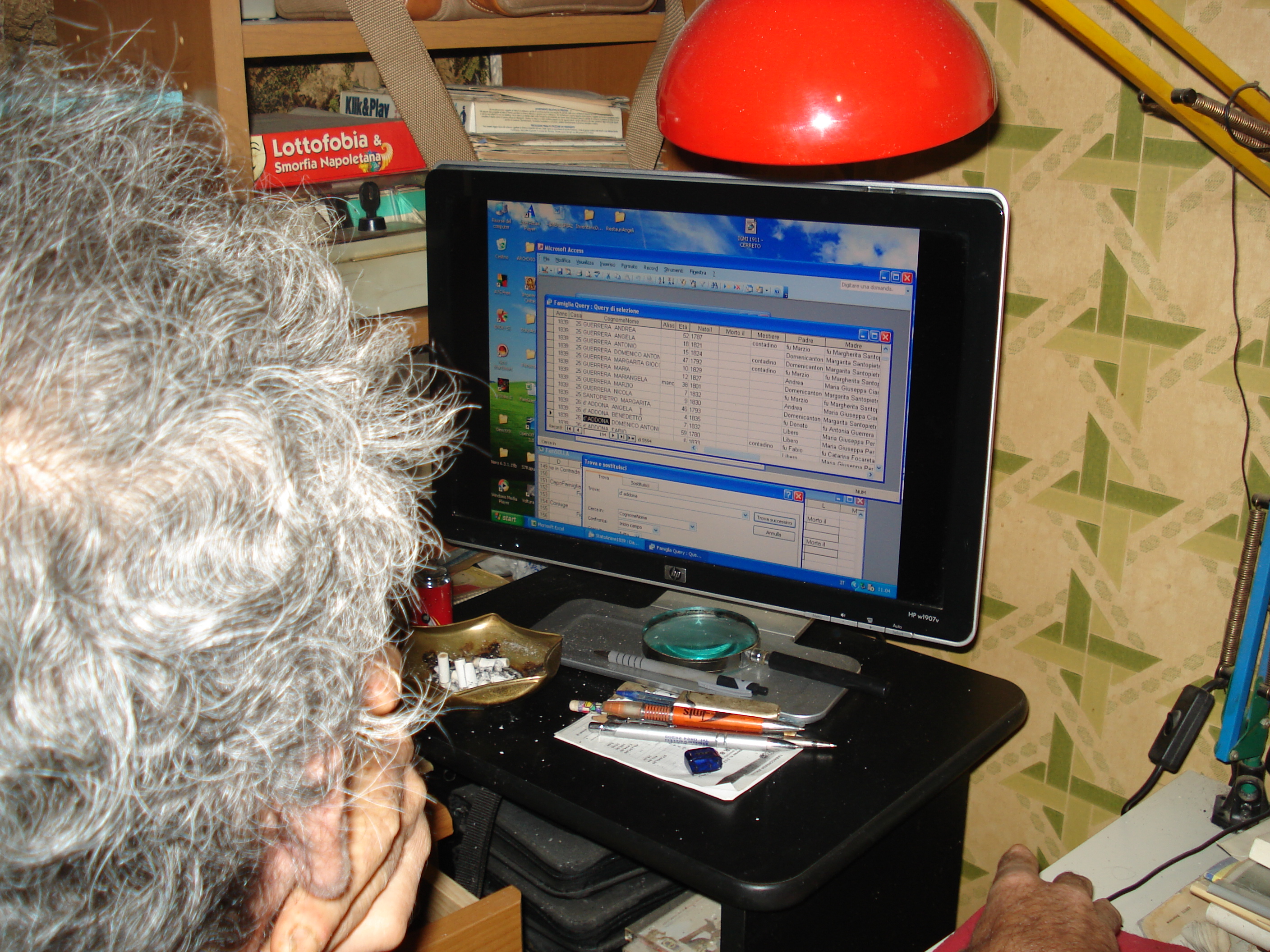
The shutter of the second floor window burst open and our guide into the past thrust out his sleepy head. “Beh?” Oops, were we too early? Annarita explained that we had an appointment to see the church archives. While he was mulling that over, the beaded curtain in front of the door parted and a middle aged woman peeked out. Shouts from above moved her. She ushered us into the front room. More shouts from above and she ushered us up the stairs. Annarita and I looked at each other. Weren’t we supposed to go to the church? Wasn’t he the dude with the archive room key? Why are we going up to – well who knows what? What had my quest for the family’s history gotten us into? That quest had led us to the true keeper of the keys to knowledge – Antimo Albini! After a cursory greeting, Antimo promptly sat down at the computer, lit a cigarette and led me on a four hour journey into my grandmother’s past.
His head of thick grey hair bobbed and weaved as he pulled up database after database. This passionate historian had decided that the history of Pontelandolfo would be lost if someone didn’t do something. He decided to be that someone.
Antimo spent four years of his life meticulously going through all of the church records and putting the information in a Microsoft Access database. This was an incredible undertaking. As he digs into my past, the gleam in his eyes reveals a man filled with passion for both history and the story of Pontelandolfo. He entered data from books going back to 1607 – separate books for each year of the census. There were also combined year range books of births, deaths, and baptisms. That is a heck of a lot of books. Whoops – he had matrimonial books back to 1505! He said, ” as the books disappear, their stories will be gone unless people like us who care about our pasts start passing the stories on.” So get on the stick and start recording your stories!
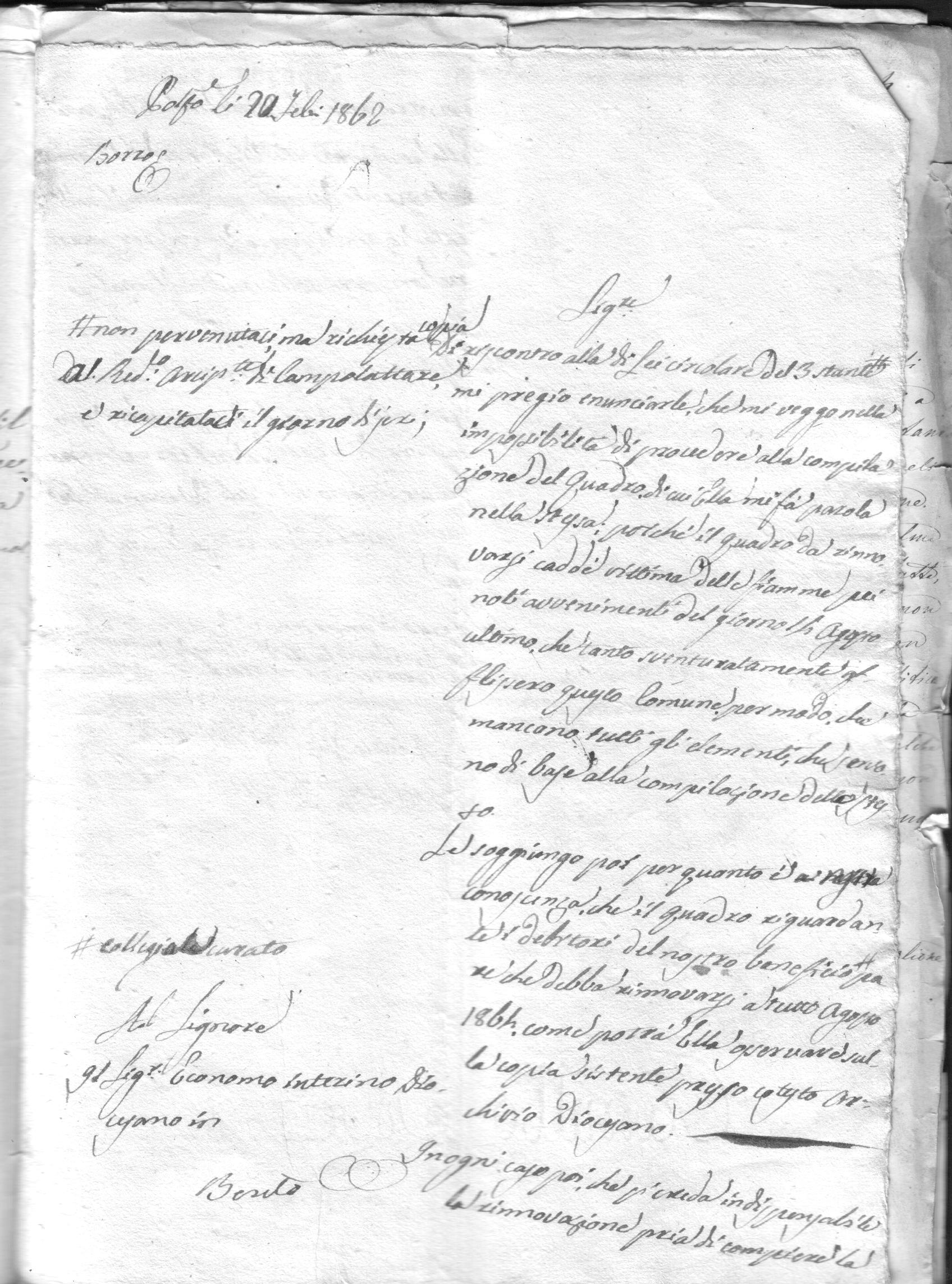
Imagine reading thousands of pages like this one.
As he created the databases he noted the book name, page number and entry number. That way if anyone really wanted to see the fragile old books they could just go to the relevant pages. He also created separate data bases labeled by book. Damn, he is good. The organization will help future historians track data.
We learned that until 1903 the priest of each parish was responsible for doing a census. The census held the tales of the village. The priests would visit each house in the parish – whyam I wondering if they also got donations for the church at the same time – and ask questions. They noted the names and ages of people living in the house, if the house was owned or rented, what kind of jobs folks had, nicknames and what ever else caught their fancy. Those notes are now safely ensconced in Antimo’s database. In 1903 the state took over the job and started to do a census every ten years. These sure has hell don’t include the interesting notes the priests wrote down.
Birth and death registration book from the 1800’s.
Before 1700 there were four parishes serving this mountain town of peasants and landholders – San Felice, San Angelo, San Piedro and San Salvatore. So priests from all of those parishes kept records of births, baptisms, deaths, weddings. These are great old journals with meticulous handwriting on paper so old that it crumbles when touched. We know that because the Comune has it’s own set of unprotected books that are manhandled, falling apart and not digitized! Che fa! Thank God Antimo created a database of the much more complete church records.
In 1688, there was a huge terremoto – earthquake – after which the parishes were forced to merge. Well. not exactly forced, but San Felice and San Pietro parishes spent a lot of time fighting over who got to be the cemetery. In those days that meant holding the bones of the departed in the catacombs of the church – you know that space just below the seats for the congregation. In the throws of the fight neither church got rebuilt. That narrowed the playing field and in 1700 there was only the mother church of San Salvatore. The church where my grandmother was baptized and twice married. It still stands and we go to mass there often – not because I’m a good catholic but because I can feel her presence there.
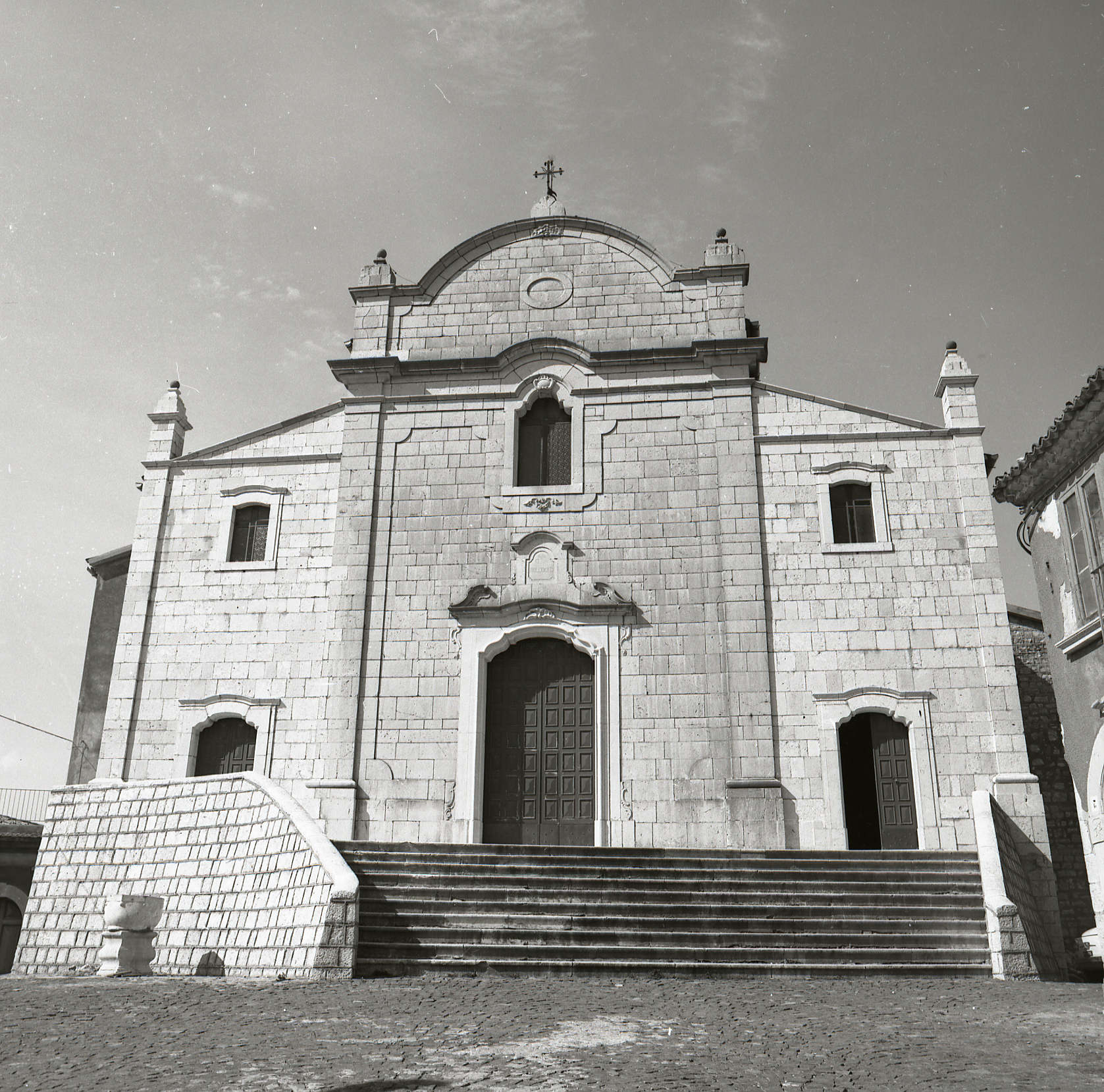
San Salvatore
The art in San Salvador is awesome.
These are shots from the 50’s. Later we will have a blog on the parish and you’ll see glorious color.
As I sit in the piazza writing this, my heart fills and tears start to glide down my cheeks. What is that about? How could a middle aged, hard assed woman like me get so sentimental about finding my family? I haven’t a clue but the universe sent me here and as my dad’s first cousin, Giusippina, says often – sangue è sangue – blood is blood and I am the first of the family to return looking for those that stayed.
Finding one’s family is a backwards process. Start with the birth and death certificates of today and work backwards. Since I had already done a lot of research to gather the documents to become an Italian Citizen, I went to see Antimo with the materials he needed to leap even further back in time. (Read the blog about citizenship for more background.) https://midgeguerrera.wordpress.com/2013/06/21/cittadina-italiana-citizenship/)
Antimo started by finding my grandmother’s birth records. We had the day, time and name of her parents, Liberantonio Solla and Maria Antonia Rinaldi. (I am dying to know if we are related to the Rinaldi Olio di Oliva folks.)
Every village in Italy will provide you with your family’s documents. There was a very nominal fee for grandma’s birth certificate.
Then he painstakingly worked backwards, creating a new excel data base for me that included everything he could find. The little details he unearthed painted a picture of the times and the people. nicknames were used everywhere. My great-great grandma Solla had the same name as mia nonna – Maria Rosaria. It was also the same name as her mother. Her birth certificate was noted as Maria Rosaria D’Addona.
Antimo said that baptisms were very close in date to birth records. Many children died soon after birth. Since everyone wanted the babies to go to heaven, people made sure they got those kids to church and baptized immediately. Often if a child died, the same name was given to the next child of the same sex. Boy, does that add another database layer of confusion.
Later we paniced – we couldn’t find my grandma’s grand-mom, Maria Rosaria D’Addona, in any database. Oh where oh where could my grande bisnonna be! We only found the unborn (no birth record) Cesare D”Addona in all the family census databases. Like she fell from the sky. The brilliant Antimo scanned even more documents and realized that Cesare was Maria Rosaria’s nonna’s name. Since there were two Maria Rosarias in the family they decided to call my great great grandma – Cesare. In 1839, Cesare was only 16 years old when she married the widower Felice Solla from Morcone. I am guessing he didn’t have much cash because they moved in with her mother on Via San Felice (now Via Municipo – the same street where Antimo currently lives.) That means I have walked past my great – great grandparents first marital home a million times!
I never would have figured that out. We were blessed to have Antimo, a focused detective, helping us by constantly cross checking information from birth, death, marriage and census records. OK, we found the lineage of my great grandma. Now let’s talk about great grandpop.
My great grandfather was Liberantonio Solla – family tales are full of his musical ability. Zia Caterina also remembered his ability to drink the night away and fall down the mountain on the way home to Via Porta Nuova. On my second visit to Pontelandolfo, we found my great granddad’s house . The rocks of this small medieval stone cottage – now in ruins – held secrets that we will never know. Or will we?
Only a few stone walls are left of the house that my young grandmother, grandfather and aunt and uncles shared with grandma’s parents.
What we didn’t know was that Liberantonio wasn’t called Liberantoino by anyone but his mama. Pitocchio (flea in dialect) was his nickname. As he played the concertina, villagers shouted Pitocchio . I’m not quite sure of the name my bisnonna, Maria Antonia Rinaldi, shouted when he came home dead drunk, having spent all he made singing at the bar.
Oh, I just remembered, great grandma Maria Antonia Rinaldi was born in a rented house. Liberantonio Solla was born on Via San Felice – in the home of his grandma! How the hell did we discover all this in less than ten hours? My great grandfather was a “bracciante” – an ancient term for working the land for someone else and getting a piece of what you grew for yourself – yeah serf. I come from a long line of indentured servants. Weeoo. My great-great uncle Nicola Solla (Liberantonio’s bro) worked for the commune. We discovered that for generations a Nicola Solla worked for the commune. I can’t wait to find out if one works for the town today.
So much to discover. So many stories to hear, feel and relive. So little time to do it all.
Thank you. Thank you. Thank you Antimo Albini for keeping the keys to family history at our fingertips.





















 Nonna's Mulberry Tree