Pontelandolfo Funeral Traditions

IMG_1512 Finally – the story you may or may not have been waiting for – the funeral traditions of my Italian home town. A shout out on this topic to  Art Adair of Somerville’s New Cemetery, Jimmy Cusick of Cusick’s Funeral Home and Mayann Carroll, former ace lobbyist for the Funeral Director’s Association.  Sorry that this particular blog was usurped earlier by my finding my great grand daddy’s bones and turning into a pile of weepy. (https://nonnasmulberrytree.com/2014/06/06/finding-my-great-grandfather/)

This morning when I got up there was a line of cars outside our house. (Thats a lie, it’s been a week since this happened but I didn’t want to mess with the story.) I mentioned the cars to Jack and he said they had been there late last night too. An all night bash and we weren’t invited?  Of course we are usually asleep by 10:00.  Our house is really close to the cemetery but it has a parking lot and this car line started further up the hill. H’mmm.

The yellow house on the left is ours - surrounded by cars.
The yellow house on the left is ours – surrounded by cars.

Our neighbor and friend, Nicola Ciarlo, stopped over for caffè.  Nosey Jack asked why Nicola wasn’t working.  “There’s a funeral, he said, don’t you see the cars?”  What cars, I said?  (Hey I’m not the nosey one.)  Looking at me like I had Campari for breakfast, Nicola said, “The ones on the road by the house?”  Oh those cars.  Why are they here? “People are visiting the family.”  We do that in the New Jersey too.  “With the body?” he asked.  I retorted, The real body – the dead body?

According to Nicola, here in Pontelandolfo they bring the coffin to the house, arrange the body in the bedroom or another room and everyone comes to the house to pay their respects.  People bring food and many kiss the dead person goodbye.  (Try bringing food to a NJ funeral parlor – I’ve gotten my hand slapped trying that one – right Jimmy.) 

The family stays up all night with the corpse.  My first response was YUCK will I ever use that room again.  Then, thinking about it, the idea resonated with me and actually sounds more civilized than schlepping the corpse from a drawer in the morgue to the paid company’s home. (Sorry Jimmy, your funeral parlor often feels like my home away from home.)   They don’t have funeral parlors in Ponteladolfo – they have funeral facilitators.  So unless you  want to cart the body to – well I don’t know to where – you have to use your own parlor.  H’mm that could be a lot of work.  I mean, how long is the body in the house — I’m thinking three visitation days – two hours in the afternoon and two or three in the evening – or something like that.  “Oh”, Nicola said, “its only 24 hours then the funeral at the church and burial.  People visit most of that time.”

I was blessed to be present when my dad died and moments after my precious Aunt Cat died.  During that period of time, I could feel the force of their spirits leaving.  It wasn’t ugly or scary – it was an opportunity to share yet another moment with someone you loved.  So maybe taking the process one step further and having your loved one pass on from their home isn’t’ so bad.  Years ago that was the American tradition too.

I only saw the sign for one “organizzazione funerali a Pontelandolfo” – notice it is not a “home or parlor.”  The company, Agenzia Funebre Diglio, located on Piano della Croce, 8 – 82027 – Pontelandolfo, BN, organizes funerals.  They do not embalm!  Bodies here are not embalmed.  I’m thinking the NJ Funeral Directors lobby would have a hissy fit if folks started screaming for our laws to change and bodies in their natural state were allowed to be viewed for 24 hours and interred.

20140612-105625-39385902.jpg
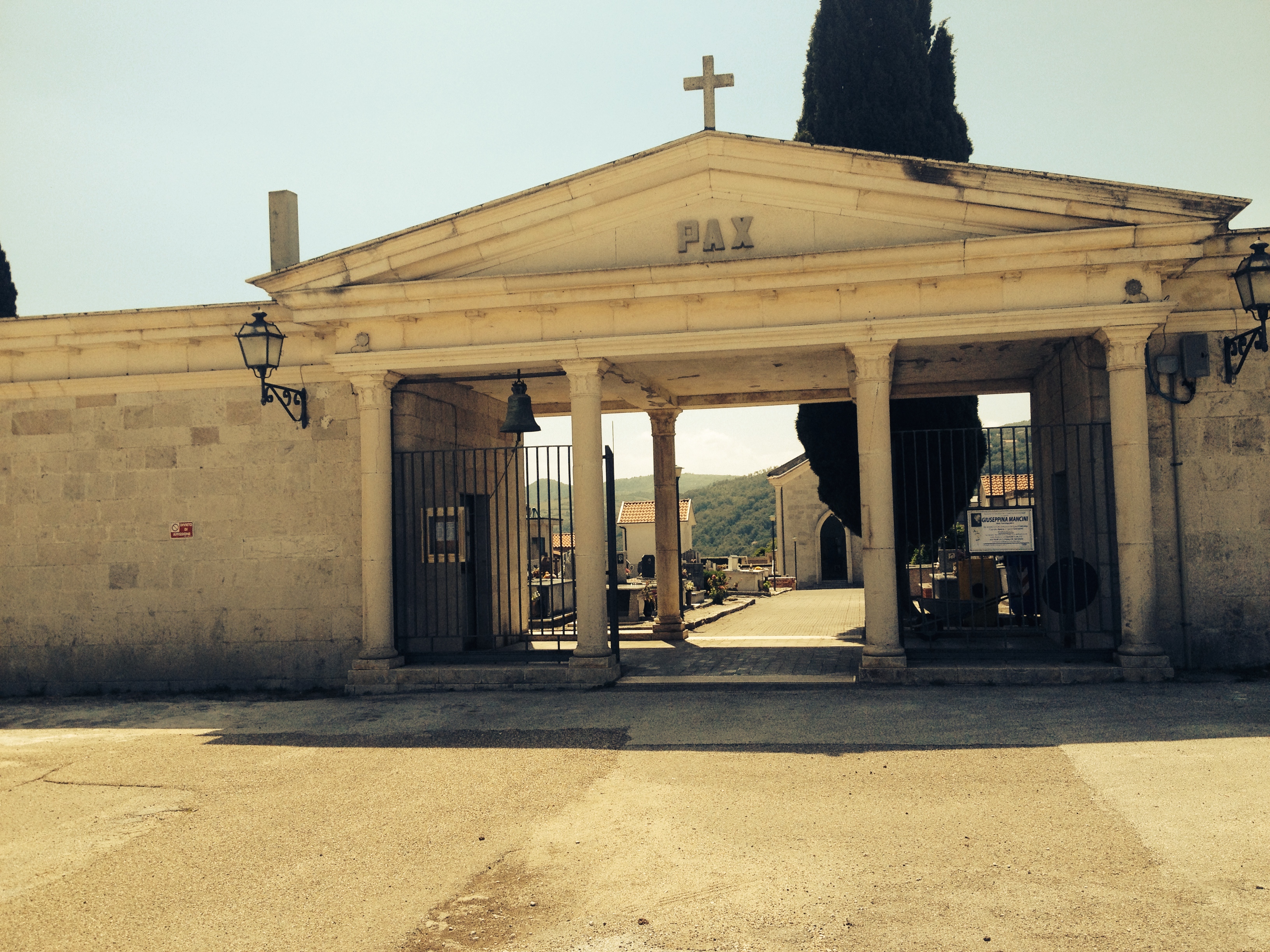
Conveniently located just down a hill from the cemetery.

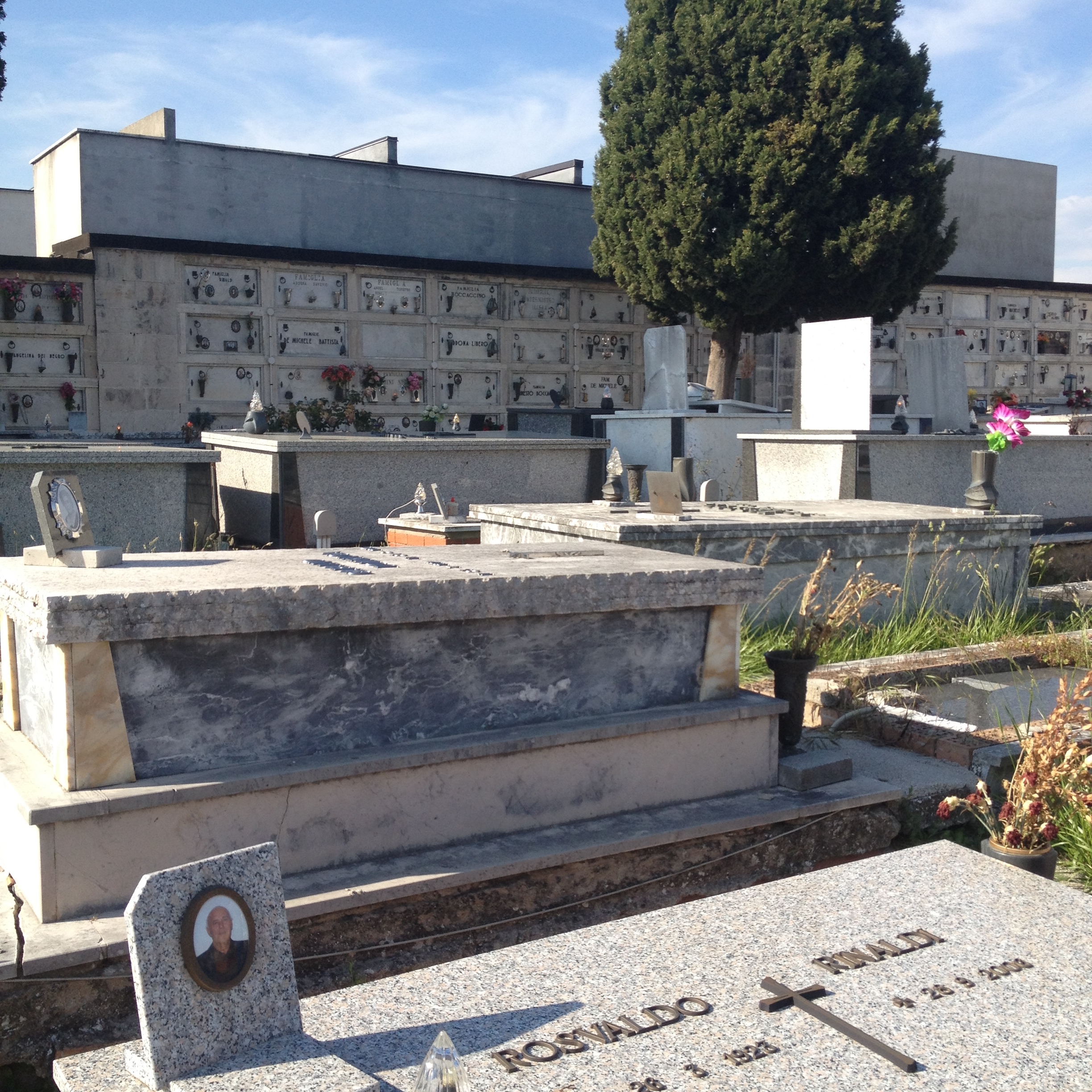
My Italian is not the best so I may have misunderstood some of Nicola’s nuances but research and Jack’s memory of his Italian teacher saying the same thing confirms what follows – sort of.  Here you only lease a spot for a coffin.  If you have a lot of money you build a zinc box like thing and your coffin rests on a cement pad.  You then have thirty years to decompose peacefully.  If you have less money your coffin is partially buried in the dirt and you have a small shell of an exterior box. You get ten years of a cozy spot.
IMG_1547
The tall zinc model is on the left and next to it is the lower model.

After thirty years – or ten – the body is exhumed, bones are cleaned and put in a small box.  Often, there is another ceremony for the bones.  The bones are then placed in a smaller spot on one of the long walls of marble.  Poor folks who don’t have family drawers on the wall are placed in the basement of the cemetery chapel. Those of you who read my last post, heard that story.

IMG_1545
You can see how the coffin is not really deep in the ground.


IMG_1543
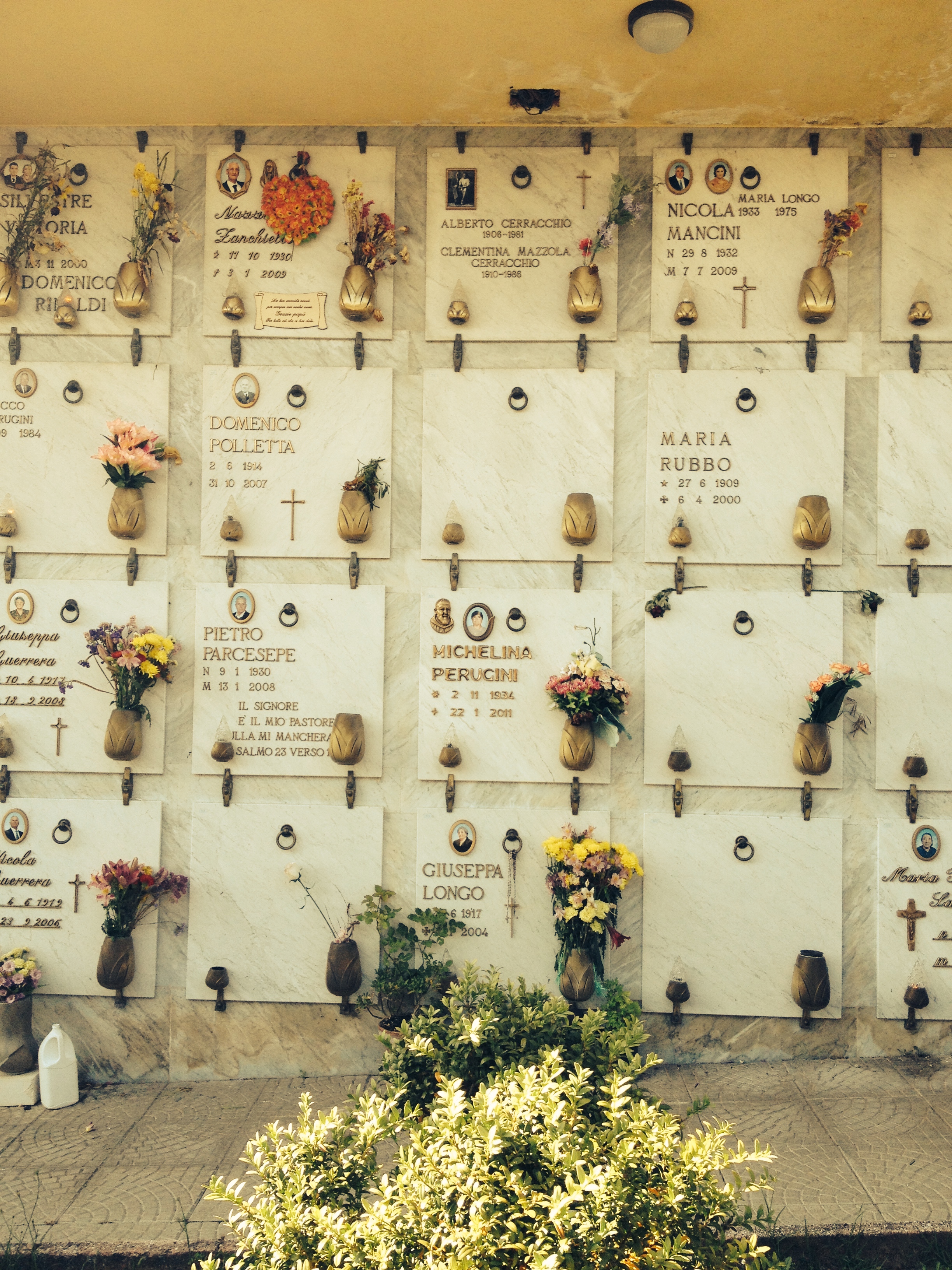
Here is a wall of family alcoves.
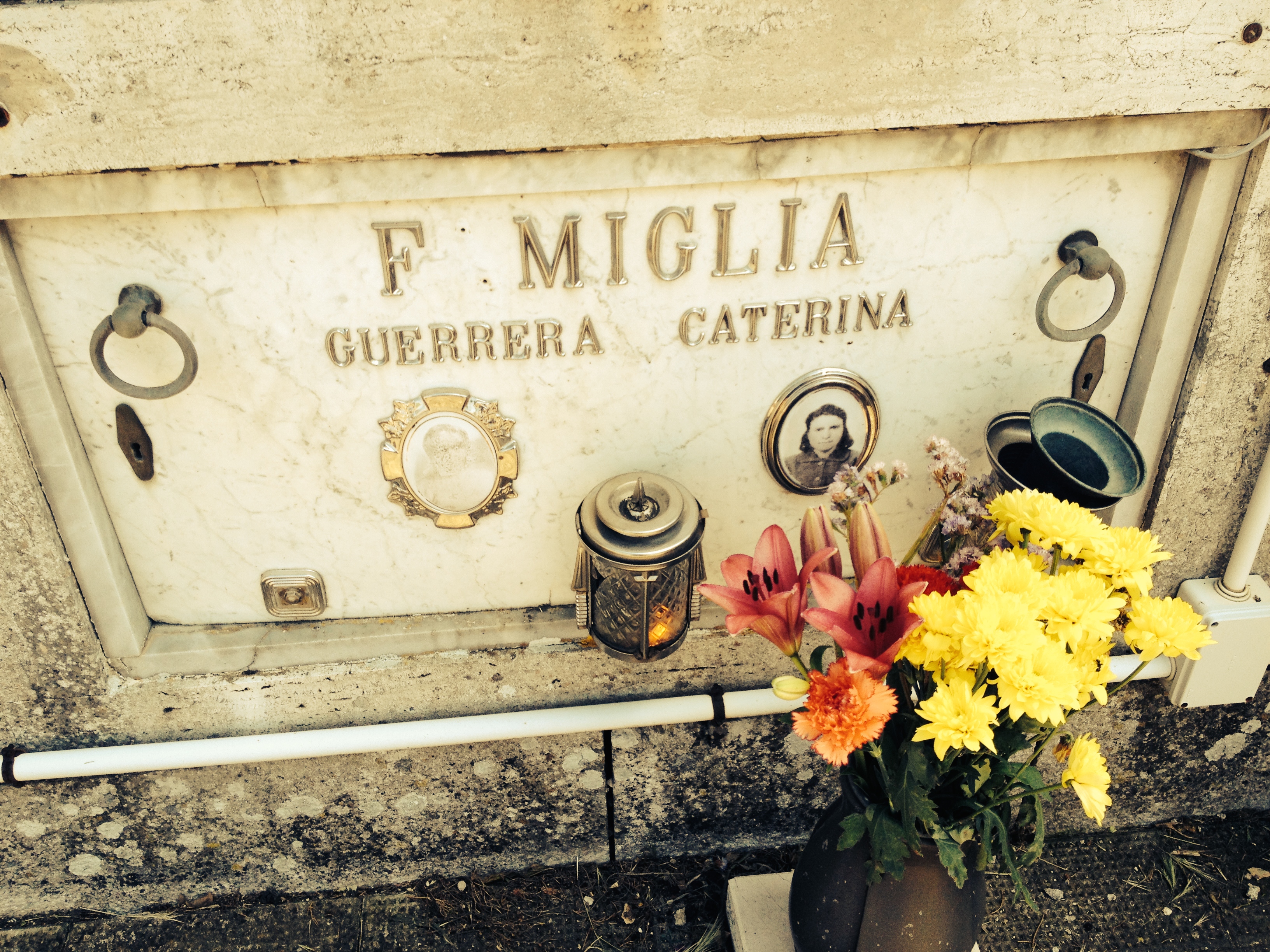
Here is a close up of a spot.  It reminded me of my favorite Aunt Cat.
Here is a close up of a spot. It reminded me of my favorite Aunt Cat.  Note the fresh flowers.

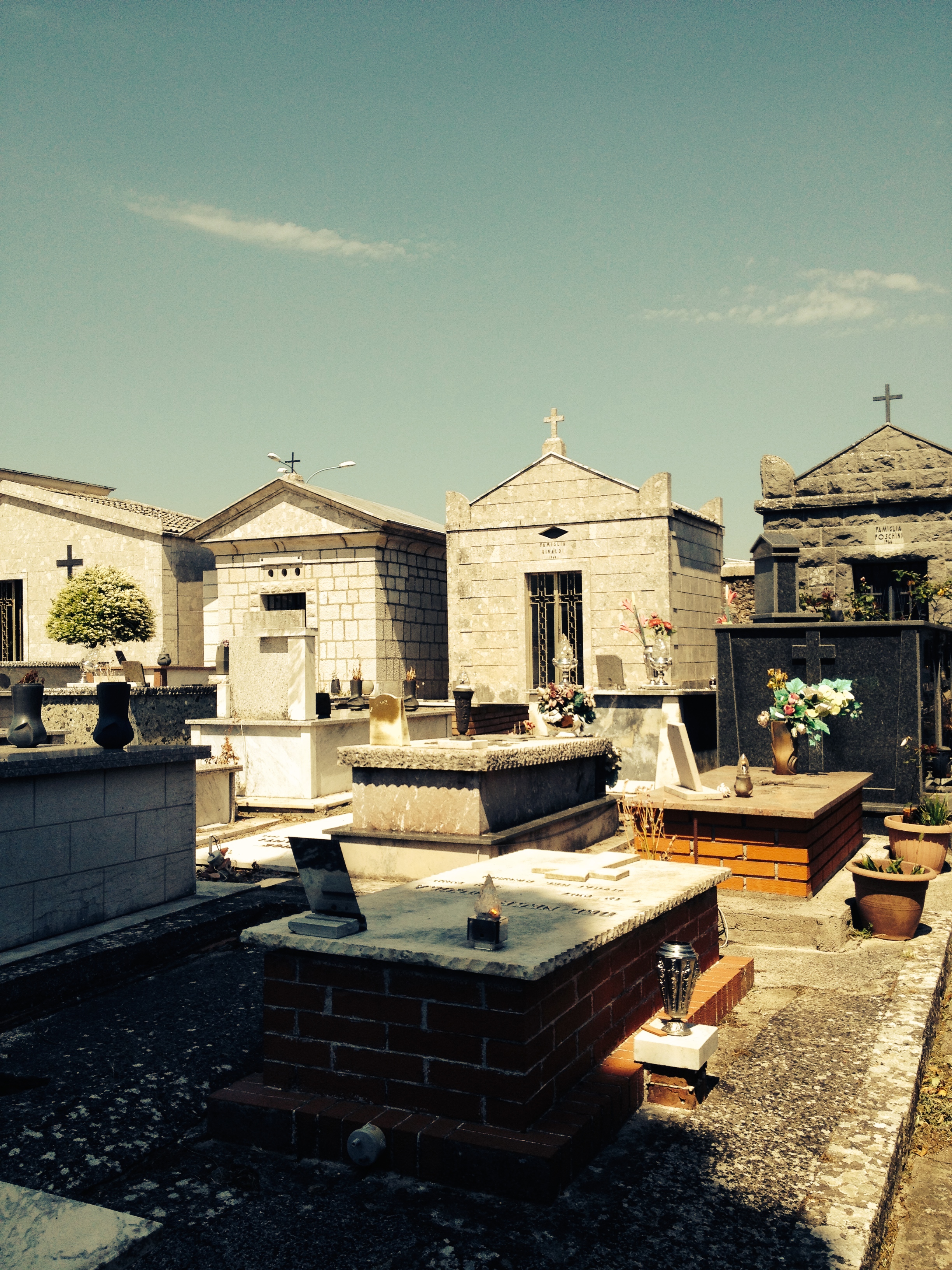
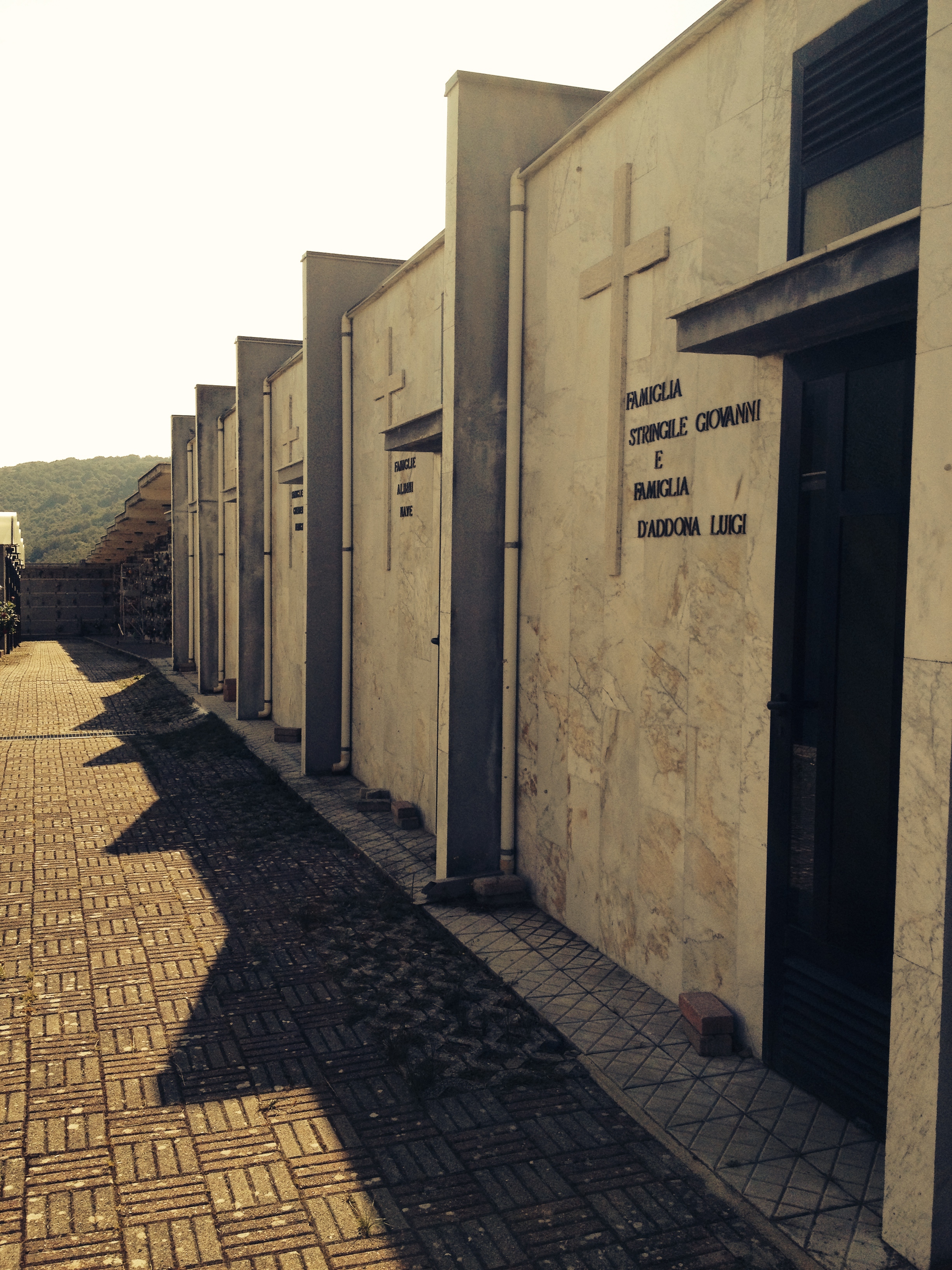
People of means have little private burial houses – what do we call those – memorials?   (If you know what these things are called leave a comment.)   The family’s remains can stay in the coffin in a place permanently or be removed later to make space for younger relatives, their bones placed in a glass box and put to rest in a smaller spot.
IMG_1527
There is a little village of these houses.
IMG_1528
This is the modern version.
IMG_1529
I peaked in side one of the houses. The flowers are fresh and changed often.

The people here visit their deceased family often. I see families come bringing new flowers weekly.  There is a real connection to the past.
IMG_1552
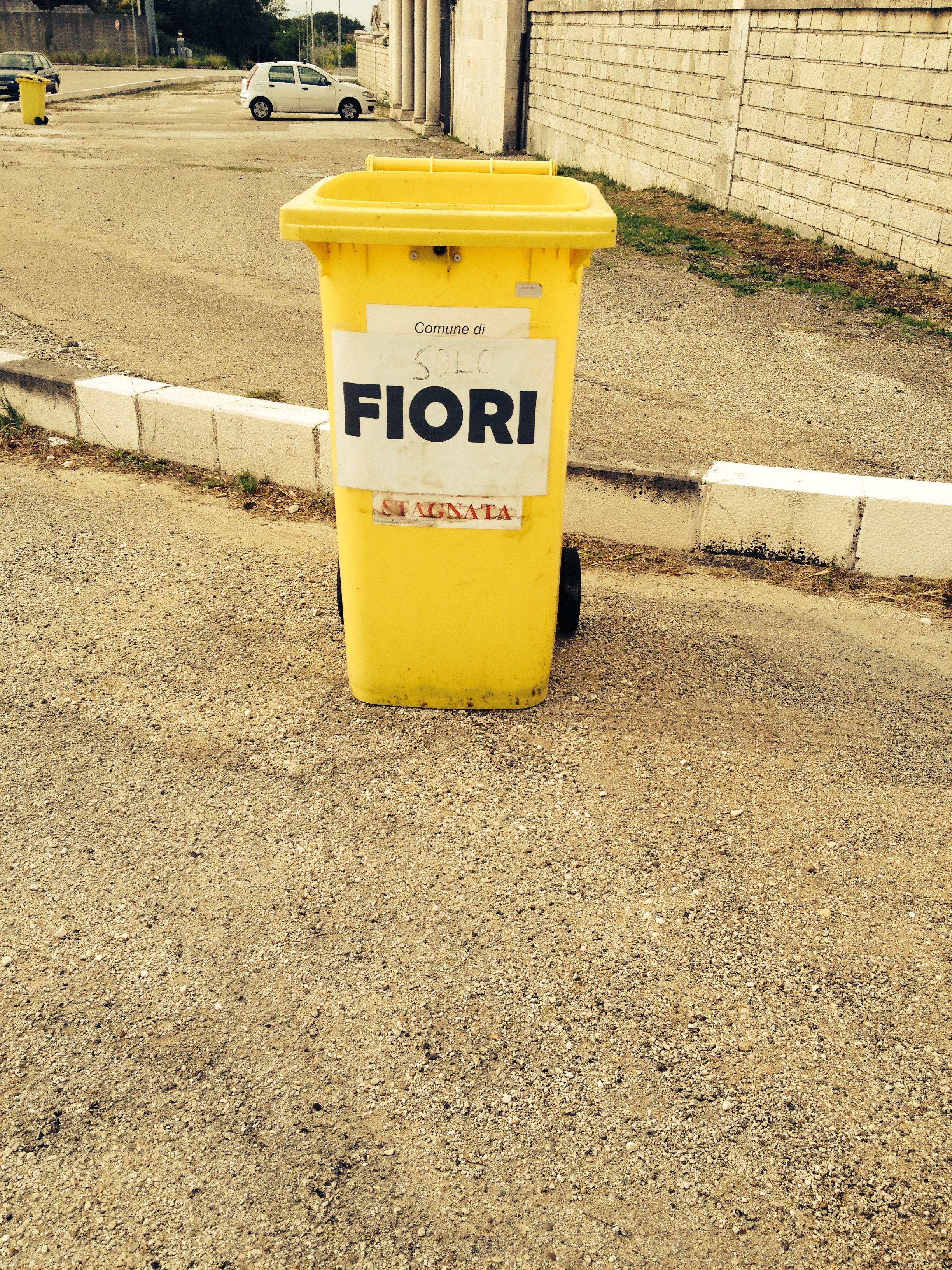
The cemetery association has these flower recycling bins to hold last week’s buds.

This exhumation and re-burial in a smaller spot is far from barbaric. It is done with love and a understanding of the cycle of life. The mountain’s rocky soil makes interment difficult. Usable land is farmed to bring food and income to the residents. The re-interment of remains has been going on for hundreds of years – think of all the bones found in ancient church lower basements- catacombs. More important than the burial process is the honor that is given to the dead – ongoing by even the younger generations.

IMG_1518
You can really see the height differences in the burial plots.

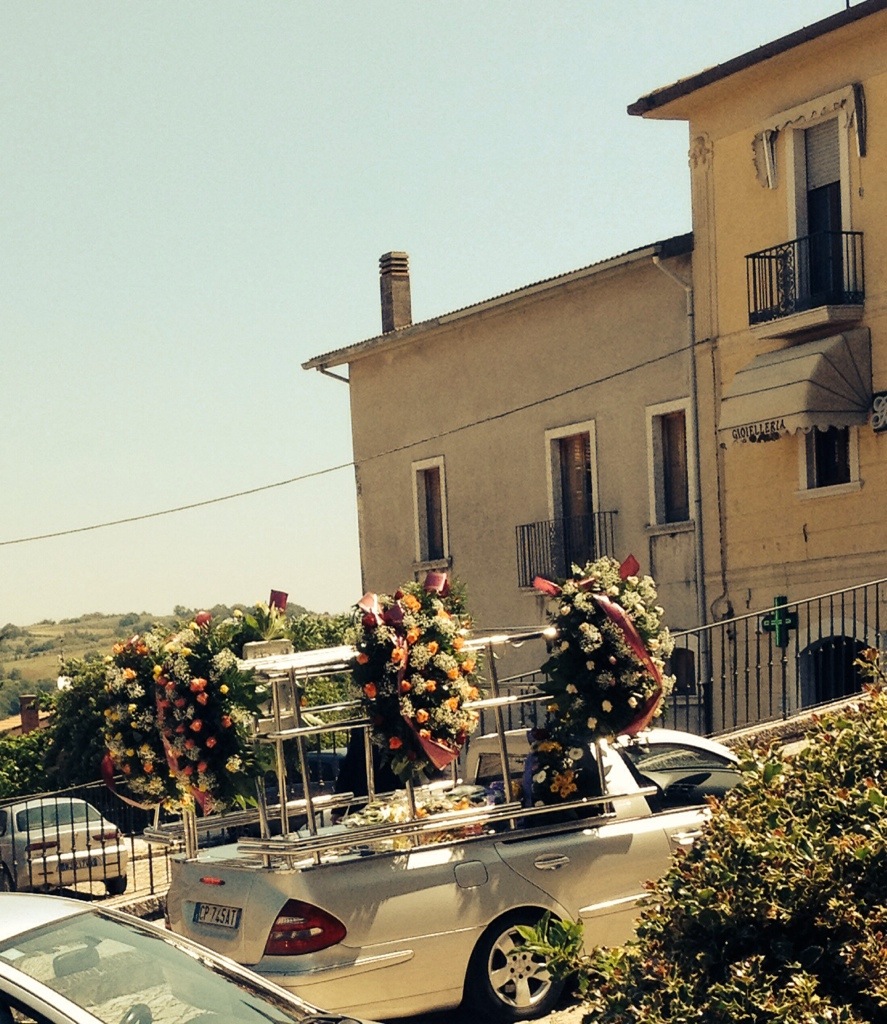
After Nicola patiently explained all that to me, I decided to walk down the hill and see the funeral precession for our neighbor.  I chose to watch from the great patio at Bar Mixed Fantasy. Whew, I got here just in time to watch the lead flower car slowly move up the hill to the old church. The hearse followed and following the hearse,  just like in every old movie of an Italian funeral, people from the village slowly marched up the hill too.  Wait a second – the person dies, is laid out at home and within hours folks are visiting, bringing food and clearing their calendars for the next day’s funeral.  How does the news spread that fast?  One of the services provided by the Funeral Agency is the immediate printing and posting of the large death notices.
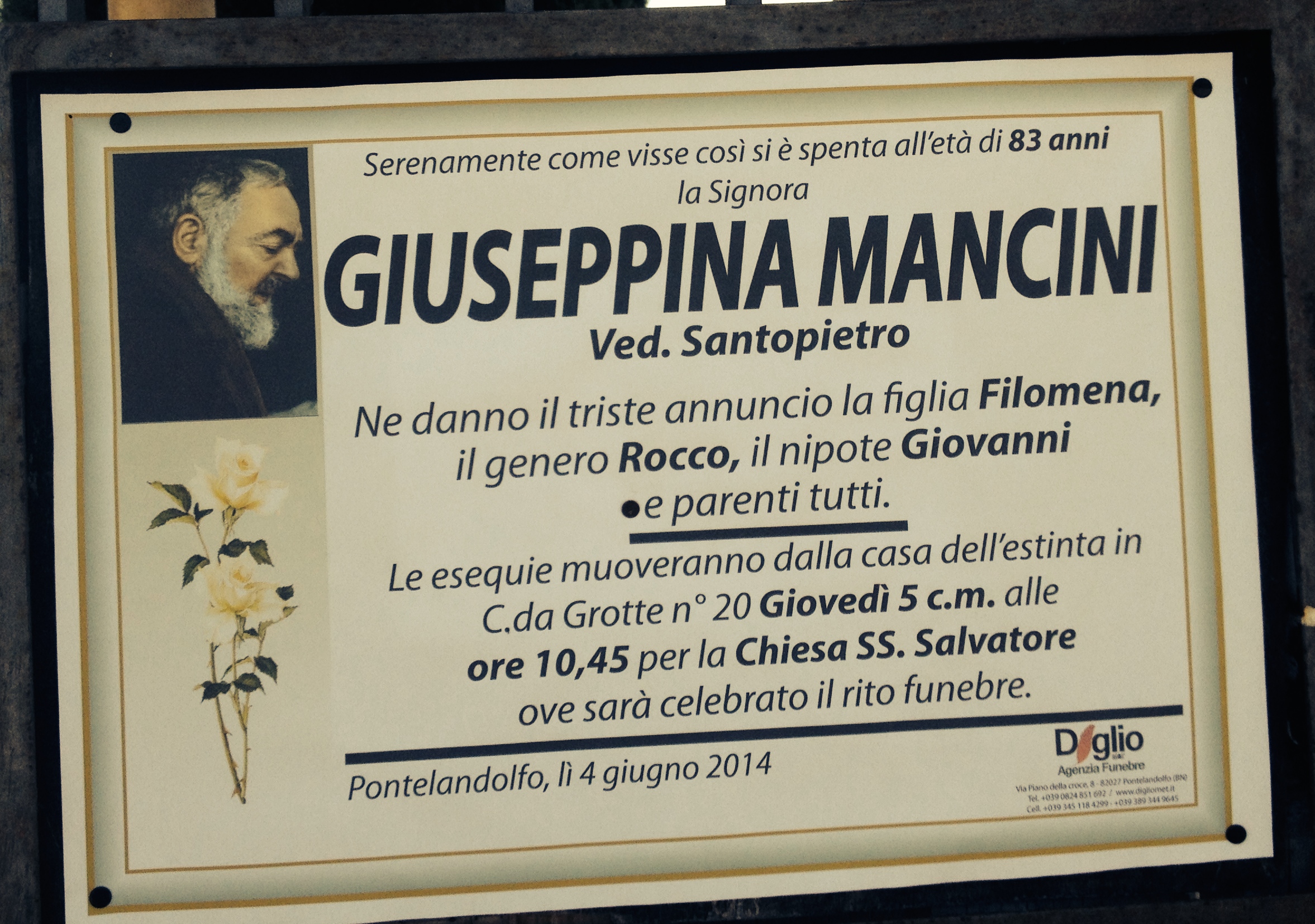
These notices go up instantly.

The first time I came to Pontelandolfo – years ago – I saw plastered on the wall a death notice for Giovanni Guerrera.  It was a little freaky since I had spoken to my dad the day before and he was fine.  The death notices are either simple or adorned with art.  Within hours of the persons passing the notices are posted on the villages walls and posted at the cemetery.

Ok, back to my glass of succo d’arancia rossa and the procession.  I will admit I wanted to take pictures but I thought that it would be incredibly tacky.  It was a very quiet and somber movement towards the church.  OK,OK, I snuck one picture of the flower car. (This is for Cusick’s Funeral Home.)
20140605-124655-46015266.jpg

After the mass, the procession moved slowly down the hill to the piazza and on towards the cemetery. Where the loved one will be interred undisturbed until the lease runs out and they are moved to their final resting place surrounded by those that loved them.
Missing Those City Lights?

Last night I wended my way over the curvy hill road – checking for the sheep that graze and amble across the road from one field to another.  I decided to go visit Rosella and her great kids – they live in a medieval grotto next to a waterfall and antique water fountain.  The road scares the pajeeeezuz out of me – holes, animals and curves on cliffs.  But visiting the Iacovella house is worth the risks.  I’m thinking a quick game of scopa and a cup of caffè.  That was not in the cards – it was time for city lights.

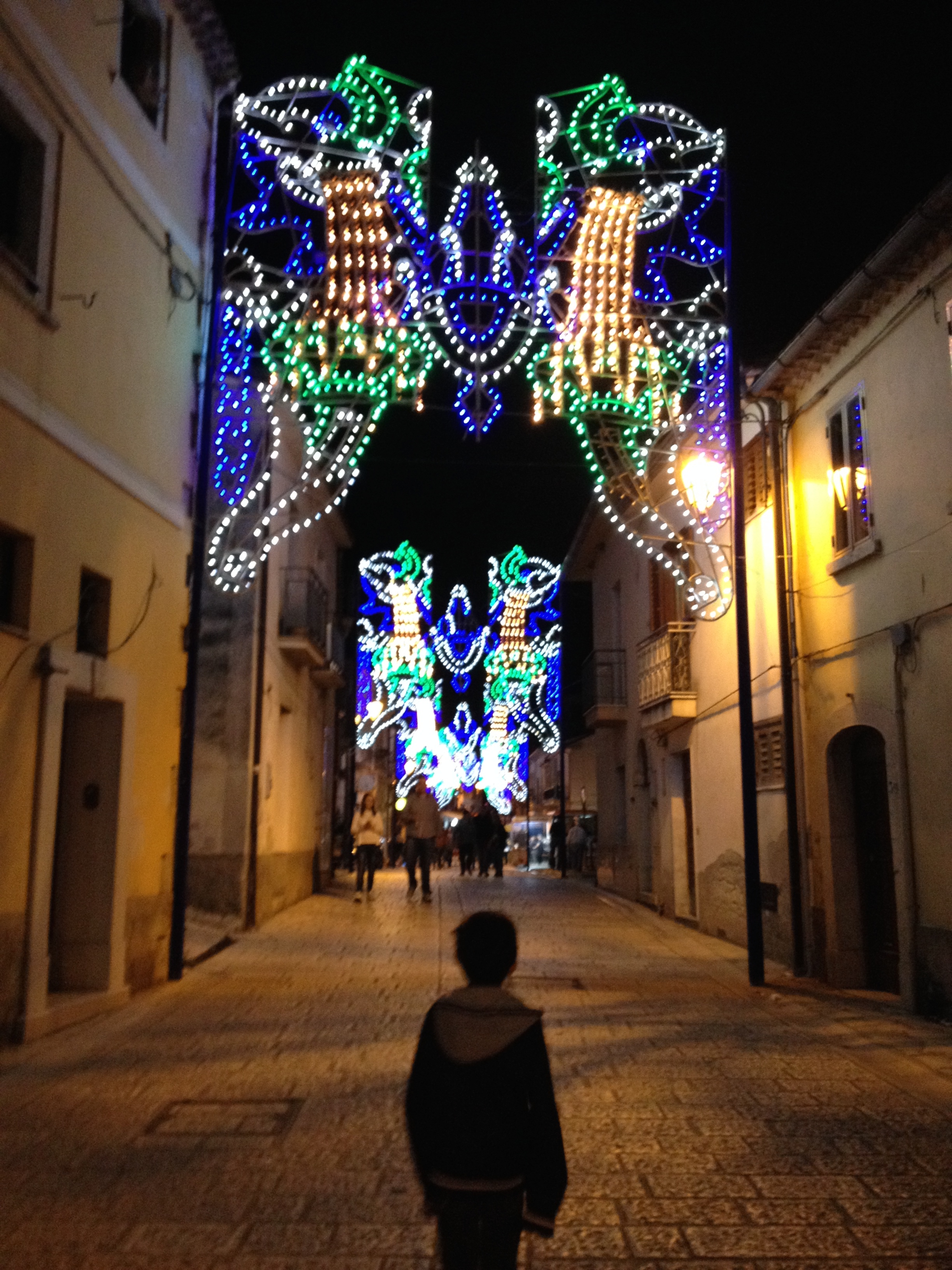
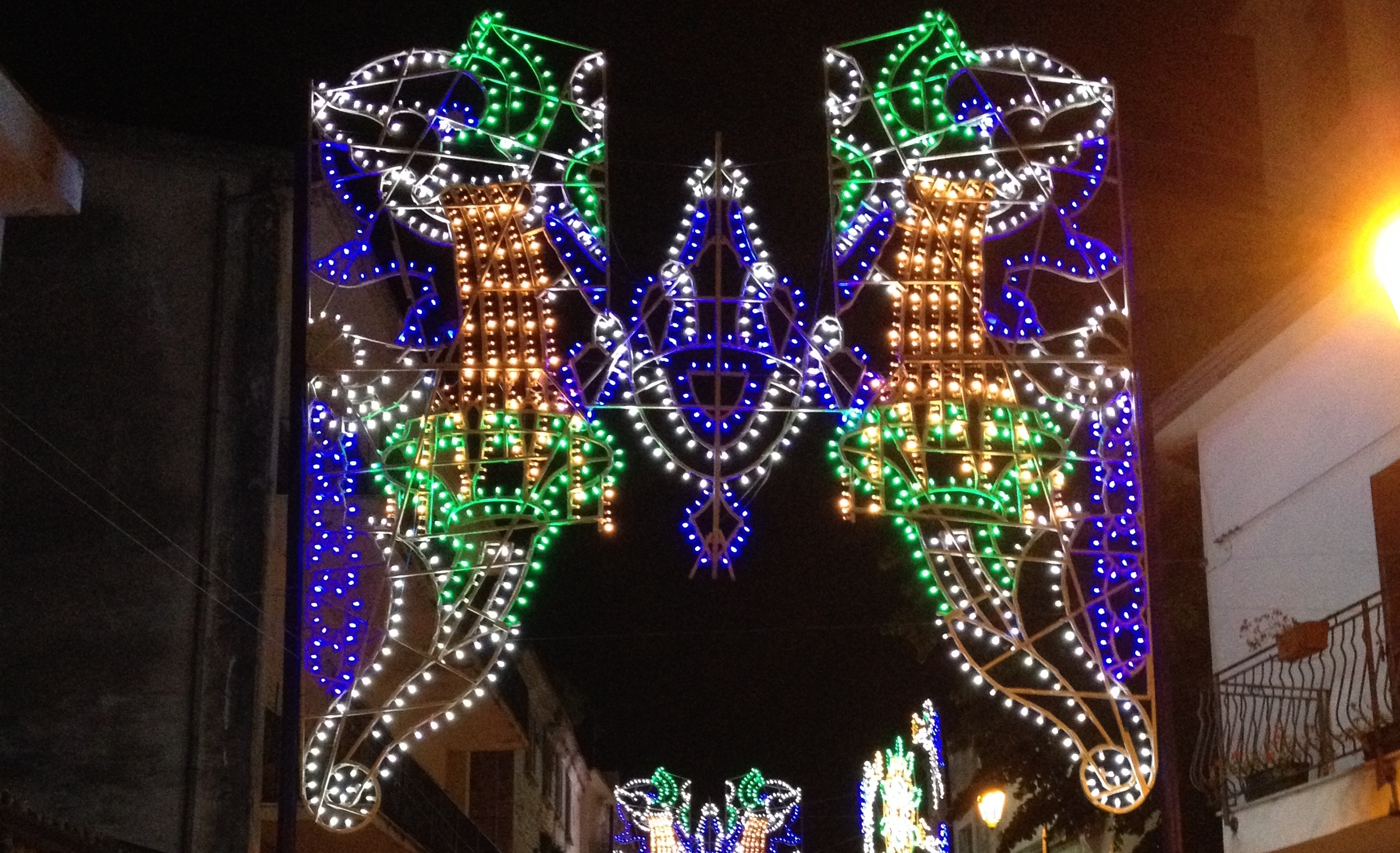
Who needs Times Square!

I jumped into the car with Rosella and the kids for a “solo cinque minute” visit to Casalduni.  Rosella’s husband, Pasquale, is running for Sindaco (mayor) and silly me thought we were bopping into the village to pick up campaign stuff.  My first clue was all of the cars parked along the road into Casalduni.  My second clue was the kids opening the windows and sticking their heads out to see something.  Whoa!  That something was this brilliantly lit street leading to the small villages central square.  Tonight was the first night of the festa for Santa Rita!

Of course, when I got back I had to google Saint Rita to find out who she was and what her deal was.  She is the patron saint of Casalduni and the patron saint of impossible causes.

She was married to a brute.  He died, her kids died and she devoted herself to God.
She was married to a brute. He died, her kids died and she devoted herself to God. Also for years after putting on a crown of thorns, she suffered with a terrible gash in her head.  Even carrying all that pain she committed herself to doing good works.

Every Italian village has a patron saint and it looks like that saint’s day – for Rita it’s May 22 – is a good excuse to bring some music, art and history to the village.  Last night the entertainment was Gruppo Folklorico Sannio Antico –  (https://www.facebook.com/pages/GRUPPO-FOLKLORICO-SANNIO-ANTICO/220253154670895) .  These all volunteer dancers told the story of Casalduni through music and movement.  Supplying the music was Il Gruppo Fontanavecchia.  In the hills,  old fountains – a source of water and life – seem to be a recurring theme. One movement piece showed women washing their clothes, gossiping and filling  jugs at the fountain – while the men flirted.  Ah a typical Italian scene. 

IMG_1444
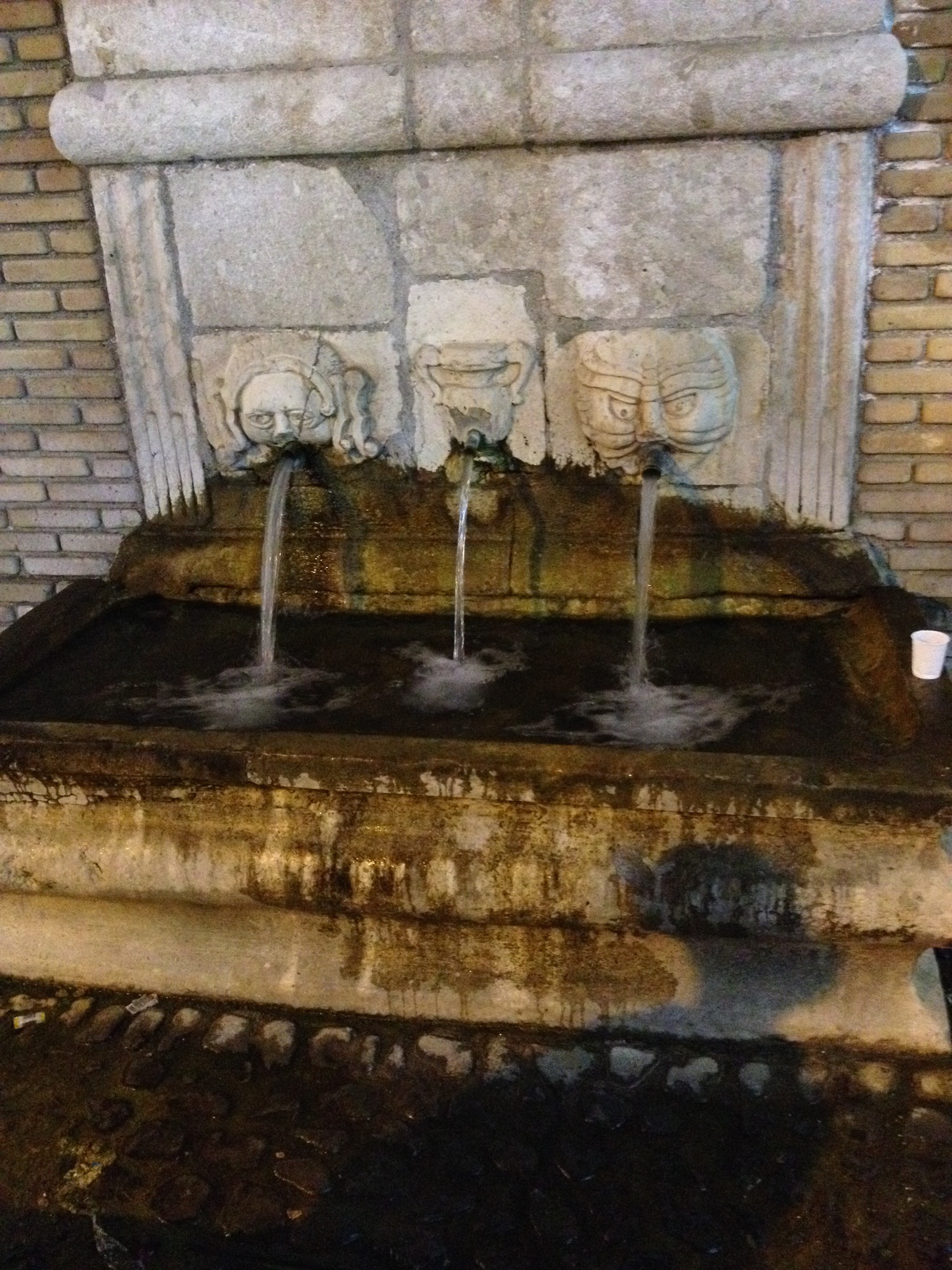
This is the village’s ancient fountain and water source. The water comes from the mountain.

Casalduni is an interesting village.  It only has about 1500 residents but covers a great swath of land.  The village historic center has tons of empty properties.  I’m guessing families immigrated and just deserted their medieval row houses.  The place is charming and would make an easily accessible artists colony or pied a terrè in Italy.  It saddens me to see these historic villages just slowly empty.

Last night, the enthusiasm and energy of the “cittadini”made it a terrific night on the town.  My theory is that people need the arts to survive and if the arts are not close by they will create their own artistic feast.  I grew up in New Jersey, NY’s step-sister.  Our town, Hillsborough Township, was and still is an artistic waste land.  There is the occasional art show and band in the park but mostly if you want action you can visit one of the hundreds of jock filled fields – soccer, baseball, and  well I don’t know what the other jock fields are for but they are there.  Since Hillsborough is so close to New York, Philadelphia and Princeton, we leave town for our art fix.  Here in the hills of Italy, people don’t have a lot of cash, there is limited public transportation and everyone has the soul of a Da Vinci.  They make art!  Dance companies are formed. Theatrical “spectacollos” are staged. Live music is found in piazzas and every child doodles on a sketch pad.  Folks here create the art they crave and a saint’s day is a great opportunity to share it.  Since Saint Rita’s day is May 22, we will go back tonight to see what artistic feast we can munch on.

IMG_1442
Dancers waiting to take the stage, join the audience.

Gruppo Folklorico Sannio Antico wishes –

Con le nostre danze e canti, auguriamo a tutti una serata piacevole e che sia portatrice di pace e serenita.”  Noi devoti di Santa Rita chiediamo la sua protezione.

 With our dances and songs, we wish that every person enjoys the evening.   Also, may this event bring serenity and peace and may Santa Rita protect everyone with many blessings.

Me, I’m just happy to see the city lights.

The night may be over but the lights and St. Rita will follow us home.


How Many Bags of Fava Beans Are There?

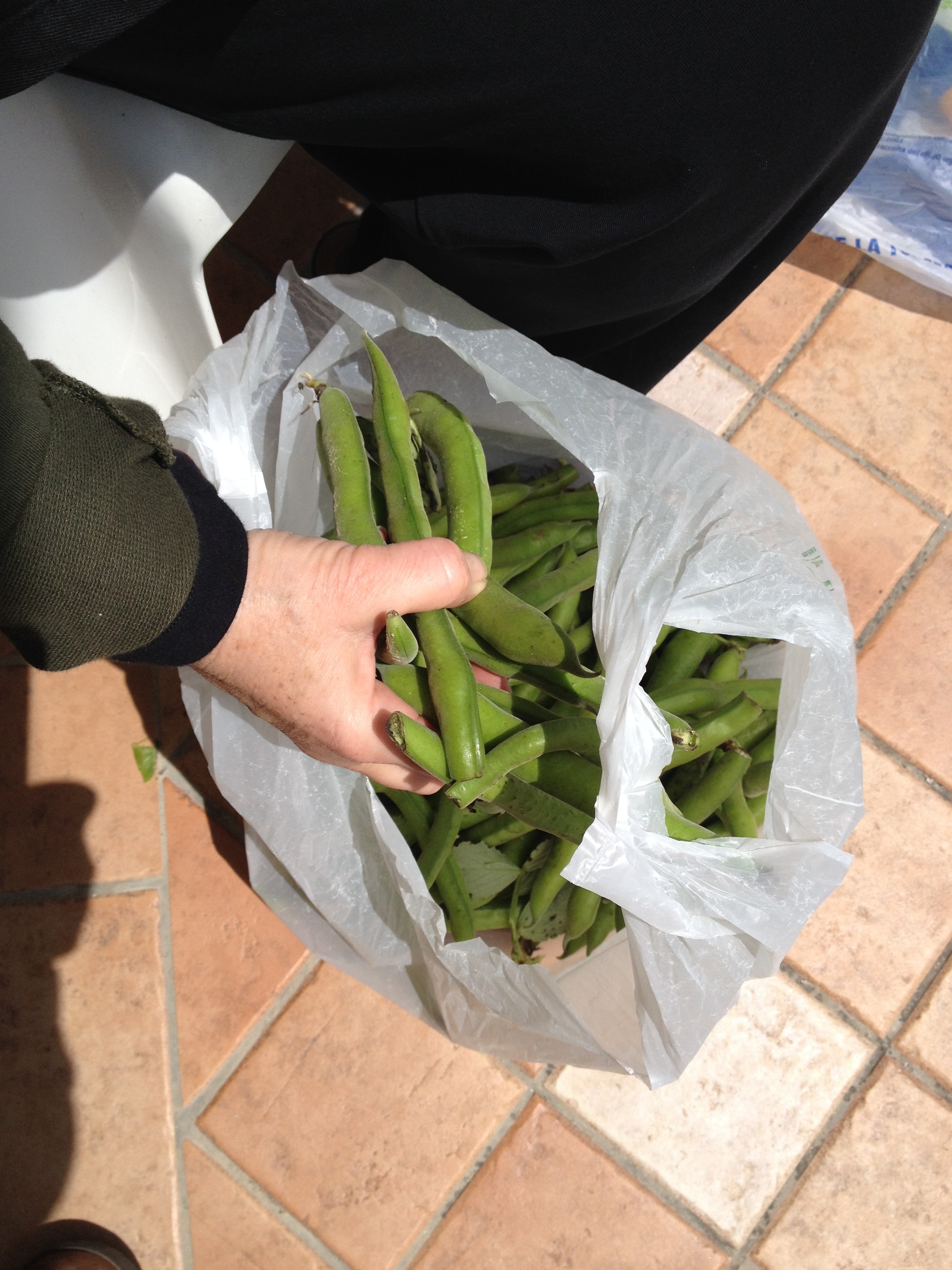
Fava beans are sprouting in everyone’s gardens!  Yea, these protein filled little fellows make a yummy dinner.  Last year, when the fava beans kept gracing my doorway, it was the first time that I had ever seen a fresh one.  Well, maybe I did when nonna was alive and had the garden the size of a campo di calcio (soccer field) – but I don’t remember.

IMG_1402
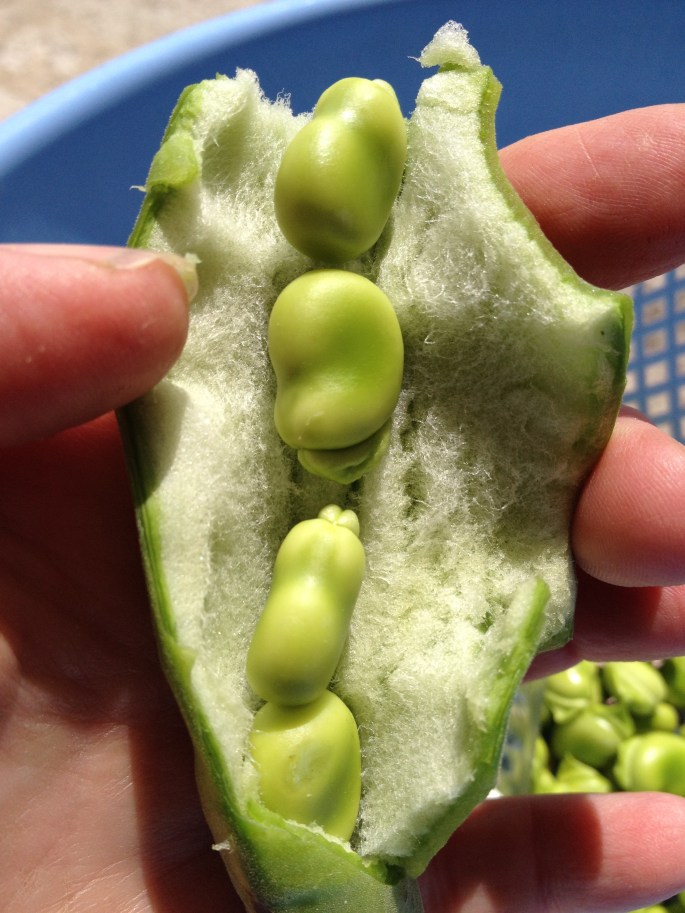
Pods are really green giants!

Seriously, this is a question that merits exploration.  How many bags of fava beans are there in Pontelandolfo?  When people pop in after pranza for caffè they usually bring something to share – like what ever is growing in the garden or was baked that morning.  Now me, I like the “what was baked” this morning – no fuss, no muss, just yummy delight.  My neighbor, Zia Vittoria, has an incredible garden.  It is chock full of every vegetable you could possibly imagine – including fava beans.

images
Bursting with protein the pods just wait to be picked, gifted and gifted again.

Yet, as other women pop in to visit Zia Vittoria, so do giant bags of fava beans.  H’mm when women visited these women they too brought fava beans.  One day it hit me.  What if there was really only a finite number of bags of fava beans and in any given span of two days the same 15 bags got re-gifted from house to house.

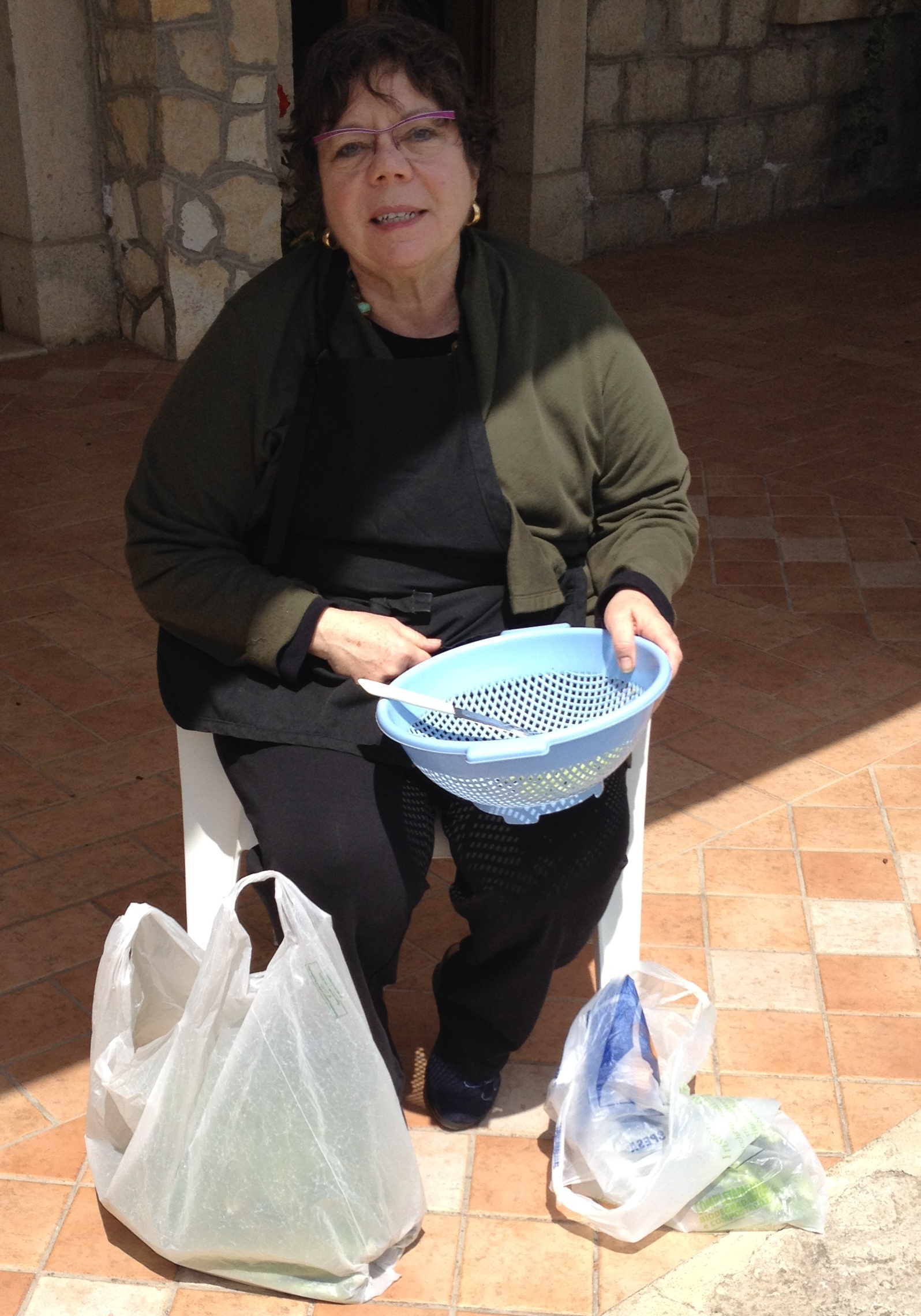
The bags stop here!  Well, when a bag appears on my door step I don’t re-gift it.  I say “guess whose coming to dinner.”  Last year Mr. Fava came often. The top picture is of my first bag of this season.  I pulled out the colander, a knife and a bag for the compost pile.  The sky was blue and I cheerily began popping beans out of the pod.

IMG_1397
Eat local and touch your food first.

So there I am shelling beans and wondering how I was going to cook them when my nipote (Italian for any kid in your family that you are related to and older than) popped by, reached into the bag, ripped open the pod and tossed the beans in his mouth.  RAW!  Who knew!  I was forced to try it – I mean I’ll taste just about anything.  The bean was sweetly good and obviously picked this morning.  I discovered that the day they are picked they are deleeeeesh as a salad – tossed with tuna or just a few slices of onion or whatever you can imagine.  That is also an abundantly easy lunch or dinner.

IMG_1403
If you can find the “zipper” these are pretty easy to open. Or stick the tip of the knife in the top and give it a slice. Then pop the beans into a bucket – just like a carnival.

I kept at the de-podding for a while.  My brain taking journeys back to the early seventies when with my long hair braided, I shelled beans, baked bread, grew sprouts and didn’t inhale.  It seems to me that it used to be fun.  This ain’t fun but it is worthwhile.

How many more are there?  And why do so many giant beans yield one little bean dish?
How many more are there? And why do so many giant beans yield one little bean dish?

One of the things I remembered while I was mindlessly popping beans, was an article in the New York Times that I read last year. A snotty assed food writer had gone to Rome. ordered fava beans in a restaurant and was appalled that they weren’t peeled!  I had no idea what the hell Miss little anal retentive was talking about.  In all the homes I’ve visited for pranza, all the fava bean stew, soup, frittata I’ve eaten, no one peeled off the outer shell.  I was taught to par- boil the beans before creating the dish.  Apparently, after this par-boiling part you can take off the outer shell.  Hell lady, I just spent an hour popping pods and now you want me to spend two hours popping par-boiled beans?

IMG_1405
It looks like a nursery of wee ones nestled on a flannel bed.

I caved and decided to try it.  After boiling the beans and dumping them in the ever faithful colander, I burnt my fingers trying to pop them out of their little shells.  What?  Wait till they cool?  What a thought!  Ten minutes is the maximum of waiting time I give anything.  I popped a few and tasted them.  Damn, it did make a taste difference.  They tasted sweeter and less meaty than they do with the shells on. I looked at the bowl of about a pazillion beans and I looked at Jack.  He gave me the “are you crazy” look – no one here takes the shells off.  When in Rome……

Without skinning the par-boiled beans, I made a simple recipe.   First I sautéd a couple of large onions in local olive oil, toss in cubes of pancetta and let that all get caramelized and crispy.  I always buy un etto of cubed pancetta – 100 grams – so that is probably what I used.  H’mm, from all the veggie tops and pieces I had languishing around, I made vegetable broth yesterday.   I tossed some broth in the pan, added the beans, a dollop of red wine – this is Italy – and let it simmer.  That and crusty bread made a perfect “cena.”

What’s that outside my door?  FAVA!

Thank you Rachel for my present!

Passionate Card Games

Men to the right of me.  Men to the left of me.  Men in sports jackets.  Men in open collar shirts.  Men in jeans and work shoes.  Men!

In my decadent youth being the only woman in a bar full of men would have been an incredible challenge.  Who would I key in on and get to buy me a Dewar’s on the rocks?  Who would be  smart enough to captivate me with conversation?   Who would….

Midge cutesy
Yoo, hoo – I’m looking at you! Damn, in the day the old magic eyes could reel them in.

Ah, youth – wasted on the young.  One Sunday, I was the only woman in the Bar Elimar.  I’m guessing other women were at the mass I had gotten up too late to head to.  The bar was packed with men – inside and out.  There was one lone table – in the sun – left so I plopped myself down and ordered the breakfast of champions.

IMG_0414
What a way to start a Sunday!

As I sipped my cappucino, my mind flashed back to the 70’s – whoa – hold on lady you are now very close to 70.  Take a breath.  I whipped out my iPad, did that pretend reading thing while I scoped out the scene. H’mmm what would I have to do to get one of these guys to come over to my table?   H’mmm would the killer stare work or would it be the smile & nod routine?

Then it hit me.  Even if my foxy friend Mary were here to act as wing man – we tag-teamed in bars in our rakish youth – no one would look at me. I could be a size 2 and naked and no one would look at me.  They are all staring at their cards!  Card games and other games of chance are an intense fact of life in my little village.  Cards are a passion.

IMG_0847
Yoo hoo – My boob just popped out of my shirt!!!

Men sit for hours in the bars playing cards – Scopa, Briscola and other games that I didn’t recognize but there was lots of tossing of cards and shouting.  Last summer, Alessio, one of my favorite young men and his cute older brother Gabriele, decided to teach me to play Scopa.  After all they and their buddies, mimicking the older guys, sit sipping soda and playing Scopa in the piazza.  Surely, this old American cousin could learn.

According to the Dante Alighieri Society of Washington –

Scopa is the most popular card game in Italy .  It requires the ability to count and add up to the number 40.

Boom, that took me right of the running.  I can’t add up to 40 in English and now I have to do it in Italian?

Gabrella hold Alessio  back from leaping across the table at me because I forgot how much il re was worth.
Gabriele holds Alessio back from leaping across the table at me because I forgot how much il re was worth.


After numerous lessons and lots of laughing – all pointed at me – Alessio and Gabrielle finally  taught me enough to actually play with me.  But our games paled compared to the men in the bars.  There wasn’t any tossing of hands in the air, slapping the cards with the force of death, loud groans and arguments.  No one got up and left abruptly at our table.  (Unless it was to get a snack.)

Art is everywhere - even in a Napoletane deck of cards.
Art is everywhere – even in a Napoletane deck of cards.

During the focused card games in the bars, I never saw money change hands – gambling is illegal I think – but in my heart of hearts I knew that passionate play had to lead to some prize.  Maybe it’s simply beer or if you’re lucky…..


Oro Giovane – Local Holiday Shopping in Pontelandolfo

Bah, humbug said the Scrooge Midge as she stared at the masses of cars outside the mall and struggled to drive past it on the super crowded highway.  Bah, Bah, BAH, HUMBUG said super angry Scrooge Midge when she saw all of the Black Friday news shots of herds of people trampling into the  evil BOX STORES that plague the American landscape.  How can Scrooge Midge get back in touch with the Christmas Spirit?  How can Scrooge Midge get in touch with her inner Santa and put down that bottle of  Scotch?  She can go into the gift closet and start reminiscing about where she bought the baubles for her family and be proud that she thought about gift buying for Christmas when she was still in Pontelandolfo.   Even prouder that she was shopping uber-local from people who live and work in a minuscule Italian village.  Whoa – look at this –

IMG_1114
I picked this up for my cousin – oops – if she reads this – Santa blew the surprise!
It was less than $20 and is adorable.

Seeing the necklace made me think of Ornella Romano, the charming and creative owner of Oro Giovane.  The first vision that popped into my head was Ornella sitting on the outdoor couch at Bar Elimar with her daughter Olga Addona under the blue morning sky, drinking cappuccinoS.  I didn’t really know them well but smiled and said “buon giorno.” As I did every – oops Jack caught my lie – most mornings, I went to the bar, ordered a cappuccino, sat outside with my lap top, sipped the best cappuccino in the world, stared and did my writing.  When I went to pay I discovered that my caffè had been paid for by Ornella!  Grazie tante! Welcome to village life.

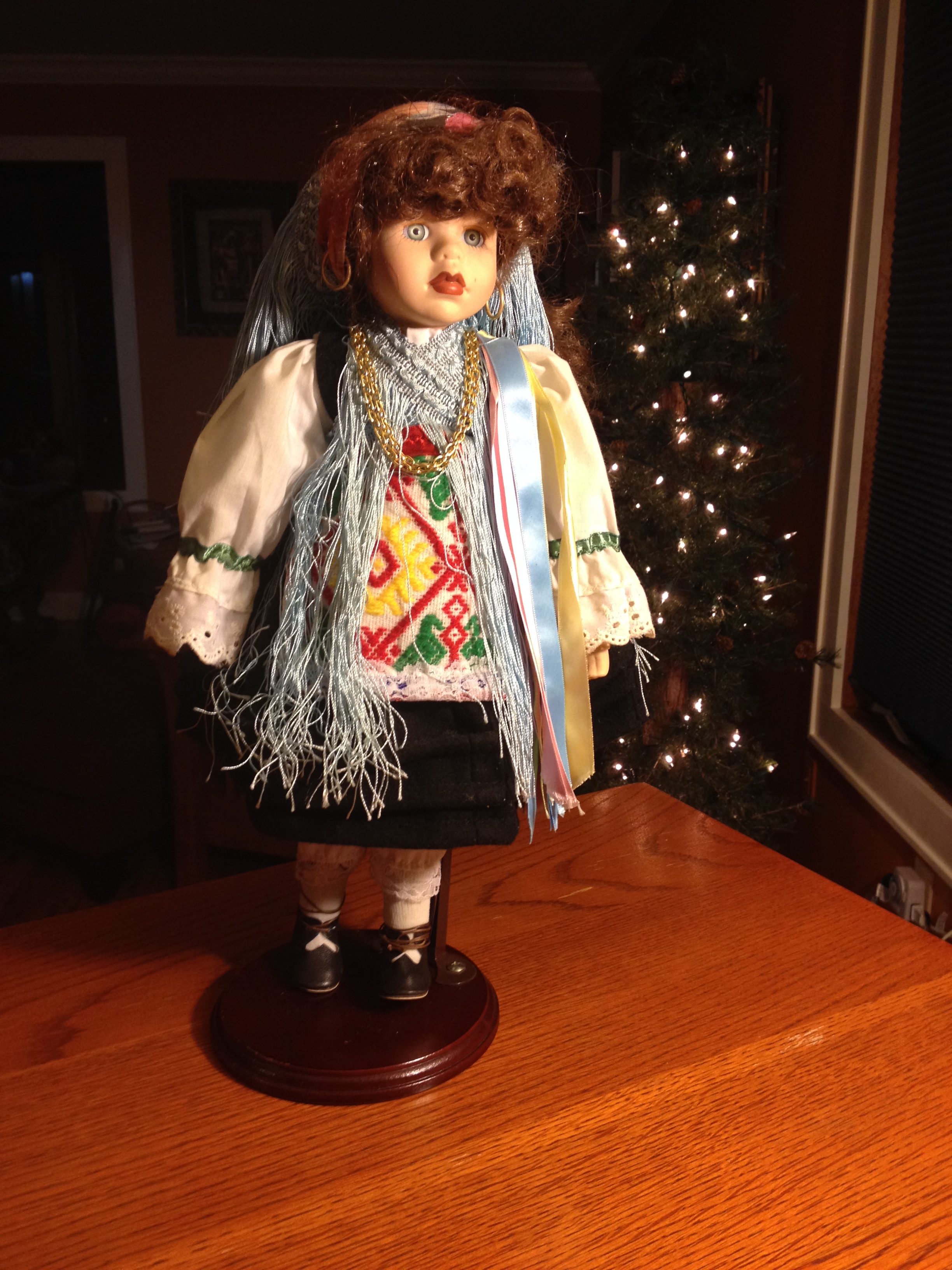
My talented cousin Carmela Fusco creates dolls dressed in historic traditional garb.  Before I found Carmella and started a relationship that has spanned many years, I visited Pontelandolfo, wandered into a small shop and bought a doll for myself and one for my niece.  Years later, I realized my first connection to Carmela was the doll!

IMG_1121
Carmela’s doll proudly stands in my living room.

She sells them now at Ora Giovane and some years ago brought me there to meet the owners, Ornella and her husband Rossano Addona. During our visits, we often stop in and  have bought some pieces, but never really spent time getting to know Ornella’s family.  This trip was different.  We would run into the family in the piazza listening to music, sipping a prosecco or taking the sun.  Like many of the small business owners, they would sit outside their shop on nice days and talk to other shop owners, gossip with villagers and include outsiders like us in daily life.

DSC02110
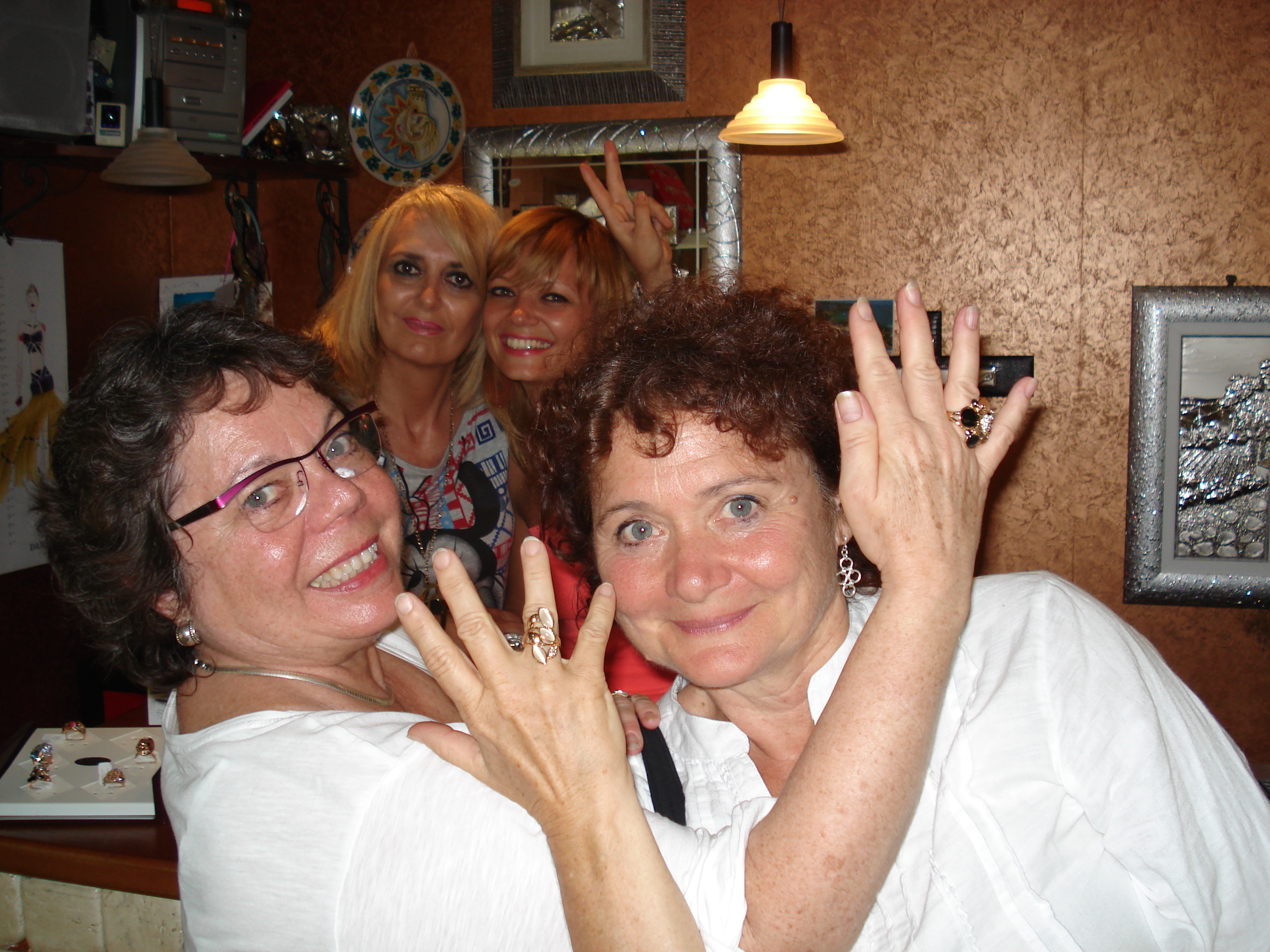
Jewelers Olga Addona and Ornella Romana.

Olga Addona attended the goldsmith  specialty high school available to students from the Province of Benevento.  Can you imagine – a public school where talented art students can  learn goldsmithing!  Unfortunately, because Pontelandolfo is not on a regular bus or train line it is difficult for students to attend the school and there has been a huge drop in enrollment.  Sadly, the school is closing this year.  Hey Arts Folks – WHAT A GREAT OPPORTUNITY!  Why not reopen it for artsy American adults!  Charge a tuition!  Bring some tourist dollars into town.

DSC02114
Sister Susan and I bought some faux bling and kibbitzed with Ornella & Olga.

I am passionate about shopping local – and yes I do shop locally in New Jersey.  My meat comes from farms not factories, my meds are from a family owned pharmacy, etc. Shopping in Pontelandolfo is really like a walk back in time when Main Streets were thriving and everyone knew your name and if you acted like a wild child any adult would call your parents.

I truly enjoyed popping into Oro Giovane and foraging for fantastic gifts.  The family owns two shops on the piazza – one is just jewelry, art and tchatchkes.

DSC02117
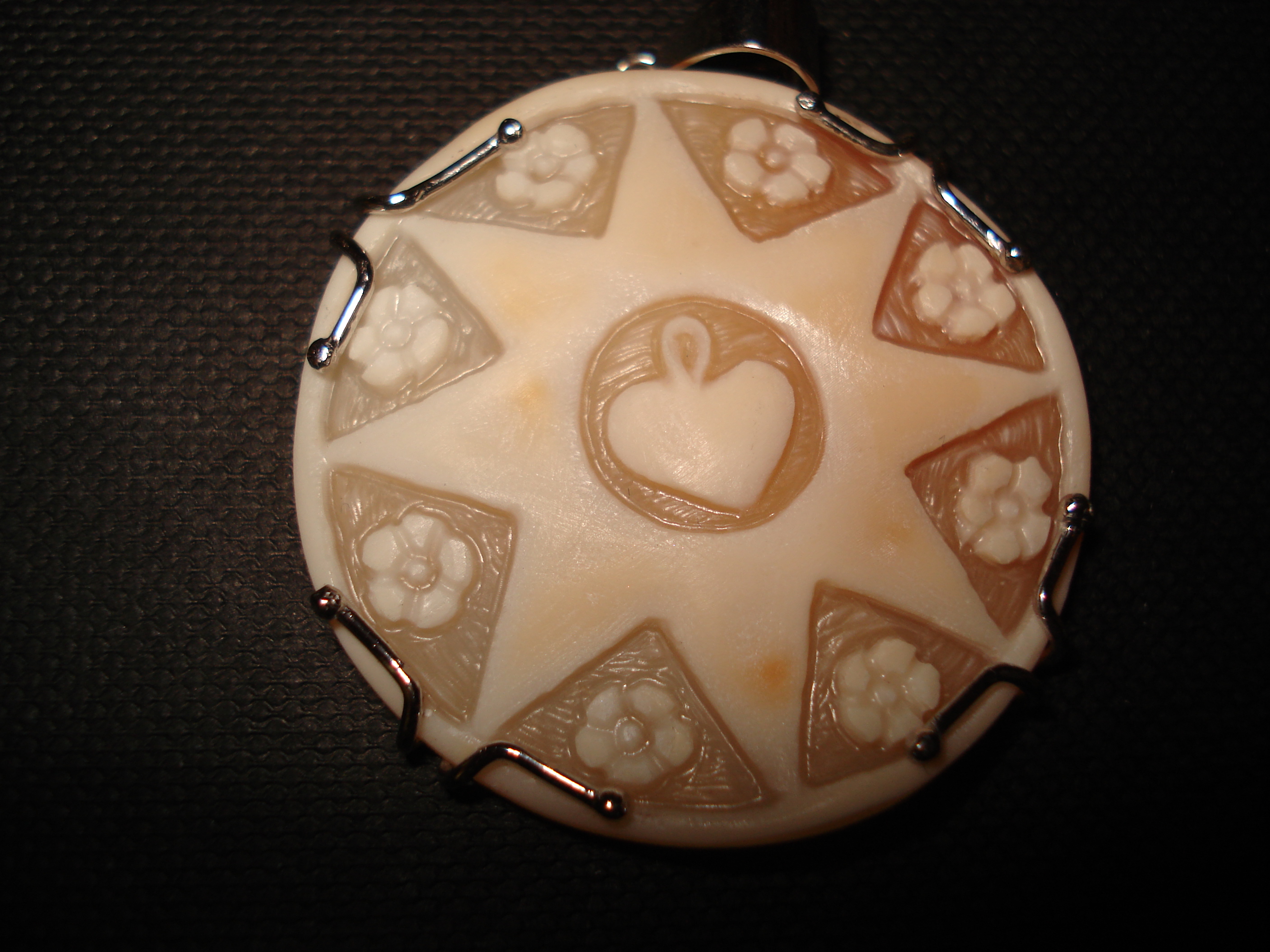
Cameos carved with the village’s crest.

The second shop has great purses and accessories.  Santa – Babbo Natale –  loves family owned shops, artisan studios and well – anything local in the USA and Italy.  So will you when you visit my other hometown – Pontelandolfo!

Huzzah – I just remembered – NOW SANTA GETS TO WRAP ALL THIS SWAG!  BUON NATALE!

Oro Giovane’s Facebook page is https://www.facebook.com/orogiovane.gioielleria?fref=ts

DSC02120

Laundry – Venetian Style

Traveling through Italy, Midge had an epiphany! Laundry wasn’t some mundane yet necessary act. Yards of laundry strung around Venice was art.

Nonna Comes to America

Passport 1
Mia nonna coraggiosa e zii.
One woman alone
with three kids in steerage.

Before we can talk about my nonna’s trip to America, I thought we’d take a peak at where she came from. There isn’t much left of il casolare in pietra – the stone cottage my nonna, Mariarosaria Solla left behind. I was going to say hut – stone hut – but it was a tad bigger than that. Imagine a stone one-car garage built when all cars where VW Beetles.  When Rosaria (I never heard the Maria part of her name) left for America, she had been living in a one-room house of stone that dated back to the Middle Ages. Obviously, houses constructed of huge rocks were built to last. This one did until an earthquake took out most of the town.

Following sprightly nonagenarian Filamena as she scampered over rocks, past thistles and up the hill, my stomach gave a twitter. It might have been because I haven’t been able to scamper like a goat since I was ten and here was Filamena sporting the traditional kerchief, dark stockings, long dress and nun’s shoes laughing as she guided us to my nonna’s house. Or it could have been because with every step I took I felt more and more rooted in this community.

We found the house at the top of a hill in the section of Pontelandolfo called Brecciale.  From the remains of the cottage, one can see the village center, tower and church steeple. The view is spectacular! The thought of walking down the hill through the valley and up the hill to the central piazza carrying goods to barter or sell brought tears to my muscles. It was my nonna’s parent’s home – Liberantonio Solla and Mariantonia Rinaldi.  Story has it that my bisnonno, Liberantonio, was a musician! The vein of artists in my family obviously can be traced back to our beginnings. Accepting wages of wine, Liberantonio would play his concertina in the piazza. He’d make it down hill number one, across the small valley and be crawling by the time he was mid-way up hill number two. That’s when my bisnonno would bellow for bisnonna, Mariantonia, to drag him up the hill home. She’d ignore him. Good for her. I come from great stock!

Nonna did what the children of every other poor family did than and still do today, lived with her parents. As I explore the village that sprouted my family and meet cousins I didn’t know I had, I’m meeting families that still have two or three generations living under one roof.

Up a piece from nonna’s house was a patch of rock that the local farmers used to grind wheat. The marks from a heavy stone wheel are permanently imbedded in the rock. An oxen or mule was harnessed to a contraption that smacked on the grain. You can also still see the circular track of decades of animals walking round and round and round and round.

Living on the top of a hill, means to fetch water from the river or the nearest fountain Nonna Rosaria walked down steep paths.  Easy for Jack and Jill to go down the hill – but with buckets full – it is up hill to home.  Even though life was tough, nonna and her children loved living there. I understand now why my nonna’s farmhouse and land in New Jersey looked the way it did. She and my nonno, Francisco Guerrera, tried to remake their little piece of New Jersey into a little piece of Pontelandolfo.

Take a peek at the video of her house today – Nonna’s House

To find out more about my grandmother’s trek across the ocean to America, we took my Zia Caterina to see Ellis Island. She had made that journey with her mother and two brothers.  When we walked into the great hall of the immigrant’s reception center her face turned grim and she started shaking.  Like a soldier suffering Post Traumatic Stress Syndrome, residual fear racked her body. It was the same fear she felt when the line watchers at Ellis Island ripped her away from her mother and put her in quarantine.  We passed a door and she shouted, “that’s the room – the room they put the sick ones in.”  “They left us there and no one could speak our kind of Italian and tell me anything.”  “I was scared but looked them in the eye and said sto bene – I’m well.”

Caterina’s Story:

When I was two in Italy I got polio – they didn’t know what to do then – not many got polio.  My mother, put hot rags on me and massaged and massaged my leg and arm.  She said I just cried all the time.  I walked when I was 9 months old – I talked at 12 months.  Then at 2, it was over.  The priest wanted to send me away – he said cripples couldn’t stay. My mother wouldn’t let them take me.  She kept rubbing my legs and rubbing my arms.  She never wanted to come to America. My father came first and worked in the Patterson silk mills.  Mamma was afraid that if we stayed in Pontelandolfo they would take me and put me away with the crazy people.  The priest kept coming to look at me – he’d shake his head. When papa saved enough to rent a place to for us to live in, he sent for us.  The Pontelandolfesi women told my mother to only pack her nicest clothes for America – in America everyone was rich. What nice clothes?  They were contadini – kind of like sharecroppers. (Serfs – I told you I come from good stock.)

Mamma was a fool and listened. She left her good wool skirt, heavy wool shirt and shawls. Beh, those stupid women kept saying only peasants dressed in those.  I think the other women wanted her warm clothes. On the ship it was so cold mamma couldn’t stop shaking.  She didn’t have anything heavy to wear.

86950-PH-GFB1-086

She promptly made a warm cape in NJ!

Mamma was shivering and had a fever. She just stayed in the bed – we were all way down in the bottom of the ship – hundreds of us.  My brother Nick, Sal and me – mamma was so sick – we were kids. We didn’t know what to do. They didn’t give us good food only bread. We had a piece of cheese in our bag.  An old man felt sorry for mamma and took care of her.  He got coats from the other men and piled them on her. Somehow she lived.

When we got to Ellis Island because I had polio mamma was scared that they wouldn’t let me in America.  She made me stand between her and Nick in the long line – close so you couldn’t see my little arm and shriveled leg.  Men in white coats walked up and down the line and looked at us – even made some people open their mouths.  A man stopped and took me.  I could hear my mother screaming. They took me away to quarantine and she didn’t understand what was going on.  None of us did. They kept me at Ellis Island for a couple of weeks.  She and papa came every day to ask for me. They told her nothing.   Finally they let me out – I thought I would never get out.  My mother cried that day until there were no more tears inside her.

My nonna, Mariarosaria Solla, overcame her fear and was the rock that my family was built on.  She learned English immediately – I was never spoken to in Italian by anyone – we were Americans.  Also, I was born just as WWII was ending and even though young men like my dad served in the military – Italians had been persecuted in America – many put in interment camps and others sent back.

This woman of the country was now living in an industrialized part of New Jersey.  The long shifts that my grandfather worked at the silk mills meant that she had to learn to be self-sufficient in a new place.  Eventually, my grandfather and Great-uncle John bought a farm together in Neshanic, New Jersey.  Later nonno and nonna bought their own fifteen acres in Flagtown – where I was raised with the sheep, chickens and goats.  Nonna was an incredible farmer – my family continued to be subsistence farmers – just like they had been in Italy.   Nonna and Zia Caterina could grow just about anything.  Those skills came from Pontelandolfo. Yes, nonna did snap a chicken’s neck so we could have a roast and butchered goats, sheep etc.  I only learned how to kill and clean fowl – not sure if I could even do a rabbit.  But hey, life brings new adventures for all of us.  I just hope that I have inherited a piece of her courage for my journey.


86950-PH-GFB1-065
15 acres to farm – and just like what I see today in Pontelandolfo – the women are in the fields. Nonno worked for the railroad.