Last night I wended my way over the curvy hill road – checking for the sheep that graze and amble across the road from one field to another. I decided to go visit Rosella and her great kids – they live in a medieval grotto next to a waterfall and antique water fountain. The road scares the pajeeeezuz out of me – holes, animals and curves on cliffs. But visiting the Iacovella house is worth the risks. I’m thinking a quick game of scopa and a cup of caffè. That was not in the cards – it was time for city lights.
Who needs Times Square!
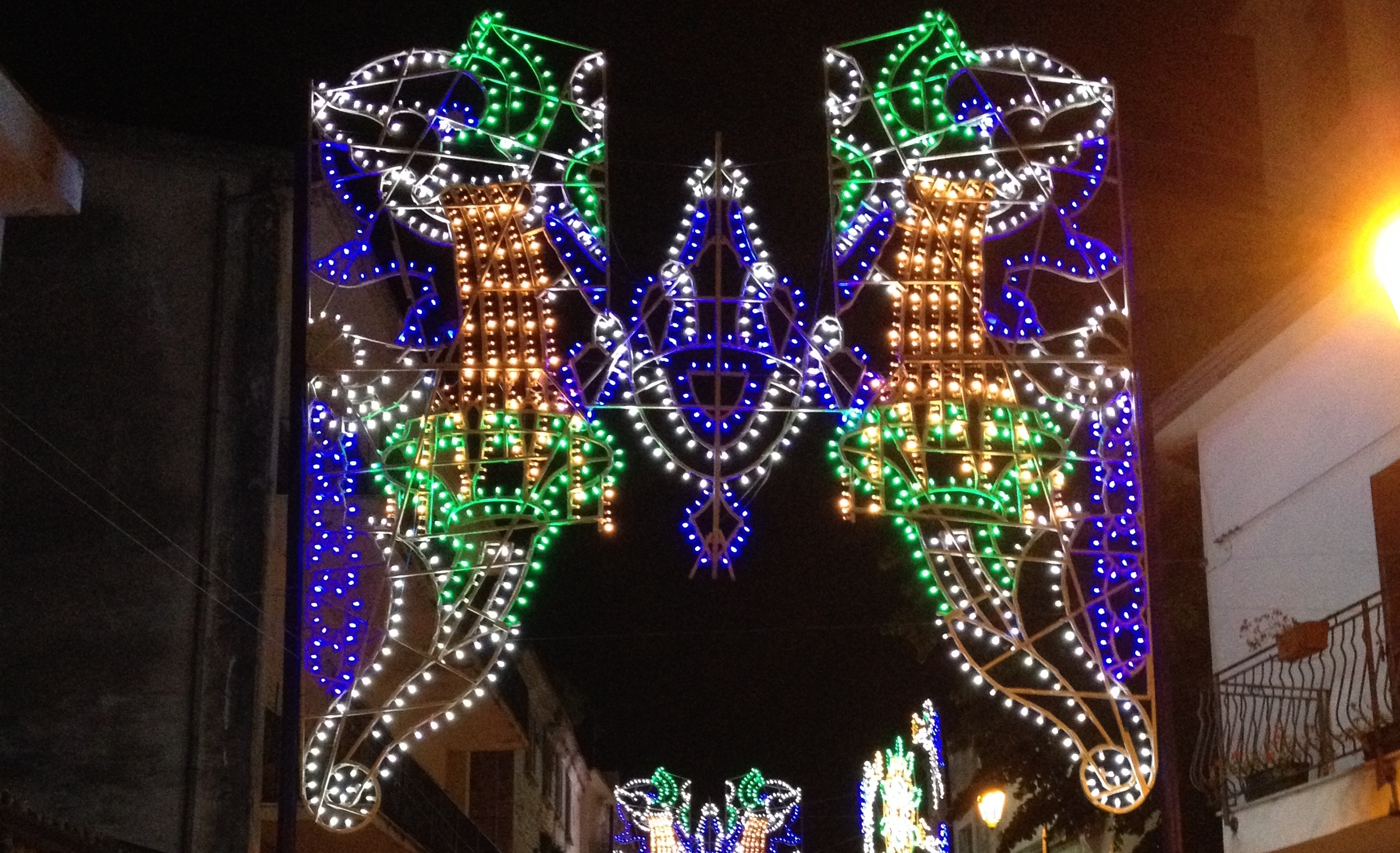
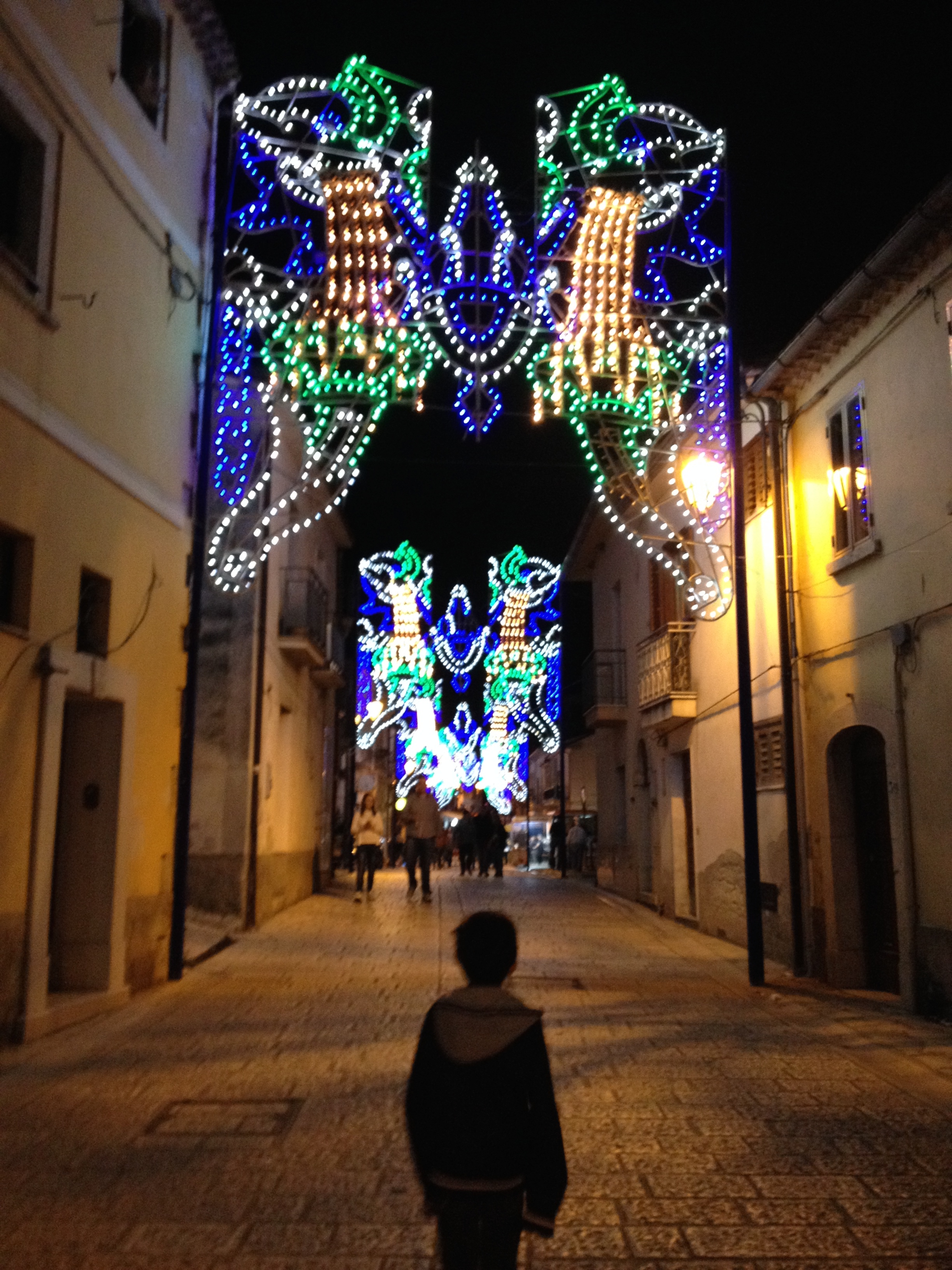
I jumped into the car with Rosella and the kids for a “solo cinque minute” visit to Casalduni. Rosella’s husband, Pasquale, is running for Sindaco (mayor) and silly me thought we were bopping into the village to pick up campaign stuff. My first clue was all of the cars parked along the road into Casalduni. My second clue was the kids opening the windows and sticking their heads out to see something. Whoa! That something was this brilliantly lit street leading to the small villages central square. Tonight was the first night of the festa for Santa Rita!
Of course, when I got back I had to google Saint Rita to find out who she was and what her deal was. She is the patron saint of Casalduni and the patron saint of impossible causes.
She was married to a brute. He died, her kids died and she devoted herself to God. Also for years after putting on a crown of thorns, she suffered with a terrible gash in her head. Even carrying all that pain she committed herself to doing good works.
Every Italian village has a patron saint and it looks like that saint’s day – for Rita it’s May 22 – is a good excuse to bring some music, art and history to the village. Last night the entertainment was Gruppo Folklorico Sannio Antico – (https://www.facebook.com/pages/GRUPPO-FOLKLORICO-SANNIO-ANTICO/220253154670895) . These all volunteer dancers told the story of Casalduni through music and movement. Supplying the music was Il Gruppo Fontanavecchia. In the hills, old fountains – a source of water and life – seem to be a recurring theme. One movement piece showed women washing their clothes, gossiping and filling jugs at the fountain – while the men flirted. Ah a typical Italian scene.
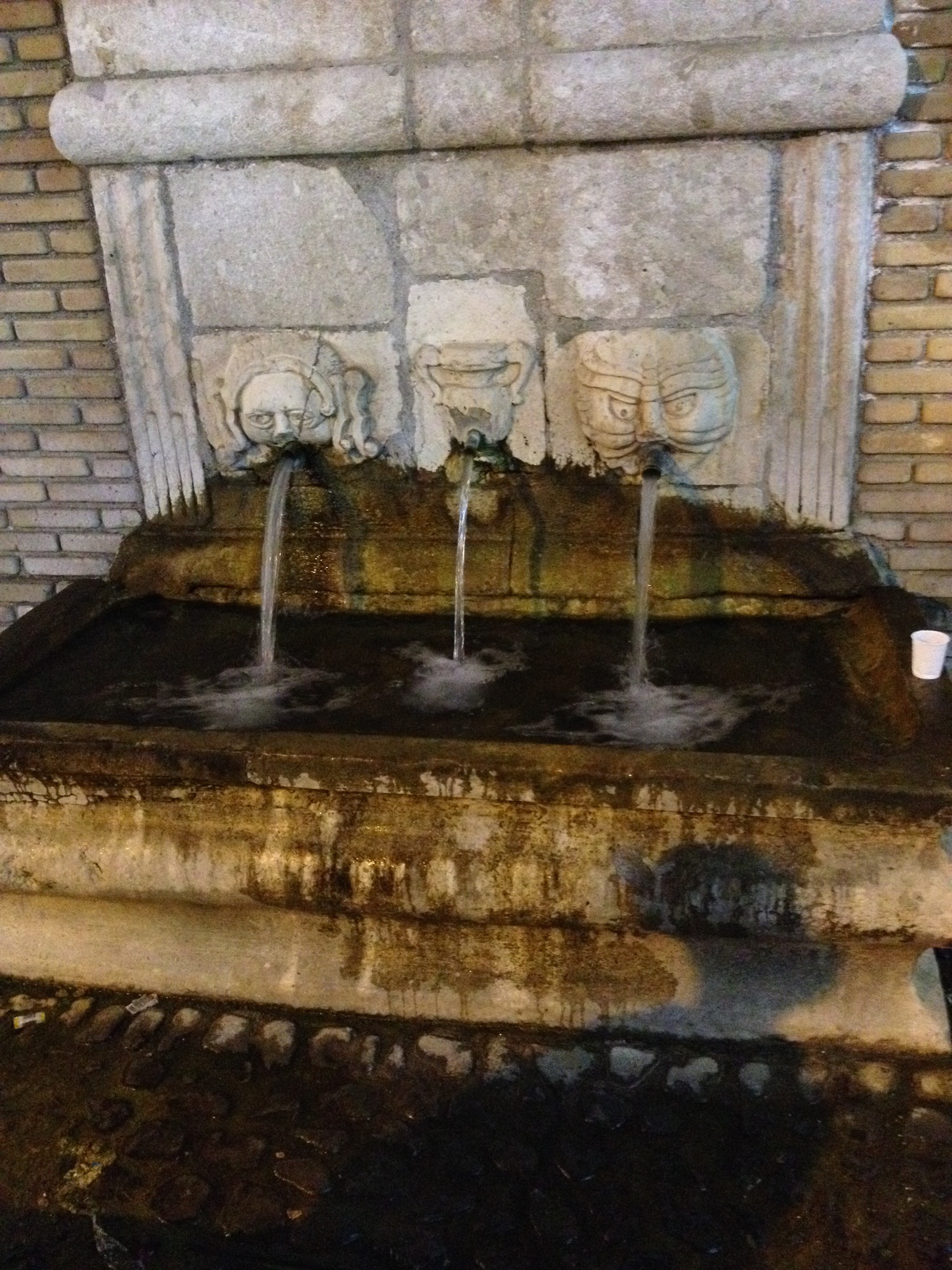
This is the village’s ancient fountain and water source. The water comes from the mountain.
Casalduni is an interesting village. It only has about 1500 residents but covers a great swath of land. The village historic center has tons of empty properties. I’m guessing families immigrated and just deserted their medieval row houses. The place is charming and would make an easily accessible artists colony or pied a terrè in Italy. It saddens me to see these historic villages just slowly empty.
Last night, the enthusiasm and energy of the “cittadini”made it a terrific night on the town. My theory is that people need the arts to survive and if the arts are not close by they will create their own artistic feast. I grew up in New Jersey, NY’s step-sister. Our town, Hillsborough Township, was and still is an artistic waste land. There is the occasional art show and band in the park but mostly if you want action you can visit one of the hundreds of jock filled fields – soccer, baseball, and well I don’t know what the other jock fields are for but they are there. Since Hillsborough is so close to New York, Philadelphia and Princeton, we leave town for our art fix. Here in the hills of Italy, people don’t have a lot of cash, there is limited public transportation and everyone has the soul of a Da Vinci. They make art! Dance companies are formed. Theatrical “spectacollos” are staged. Live music is found in piazzas and every child doodles on a sketch pad. Folks here create the art they crave and a saint’s day is a great opportunity to share it. Since Saint Rita’s day is May 22, we will go back tonight to see what artistic feast we can munch on.
Dancers waiting to take the stage, join the audience.
Gruppo Folklorico Sannio Antico wishes –
Con le nostre danze e canti, auguriamo a tutti una serata piacevole e che sia portatrice di pace e serenita.” Noi devoti di Santa Rita chiediamo la sua protezione.
With our dances and songs, we wish that every person enjoys the evening. Also, may this event bring serenity and peace and may Santa Rita protect everyone with many blessings.
Me, I’m just happy to see the city lights.
The night may be over but the lights and St. Rita will follow us home.
Hemingway had Soppy Joe’s Bar in Key West. F. Scott Fitzgerald had the Ritz Bar in Paris. Dylan Thomas had the White Horse Inn in Manhattan’s West Village, I have Bar Elimar in Pontelandolfo, Italy.
Some folks work at Staryucks. I prefer the joint that makes the 90 cent real cappuccino.
Hey, reality check – I know I am not in the same league as those major writing players but I am willing to learn from them. The first lesson – find a home away from home that will jump start your creative juices. Or in my case, provide me with a tribe. Some folks can work alone – I need the constant buzz of other folks around me. They don’t even have to talk to me – just be there.
Sure I could sit at my desk, stare out the window at incredible mountains and maybe even pretend to write while I wallow in self pity and loneliness. Or I could walk down the mountain to Bar Elimar – today I drove- have an incredible cappuccino, whip out my Macbook Air or iPad mini, stare at cool stuff and write about the people places and things I see. A win win.
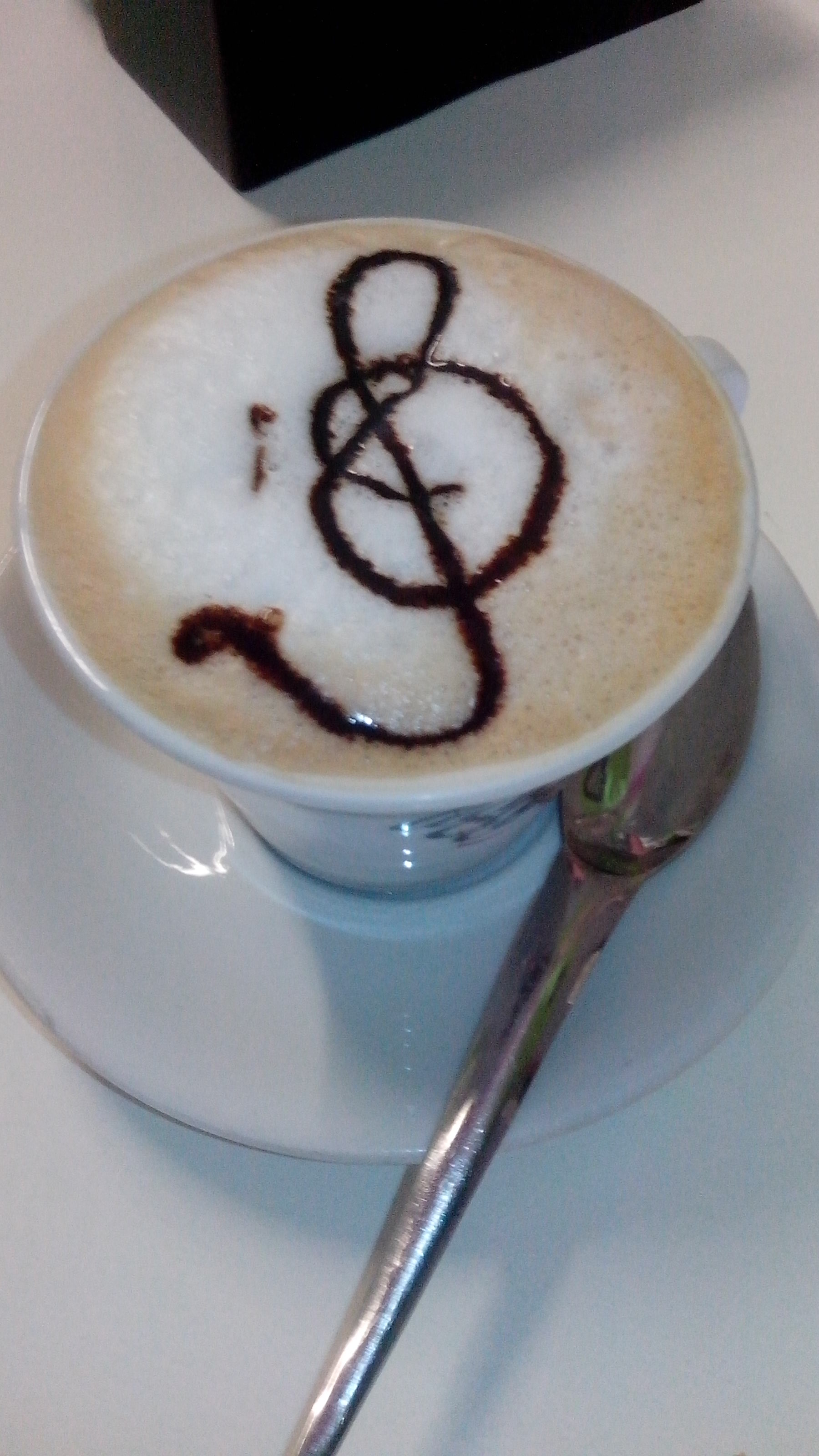
The first thing I see is the cool art Marilina has drawn on my cappuccino foam. Yes, that is blood orange juice.
Some days, when my 6th decade body is dragging, I swear I steal an infusion of energy from the bar’s owners, Marilina Mazzamauro and Elio Di Muraglia. This duo works from dawn until 4:30 the next morning. Granted they do take shifts and it is a wee bit slower life in the winter but come warm nights the place is jumping. ( Did you figure out that Bar Elimar is the cute combining of the couple’s names?)
Most mornings, Marilina makes me that double, taking care to paint a flower, treble clef or fluid design in chocolate on the top of the steaming milky foam. That art as part of my daily life is all I need to get inspired to slap my fingers on the keys.
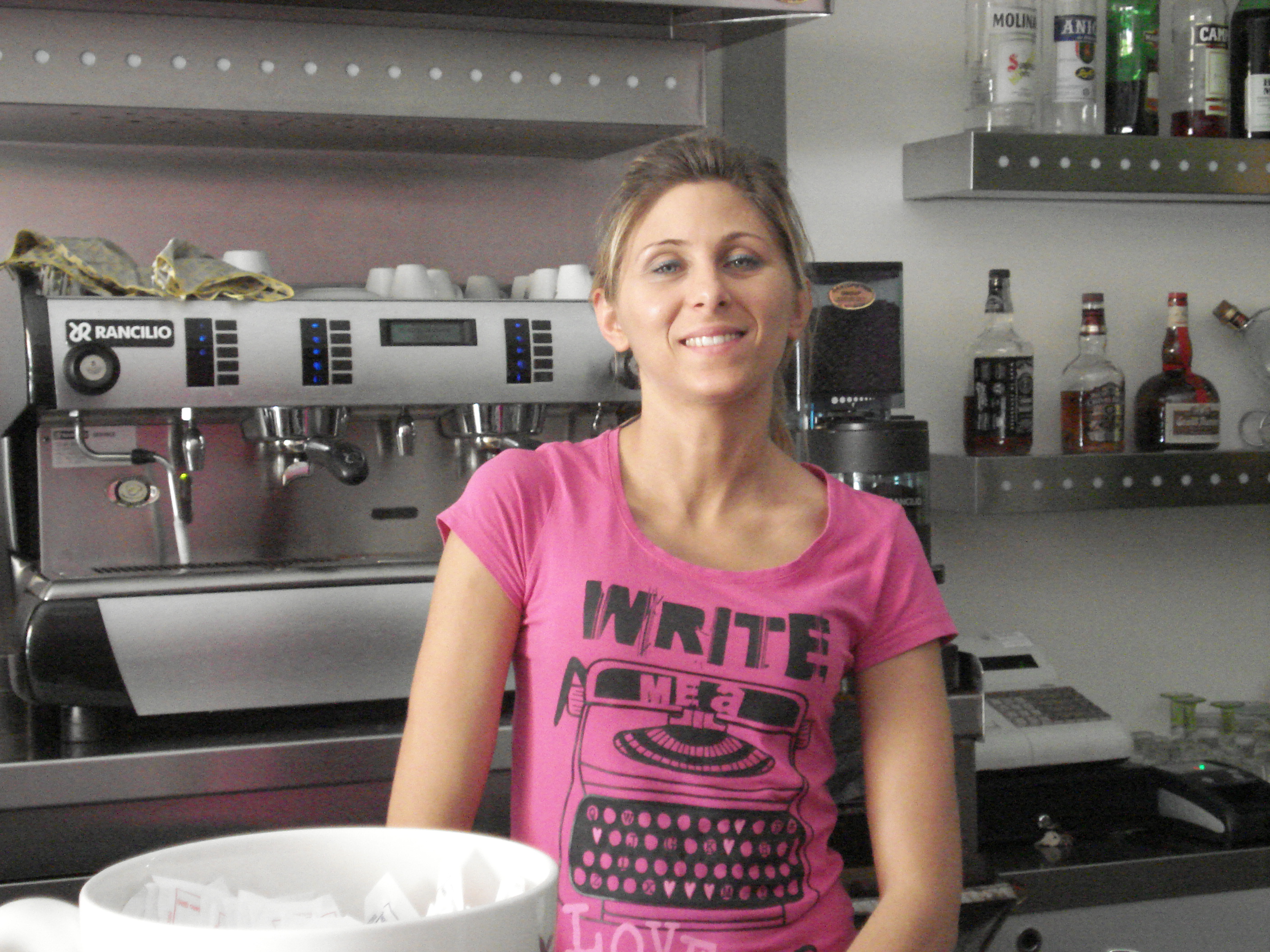
The treble clef is my favorite. Music in the morning!Marilina Mazzamauro, the artiste of cappuccino. Notice her writer’s T-shirt! I just did!
Bar Elimar is about four years old and a fixture of piazza life. Located on Piazza Roma in Pontelandolfo (BN) it is often filled with pensioners shouting and slapping down cards in frenetic games. Hey – didn’t I write about them? Yikes, I do steal stories from the bar.
Outside on warm days, the comfortable whicker couches, umbrellas and tables attract all from tweens to adults.
What I like about the place, besides the morning coffee art, is that everyone feels welcome and the place is spotless. I always feel secure enough to leave my MacBook Air on the table inside and go to the bathroom – ain’t no one going to steal my stuff with Marilina behind the counter. Some days, my new friend Rocco – he’s about 8 years old – will plop next to me and pummel me with questions. He also likes playing with my iPad – h’mm maybe that’s the attraction. It is that feeling of inclusion – being part of the community that really resonates with me.
An afternoon visit by my nephew Nick Losardo – the $.80 prosecco was mine.
Bar Elimar has music often during the summer. Marilina, how can you work until 4 a m and open at 7:30? Children and adults – including this crazy American – sit around, order a drink or thee under the moon and sway to the music. My question is after they pay the bands, rent the tables, rent the stage and hire the waitstaff do they make any money. Some times I think that the good life of the village,is more important to the village merchants than the bottom line. Could that be true?
Since I started back to my writers room, all the projects that I played with while in New Jersey have been percolating in my brain and my keyboard. The work may not make me a star but writing for a few hours at Bar Elimar sure makes me feel like one.
Have you ever been surrounded by people and yet still felt so lonely that your heart chakra ached? That is how I felt this morning. I am in sunny Ecuador, met a super italo-ecuadoriana, am staying with great friends but feel a gaping hole in my heart. At first I thought I was home sick – I never get home sick. Than I thought it was because my zia in Flagtown had a stroke yesterday and I am a continent away. Shazaam – it hit me -I was feeling lonely because I didn’t have a sense of community here. No “tribe” to connect with. All that depressive thinking made me hunger for comfort – comfort food – bread like I can only find at Diglio Panificio in Pontelandolfo! Diglio’s not only kept us in thick crusty bread but also was one of my connections to the community – it was a place I didn’t feel like a stranger or alone.
Some mornings I would walk down the hill just to buy a round of bread and if the Panificio wasn’t busy, I would talk to the owner, Nicola Diglio. My Italian isn’t the best but we would talk about the village, economy, USA, whatever. Nicola never made fun of my attempts to pronounce the pastries or how long it took me to decide which pizza slices to bring home in the morning for our night time snacks. That bakery was one of the anchors of the community for me.
Some Wednesdays after strolling through the market, my cousin Carmella and I would take a shopping break by going to Diglio’s for a cappuccino, a little nosh and a lot of laughter. Carmella is a bright star in my universe and of course she introduced me to this pasticceria.
Cousins/Sisters having a laugh.
According to their brochure, Diglio opened its doors in 1983 with a commitment to use recipes handed down form generation to generation. When you visit Italy, you can find the shop at 2, Via Eglido Gentile, 82027 Pontelandolfo (BN). It truly is a pasticceria artigiana – when you watch the video you’ll agree with me.
While selecting pictures for the video I saw one of the Diglio’s little sandwiches on scrumptious rolls and got a little misty. Zap – flash back to my dad’s first cousin, Giuseppina, insisting we stop at Diglio’s so she could buy the sandwiches before l’avventura. Jack and I take Giussipina and her sister Paulina on road trip adventures. They pick the place to go – it’s always a shrine – there are tons in our area. Since we never saw a shrine and loved listening to the two of them chatter and laugh at us, we would go to shrines – with bags of Diglio yummy mini sandwiches.
Giuseppina, Paulina & Jack 2013 adventure
Then I flashed back to 1995. when I first knocked on Giussipina’s door, pointed at my family tree and said in pidgin Italian “tu sei il cugino di mio padre?”. That timid knock resulted in finding my extended family and celebrating with what – pastries from Diglio.
1995 Giuseppina & Paulina – note the pastries.
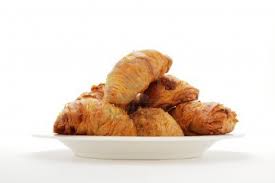
Whenever I bought pastries I would marvel at the way they are presented – perched on a golden cardboard tray and gingerly wrapped in pretty paper. The presentation always made any day that you bought a pastry feel like a special day. Some days I just need a special day and a sfogliatella prettily wrapped can be just the medicine it takes to turn the grey sky into blue.
One bite is better than a happy pill.
This past June was the first time I had Il Rusticacio – a small bread puff made with cheese, egg and salame. When I bit into one I swear I felt my grandmother hugging me. People have been eating – what we call artigianale – dough filled things for generations. The connection I feel in Pontelandolfo to my family is intense and eating food made with ancient recipes makes the connection even tighter. Is that my grandmother pinching my cheeks?
One day I went into the shop and Nicola’s son, Antonio, who is a super creative part of the artistic bakery team was behind the counter. The door opened and his daughter came in from school – she looked at me, I looked at her and recognition twinkled in both our eyes. She said “Good Morning – How are You?” The secret phrase I told the kids in the public school that I worked with to say to me whenever they saw me. Boom – an even bigger connection to the bakery.
Community – that is what I need in order to feel secure, happy and healthy. When I am in Pontelandolfo – we go back May 1st – walking into Diglio Panificio yields more than just a loaf of bread. Enjoy the video!
Chased by the emotions welling from a simple e-mail subject line – Invio Ricerca Famiglie Rinaldi e Solla (Search for Families Rinaldi & Solla), – tears race down my cheeks. An incredible gift was soaring over the mystical internet highway. I took a breath, double clicked and read –
Come eravamo rimasti, finalmente posso inviarti la ricerca delle due Famiglie Rinaldi Mariantonia e Solla, spero che il tutto sia soddisfacente. (As we left it, finally I’m sending you the documents about the Rinaldi and Solla Familes – I hope this is satisfactory.)
Una caro saluto
Antimo Albini
How could it not be satisfactory? It was so much more than satisfactory! Attached were two incredible documents – documents tracing my grandmother’s family back to the 1500’s!
Little boxes of wonder! Pages of them waiting to be entered in my Family Tree software. Anyone want to help?
Immediately I sent PDF’s flying through space to my family. With a little more digging, my newly found ancestors will share incredible stories. But I am getting ahead of myself. Let me start at the beginning –
One beautiful morning Annarita Mancini and I walked up Via Municipo and stopped in front of a small attached stone row house. This part of the Pontelandolfo dates back to the 1600’s. Annarita rang the bell.
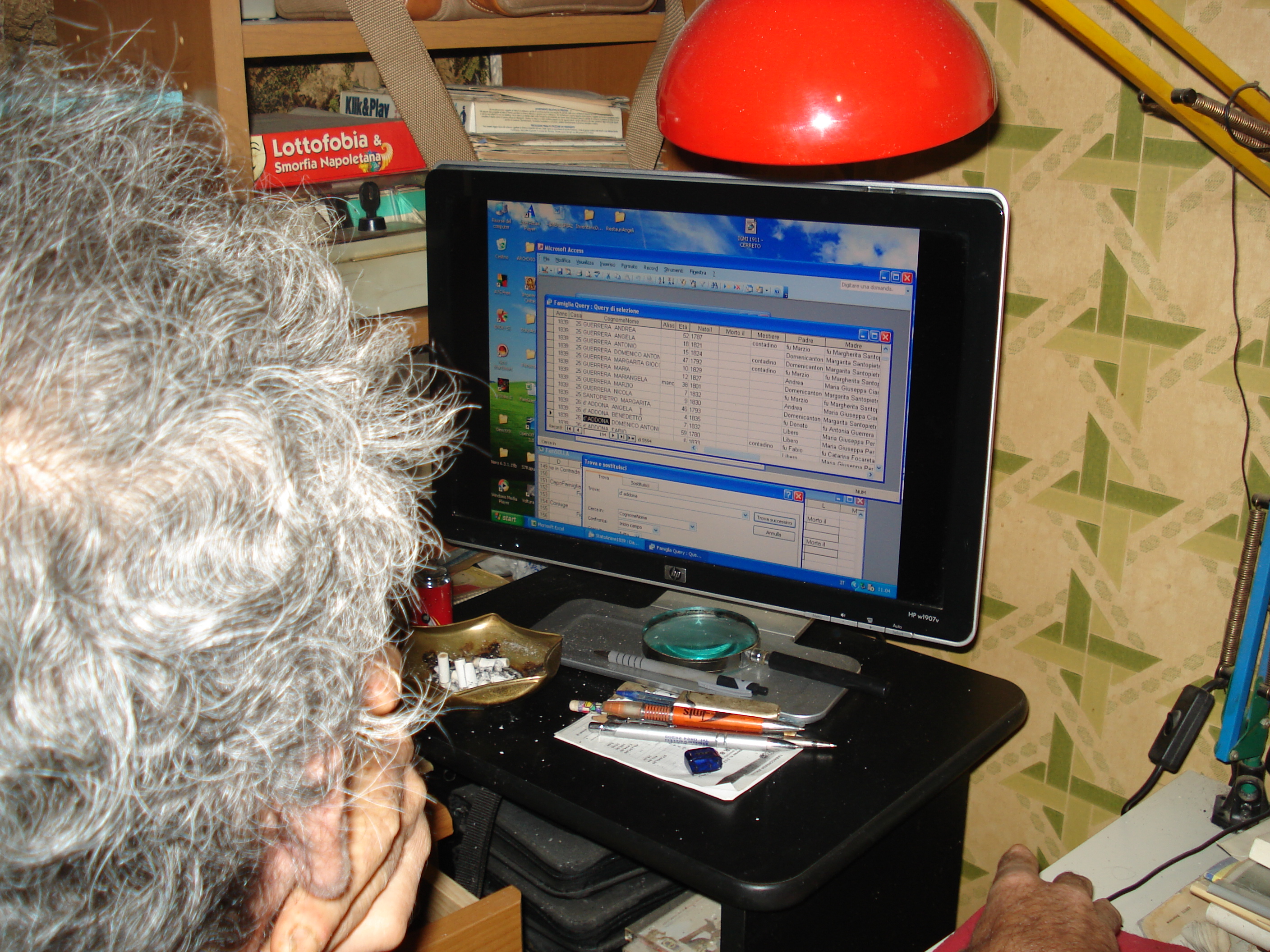
The shutter of the second floor window burst open and our guide into the past thrust out his sleepy head. “Beh?” Oops, were we too early? Annarita explained that we had an appointment to see the church archives. While he was mulling that over, the beaded curtain in front of the door parted and a middle aged woman peeked out. Shouts from above moved her. She ushered us into the front room. More shouts from above and she ushered us up the stairs. Annarita and I looked at each other. Weren’t we supposed to go to the church? Wasn’t he the dude with the archive room key? Why are we going up to – well who knows what? What had my quest for the family’s history gotten us into? That quest had led us to the true keeper of the keys to knowledge – Antimo Albini! After a cursory greeting, Antimo promptly sat down at the computer, lit a cigarette and led me on a four hour journey into my grandmother’s past.
His head of thick grey hair bobbed and weaved as he pulled up database after database. This passionate historian had decided that the history of Pontelandolfo would be lost if someone didn’t do something. He decided to be that someone.
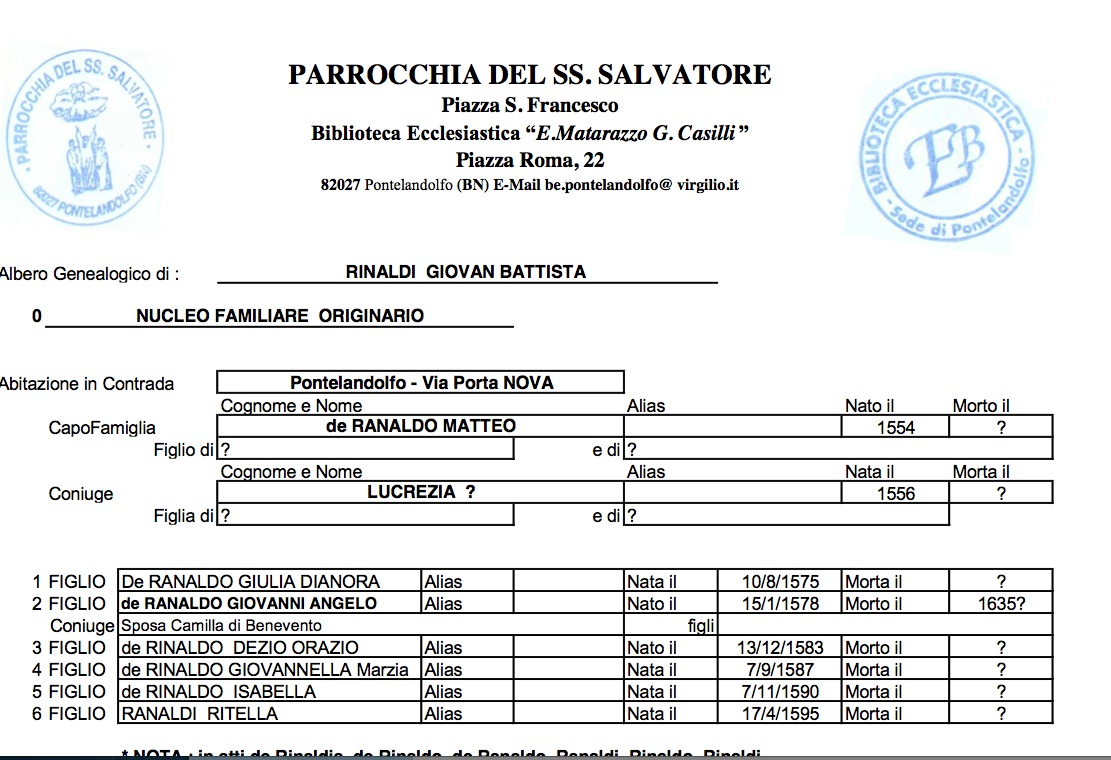
Antimo spent four years of his life meticulously going through all of the church records and putting the information in a Microsoft Access database. This was an incredible undertaking. As he digs into my past, the gleam in his eyes reveals a man filled with passion for both history and the story of Pontelandolfo. He entered data from books going back to 1607 – separate books for each year of the census. There were also combined year range books of births, deaths, and baptisms. That is a heck of a lot of books. Whoops – he had matrimonial books back to 1505! He said, ” as the books disappear, their stories will be gone unless people like us who care about our pasts start passing the stories on.” So get on the stick and start recording your stories!
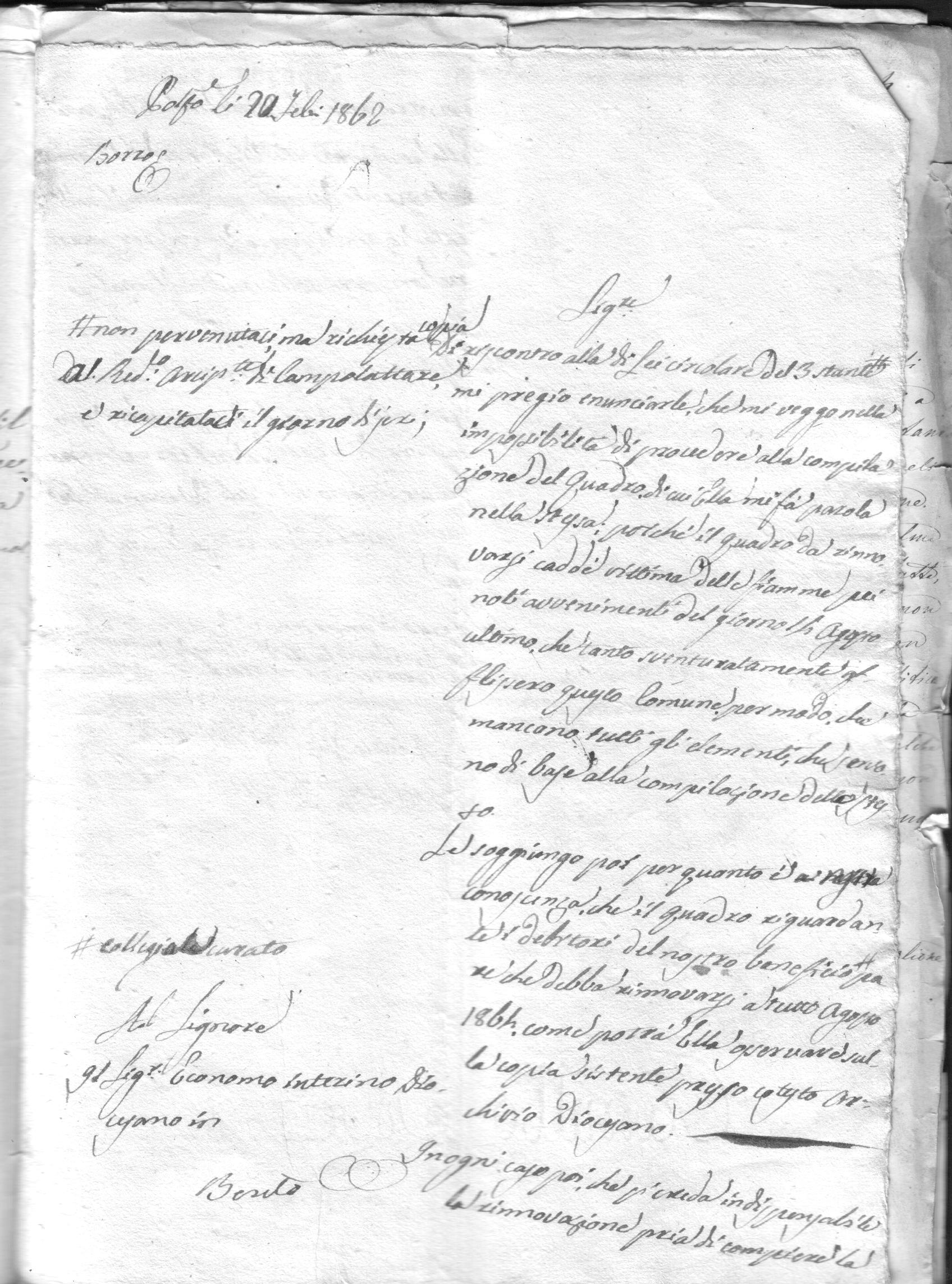
Imagine reading thousands of pages like this one.
As he created the databases he noted the book name, page number and entry number. That way if anyone really wanted to see the fragile old books they could just go to the relevant pages. He also created separate data bases labeled by book. Damn, he is good. The organization will help future historians track data.
We learned that until 1903 the priest of each parish was responsible for doing a census. The census held the tales of the village. The priests would visit each house in the parish – whyam I wondering if they also got donations for the church at the same time – and ask questions. They noted the names and ages of people living in the house, if the house was owned or rented, what kind of jobs folks had, nicknames and what ever else caught their fancy. Those notes are now safely ensconced in Antimo’s database. In 1903 the state took over the job and started to do a census every ten years. These sure has hell don’t include the interesting notes the priests wrote down.
Birth and death registration book from the 1800’s.
Before 1700 there were four parishes serving this mountain town of peasants and landholders – San Felice, San Angelo, San Piedro and San Salvatore. So priests from all of those parishes kept records of births, baptisms, deaths, weddings. These are great old journals with meticulous handwriting on paper so old that it crumbles when touched. We know that because the Comune has it’s own set of unprotected books that are manhandled, falling apart and not digitized! Che fa! Thank God Antimo created a database of the much more complete church records.
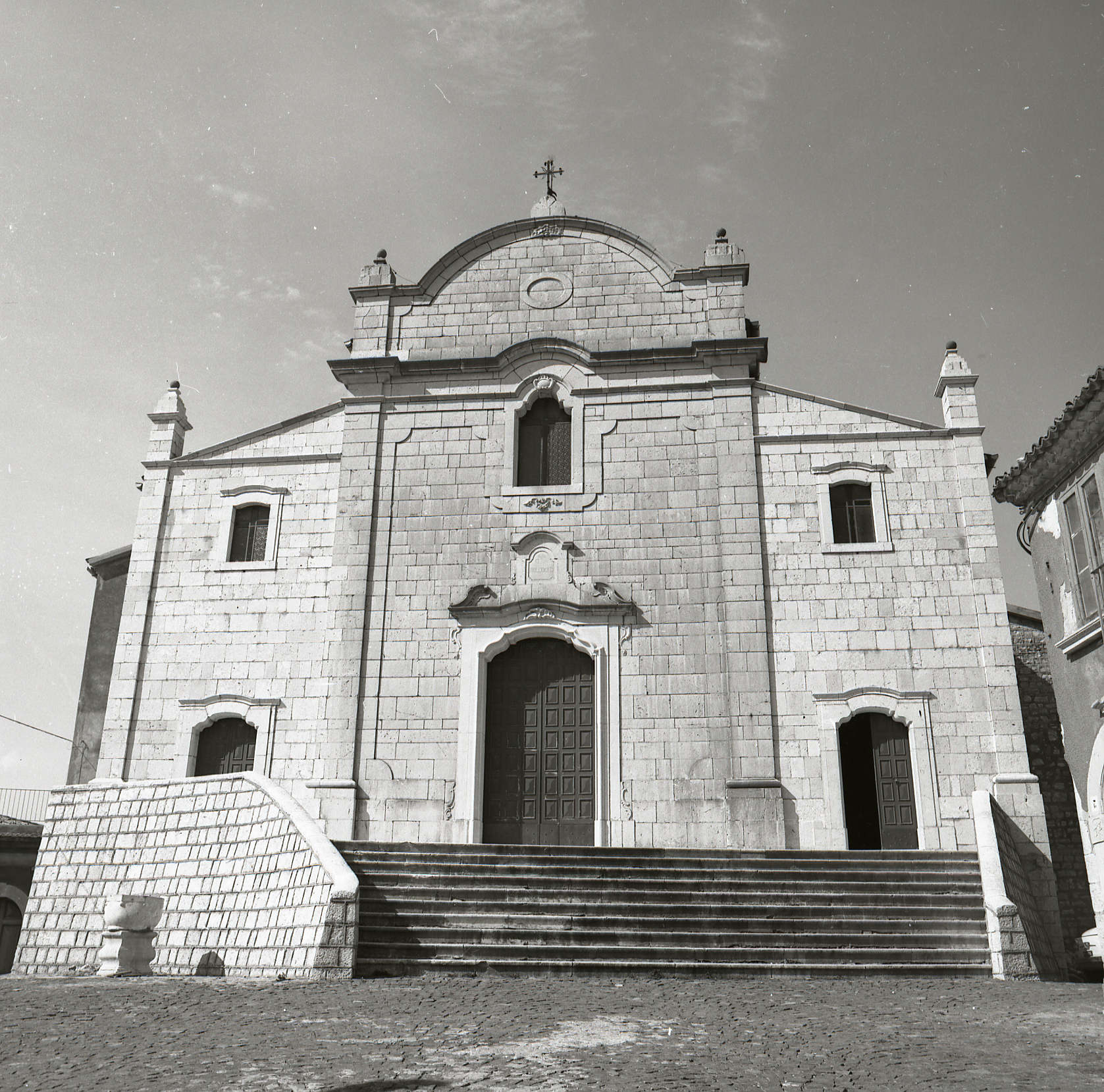
In 1688, there was a huge terremoto – earthquake – after which the parishes were forced to merge. Well. not exactly forced, but San Felice and San Pietro parishes spent a lot of time fighting over who got to be the cemetery. In those days that meant holding the bones of the departed in the catacombs of the church – you know that space just below the seats for the congregation. In the throws of the fight neither church got rebuilt. That narrowed the playing field and in 1700 there was only the mother church of San Salvatore. The church where my grandmother was baptized and twice married. It still stands and we go to mass there often – not because I’m a good catholic but because I can feel her presence there.
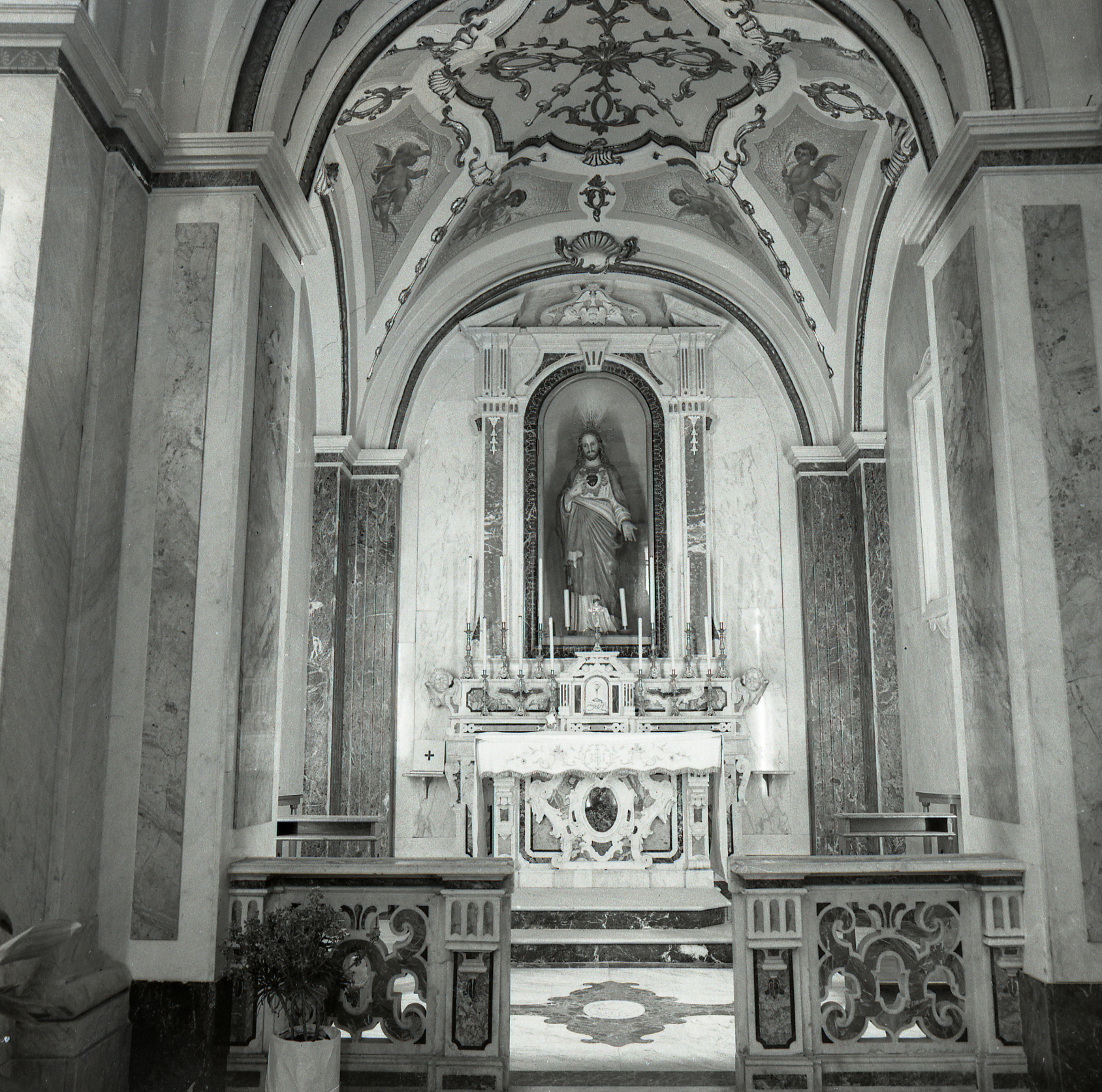
San SalvatoreThe art in San Salvador is awesome.These are shots from the 50’s. Later we will have a blog on the parish and you’ll see glorious color.
As I sit in the piazza writing this, my heart fills and tears start to glide down my cheeks. What is that about? How could a middle aged, hard assed woman like me get so sentimental about finding my family? I haven’t a clue but the universe sent me here and as my dad’s first cousin, Giusippina, says often – sangue è sangue – blood is blood and I am the first of the family to return looking for those that stayed.
Finding one’s family is a backwards process. Start with the birth and death certificates of today and work backwards. Since I had already done a lot of research to gather the documents to become an Italian Citizen, I went to see Antimo with the materials he needed to leap even further back in time. (Read the blog about citizenship for more background.) https://midgeguerrera.wordpress.com/2013/06/21/cittadina-italiana-citizenship/)
Antimo started by finding my grandmother’s birth records. We had the day, time and name of her parents, Liberantonio Solla and Maria Antonia Rinaldi. (I am dying to know if we are related to the Rinaldi Olio di Oliva folks.)
Every village in Italy will provide you with your family’s documents. There was a very nominal fee for grandma’s birth certificate.
Then he painstakingly worked backwards, creating a new excel data base for me that included everything he could find. The little details he unearthed painted a picture of the times and the people. nicknames were used everywhere. My great-great grandma Solla had the same name as mia nonna – Maria Rosaria. It was also the same name as her mother. Her birth certificate was noted as Maria Rosaria D’Addona.
Antimo said that baptisms were very close in date to birth records. Many children died soon after birth. Since everyone wanted the babies to go to heaven, people made sure they got those kids to church and baptized immediately. Often if a child died, the same name was given to the next child of the same sex. Boy, does that add another database layer of confusion.
Later we paniced – we couldn’t find my grandma’s grand-mom, Maria Rosaria D’Addona, in any database. Oh where oh where could my grande bisnonna be! We only found the unborn (no birth record) Cesare D”Addona in all the family census databases. Like she fell from the sky. The brilliant Antimo scanned even more documents and realized that Cesare was Maria Rosaria’s nonna’s name. Since there were two Maria Rosarias in the family they decided to call my great great grandma – Cesare. In 1839, Cesare was only 16 years old when she married the widower Felice Solla from Morcone. I am guessing he didn’t have much cash because they moved in with her mother on Via San Felice (now Via Municipo – the same street where Antimo currently lives.) That means I have walked past my great – great grandparents first marital home a million times!
I never would have figured that out. We were blessed to have Antimo, a focused detective, helping us by constantly cross checking information from birth, death, marriage and census records. OK, we found the lineage of my great grandma. Now let’s talk about great grandpop.
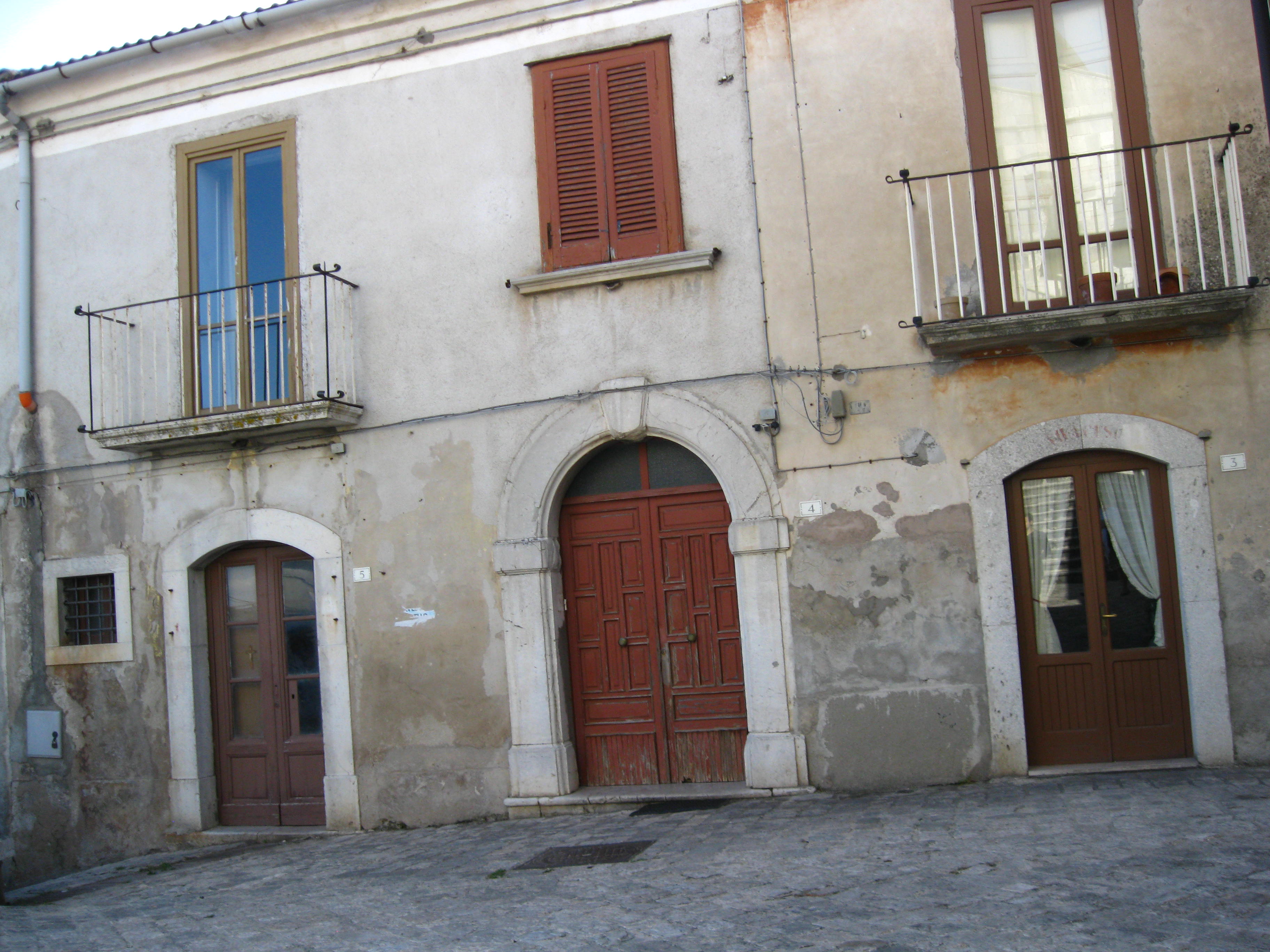
My great grandfather was Liberantonio Solla – family tales are full of his musical ability. Zia Caterina also remembered his ability to drink the night away and fall down the mountain on the way home to Via Porta Nuova. On my second visit to Pontelandolfo, we found my great granddad’s house . The rocks of this small medieval stone cottage – now in ruins – held secrets that we will never know. Or will we?
Only a few stone walls are left of the house that my young grandmother, grandfather and aunt and uncles shared with grandma’s parents.
What we didn’t know was that Liberantonio wasn’t called Liberantoino by anyone but his mama. Pitocchio (flea in dialect) was his nickname. As he played the concertina, villagers shouted Pitocchio . I’m not quite sure of the name my bisnonna, Maria Antonia Rinaldi, shouted when he came home dead drunk, having spent all he made singing at the bar.
Oh, I just remembered, great grandma Maria Antonia Rinaldi was born in a rented house. Liberantonio Solla was born on Via San Felice – in the home of his grandma! How the hell did we discover all this in less than ten hours? My great grandfather was a “bracciante” – an ancient term for working the land for someone else and getting a piece of what you grew for yourself – yeah serf. I come from a long line of indentured servants. Weeoo. My great-great uncle Nicola Solla (Liberantonio’s bro) worked for the commune. We discovered that for generations a Nicola Solla worked for the commune. I can’t wait to find out if one works for the town today.
So much to discover. So many stories to hear, feel and relive. So little time to do it all.
Thank you. Thank you. Thank you Antimo Albini for keeping the keys to family history at our fingertips.
THIRTY DAYS! A scant 30 days to tell the world you are running for office! How bloody civilized! In the USA the campaign season never ends. One election is over and the slow news channels start tossing names to the wind for the next series of elections. Here, candidates by law have exactly 30 (THIRTY) days to pitch themselves. Friends of ours who are ex-pats in Ecuador told me the same rule applies there. Thirty days to tell us about yourself. if you can’t make a pitch in 30 days you shouldn’t be pitching.The concept was a little unnerving for me – especially on the 2 (TWO) election days. There was no little job I could do. No elderly folks to drive to the polls. No bars to roll drunks out of. No cemeteries to pull names off of. Damn, what is a Jersey Girl supposed to do? Well, what everyone else did. Go vote!
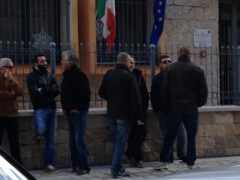
Standing, waiting, and watching.
Candidates stood together chatting as a team in front of the polling places – even Ripley would not believe this – candidates did not approach a single voter! They didn’t toss a palm card at them or kiss their kids! But I am getting ahead of myself. Let’s talk about the last few of those thirty days.
The “list” that we were following did continue it’s door to door press. “Facsimile” ballots were distributed with an X through the right circle. Yes, I will admit I carried mine into the polling place with me. They also reminded people to come to the piazza on the Friday night before the Sunday election. You heard me – SUNDAY – the polls were open from 8:00 AM until 10:00 PM. Monday they were open from 8:00 AM until 3:00 PM. Friday night was the last legal night to campaign. Saturday was the day when people were to think about what they heard, reflect and get ready to vote on Sunday. Now, can I attest that no one campaigned – nah – and neither would you ! I will tell you that the candidate that I knew best was home with her family on Saturday and insisted there was no campaigning.
Friday night I went to the piazza not knowing what to expect. A balcony above the square had a sound system, electronic keyboard and podium. The posters of the first list were up. It was drizzling and I thought who but the crazy American is going to stand in the rain, stare up at a balcony and listen to a bunch of politicians. The whole village – that’s who! Initially only a few cars pulled into the piazza and folks parked with the front windows facing the balcony.
Drive in electioneering!
An hour later the entire piazza was a drive in movie. Cars faced the show, windows down to hear the speeches and moms running out to get pizza and drinks to go. When the rain let up, people got out of their cars. If they liked what they heard they honked and cheered! This is a community that is totally involved in the political system. Enough words – check out the video.
Going for the early and often motif – I voted on Sunday. Clutching my certificate of eligibility to vote, I went into the school, found my district, handed in my certificate only to have an election worker stare at it, stare at me and demand my “documents”. I had no freakin’ idea what that meant but luckily had my italian passport on me. I handed it over, assumed an arrogant posture, and watched as the dude stared at my picture and stared at me. Finally, with a humpf he said fine. I signed in, was given a pencil and a paper ballot. I went to the two foot high cubical, put my X on the circle, wrote in Mancini, folded the ballot and stuffed it in the ballot box! Yeah, how cool is that, you actually get to stuff a ballot box. By the end of a rainy Sunday about one-third of the eligible voters had voted. About fifty-one percent of eligible voters ultimately turned out. Can you imagine! This was an off cycle election and people actually came out!
Monday, I had to do something. It is impossible to just sit out an election. So I wandered down to the polling place to watch the counting of the ballots. In front of a crowd, each ballot is pulled out, shown to the room, the Sindaco’s name read and the consigliere’s name read. Those names are marked and the ballot is put aside. That means that political organizations can keep an accurate tally too. No hanging chads here – just a big X. I got bored after a while because doing show and tell with a couple thousands sheets of paper takes a lot longer than reading numbers off the back of a machine. To see the final results read the numbers in the Pontelandolfo News. http://www.pontelandolfonews.com/index.php?id=3357
A few days after the election I noticed new political posters going up. What in the hell is this? The election was over. They were giant thank you notes. Whether a ticket won or lost they thanked the voters. Now, how nice it that! Take heed American politicians there are lessons to be learned here.
Even though we lost we are considerate enough to say thank you!Thank you! Thank you!












 Nonna's Mulberry Tree