Finding My Great Grandfather

This morning when I got up there was a line of cars outside our house.

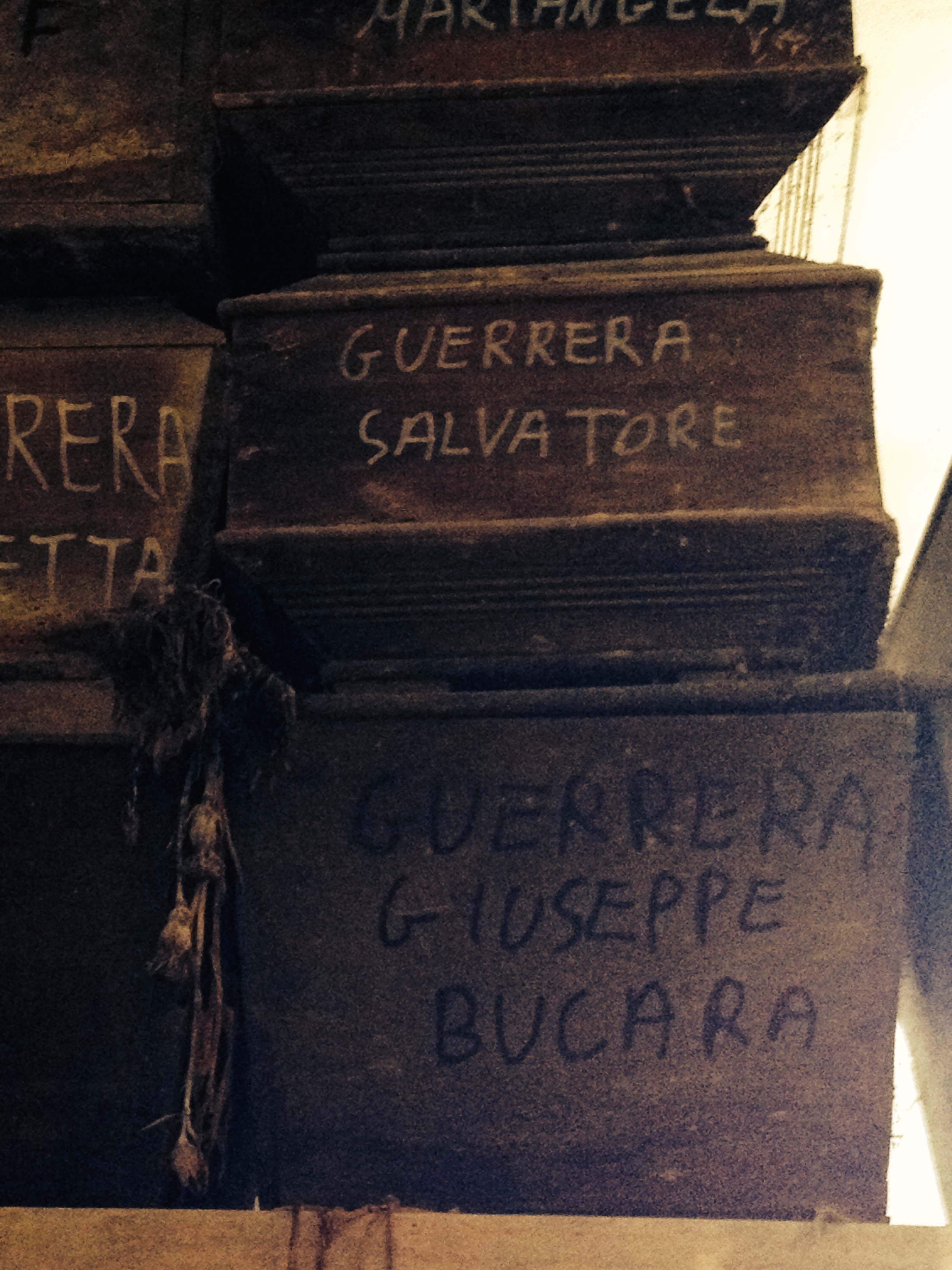
That is the line that starts the post I thought I was going to write.  You’ll get that one tomorrow or dopo domani.  It is about a funeral and the funeral/burial traditions of Pontelandolfo.  I can’t finish it today.  Because today in the basement of the Pontelandolfo Cemetary “Cappella” – Chapel, where the bones of the poor are stacked in wooden or tin boxes, I found my great grandfather.  Don’t ask me how I know it was him or how I found him.  When I saw the wooden box with the handwritten “Salvatore Guerrera” I just knew.  It doesn’t have a date – he died in the 1920’s – but I knew.
IMG_1540
There are hundreds of stacked boxes. I may be wrong, but when I saw this box – I knew.

My great friend, Nicola Ciarlo, had taken me to the cemetery to explain the rules, regulations and traditions of a Pontelandolfo funeral.  It is as unlike a New Jersey funeral as you can imagine.  The mountain is made of soil that is rocky and hard.  The cemetery has been used for generations and hasn’t grown in size.  People die – how could the cemetery not expand? Simple, after a number of years, the coffin’s are dug up, bones prepared and then placed in a little box that is placed in a nice marble drawer.  That’s if you can afford the nice marble drawer to share with your loved ones. But you’ll read that tomorrow.  Today I need to think about my bisnonno.

Nicola took me to the church basement to show me where the bones of the lost ones were housed.  The place is called “il ossario” – that is fitting because “ossa” means bone.  The lost ones either didn’t have family to reclaim their bones or they were too poor to be placed somewhere else.  In the 1920s in Pontelandolfo everyone was poor – my family was no exception.  They were contadini – farmers who worked the land for a rich dude. Back then, after World War I and the ravaging of the mountain by the troops, the poverty caused a mass exodus to the Americas. Noone had the money to come back for funerals or even knew that loved ones had died.  So, in the ossario there are stacks and stacks of wooden boxes.  Some were dated from the early 1900’s.  Most didn’t have any dates, just a name scrawled across one side.  Little white boxes held the bones of poor children.

IMG_1538
The bones of children are nestled in white wooden cradles for perpetuity.

As I covered my nose from the damp, moldy smell and looked around, I realized that the boxes had been piled in alphabetical order.  I kept walking and found a shelf containing the remains of Guerreras.  Since Guerrera is as common here as Smith, I didn’t think anything of the shelf.  Then, as though an arrow shot through my core, my entire being was pulled toward the box that said “Salvatore Guerrera.”  It has been 5 hours and I am still crying – though now I am crying in my scotch.  At first, I thought the overwhelming sadness was because the root of my family tree was tossed in a box and stacked on a shelf.  Or I was crying because of how very poor my family had been.  Then I realized that I was crying and felt an overpowering sense of loss for all the elders in my family that I didn’t know, haven’t found and haven’t taken the time to discover.  I cried from the depth of my soul.  The tears refused to stop.  Suddenly, I realized that I was mourning.  Mourning for my father, my Aunt Cat, my mommy, my Uncle Sally, grandma, Uncle Tony, Uncle Nick, cousin Roseann, Aunt Julie – mourning for all of the people I have loved, who had loved me unequivocally and died.  All of the sadness I had bottled up had been released by my great grandfather, Salvatore.  My sadness sits inside me and maybe that’s a good thing.  Maybe in order for the sadness to escape I need to start whacking away at the memoir about finding my family.

Enough about me.  Let’s talk about Salvatore Guerrera. He was born on April 5, 1848 to Giovanni Guerrera and Maria Guerrera – since women here don’t change their names when they marry seeing the Guerrera married to a Guerrera was a wee bit disconcerting.  But hey, it was a small village and Guerrera is like Jones.  The Guerrera infusion in my body is even stronger – Salvatore married Caterina Guerrera.  Writing this makes me realize that my blood must also flow in over 50% of the people that I meet.  That connection is visceral for all of us and explains why I feel so accepted here. My great grandparents had five children that lived – Francesco – my nonno,  Maria Vittoria, Anna, Nicola, and Giovanni.

Book in comune

What I discovered years ago peering through the dusty books in the town hall was that Salvatore had a whole second family! He also married Giuseppa Iannicelli and had four more kids- Caterina Maria ( who died as a baby), Caterina, Michele Nicola and Antonio.  It is interesting that Salvatore’s first wife’s name was Caterina and he named his daughters with his second wife Caterina!  I wish I could flash back in time and hear that story.

Salvatore was a small man who was larger than life – a fighter, lover, leader.  I have only met him through the tales that others have shared. It isn’t the same as seeing his face and hearing his voice but it still links me to him.  Here are stories my Zia Caterina, Daddy John, and Carmine Manna told me.

Salvatore Guerrera was Robin Hood. He stole from the rich and gave to the poor.  In those days everyone was a poor sharecroppers – like a slave – worked the fields for the rich.  They had very little food or money.  Salvatore took and gave.  No one starved.

During World War I, Salvatore was out hunting and he heard some local women screaming. German soldiers were “having their way with them.”  Salvatore shot the soldiers.  He then dressed as a soldier, took their German guns and walked past the Germans – right back through the lines.  That took amazing balls.

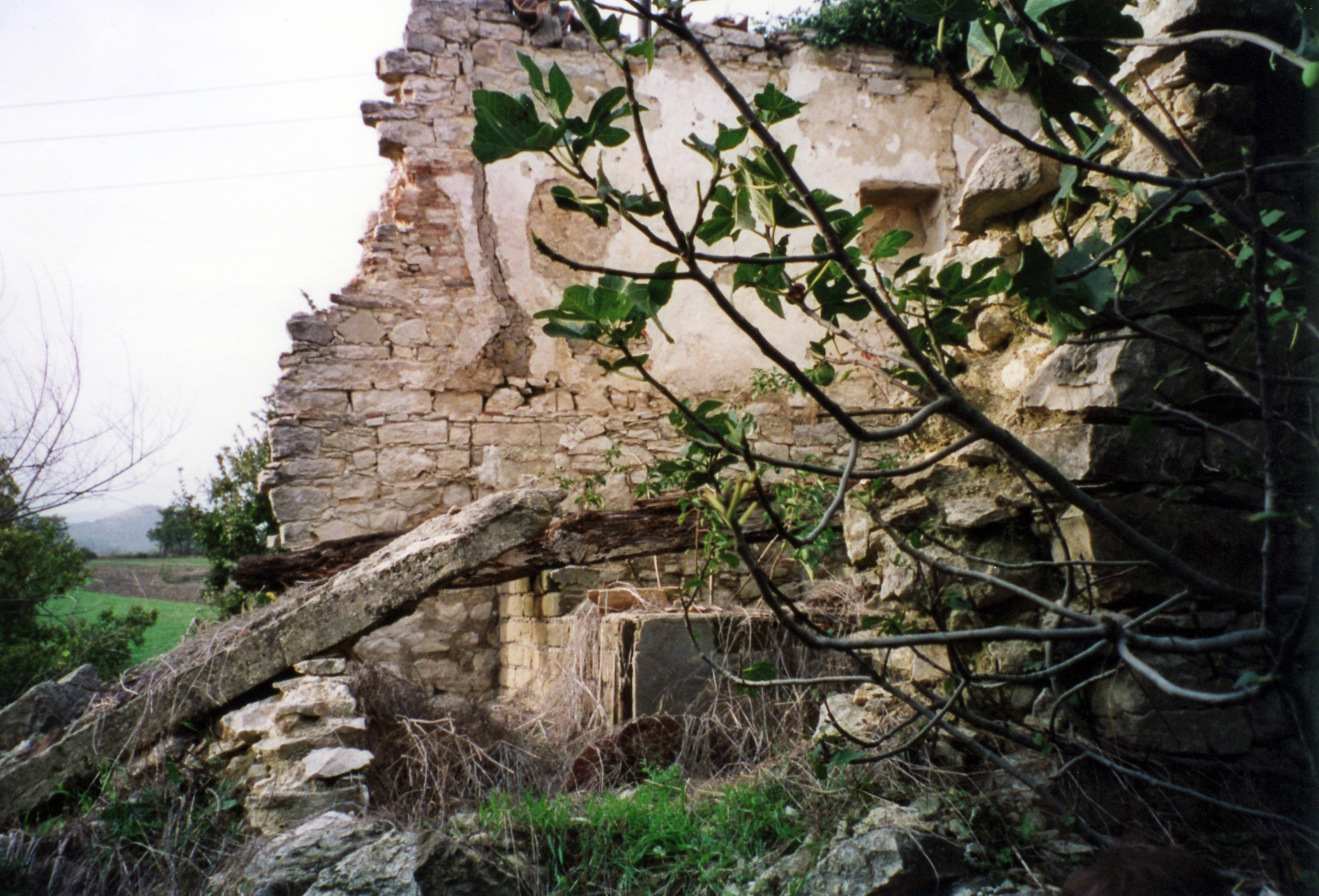
With safety in numbers, peasants then lived in stone attached dwellings. The bottom floor was used to house the family’s animals and farming tools. The heat from the animals rose and warmed the second floor which was inhabited by the family. It was one room. The space was very small and yet everyone managed to live together.  The structure still stands in the Santa Caterina section of Pontelandolfo.

86950-PH-I99-P-014
Here is the set of row houses that date back hundreds of years. Now they are empty or used as storage space.
86950-PH-I99-P-015
Here is what is left of Salvatore’s. It was the end of the row and looks like I felt today.

Zia Giuseppina Guerrera, my dad’s first cousin, told me these stories:

Salvatore needed wood for a fire to bake bread.  In this time there were no trees left for wood.  (My grandmother told me that during World War I everything was taken from them and they started to make soup from the bark of trees.)  Everyone was poor and hungry.  Salvator wanted to cut down the tree of the the padrona.  Remember, Salvatore, like many others, was a serf and worked the land for the padrona.  The tree was incredibly large and the padrona said “No, you can’t cut it.  I need to tie my donkey to that tree.  So in the dark of night Salvatore cut off the just the top of the tree and tied the donkey to the bottom!

Tobacco was grown in the fields to make cigarettes.  The police – working for the rich – said don’t take this tobacco, it is to be sold.  Of course Salvator took a leaf of the tobacco, looked at the police and said, ” Beh,  don’t talk to me about this tobacco.  I will smoke if I want to – so get the hell out of here.”  Since he was as strong as a giant, the police went away.  The next day the police came back and Salvatore was smoking.  He was so very very strong and carried himself like a man of power.  There was no arrest.  They were afraid of him.

He was so strong that he would take things from the rich man to give to the others.  The rich man would say – “I’ll give you money to stop taking things.  Salvator laughed and said – “I’ll just take it.”  The rich man too was afraid of the very strong and persuasive Salvatore.

When Salvatore was very old he told Giuseppena’s father, Antonio, to bring him his cane.  “I want the cane.  Give me the cane because I want to beat these children.”  No one would bring him his cane. He was still really strong – even as an old man and everyone knew if he got a hold of that cane…

I obviously never met Salvatore Guerrera, the father of my father’s father and the very strong root of my personal family tree.  Those traits of his I have seen – in my father, my aunt and gulp – I hate to admit it but – myself.

“L saugu t chiama,” Zia Giuseppina, my father’s first cousin, constantly tells me in the dialect of Pontelandolfo, that “the blood calls.” “L saugu t’altira.” Blood like a magnet is drawn to like blood.  My saugu, is strongly attracted to the saugu here.  She hugs me and reminds me, that I am the only one who came back from America to search for those left behind.” 

The search continues.


Italian Elections 2014 – The Good, The Bad & The Ugly

This super long link will tell you what is now happening politically in Italy.

http://www.telegraph.co.uk/news/worldnews/europe/italy/10856075/EU-election-2014-Italys-Renzi-triumphs-as-comic-Grillo-loses-ground.html

I’ll tell you what I observed from my table in the piazza.

Sipping caffè one day and attempting to read Il Sannio, the local newspaper, I nearly choked on a headline.  Gli sconti per chi vuole spostarsi in treno in auto o in aereo (discounts for those who want to travel by train by car or by plane).  For folks to get back to their home towns to vote there are heavy discounts on travel!  There was a 60% discount on regional trains, 70% on national trains, 60% for travel by sea and the one that really kicked me in the ass – a 40 euro reimbursement for air travel.  Now my ticket on May first was a hell of a lot more than 40 euros but my niece in London could have flown over for the weekend for practically nothing.  Maybe they don’t do absentee ballots or they just like to have folks come home once a year.  This is definitely a good thing!

Another good thing is the short campaign season. I can’t find any on line resources to validate what folks have told me but it seems that candidates and parties can only campaign for one month.  Yeah!  No political BS for years in advance of an election.  Here, it is simply signs on the approved village sign boards and visiting folks in their homes.

This is the actor/comic Beppo Grillo's party.
This is the actor/comic Beppe Grillo’s party. He lost but had cute signs.

My landlord did get mail from parties but only one from each – not a thousand from each and no robo calls! How civilized.

IMG_1456
Notice the palm card – well 4 palm cards – with the X through the icon – in case you forget how.


What’s bad? A hefty percentage of the people I surveyed in Pontelandolfo were not going to bother to vote.  “Why – what does the EU do for me?”  “Politics – it doesn’t matter they are all the same.”  It was interesting for me to hear this laconic attitude.  Last year when the election was totally local it seemed like everyone in the commune came out to vote – and they practically did. When I went to the polls this year I was the only one in my district’s room.  Good news is I didn’t have to wait.  According to AGI.it – there was a nationwide drop in voters for this particular election:

(AGI) Rome, May 26 – Turnout in Italy for the European election on Sunday fell to 57.22 of percent of eligible voters from 65.87 percent in 2009, when polls also remained open on Monday morning. 

Here is some of the ugly.  One afternoon, I thought I was in Hudson County, NJ.  Men at the next table were listening to a recording on a cell phone and getting angrier and angrier.  They played it a couple of times – it was hard to eavesdrop with all that cursing but…  In a local race at a village whose name I didn’t catch, a candidate was calling people and literally threatening their jobs.  Being a middle aged white woman and obviously harmless, I asked what the men were upset about and they told me.  Some creep was calling older voters and telling them he would insure they lost their government jobs and never get another job unless they voted for his party.  My question was how the hell would anyone know who you voted for?  Paper ballots – you hand write a person’s name on paper ballots.  The villages are so small and there are so few folks that vote in a district that you can figure out who voted for you especially if they use the mark.  The mark?  You are told how to write the person’s name – I’m not kidding here this is what they told me.  Like, I’ll steal your cow unless you write me in as MiDge.  They tell the next old dude to write it midGe.  Since challengers get to review all ballots too……  This is pretty ugly. Uglier than anything I’ve heard of in NJ which can get pretty ugly.  How is that bridgegate scandal doing?


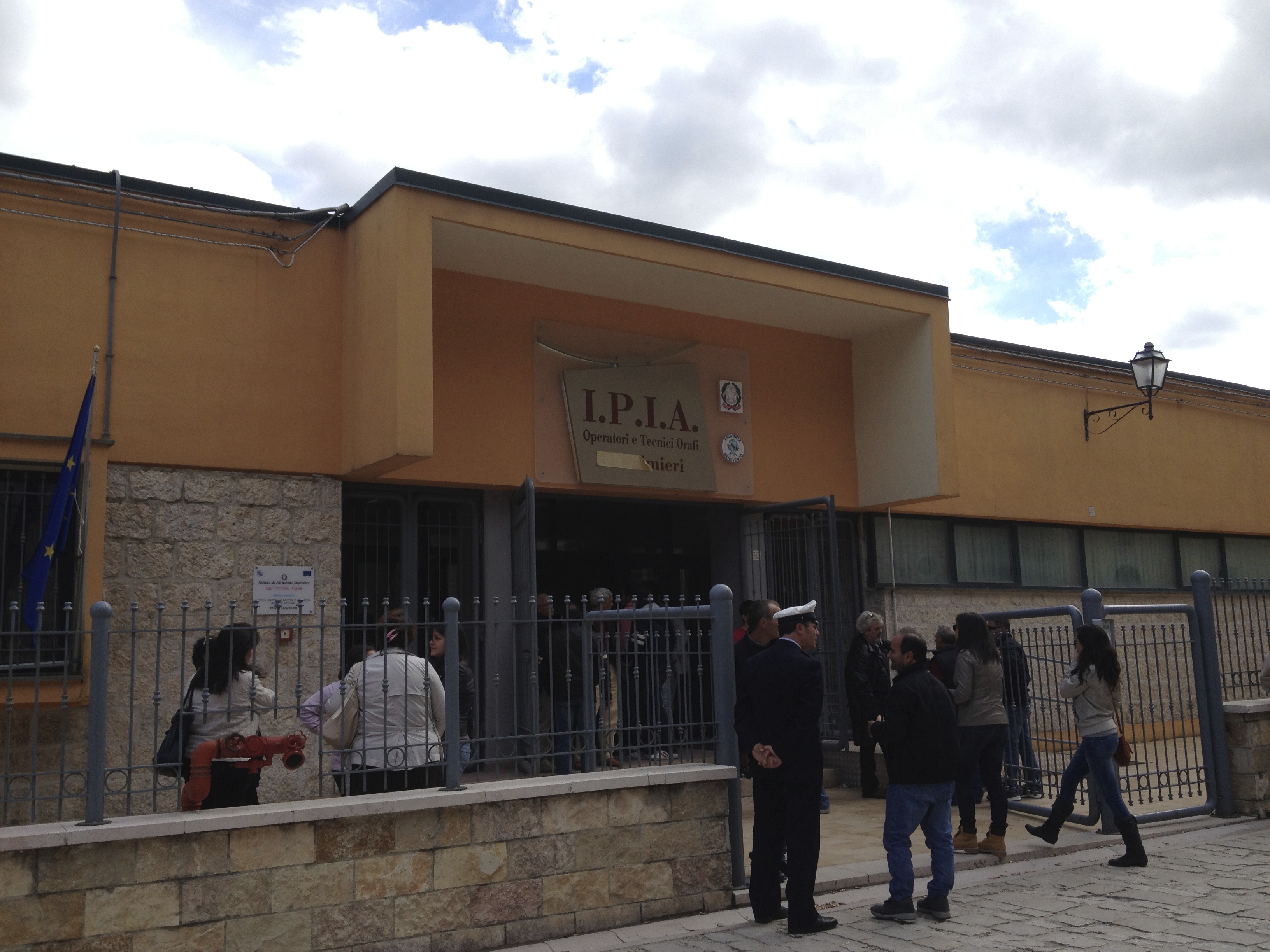
Yes, I voted. My dad ingrained that in my brain.  In Pontelandolfo we were only voting for the party who would send representatives to the EU.  We vote in the provincial high school – it is a specialty school for jewelry design.  Talk about good artsy vibes on election day.

IMG_0620
This picture was from last year’s election. Yesterday there wasn’t a line nor a policeman.

I went into district two, showed them my voting card, carta identita and like last year started to give them my passport when the election worker said “we know you.”  H’mm is that good or bad?  They handed me a pencil and a piece of paper.  Horrifying the pool workers, I started to put my mark right there and stuff the box.  I mean all you have to do is put an X across the icon of the party.  They pointed me to my secure screened space, I made my X and then stuffed the paper ballot in the box.  There are no hanging chads you literally make an X over an icon.  I am a good cittadini.  I vote early and often.  Look – I had my voter ID card stamped to prove it!

IMG_1455
See – I officially voted! Weeeeoooo!


Missing Those City Lights?

Last night I wended my way over the curvy hill road – checking for the sheep that graze and amble across the road from one field to another.  I decided to go visit Rosella and her great kids – they live in a medieval grotto next to a waterfall and antique water fountain.  The road scares the pajeeeezuz out of me – holes, animals and curves on cliffs.  But visiting the Iacovella house is worth the risks.  I’m thinking a quick game of scopa and a cup of caffè.  That was not in the cards – it was time for city lights.

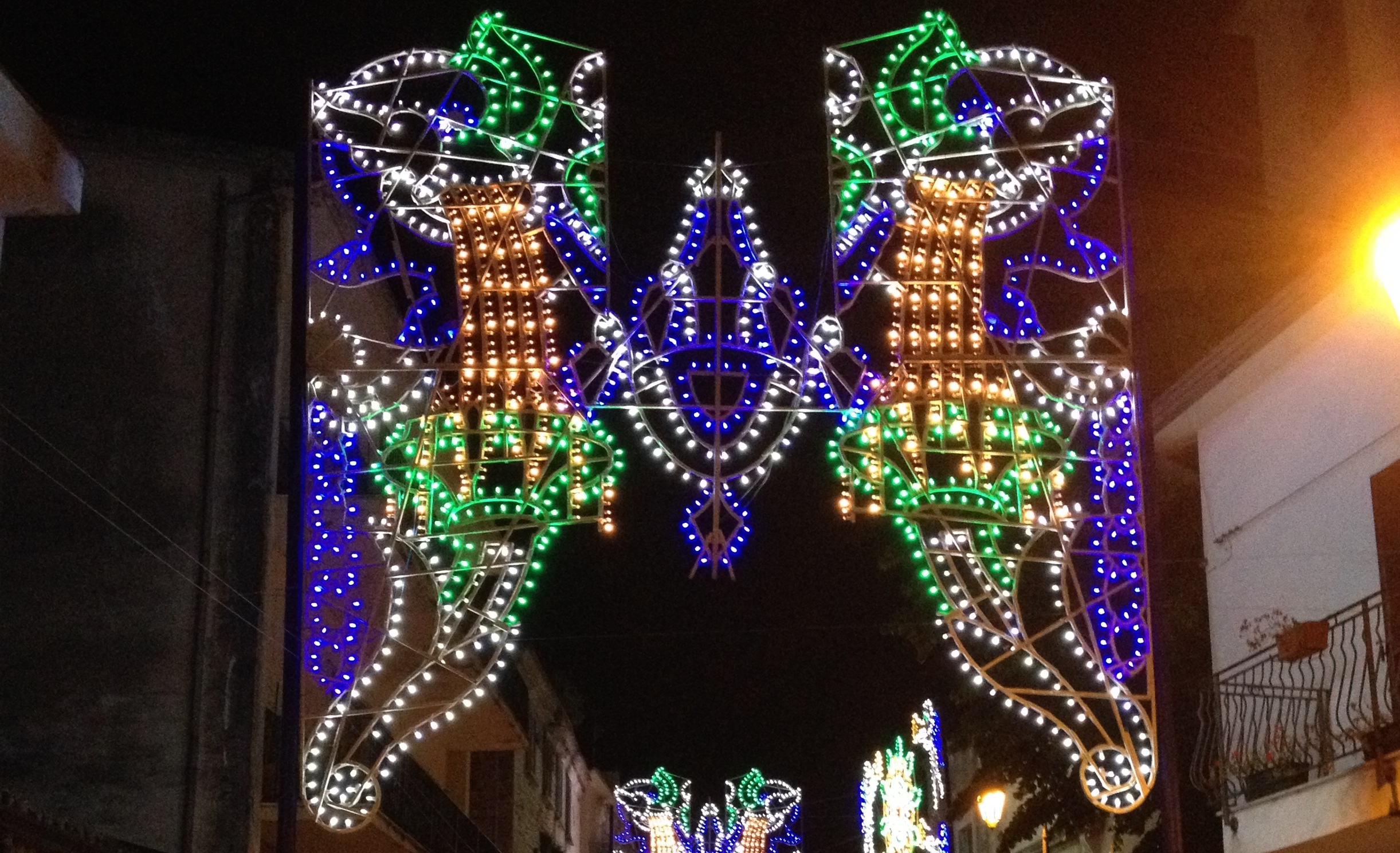
Who needs Times Square!

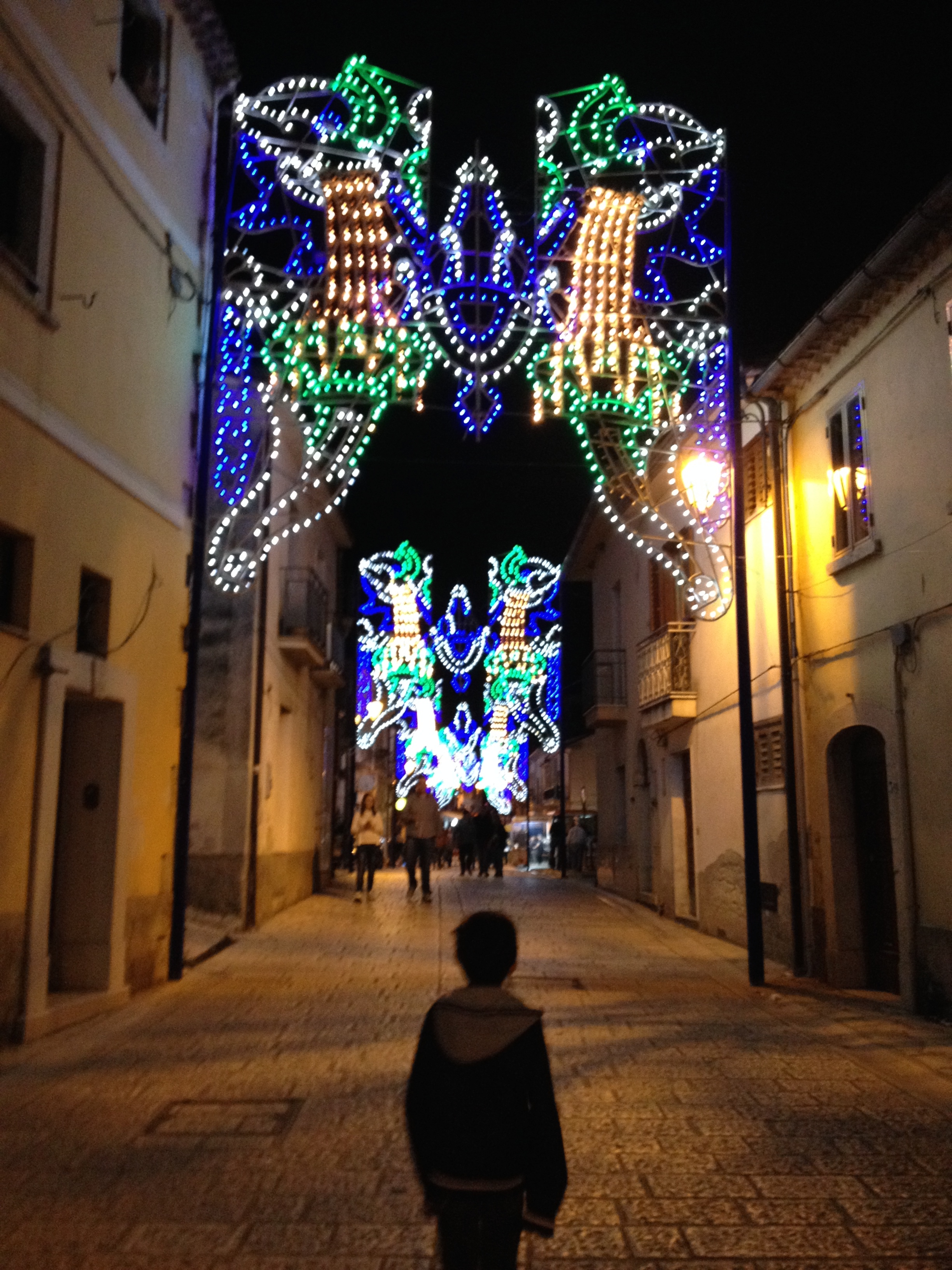
I jumped into the car with Rosella and the kids for a “solo cinque minute” visit to Casalduni.  Rosella’s husband, Pasquale, is running for Sindaco (mayor) and silly me thought we were bopping into the village to pick up campaign stuff.  My first clue was all of the cars parked along the road into Casalduni.  My second clue was the kids opening the windows and sticking their heads out to see something.  Whoa!  That something was this brilliantly lit street leading to the small villages central square.  Tonight was the first night of the festa for Santa Rita!

Of course, when I got back I had to google Saint Rita to find out who she was and what her deal was.  She is the patron saint of Casalduni and the patron saint of impossible causes.

She was married to a brute.  He died, her kids died and she devoted herself to God.
She was married to a brute. He died, her kids died and she devoted herself to God. Also for years after putting on a crown of thorns, she suffered with a terrible gash in her head.  Even carrying all that pain she committed herself to doing good works.

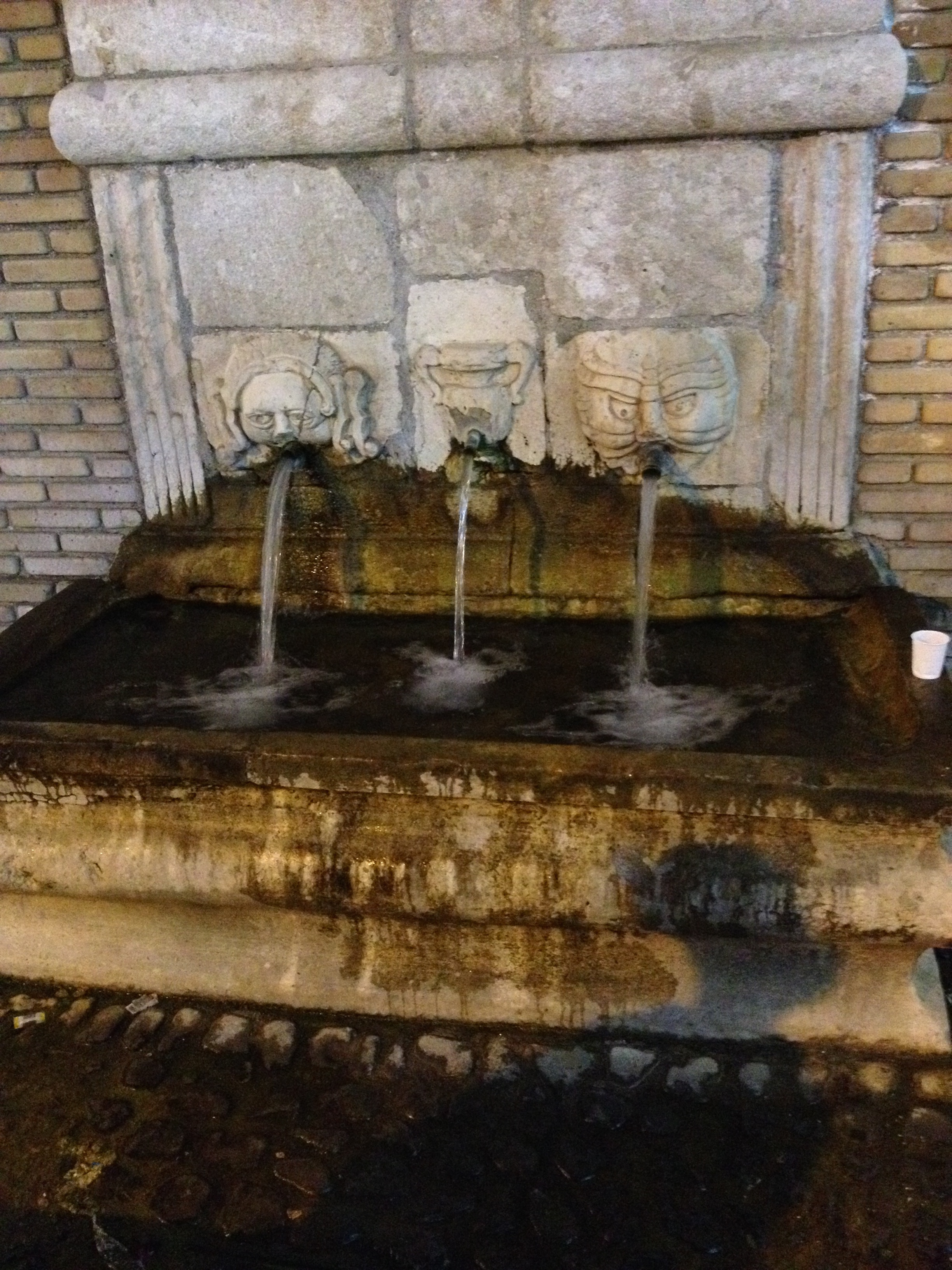
Every Italian village has a patron saint and it looks like that saint’s day – for Rita it’s May 22 – is a good excuse to bring some music, art and history to the village.  Last night the entertainment was Gruppo Folklorico Sannio Antico –  (https://www.facebook.com/pages/GRUPPO-FOLKLORICO-SANNIO-ANTICO/220253154670895) .  These all volunteer dancers told the story of Casalduni through music and movement.  Supplying the music was Il Gruppo Fontanavecchia.  In the hills,  old fountains – a source of water and life – seem to be a recurring theme. One movement piece showed women washing their clothes, gossiping and filling  jugs at the fountain – while the men flirted.  Ah a typical Italian scene. 

IMG_1444
This is the village’s ancient fountain and water source. The water comes from the mountain.

Casalduni is an interesting village.  It only has about 1500 residents but covers a great swath of land.  The village historic center has tons of empty properties.  I’m guessing families immigrated and just deserted their medieval row houses.  The place is charming and would make an easily accessible artists colony or pied a terrè in Italy.  It saddens me to see these historic villages just slowly empty.

Last night, the enthusiasm and energy of the “cittadini”made it a terrific night on the town.  My theory is that people need the arts to survive and if the arts are not close by they will create their own artistic feast.  I grew up in New Jersey, NY’s step-sister.  Our town, Hillsborough Township, was and still is an artistic waste land.  There is the occasional art show and band in the park but mostly if you want action you can visit one of the hundreds of jock filled fields – soccer, baseball, and  well I don’t know what the other jock fields are for but they are there.  Since Hillsborough is so close to New York, Philadelphia and Princeton, we leave town for our art fix.  Here in the hills of Italy, people don’t have a lot of cash, there is limited public transportation and everyone has the soul of a Da Vinci.  They make art!  Dance companies are formed. Theatrical “spectacollos” are staged. Live music is found in piazzas and every child doodles on a sketch pad.  Folks here create the art they crave and a saint’s day is a great opportunity to share it.  Since Saint Rita’s day is May 22, we will go back tonight to see what artistic feast we can munch on.

IMG_1442
Dancers waiting to take the stage, join the audience.

Gruppo Folklorico Sannio Antico wishes –

Con le nostre danze e canti, auguriamo a tutti una serata piacevole e che sia portatrice di pace e serenita.”  Noi devoti di Santa Rita chiediamo la sua protezione.

 With our dances and songs, we wish that every person enjoys the evening.   Also, may this event bring serenity and peace and may Santa Rita protect everyone with many blessings.

Me, I’m just happy to see the city lights.

The night may be over but the lights and St. Rita will follow us home.


How Many Bags of Fava Beans Are There?

Fava beans are sprouting in everyone’s gardens!  Yea, these protein filled little fellows make a yummy dinner.  Last year, when the fava beans kept gracing my doorway, it was the first time that I had ever seen a fresh one.  Well, maybe I did when nonna was alive and had the garden the size of a campo di calcio (soccer field) – but I don’t remember.

IMG_1402
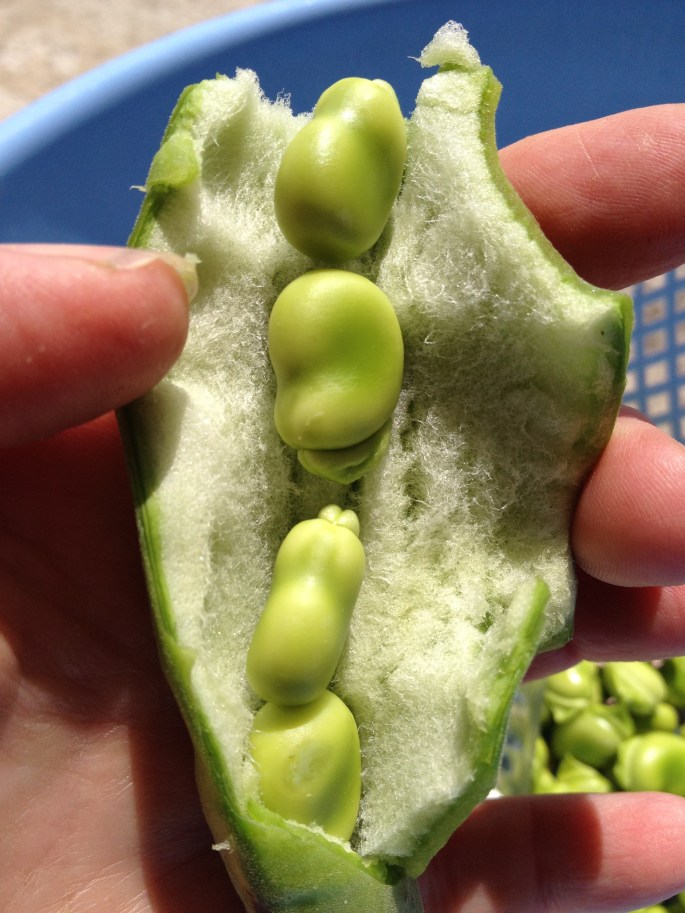
Pods are really green giants!

Seriously, this is a question that merits exploration.  How many bags of fava beans are there in Pontelandolfo?  When people pop in after pranza for caffè they usually bring something to share – like what ever is growing in the garden or was baked that morning.  Now me, I like the “what was baked” this morning – no fuss, no muss, just yummy delight.  My neighbor, Zia Vittoria, has an incredible garden.  It is chock full of every vegetable you could possibly imagine – including fava beans.

images
Bursting with protein the pods just wait to be picked, gifted and gifted again.

Yet, as other women pop in to visit Zia Vittoria, so do giant bags of fava beans.  H’mm when women visited these women they too brought fava beans.  One day it hit me.  What if there was really only a finite number of bags of fava beans and in any given span of two days the same 15 bags got re-gifted from house to house.

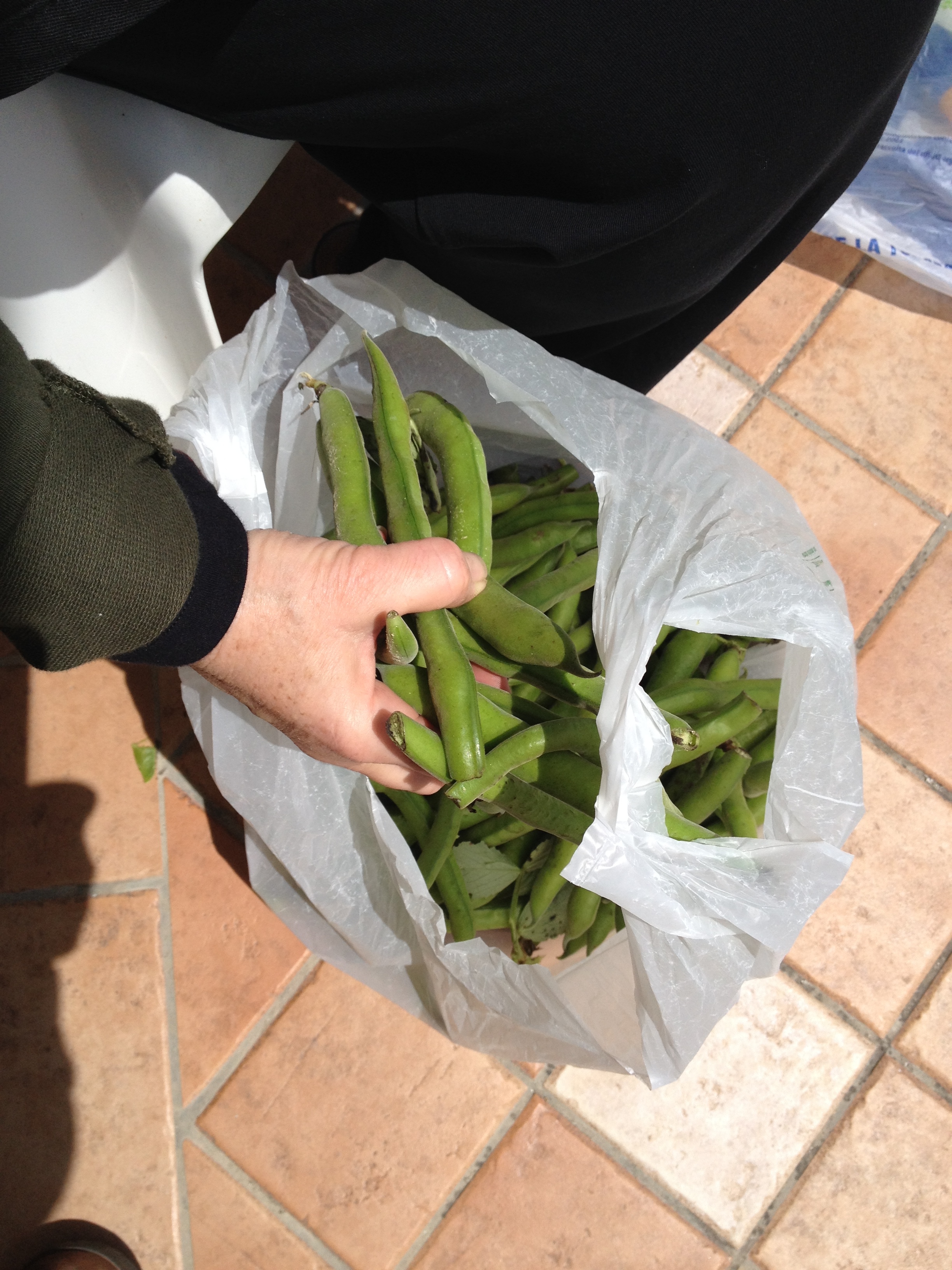
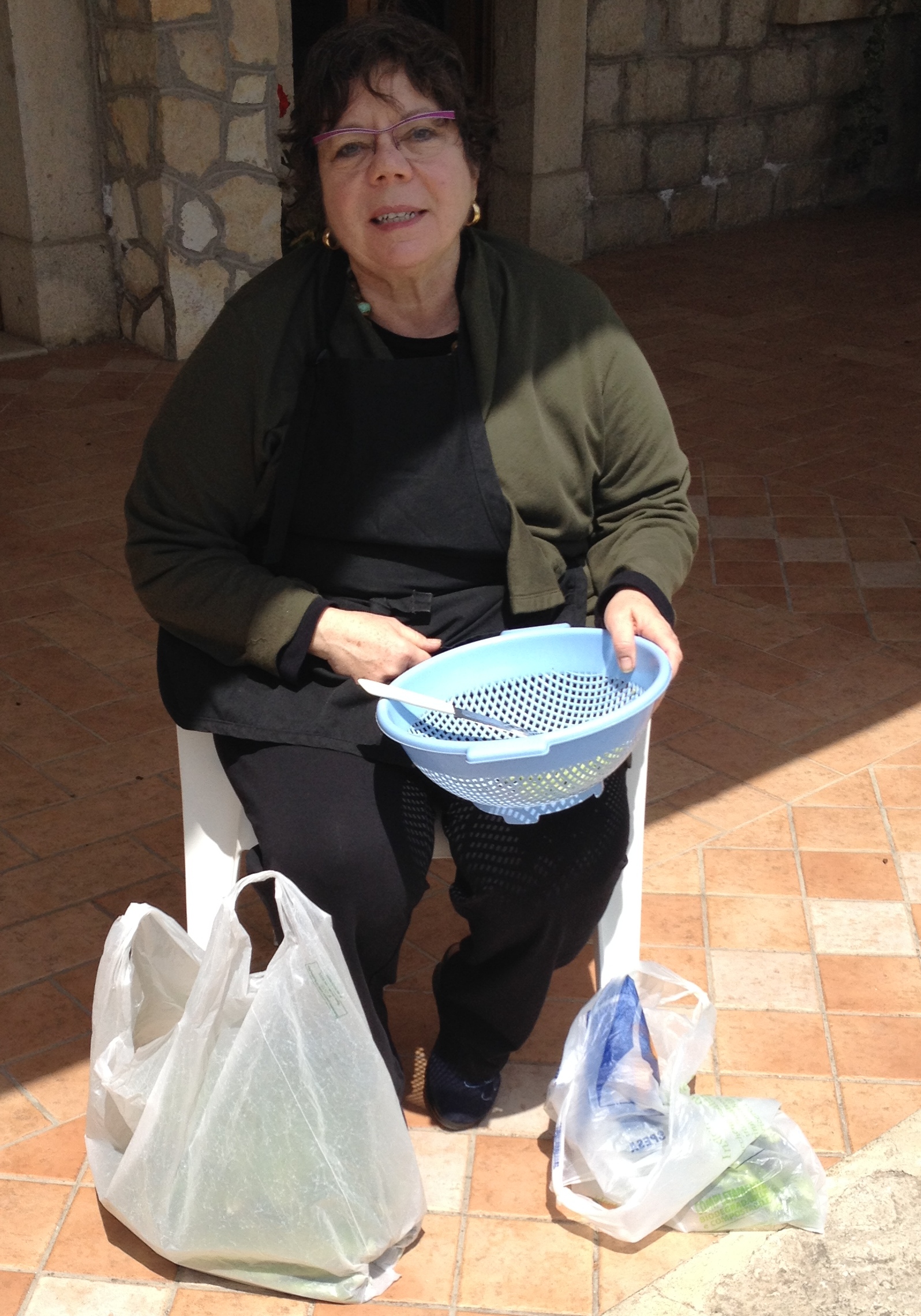
The bags stop here!  Well, when a bag appears on my door step I don’t re-gift it.  I say “guess whose coming to dinner.”  Last year Mr. Fava came often. The top picture is of my first bag of this season.  I pulled out the colander, a knife and a bag for the compost pile.  The sky was blue and I cheerily began popping beans out of the pod.

IMG_1397
Eat local and touch your food first.

So there I am shelling beans and wondering how I was going to cook them when my nipote (Italian for any kid in your family that you are related to and older than) popped by, reached into the bag, ripped open the pod and tossed the beans in his mouth.  RAW!  Who knew!  I was forced to try it – I mean I’ll taste just about anything.  The bean was sweetly good and obviously picked this morning.  I discovered that the day they are picked they are deleeeeesh as a salad – tossed with tuna or just a few slices of onion or whatever you can imagine.  That is also an abundantly easy lunch or dinner.

IMG_1403
If you can find the “zipper” these are pretty easy to open. Or stick the tip of the knife in the top and give it a slice. Then pop the beans into a bucket – just like a carnival.

I kept at the de-podding for a while.  My brain taking journeys back to the early seventies when with my long hair braided, I shelled beans, baked bread, grew sprouts and didn’t inhale.  It seems to me that it used to be fun.  This ain’t fun but it is worthwhile.

How many more are there?  And why do so many giant beans yield one little bean dish?
How many more are there? And why do so many giant beans yield one little bean dish?

One of the things I remembered while I was mindlessly popping beans, was an article in the New York Times that I read last year. A snotty assed food writer had gone to Rome. ordered fava beans in a restaurant and was appalled that they weren’t peeled!  I had no idea what the hell Miss little anal retentive was talking about.  In all the homes I’ve visited for pranza, all the fava bean stew, soup, frittata I’ve eaten, no one peeled off the outer shell.  I was taught to par- boil the beans before creating the dish.  Apparently, after this par-boiling part you can take off the outer shell.  Hell lady, I just spent an hour popping pods and now you want me to spend two hours popping par-boiled beans?

IMG_1405
It looks like a nursery of wee ones nestled on a flannel bed.

I caved and decided to try it.  After boiling the beans and dumping them in the ever faithful colander, I burnt my fingers trying to pop them out of their little shells.  What?  Wait till they cool?  What a thought!  Ten minutes is the maximum of waiting time I give anything.  I popped a few and tasted them.  Damn, it did make a taste difference.  They tasted sweeter and less meaty than they do with the shells on. I looked at the bowl of about a pazillion beans and I looked at Jack.  He gave me the “are you crazy” look – no one here takes the shells off.  When in Rome……

Without skinning the par-boiled beans, I made a simple recipe.   First I sautéd a couple of large onions in local olive oil, toss in cubes of pancetta and let that all get caramelized and crispy.  I always buy un etto of cubed pancetta – 100 grams – so that is probably what I used.  H’mm, from all the veggie tops and pieces I had languishing around, I made vegetable broth yesterday.   I tossed some broth in the pan, added the beans, a dollop of red wine – this is Italy – and let it simmer.  That and crusty bread made a perfect “cena.”

What’s that outside my door?  FAVA!

Thank you Rachel for my present!

Bar Elimar – My “Writer’s Room”

Hemingway had Soppy Joe’s Bar in Key West. F. Scott Fitzgerald had the Ritz Bar in Paris. Dylan Thomas had the White Horse Inn in Manhattan’s West Village,  I have Bar Elimar in Pontelandolfo, Italy.

IMG_0433
Some folks work at Staryucks.  I prefer the joint that makes the 90 cent real cappuccino.

Hey, reality check – I know I am not in the same league as those major writing players but I am willing to learn from them.  The first lesson – find a home away from home that will jump start your creative juices.  Or in my case, provide me with a tribe.  Some folks can work alone – I need the constant buzz of other folks around me.  They don’t even have to talk to me – just be there.

Sure I could sit at my desk, stare out the window at incredible mountains and maybe even pretend to write while I wallow in self pity and loneliness.  Or I could walk down the mountain to Bar Elimar – today I drove- have an incredible cappuccino, whip out my Macbook Air or iPad mini, stare at cool stuff and write about the people places and things I see.  A win win.

IMG_0414
The first thing I see is the cool art Marilina has drawn on my cappuccino foam. Yes, that is blood orange juice.

Some days, when my 6th decade body is dragging, I swear I steal an infusion of energy from the bar’s owners, Marilina Mazzamauro and Elio Di Muraglia.  This duo works from dawn until 4:30 the next morning.  Granted they do take shifts and it is a wee bit slower life in the winter but come warm nights the place is jumping. ( Did you figure out that Bar Elimar is the cute combining of the couple’s names?)  

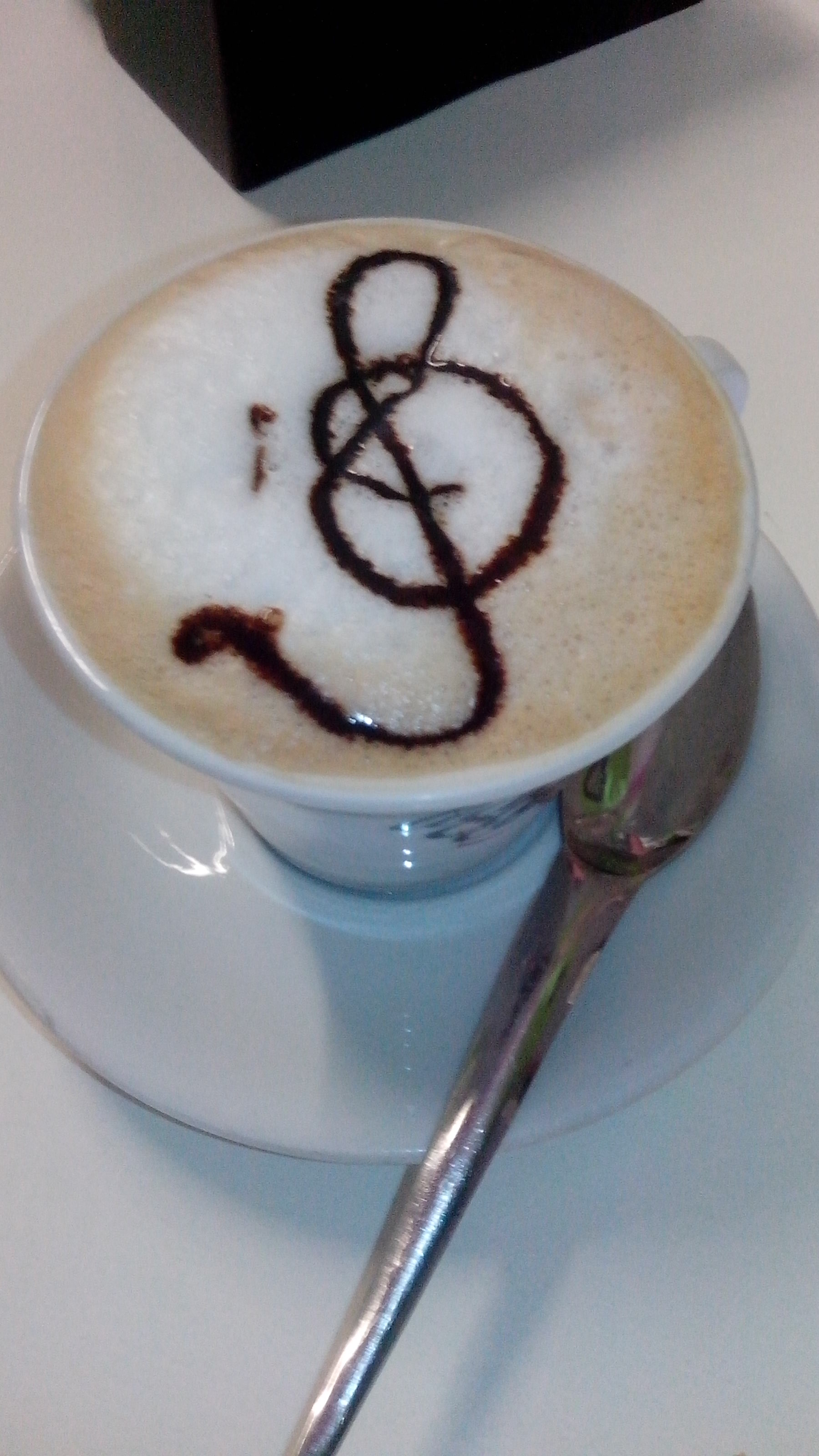
Most mornings, Marilina makes me that double, taking care to paint a flower, treble clef or fluid design in chocolate on the top of the steaming milky foam.  That art as part of my daily life is all I need to get inspired to slap my fingers on the keys.

IMG_20130710_112337
The treble clef is my favorite. Music in the morning!
2012-07-09 05.14.27
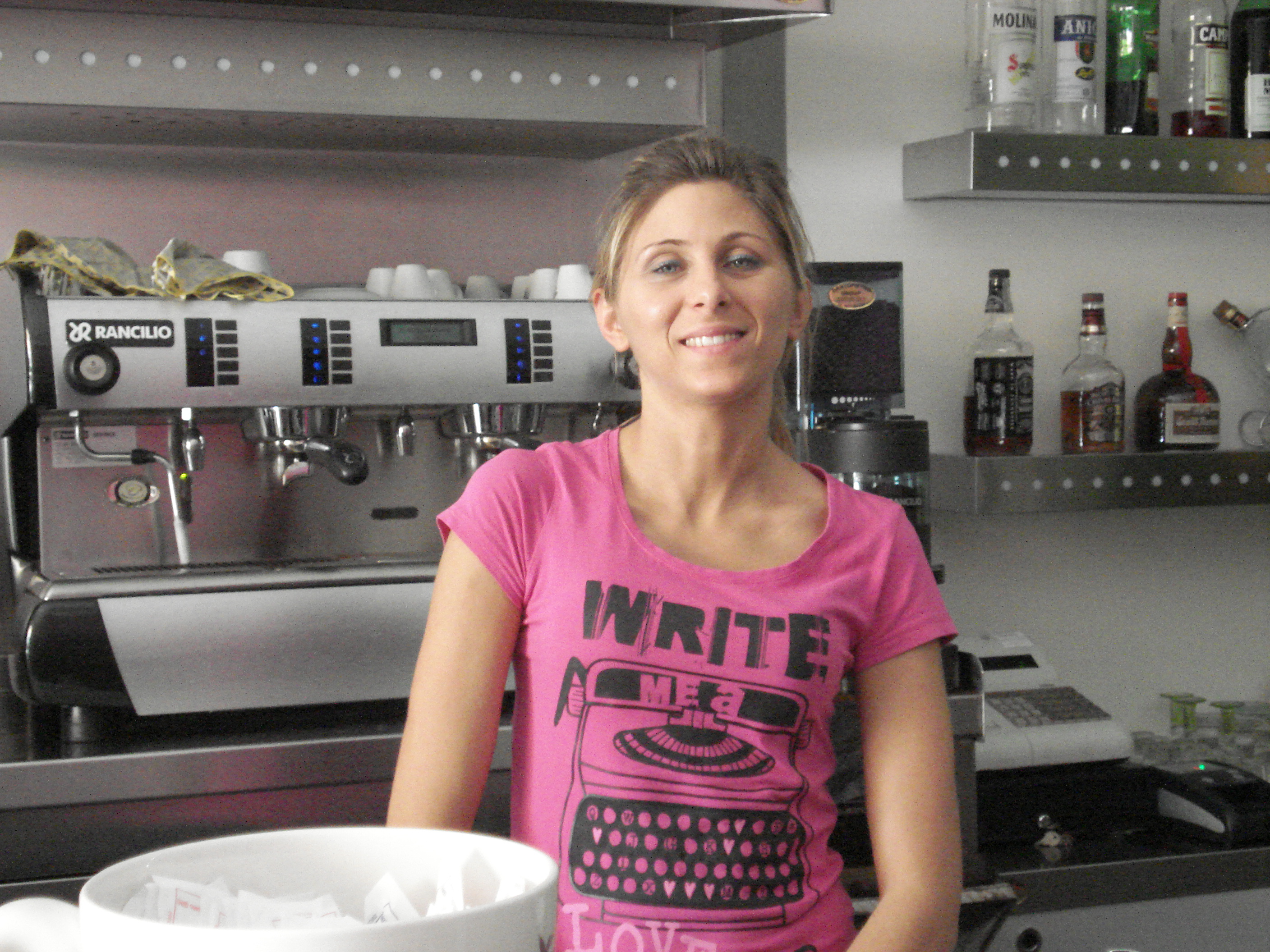
Marilina Mazzamauro, the artiste of cappuccino. Notice her writer’s T-shirt!  I just did!

Bar Elimar is about four years old and a fixture of piazza life.  Located on Piazza Roma in Pontelandolfo (BN) it is often filled with pensioners shouting and slapping down cards in frenetic games. Hey – didn’t I write about them?  Yikes, I do steal stories from the bar.

Outside on warm days, the comfortable whicker couches, umbrellas and tables attract all from tweens to adults. 
Outside on warm days, the comfortable whicker couches, umbrellas and tables attract all from tweens to adults.

 What I like about the place, besides the morning coffee art, is that everyone feels welcome and the place is spotless.  I always feel secure enough to leave my MacBook Air on the table inside and go to the bathroom – ain’t no one going to steal my stuff with Marilina behind the counter.  Some days, my new friend Rocco – he’s about 8 years old – will plop next to me and pummel me with questions.  He also likes playing with my iPad – h’mm maybe that’s the attraction.  It is that feeling of inclusion – being part of the community that really resonates with me.

IMG_0624
An afternoon visit by my nephew Nick Losardo – the $.80 prosecco was mine.

 Bar Elimar has music often during the summer.  Marilina, how can you work until 4 a m and open at 7:30?  Children and adults – including this crazy American – sit around, order a drink or thee under the moon and sway to the music.  My question is after they pay the bands, rent the tables, rent the stage and hire the waitstaff do they make any money.  Some times I think that the good life of the village,is more important to the village merchants than the bottom line.  Could that be true?

Since I started back to my writers room, all the projects that I played with while in New Jersey have been percolating in my brain and my keyboard.  The work may not make me a star but writing for a few hours at Bar Elimar sure makes me feel like one.

IMG_1407

Passionate Card Games

Men to the right of me.  Men to the left of me.  Men in sports jackets.  Men in open collar shirts.  Men in jeans and work shoes.  Men!

In my decadent youth being the only woman in a bar full of men would have been an incredible challenge.  Who would I key in on and get to buy me a Dewar’s on the rocks?  Who would be  smart enough to captivate me with conversation?   Who would….

Midge cutesy
Yoo, hoo – I’m looking at you! Damn, in the day the old magic eyes could reel them in.

Ah, youth – wasted on the young.  One Sunday, I was the only woman in the Bar Elimar.  I’m guessing other women were at the mass I had gotten up too late to head to.  The bar was packed with men – inside and out.  There was one lone table – in the sun – left so I plopped myself down and ordered the breakfast of champions.

IMG_0414
What a way to start a Sunday!

As I sipped my cappucino, my mind flashed back to the 70’s – whoa – hold on lady you are now very close to 70.  Take a breath.  I whipped out my iPad, did that pretend reading thing while I scoped out the scene. H’mmm what would I have to do to get one of these guys to come over to my table?   H’mmm would the killer stare work or would it be the smile & nod routine?

Then it hit me.  Even if my foxy friend Mary were here to act as wing man – we tag-teamed in bars in our rakish youth – no one would look at me. I could be a size 2 and naked and no one would look at me.  They are all staring at their cards!  Card games and other games of chance are an intense fact of life in my little village.  Cards are a passion.

IMG_0847
Yoo hoo – My boob just popped out of my shirt!!!

Men sit for hours in the bars playing cards – Scopa, Briscola and other games that I didn’t recognize but there was lots of tossing of cards and shouting.  Last summer, Alessio, one of my favorite young men and his cute older brother Gabriele, decided to teach me to play Scopa.  After all they and their buddies, mimicking the older guys, sit sipping soda and playing Scopa in the piazza.  Surely, this old American cousin could learn.

According to the Dante Alighieri Society of Washington –

Scopa is the most popular card game in Italy .  It requires the ability to count and add up to the number 40.

Boom, that took me right of the running.  I can’t add up to 40 in English and now I have to do it in Italian?

Gabrella hold Alessio  back from leaping across the table at me because I forgot how much il re was worth.
Gabriele holds Alessio back from leaping across the table at me because I forgot how much il re was worth.


After numerous lessons and lots of laughing – all pointed at me – Alessio and Gabrielle finally  taught me enough to actually play with me.  But our games paled compared to the men in the bars.  There wasn’t any tossing of hands in the air, slapping the cards with the force of death, loud groans and arguments.  No one got up and left abruptly at our table.  (Unless it was to get a snack.)

Art is everywhere - even in a Napoletane deck of cards.
Art is everywhere – even in a Napoletane deck of cards.

During the focused card games in the bars, I never saw money change hands – gambling is illegal I think – but in my heart of hearts I knew that passionate play had to lead to some prize.  Maybe it’s simply beer or if you’re lucky…..


Oro Giovane – Local Holiday Shopping in Pontelandolfo

Bah, humbug said the Scrooge Midge as she stared at the masses of cars outside the mall and struggled to drive past it on the super crowded highway.  Bah, Bah, BAH, HUMBUG said super angry Scrooge Midge when she saw all of the Black Friday news shots of herds of people trampling into the  evil BOX STORES that plague the American landscape.  How can Scrooge Midge get back in touch with the Christmas Spirit?  How can Scrooge Midge get in touch with her inner Santa and put down that bottle of  Scotch?  She can go into the gift closet and start reminiscing about where she bought the baubles for her family and be proud that she thought about gift buying for Christmas when she was still in Pontelandolfo.   Even prouder that she was shopping uber-local from people who live and work in a minuscule Italian village.  Whoa – look at this –

IMG_1114
I picked this up for my cousin – oops – if she reads this – Santa blew the surprise!
It was less than $20 and is adorable.

Seeing the necklace made me think of Ornella Romano, the charming and creative owner of Oro Giovane.  The first vision that popped into my head was Ornella sitting on the outdoor couch at Bar Elimar with her daughter Olga Addona under the blue morning sky, drinking cappuccinoS.  I didn’t really know them well but smiled and said “buon giorno.” As I did every – oops Jack caught my lie – most mornings, I went to the bar, ordered a cappuccino, sat outside with my lap top, sipped the best cappuccino in the world, stared and did my writing.  When I went to pay I discovered that my caffè had been paid for by Ornella!  Grazie tante! Welcome to village life.

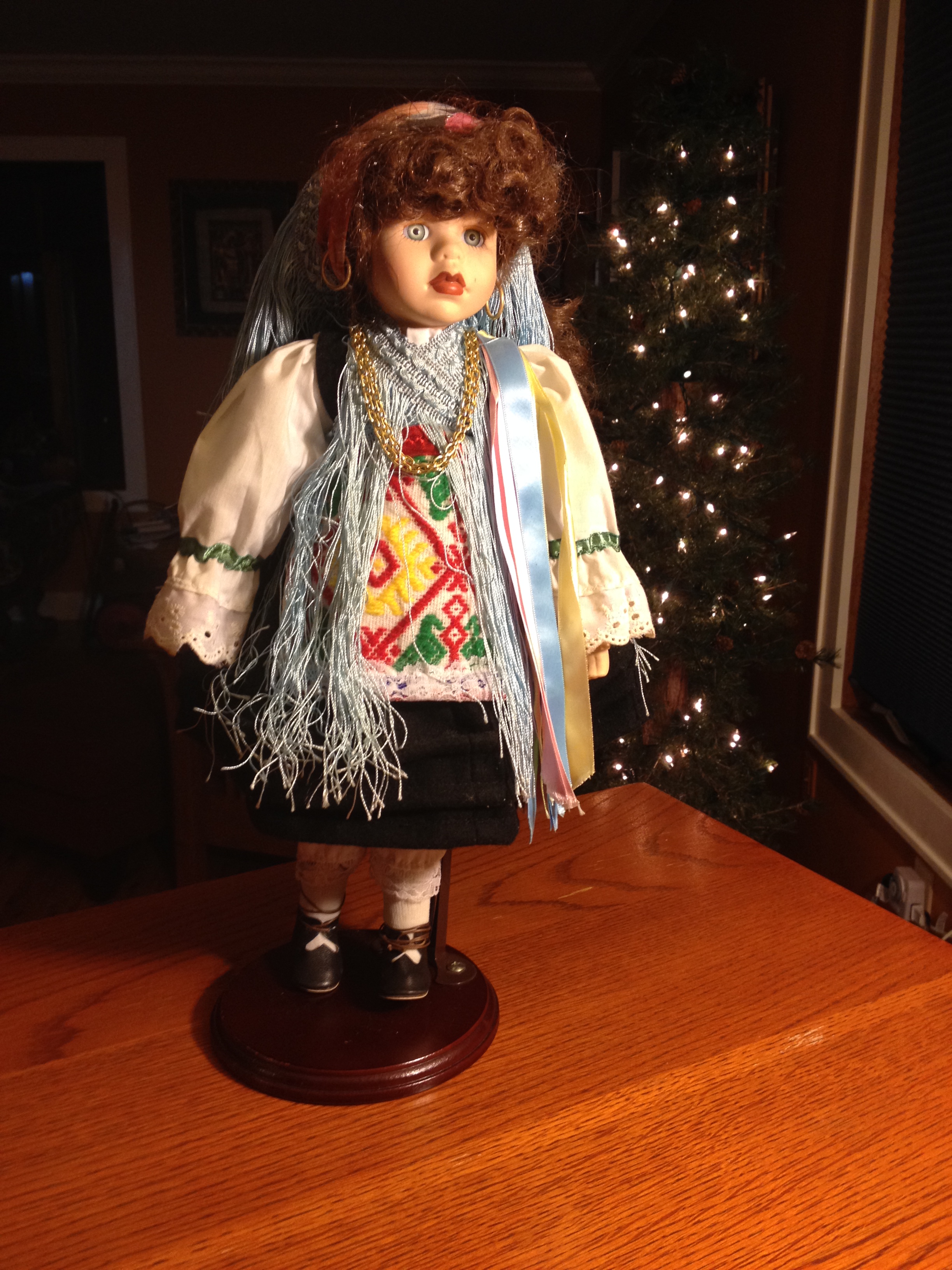
My talented cousin Carmela Fusco creates dolls dressed in historic traditional garb.  Before I found Carmella and started a relationship that has spanned many years, I visited Pontelandolfo, wandered into a small shop and bought a doll for myself and one for my niece.  Years later, I realized my first connection to Carmela was the doll!

IMG_1121
Carmela’s doll proudly stands in my living room.

She sells them now at Ora Giovane and some years ago brought me there to meet the owners, Ornella and her husband Rossano Addona. During our visits, we often stop in and  have bought some pieces, but never really spent time getting to know Ornella’s family.  This trip was different.  We would run into the family in the piazza listening to music, sipping a prosecco or taking the sun.  Like many of the small business owners, they would sit outside their shop on nice days and talk to other shop owners, gossip with villagers and include outsiders like us in daily life.

DSC02110
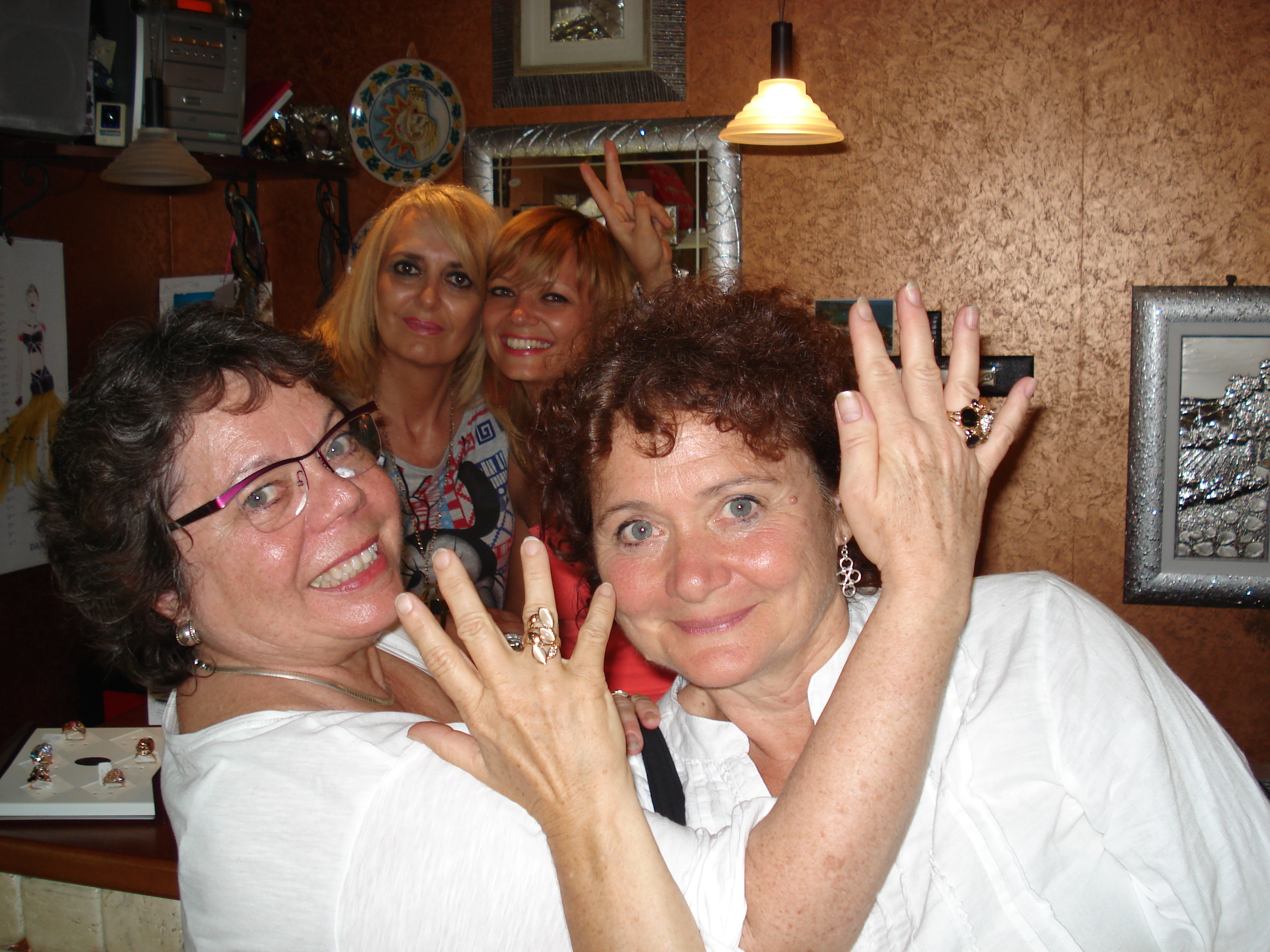
Jewelers Olga Addona and Ornella Romana.

Olga Addona attended the goldsmith  specialty high school available to students from the Province of Benevento.  Can you imagine – a public school where talented art students can  learn goldsmithing!  Unfortunately, because Pontelandolfo is not on a regular bus or train line it is difficult for students to attend the school and there has been a huge drop in enrollment.  Sadly, the school is closing this year.  Hey Arts Folks – WHAT A GREAT OPPORTUNITY!  Why not reopen it for artsy American adults!  Charge a tuition!  Bring some tourist dollars into town.

DSC02114
Sister Susan and I bought some faux bling and kibbitzed with Ornella & Olga.

I am passionate about shopping local – and yes I do shop locally in New Jersey.  My meat comes from farms not factories, my meds are from a family owned pharmacy, etc. Shopping in Pontelandolfo is really like a walk back in time when Main Streets were thriving and everyone knew your name and if you acted like a wild child any adult would call your parents.

I truly enjoyed popping into Oro Giovane and foraging for fantastic gifts.  The family owns two shops on the piazza – one is just jewelry, art and tchatchkes.

DSC02117
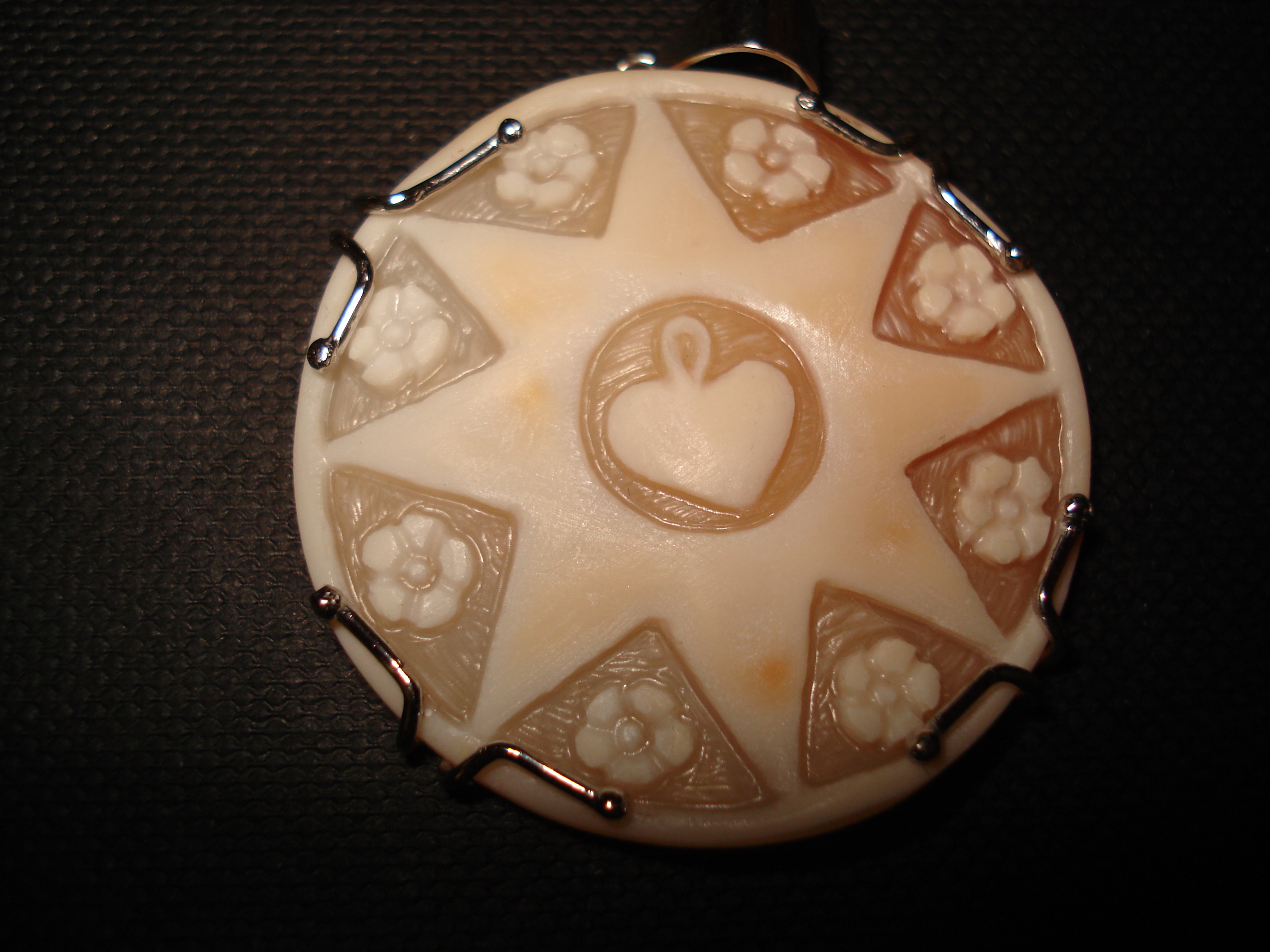
Cameos carved with the village’s crest.

The second shop has great purses and accessories.  Santa – Babbo Natale –  loves family owned shops, artisan studios and well – anything local in the USA and Italy.  So will you when you visit my other hometown – Pontelandolfo!

Huzzah – I just remembered – NOW SANTA GETS TO WRAP ALL THIS SWAG!  BUON NATALE!

Oro Giovane’s Facebook page is https://www.facebook.com/orogiovane.gioielleria?fref=ts

DSC02120

Laundry – Venetian Style

Traveling through Italy, Midge had an epiphany! Laundry wasn’t some mundane yet necessary act. Yards of laundry strung around Venice was art.