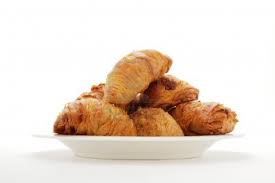
Have you ever been surrounded by people and yet still felt so lonely that your heart chakra ached? That is how I felt this morning. I am in sunny Ecuador, met a super italo-ecuadoriana, am staying with great friends but feel a gaping hole in my heart. At first I thought I was home sick – I never get home sick. Than I thought it was because my zia in Flagtown had a stroke yesterday and I am a continent away. Shazaam – it hit me -I was feeling lonely because I didn’t have a sense of community here. No “tribe” to connect with. All that depressive thinking made me hunger for comfort – comfort food – bread like I can only find at Diglio Panificio in Pontelandolfo! Diglio’s not only kept us in thick crusty bread but also was one of my connections to the community – it was a place I didn’t feel like a stranger or alone.
Some mornings I would walk down the hill just to buy a round of bread and if the Panificio wasn’t busy, I would talk to the owner, Nicola Diglio. My Italian isn’t the best but we would talk about the village, economy, USA, whatever. Nicola never made fun of my attempts to pronounce the pastries or how long it took me to decide which pizza slices to bring home in the morning for our night time snacks. That bakery was one of the anchors of the community for me.
Some Wednesdays after strolling through the market, my cousin Carmella and I would take a shopping break by going to Diglio’s for a cappuccino, a little nosh and a lot of laughter. Carmella is a bright star in my universe and of course she introduced me to this pasticceria.
Cousins/Sisters having a laugh.
According to their brochure, Diglio opened its doors in 1983 with a commitment to use recipes handed down form generation to generation. When you visit Italy, you can find the shop at 2, Via Eglido Gentile, 82027 Pontelandolfo (BN). It truly is a pasticceria artigiana – when you watch the video you’ll agree with me.
While selecting pictures for the video I saw one of the Diglio’s little sandwiches on scrumptious rolls and got a little misty. Zap – flash back to my dad’s first cousin, Giuseppina, insisting we stop at Diglio’s so she could buy the sandwiches before l’avventura. Jack and I take Giussipina and her sister Paulina on road trip adventures. They pick the place to go – it’s always a shrine – there are tons in our area. Since we never saw a shrine and loved listening to the two of them chatter and laugh at us, we would go to shrines – with bags of Diglio yummy mini sandwiches.
Giuseppina, Paulina & Jack 2013 adventure
Then I flashed back to 1995. when I first knocked on Giussipina’s door, pointed at my family tree and said in pidgin Italian “tu sei il cugino di mio padre?”. That timid knock resulted in finding my extended family and celebrating with what – pastries from Diglio.
1995 Giuseppina & Paulina – note the pastries.
Whenever I bought pastries I would marvel at the way they are presented – perched on a golden cardboard tray and gingerly wrapped in pretty paper. The presentation always made any day that you bought a pastry feel like a special day. Some days I just need a special day and a sfogliatella prettily wrapped can be just the medicine it takes to turn the grey sky into blue.
One bite is better than a happy pill.
This past June was the first time I had Il Rusticacio – a small bread puff made with cheese, egg and salame. When I bit into one I swear I felt my grandmother hugging me. People have been eating – what we call artigianale – dough filled things for generations. The connection I feel in Pontelandolfo to my family is intense and eating food made with ancient recipes makes the connection even tighter. Is that my grandmother pinching my cheeks?
One day I went into the shop and Nicola’s son, Antonio, who is a super creative part of the artistic bakery team was behind the counter. The door opened and his daughter came in from school – she looked at me, I looked at her and recognition twinkled in both our eyes. She said “Good Morning – How are You?” The secret phrase I told the kids in the public school that I worked with to say to me whenever they saw me. Boom – an even bigger connection to the bakery.
Community – that is what I need in order to feel secure, happy and healthy. When I am in Pontelandolfo – we go back May 1st – walking into Diglio Panificio yields more than just a loaf of bread. Enjoy the video!
The holidays are over and you may have been wondering where I’ve been. No where exotic, just doing a little inward gawking. It is the new year – 2014 – and standing under my nonna’s snow covered mulberry tree as chunks of ice smack me in the head, I feel compelled to tell the truth. To finally, admit that – cripes this is hard – how do I explain – beh – just belt it out –
During the holiday seasons there are Italian traditions that I love to exploit – yeah exploit. Preparing the seven fishes on Christmas Eve, hosting a Christmas Day feast, having lentils with cotechino on New Years, celebrating Epiphany by hanging up my collection of La Befana dolls – all of these traditions that my Italian American pals tell me were incredibly important in their families I never heard of until I was in my 20s! When I discovered these traditions existed in other families I STOLE them and made them mine. I now embrace these traditions to reinforce that I am Italian. Some folks say I over embrace them – hug them until they pop. They were not a part of my childhood in poor rural agrarian New Jersey. Here, you hid the fact you were Italian – the elders remembered the WWII Italian interment or prisoner of war camps that popped up all over New Jersey. We’ll save the stories of those camps, that were as close to us as 10 miles away, for another day.
A typical meal at grandma’s – that is me grinning in the lower right hand corner.
My first huge confession is that I never have gone to confession. That’s right, this kid with the Italian last name didn’t step foot in a Catholic Church until she was in college. I was baptized Lutheran and grew up in the Dutch Reformed Church. So I never heard of Epiphany or understood why eating fish on Friday was such a big deal. It all goes back to a randy priest in Manville who used to flirt with and chase my nonna around. Apparently, he was raising a lot more than the Holy Spirit with the Italian immigrant wives and my nonno, Francisco, wasn’t going to have someone else singing hallelujah with Mariarosaria. So, no one was allowed to step foot in a Catholic church. My dad said that Francisco held mass for the family every Sunday. He read from the bible, shared a lesson and reinforced that they were to put others first. What Francisco didn’t say was that he couldn’t read the bible – it was memorized or he gave a good facsimile of the word.
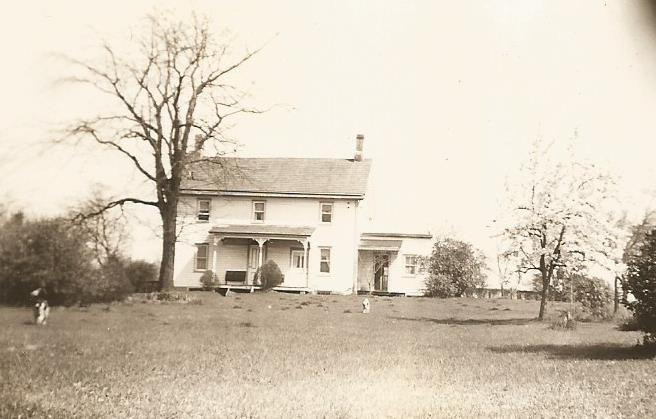
Nonna & Nonno in front of the Flagtown House
Dad didn’t discover that his father couldn’t read until he was in high school and he needed Fancisco’s signature on a form for football. I remember eating fish on Friday or pasta with vegetables or just vegetables. I also remember being poor which meant that lots of days we didn’t eat meat anyway. It wasn’t until my first trip to Italy when I went to mass in the church that my grandmother was baptized and married in that I felt any connection to Catholicism. When we are in Pontelandolfo I attend church often, listening to the mass in Italian, seeing parishioners of all ages – without books – repeating together the litany. I feel my grandmother there and to me that is priceless.
When I was in college and met Italian Americans from places like Jersey City and Hoboken where Italian traditions lived on and on, I felt stupid. “So how was your Christmas Eve – did you choke down all seven fish?” Huh, I muttered? The only fish I remember at Christmas time was baccalà fritto – nonna – damn we never used the word nonna she was plain old grandma. (We were not allowed to speak Italian – I’m first generation and no one spoke Italian to me. Remember, in Belle Mead – just down the road was that Italian prisoner of war camp.) Anyway, grandma made a pancake batter and dipped that cod and fried it up. We all loved it and that was a holiday treat. But seven fishes – never. After the scrumptious tradition was explained to me I tried to horn in on other people’s feasts. “Hey – I’m fighting with my mom again – can I come to your house?”
Today, I hungrily pour through cookbooks and dream about my next Christmas Eve. For the past two years, Jack and I have hosted a foodies night of seven fishes. We invite folks who love to cook and love to eat over on Christmas Eve. Everyone has to bring a fish dish and a healthy appetite.
This year we started with calamari fritti, baccalà fritta, clam dip and skewered shrimp with a pesto. We moved on to Salad Niçoise – two fishes here – tuna and anchiovies. Next was an incredible New England fish chowder made with fresh cod. We were forced to take a Christmas Caroling break to help the food move south.
We came in out of the cold for Cioppino – an Italian fisherman’s stew that had mussels, clams, shrimp, scallops, squid and a white fish. Time to start the bonfire. Pause and then finish our poached salmon, broiled flounder and green salad. So how many fishes was that?
We start the festivities at 1:00 in the afternoon and go on and on until the fish is gone and we are sitting with glazed eyes in front of our fire pit staring at the flames and raising a glass of grappa to the baby Jesus.
See what I mean about stealing the Seven Fishes tradition and going a bit overboard?
Christmas Day in Flagtown now resonates with loud voices, laughter and more food trucked in by my sister, cousins and friends. The table is beautifully set with the “good china” and silver. We swap tales, scream at each other and generally have a good time. The Christmas Day’s of my childhood meant a day with mom and a day with dad – this was the fifties and they were the ONLY couple divorced in my home town. I remember my Christmas tradition being how to escape the angst. Now being the “family elder”, I do go a bit nutsy on trying to see that the younguns don’t feel uber angst.
Can we talk about La Befana? One January, years ago, Jack and I were in Pontelandolfo visiting. Little witch looking dolls on brooms were being sold everywhere. Well, I just thought they were cute so I bought one and asked Carmela why they had all these flying streghe in January.
La Befana in Sardegna! They had a huge celebration with lots of women dressed like La Befana roaming the streets.
Here’s the story. One snowy night, this kind old woman, living alone in the forest, welcomed the Three Wise Men into her home. She fed them, heard their tale and watched them go to find the new born king. After cleaning up, she trailed them – never found them – but to this day brings gifts to children all over the world. Wow – kids got gifts on January 6th – brought to them by this kind old woman! What a deal – that never happened in Flagtown.
Celebrating in Venice!
Every holiday season all of my La Befana dolls come out. Watch your head – there she is hanging from the light in the kitchen. I researched La Befana’s story, wrote a play about her set in today’s world, did a storytelling session about her – well just became a la Befana fanatic. Do you see my pattern here?
I want to thank all of the Italian American women I went to Montclair State College with who first introduced me to all things Italian. Next, I need to thank my ever patient family in Pontelandolfo who still giggle when I look so wide-eyed at a tradition that has been going on for years. Lastly, I need to thank the Meet-Up: Central Jersey Lovers of All Things Italian who keep all of these fabulous traditions alive for me today.
Family Holiday Traditions – Embrace them and make them your own!
December 15th the best Christmas present this blogger could ever want came from Kristen Ross. Kristen posted a comment asking for help finding out more about her friend Nancy’s family. I e-mailed her, then she e-mailed me and soon we were chatting on the phone like old chums. The surnames in her pal’s family can also be found in my family! Rinaldi, Fusco, Mancini – wow – my bis-nonna was Mariantonia Rinaldi who had a brother Francesco. Nancy’s grandmom, Maria Rinaldi, was the daughter of Francesco Rinaldi ! Could this Californian’s family tree intersect with mine?
Those of you who grew up in or live in Pontelandolfo may know the family – if you do please leave a comment on the blog. Nancy’s dad – Domenic Mancini was born in the Minicariello section of Pontelandolfo. His dad was Antonio Mancini and mom was Maria Rinaldi. Antonio’s father is Angelo Mancini and his mother is Catterina Fusco. Maria Rindaldi’s father was Francesco Rinaldi and her mother was Antonia Rinaldi.
This is Kristen’s Story –
Kristen, Domenic & Nancy Mancini
Un Miracolo Di Natale
By Kristen Ross
Domenic Mancini was born on a small farm in Pontelandolfo, Italy. During World War II, nine year old Domenic was the first one in his family to discover that his father, Antonio, was killed in Bardia, East Africa. His mother’s inability to read meant that this little boy had to personally deliver the devastating news to the family. As I began to hear more about Domenic’s early childhood, I was deeply affected by the tragedy of it all…images of Domenic being held back by his Mother as the only father he knew left for lands and battles unknown, the longing of a little boy for an absentee father, and the courage he had to support his grief-stricken mother.
To compound the sadness of war, he never knew where his father was buried. He was told that Antonio was buried somewhere in Africa, but no one had been able to locate any information, and Domenic (now 82) had begun to come to terms with the idea that he might never be able to pay his respects to the father he lost and have closure.
After hearing him tearfully tell this story, I could not imagine what is was like to not know where his dad was after all these years. I was determined to do some research of my own. I felt the sense that nothing is impossible and nothing is ever lost, it just hasn’t been discovered.
Having taken only one Italian class, after traveling to Italy several times, I used my broken Italian to make numerous phone calls, emails, and research Italian websites. Having looked at almost two thousand names, a thousand war memorial sites, and spent countless hours of translating Italian handwriting from the 1940’s I was coming up with nothing. It was like searching for a needle in a haystack, an Italian haystack for that matter.
I needed un miracolo; a miracle. Every time I find myself helpless, I turn to something higher. I simply prayed for this right intention to manifest itself. For a father to be reunited with his son, even 72 years later, is still possible. Having lost my father too, I knew how much this would mean to Domenic to have some sense of unity, closure, full circle ect… I kept ricerca; searching.
Before I went to sleep that miraculous night, I checked one last Italian website. I typed in the letters of his last name and there he was. Antonio Mancini had been found. I started scrolling down to make sure I was actually seeing straight.
Luogo Sepoltura means Place of Burial. He was back home in Italy. From previous research that I had done, I knew the bodies of the Italian Soldiers who died overseas, were sent back to Italy in December of 1967 and placed in a beautiful memorial museum in Bari, off the coast of the Adriadic Sea. Dominick’s father has been honored there.
I called Nancy, and she quickly made the phone call to Domenic! He was in total shock and was filled with so much joy. He told us that this was the best gift he’d received in his entire life. As his voice teared up on the phone, he told us he would travel back to Italy to see his father. This summer, we will be traveling with him on this beautiful journey to witness this father and son reunion.
Unconditional Love is the best gift in the world.
This is the true meaning of Christmas to me.
**********
The Sacrario Militare dei Caduti d’Oltremare (Military Memorial to the Fallen Overseas) was opened on 10 December 1967 on the outskirts of Bari, on the way to Brindisi. The structure houses the remains of more than 70,000 Italians who died in foreign lands. These lands include Greece, Albania, Algeria, Morocco, Tunisia, Libya, Somalia, Ethiopia, Eritrea, Germany and the Mediterranean Sea, in the First and Second World Wars.
What’s a woman to do when the farmer down the road keeps dropping off pumpkins?
I know what your thinking – It’s December and Thanksgiving is long over. Why the devil are you getting pumpkins? I made the mistake of mentioning that I put left over Thanksgiving pumpkins to use by baking them, cleaning and gutting them and freezing the pumpkin to make soup, pie, pumpkin gnocchi etc. In the friendly world of farm country that means – hey, the chick down the street will take all your left over pumpkins! As my friend Jonathan said to me, “when life gives you a shitload of lemons – make lemonade.” Well, the pumpkins were multiplying and I decided to make pumpkin gnocchi!
Christmas is right around the corner so why not be a little daring – make pumpkin gnocchi for your primo piatto. No one will expect it.
Gnocchi, ready to be cooked. (Photo credit: Wikipedia)
I must tell you – after the grandkiddies go gaga from staring at electronic toys you can save the day by playing makin’ gnocchi – otherwise known as rolling and slicing snakes! Jack, a member of my extended family, came over one day and it was too cold to play outside. What saved the day? Makin’ gnocchi! His mom was our videographer – enjoy!
I don’t really have a tested recipe. Cooking in my house is like great improvised theater. So here is about what we did:
Cooked up a pumpkin. Got rid of the seeds. Sliced it and mashed up about a 1/2 cup.
Peeled and cooked potatoes and mashed up about 1 cup.
Mixed the potatoes and pumpkins together really well and tossed in 1/4 cup grated Parmesan Cheese, a dash of cinnamon and nutmeg.
Then we added about 1 1/2 cups of flour – enough flour to make it look like a dough.
We took handfuls of dough and made snakes. Cut the snakes into 1 inch pieces and put them on a linen towel to dry. You can score them with the tine of a fork if you want to be cutesy.
A big pot of salted water was put on the stove. When it was boiling I dumped in the gnocchi. They sunk. When they floated to the top they were done. How simple is this!
The sauce was just melted butter, sage and chopped pumpkin – with the necessary salt, pepper and more grated parm!
Bah, humbug said the Scrooge Midge as she stared at the masses of cars outside the mall and struggled to drive past it on the super crowded highway. Bah, Bah, BAH, HUMBUG said super angry Scrooge Midge when she saw all of the Black Friday news shots of herds of people trampling into the evil BOX STORES that plague the American landscape. How can Scrooge Midge get back in touch with the Christmas Spirit? How can Scrooge Midge get in touch with her inner Santa and put down that bottle of Scotch? She can go into the gift closet and start reminiscing about where she bought the baubles for her family and be proud that she thought about gift buying for Christmas when she was still in Pontelandolfo. Even prouder that she was shopping uber-local from people who live and work in a minuscule Italian village. Whoa – look at this –
I picked this up for my cousin – oops – if she reads this – Santa blew the surprise! It was less than $20 and is adorable.
Seeing the necklace made me think of Ornella Romano, the charming and creative owner of Oro Giovane. The first vision that popped into my head was Ornella sitting on the outdoor couch at Bar Elimar with her daughter Olga Addona under the blue morning sky, drinking cappuccinoS. I didn’t really know them well but smiled and said “buon giorno.” As I did every – oops Jack caught my lie – most mornings, I went to the bar, ordered a cappuccino, sat outside with my lap top, sipped the best cappuccino in the world, stared and did my writing. When I went to pay I discovered that my caffè had been paid for by Ornella! Grazie tante! Welcome to village life.
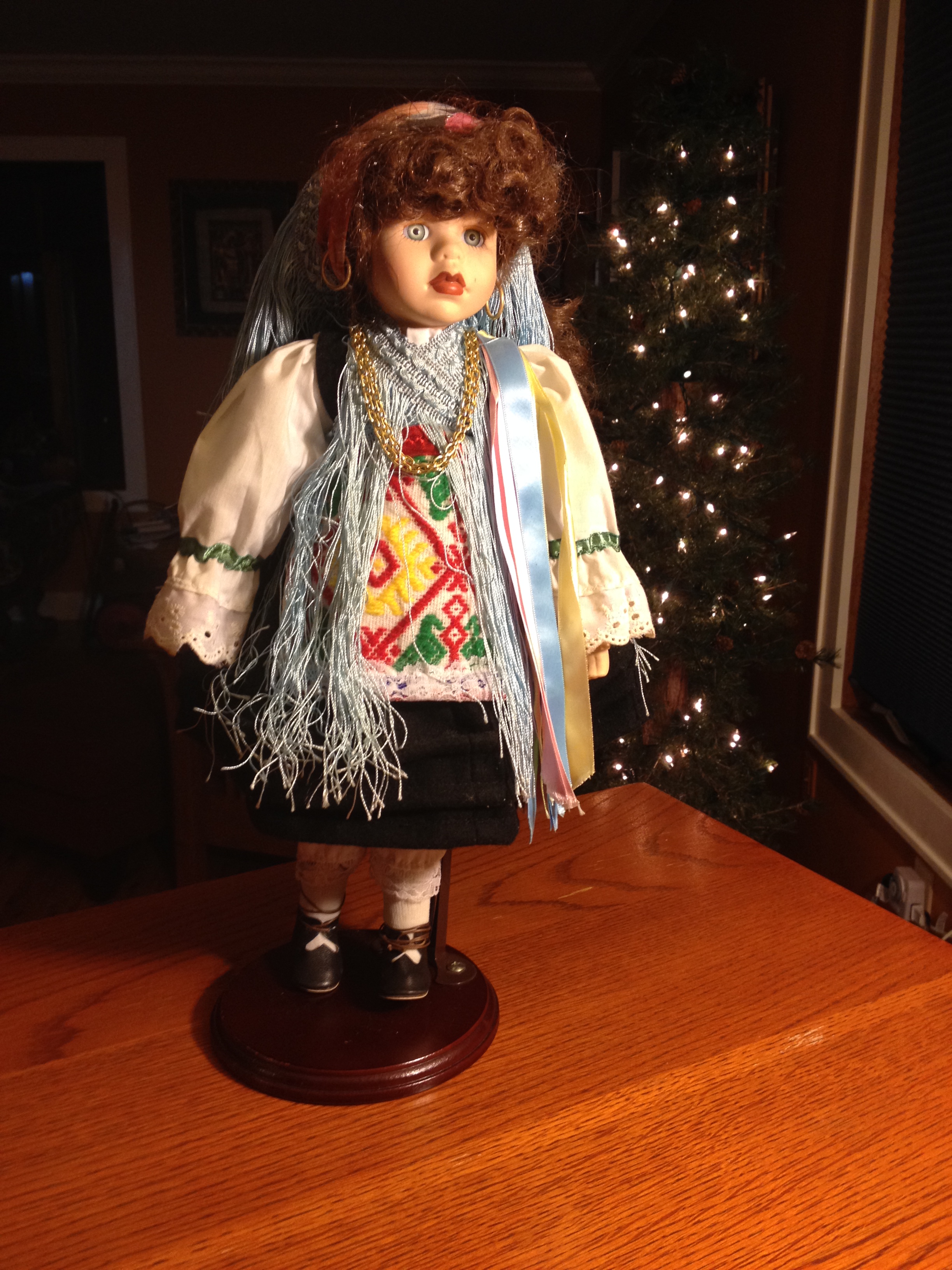
My talented cousin Carmela Fusco creates dolls dressed in historic traditional garb. Before I found Carmella and started a relationship that has spanned many years, I visited Pontelandolfo, wandered into a small shop and bought a doll for myself and one for my niece. Years later, I realized my first connection to Carmela was the doll!
Carmela’s doll proudly stands in my living room.
She sells them now at Ora Giovane and some years ago brought me there to meet the owners, Ornella and her husband Rossano Addona. During our visits, we often stop in and have bought some pieces, but never really spent time getting to know Ornella’s family. This trip was different. We would run into the family in the piazza listening to music, sipping a prosecco or taking the sun. Like many of the small business owners, they would sit outside their shop on nice days and talk to other shop owners, gossip with villagers and include outsiders like us in daily life.
Jewelers Olga Addona and Ornella Romana.
Olga Addona attended the goldsmith specialty high school available to students from the Province of Benevento. Can you imagine – a public school where talented art students can learn goldsmithing! Unfortunately, because Pontelandolfo is not on a regular bus or train line it is difficult for students to attend the school and there has been a huge drop in enrollment. Sadly, the school is closing this year. Hey Arts Folks – WHAT A GREAT OPPORTUNITY! Why not reopen it for artsy American adults! Charge a tuition! Bring some tourist dollars into town.
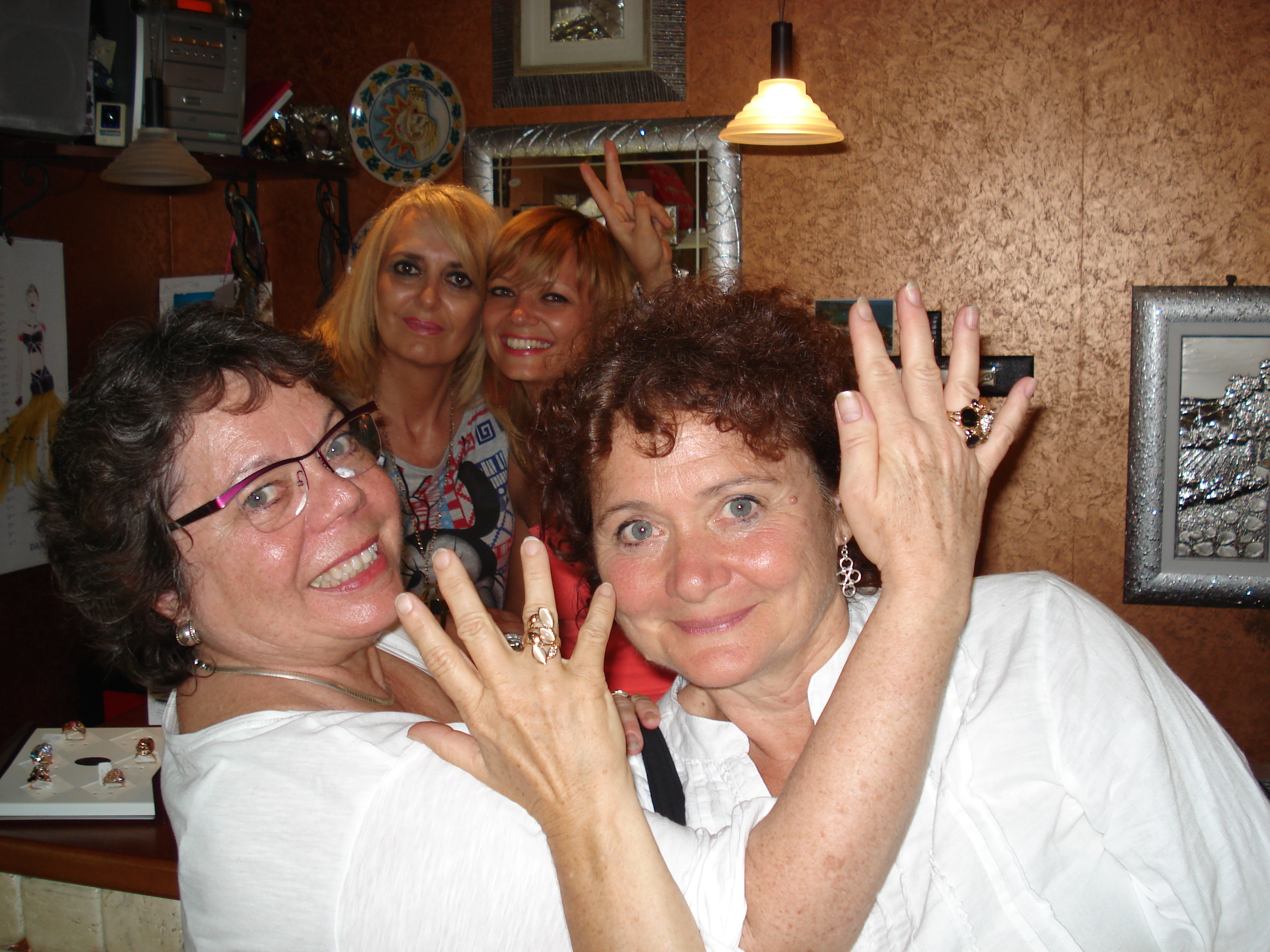
Sister Susan and I bought some faux bling and kibbitzed with Ornella & Olga.
I am passionate about shopping local – and yes I do shop locally in New Jersey. My meat comes from farms not factories, my meds are from a family owned pharmacy, etc. Shopping in Pontelandolfo is really like a walk back in time when Main Streets were thriving and everyone knew your name and if you acted like a wild child any adult would call your parents.
I truly enjoyed popping into Oro Giovane and foraging for fantastic gifts. The family owns two shops on the piazza – one is just jewelry, art and tchatchkes.
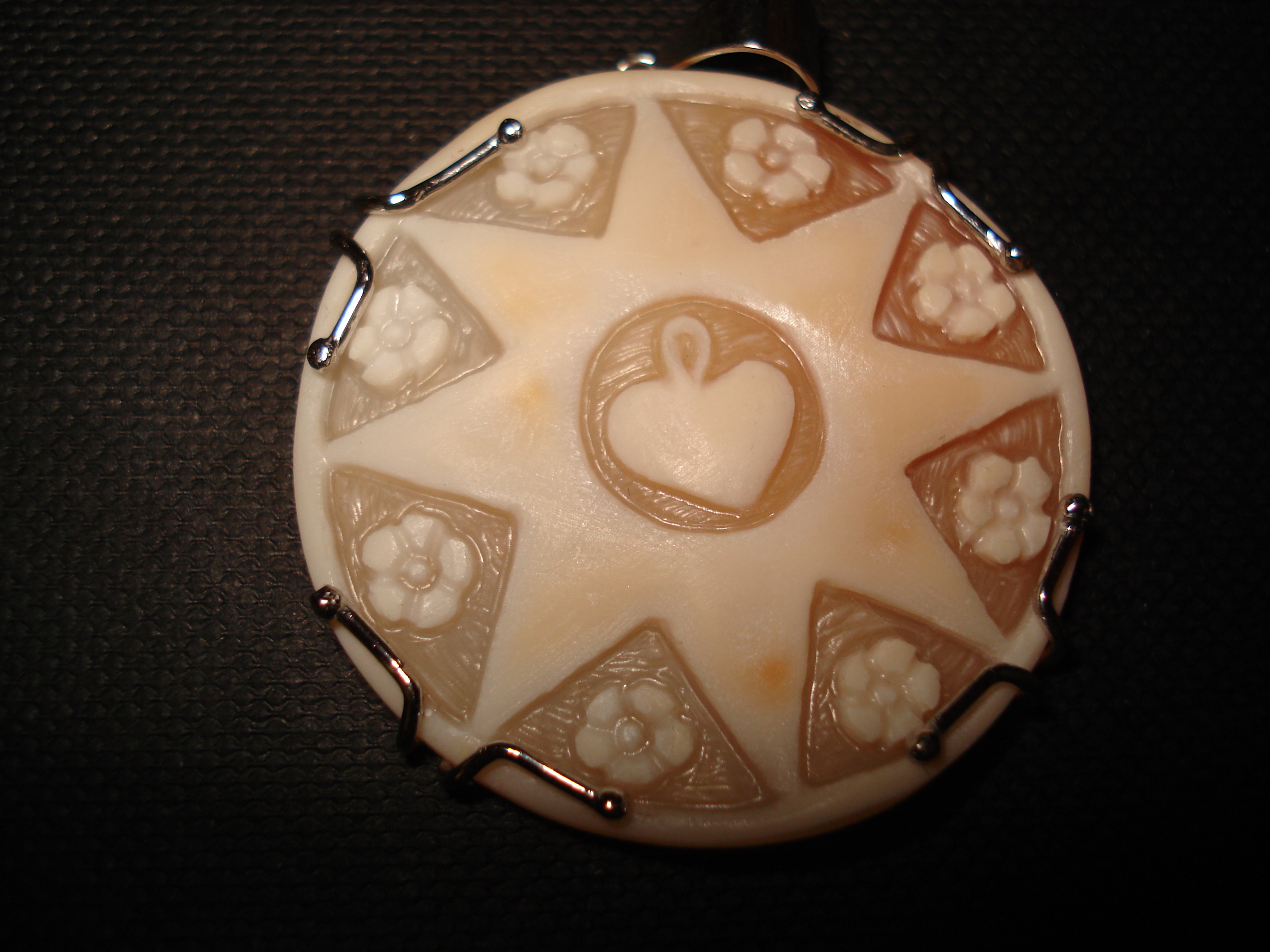
Cameos carved with the village’s crest.
The second shop has great purses and accessories. Santa – Babbo Natale – loves family owned shops, artisan studios and well – anything local in the USA and Italy. So will you when you visit my other hometown – Pontelandolfo!
Huzzah – I just remembered – NOW SANTA GETS TO WRAP ALL THIS SWAG!BUON NATALE!
Take a moment and imagine small town America before ugly strip malls and giant box stores polluted the landscape. See happy healthy people greeting their neighbors as they walk to those wonderful, small family owned shops.
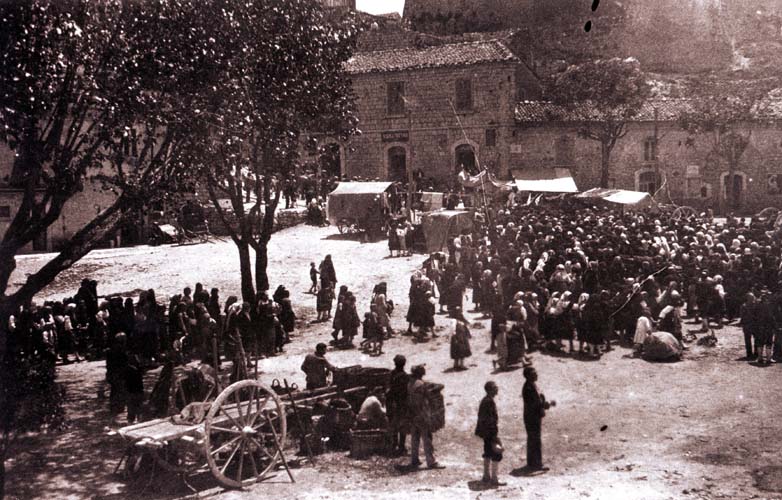
Turn of the 20th century shopping in Pontelandolfo!
Clutching your mom’s hand you visit the butcher, who knows your name and gives you a big smile. You mom says she wants to have a pork roast for dinner – the butcher asks for how many people? “Just six” she says. The big walk-in fridge is opened and you see giant hanging slabs of meat – half a cow, a whole pig – is that goat?
Meat hooks at a butcher. (Photo credit: Wikipedia)
He pulls down the pig carcass and brings it to the giant wooden shopping block. Like a sculptor wielding sharpened knives and a dancer moving to the crack of the cleaver, the butcher magically creates the perfect pork roast just for you. Wrapped in white butcher paper and tied with twine, the gift of good eating is ready to carry home. Hmmmm – no porcine growth hormones, no chemical enhancements just farm grown – the way nature intended it – meat.
Growing up in Flagtown, NJ – when the area was still rural/agrarian – I actually played in fields that held cows, pigs, chickens, goats, sheep and lots of piles of @#$%. My grandmother taught us how to butcher and clean poultry and game. Our little village even had a butcher shop. Aniello De Scala moved from Brooklyn to Flagtown long before I was born to open a small shop and get away from the Brooklyn mob (so his daughter told me). When I was a kid Aniello’s son George was the butcher. (One of the De Scala butcher blocks is currently feeling lonely in my garage.) Then the developments started eating up the farm land and “progress” brought us supermarkets. Small stores faded away…..
Living in Pontelandolfo is a return to a kinder and gentler way of living and eating. We are in carnivore heaven in Pontelandolfo – there are not one, not two but three butcher shops in our little village – great food means a lot to Pontelandolfesi. The shop I visited the most was Marcelleria, Cinque M.A.M. S.R.L., located at Via Falcone E Borsellino. (I have no clue what the initials mean – they’re all on the sign.) My cousin Carmella explained that this shop was a cooperative for the local farmers – a big plus for me.
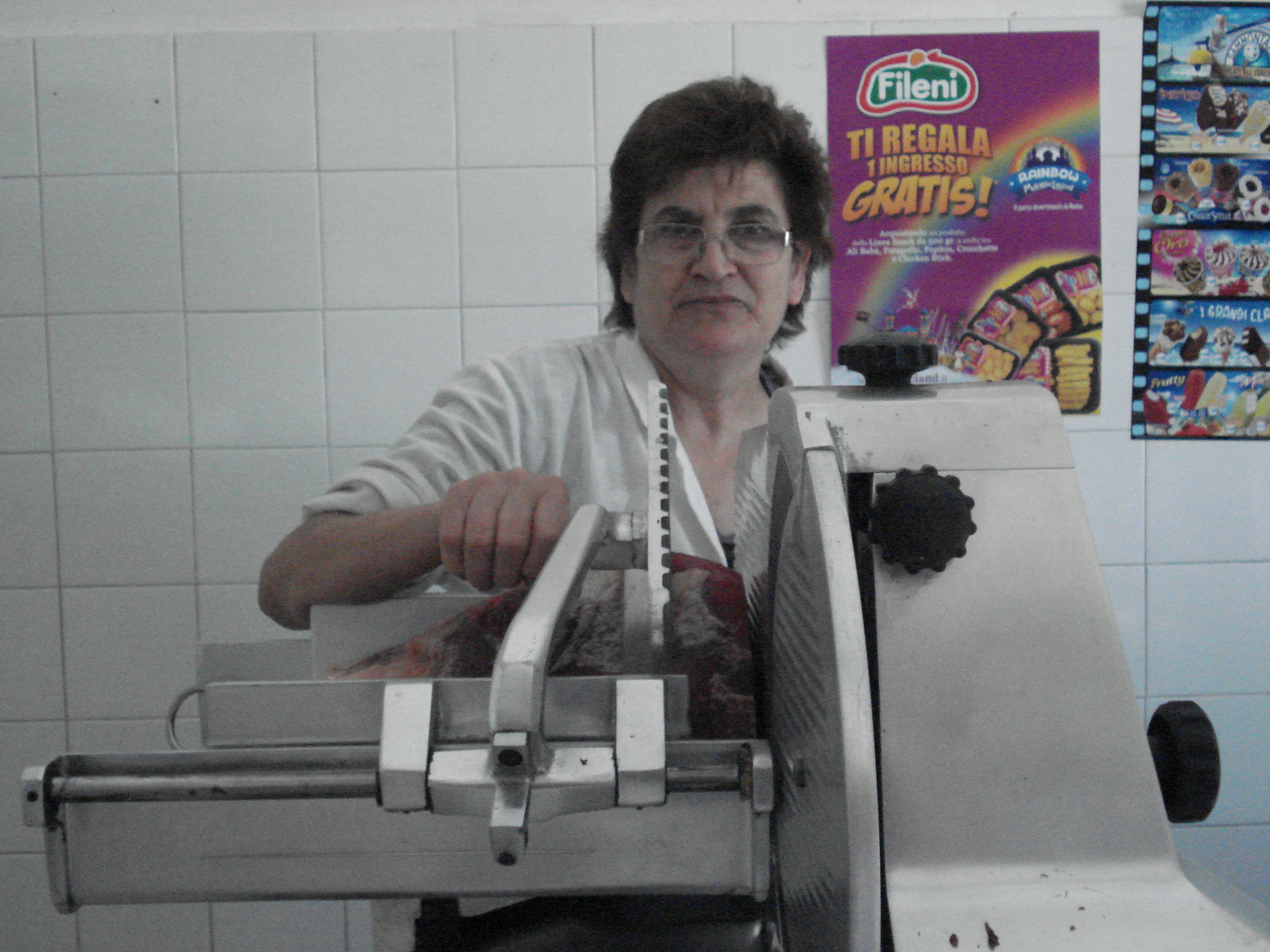
Santina Guerrera, ace butcher and charming woman.
Santina Guerrera (h’mm is she related to me?) would greet me every time I went into her Macelleria with a big smile and once with a great question – “Hai intenzione di parlare un buon italiano oggi o cattivo italiano?” (Are you going to speak good Italian today or bad Italian?) I paused, shrugged my shoulders, smiled and repied “Sempre cattivo!” (Always bad.) Clean up your minds – this wasn’t about talking dirty but speaking Italian properly – something I still haven’t mastered. Santina would smile as I fuddled through my orders. The first time I wanted chicken for my extended family of eleven, I learned what an Italian meat portion was. I originally asked for 7 chicken breasts and four full thigh/legs. Santina looked at me and asked “how many are you cooking for?” When I said eleven she cut the order in half and got the cleaver out to separate thighs from legs and cut each breast in half. I thought, this won’t feed eleven. In the USA everybody gets 1/2 pound each! She was right, my Italian cousins eat small healthy portions.
Santina prepares beef and pork for grinding.
One day, I decided to make an “American” meal for my extended family. Meatloaf, mashed potatoes, and some green thing or another. I told Santina what I wanted to make – un grande polpettone – and couldn’t understand why she took huge hunks of meat out of the walk in fridge. Midge, you silly girl, she is going to grind it fresh!
She tossed a hunk of beef and a hunk of pork in the giant grinder and out came ground integrated meat. I started to drool on the counter. Of course everything I bought was beautifully wrapped up for me.
The other butcher I visited was Macelleria Perugini Franco on Via Falcone Borsellino, 4. Franco made incredible sausage. At first I had to figure out what days he was grinding meat and adding his magical spices – because until I got the schedule down there wouldn’t be any left! He made the sausage fresh. I just found an old receipt and it only cost me € 3,87 (about $5 for 4 servings of freshly made exceptional sausage.)
No matter where we are in the world, I try never to buy supermarket meat – schifoso – wrapped in plastic, pumped full of chemicals, grown in small crowded cages – gag me – chicken and beef that – well I better stop so I don’t ruin your appetite. When Jack and I are in Flagtown we buy most of our meat directly from local farmers – Farview Farm (http://www.farviewfarm.com) in Readington and Lima Farms (http://limafamilyfarms.com) in Hillsborough.
Carnivores of the world unite behind your local butcher and family farm! We are blessed to have ours in both of our home towns.
Time to tell Zia Caterina’ s tale of Eleanor and Franklin Delano Roosevelt –
It’s presidential!
Franklin D. Roosevelt and Eleanor Roosevelt in Warm Springs, Georgia – NARA – 195635 (Photo credit: Wikipedia)
This is the tale of my dad’s older sister, Caterina Guerrera’s, journey on the rocky road to the American dream. You may remember my Aunt Cat from the earlier blog about my family’s Ellis Island experience – https://nonnasmulberrytree.com/2013/09/18/nonna-comes-to-america/.
Two-year old Caterina Guerrera was racing over the hills of Pontelandolfo talking as fast as the village’s babbling brooks. Then the world stopped. This peasant child was stricken with polio. Her mother put hot stones on her limbs, massaged and massaged. One of the reasons the family came to America was that my nonna, Maria Rosaria Solla, was afraid that Caterina would end up in an institution for the insane and deformed. Caterina was smart and fought hard and seven years later was able to board the ship in Naples for America.
Charcoal Drawing done in Italy. Maria Rosaria Solla, Savatore, Caterina, Francesco and Nicola Guerrera
When nine-year old Caterina entered her first American school she discovered just how quick a learner she was. In those days immigrant kids didn’t have the benefit of bi-lingual education or ESL – it was total immersion. On the happy little girl’s first day of school the teacher said something – Caterina looked at her and smiled – the other kids put their heads on their desks. Suddenly the teacher’s yard stick whacked Caterina on the back of the head. Aunt Cat figured out immediately what the English phrase “put your head down” meant.
Polio left her with a short right leg, “baby sized” arm and marked limp. Because of her jaunty walk – step and drag the dead leg, kids would call her 1 and 2 and. She swore to me it didn’t phase her – that they were just teasing. Bottom line, she remembered and replayed the story tape for me.
At that point in time, folks who were disabled were often hidden away. Well no one was hiding Caterina Guererra – “Guerrera” does mean female warrior. She was a fighter, often protecting herself and her younger brother, Salvatore, by tossing rocks squarely at all taunters. Eventually, the family moved to a small farm in the Flagtown, section of Hillsborough Township, New Jersey. A number of other Italian families had settled in Flagtown – this was the depression and members of this tight knit community helped each other.
Fifteen acres for nonna to farm with Catherine’s help.Grandma and Aunt Cat tend the garden to feed us all.
She graduated from Somerville High School in June of 1933 and then attended Drake College (business course – 6 months). Catherine wasn’t going to let anyone hold her back. After attending secretarial school and pounding the pavements looking for work, the only job she could get was in a sewing factory in Bound Brook – cleaning. With her shriveled right arm that hung like a dead branch and a right leg that didn’t work at all, she picked up dropped pieces of cloth so the ladies sewing wouldn’t have to take the time to bend down. Catherine took the train every day, angry that her active brain was mildewing in a sweatshop. There had to be something better – mannaggiathis was America!
The President during this period of American history was, Franklin D. Roosevelt, also a victim of polio – something he hid well. Roosevelt overcame his affliction and Catherine felt she would too. He had helped all kinds of folks during the great depression. Including her brother, Salvatore, who traveled across America improving our park lands with the the other poor young men of the Civilian Conservation Corp. The CCC was just one of the programs that were instituted under the “New Deal” moniker. The Works Progress Administration was one of my favorite programs. Jobless Americans built buildings, bridges, schools. More importantly artists, writers, musicians and theatre professionals were included in the WPA. WPA art can still be seen in public spaces around the country.
CCC Camp in Hackettstown, NJ 1935 – Uncle Sal is 6th from the left – front row!
“It is only in recent years that we have come to realize the true significance of the problem of our crippled children. There are so many more of them than we had any idea of. In many sections there are thousands who are not only receiving no help but whose very existence has been unknown to the doctors and health services.” Radio Address on President Franklin D. Roosevelt’s First Birthday Ball for Crippled Children January 30, 1934
Aunt Cat saw that Roosevelt also was instrumental in raising funds for polio treatment and creating the innovative use of hydrotherapy with polio patients in Warm Springs, Georgia. This plucky young lady sat down and penned a letter to the Roosevelts.
This is how my Aunt Cat told the story to me:
I wrote to Eleanor Roosevelt. My friend Libby (Elizabeth Quick) thought I was pazzo – why would the president’s wife listen to a “guinea” from Flagtown, NJ? My father and Mr. De Angelis started the Democratic Club here. All the Dutch farmers were Republican. I wrote 20 different letters and finally got it right. I sent it.
One day – I was giving Mary the horse some hay – and then a big black car pulled in the yard and sent the chickens running. This woman got out of the car and showed me some papers. She came from the state and she said that she was going to take me to see a doctor who could maybe help me walk better. My father was working and my mother was at Mrs. Gallo’s – Julie’s mother – I told my brother, Tony, to tell mama I was going to see a doctor and I got in the car. If someone could help me walk without dragging my leg like a mail sack than I was going. What I didn’t know was that the doctor was in Newark – in those days you only had Route 28 and it took 2 hours to get to Newark. She took me to Beth Israel Hospital – Dr. Henry H. Kessler himself saw me and asked me if I was strong. He said it would take 8 surgeries but he could make me walk better and my bad arm wouldn’t just hang like a dead branch. He laughed when I told him that I milked the goats and cows, plowed the field following Mary the horse and dragged my leg the ½ mile to the train stop to go work in the sewing factory – strong – I was strong. I was old enough to sign the papers and the next thing I knew I was in a huge room lined with beds – in those days you slept in a bed in a ward with 40 other beds. I wasn’t even afraid. Dr. Kessler had this way about him – he cared – like the Roosevelt’s. Dr. Kessler fixed my arm first. I had 9 surgeries. After the first surgery, Dr. Kessler asked the nurse why no one ever came to visit me. Even then he knew that you had to treat the whole person – not just be an orthopedic mechanic. He asked me if I had any family. I told him my family lived in Flagtown – which to him was like living in Appalachia. I had left with the social worker and never went home. I thought she told my mother.
Dr. Kessler asked me if I wanted to use the telephone and call them. You didn’t have a phone in the depression unless you were rich. So I wrote them a letter and told them where I was – the boys could read in English – as soon as they got the letter they came. Mama was furious that I would not let them take me home – but after all the surgery and I could walk she stopped being angry.
I have never voted for a Republican.They still are for the rich – look at Bush and the oil people. Bush wouldn’t send someone to help a girl with polio unless he could get something. What did Mr. Roosevelt get? A thank you letter from me, a girl whose father laid railroad ties and whose mother kept us eating by her garden and animals.
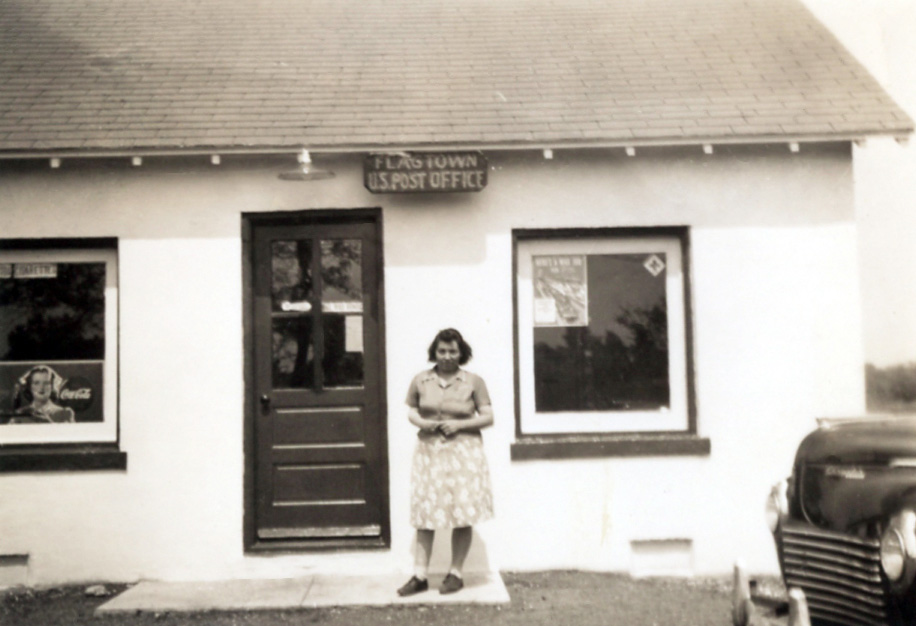
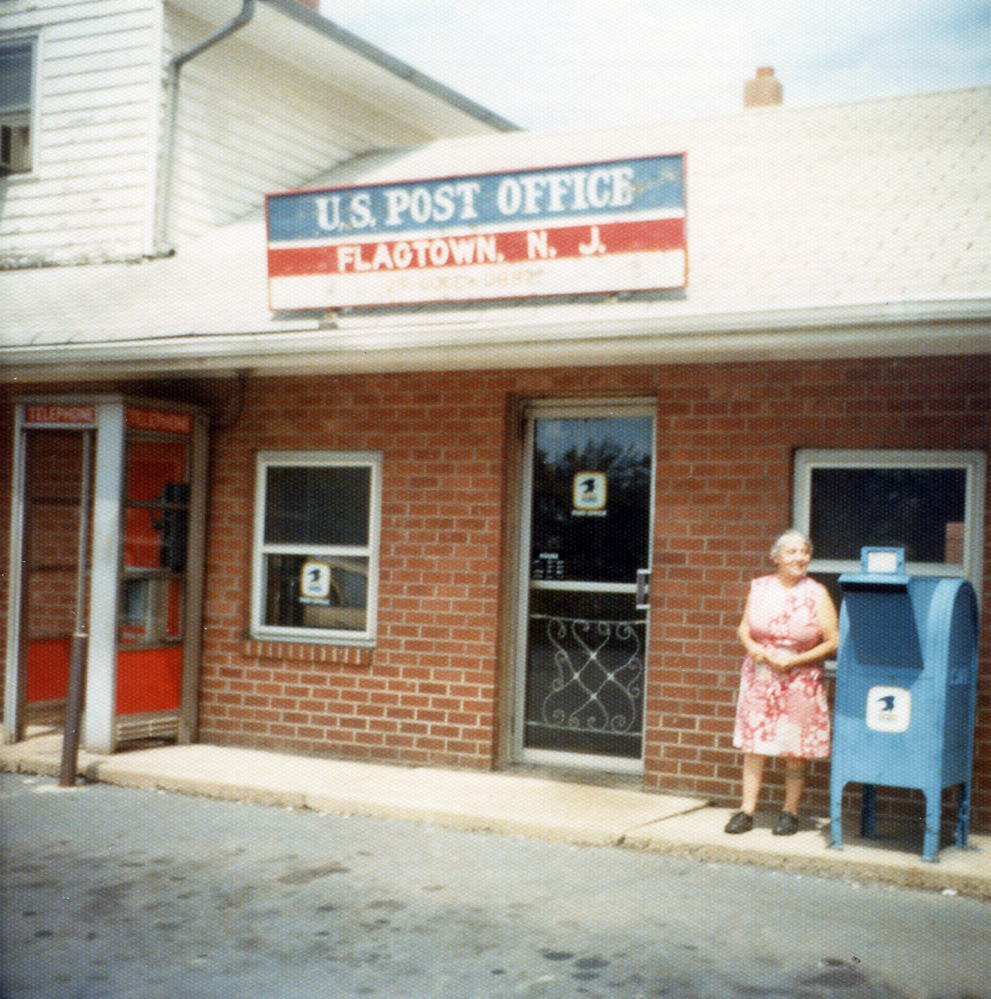
She was soon – well not that soon – I mean nine surgeries is a big deal – back in the fields, passing her driving test on the first try – her macho brothers couldn’t do that – and looking for work. Then a miracle happened – the federal government decided that a post office was to be set up in Flagtown. Whoever ran it wouldn’t get a salary but a commission on what postage was sold. (Damn, an entrepreneurial helping hand at no cost to the government – who’d have thought!) The whoever – thanks again to the helpful Roosevlet hand – was Catherine (AKA Caterina) Guerrera. At first she didn’t want to do it – a commission – who wants to work on commission. Her dad, Francesco convinced her to take the new position. In Italy it was an honor to be the postmaster.
On March 26, 1943, Frank C. Walker Postmaster General of the United States of America appointed Catherine Guerrera Postmaster at Flagtown in the County of Somerset, State of New Jersey. Originally she worked out of a shack near the rail road tracks. Then her entrepreneurial brain started twirling. Due to her personality, more people were buying stamps and the little postal stop was growing. Why not own the building? She got a parcel of ground from her dad and with her brothers help built a post office that she rented to the government. To this day my cousins rent the newer version to the postal service.
She also ran a small lending library and smaller general store out of the space.
She then marketed the hell out of that little rural post office and by the time she retired in 1980 – at a vital aged 69 – had built it up to a first-class post-office. (This designation is no longer used by the postal service.) The building also grew. From that one room rural oasis to a solid facility with an accompanying luncheonette and two apartments. She had a vision and watched it grow. Cha- ching!
From one room to many! That is my Aunt Cat.
Every story has a moment of sadness. Catherine Guerrera had been Post Master for forty years and hated that forced retirement. In 1984 – four years after retiring – the dreaded polio returned – post polio syndrome. I blamed the forced retirement – she was no longer lifting and chucking huge mail bags, standing and sorting mail, bending to talk to children. This time she had the resources to get the best of care at NYU’s Institute of Rehab Medicine under the guidance of Dr. Kristjan Ragnarsson. It took a while, but after a good number of months in New York learning how to deal with a wheel chair, take in the sights of the city from a little bit lower perspective and outfitted for new braces she was back to her “give ’em hell” self.
This great American Dream story demonstrates to all those non-believers – that a little bit of government assistance can jump start a life. And – for those of you who are died in the wool conservatives – her estate taxes more than paid off Uncle Sam for all his – I mean Roosevelt’s – help.
My fabulous Aunt Cat taught me that hard work, hope and being a Democrat was the American thing to do.