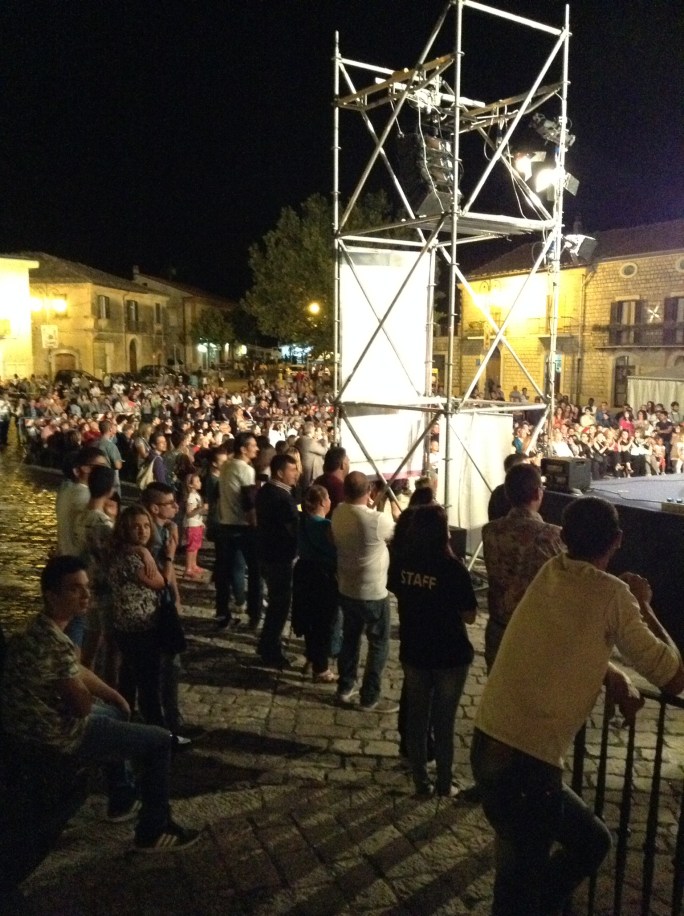
How did September get here? What happened to August? The pandemic – duh – no wonder I have no stories to tell of the annual August festa. Remember the year I tried to write about each of the seven events and slept through the last two? August in Pontelandolfo is usually jam-packed with concerts, art exhibits, processions, remembrance celebrations, Feragosto picnics and house parties. Pontelandolfesi from all over the world return home to eat, drink and reminisce with family seen only once every few years. This year, thanks to the pandemic, the monthlong whirlwind didn’t happen.
No stage was set up in Piazza Roma.
Performing artists weren’t contracted or were cancelled.
Ri Ualanegli, our internationally acclaimed folk dance company, didn’t host a 2020 dance festival.
What did happen in August? Gardens were tended. Crops harvested. Produce canned. Bars opened. Cards were shuffled. People strolled the piazza. Families ate, drank and enjoyed each other. Trekking, forest foraging and picnics took place in the mountain. Beaches were visited. Kids started thinking about school starting on September 14th. Some folks did the usual August thing and went on vacations. Returning vacationers caused a surge in Covid-19 cases.
Not again…
Pontelandolfo is a microcosm of good health. During the pandemic, there has only been one case of Covid. Perhaps it is the mountain air and great wine. I will start thinking about next August and what a joy the annual festa will be.
Spring may have sprung and gone, but my Fava memories deserve sharing. I’ve told you the tales of the roving basket of fava beans. I didn’t enjoy as many fava dishes this year as I have in the past, but did discover something worth shucking a bean pod about. Normally, after shucking a basked of bean pods, I cook the beans in their shells. Frankly, the thought of adding another step to the cooking process seemed like a pain in the pattooty. Then one fava craving day, I googled FAVA BEANS. I was surfing for any interesting recipes. Each one I found said shell the beans. NOOO! I am not going to boil a pot of water, toss in the beans, pull the beans out and burn my hands just to shell them. Shucking them from the pods is work enough.
Apparently, some other cooks didn’t want to deal with the heat of the boil either. They froze the beans instead. I couldn’t believe it when I read that and googled fava some more. Quite a few sources said freeze the beans and the shells practically pop off the bean. Hmmm. Of course, I read all the instructions and then realized I didn’t have a small sheet pan that would fit in my freezer and guarantee a single layer of beans. Also, I wasn’t going to hang around and time the beans for 30 minutes.
I shucked the beans and tossed them into a nine inch square baking dish – it is what I had that would fit in the little freezer. Were the beans in rigid little rows not touching? Nope, I tossed them in the dish. Yup, they were on top of each other. Then I put the dish in the freezer and forgot about it. Later that night, I remembered and went to visit them. They had turned whitish and looked cold. I stirred them so the ones on the top could cuddle up on the bottom. Then I went to bed.
The next night, I wanted to use the beans. I remembered reading they should be allowed to thaw for at least 15 minutes. Of course, that meant I was not going to get dinner done in time so I didn’t wait. WRONG. This was a classic “Midge doesn’t listen” mistake.
As they thaw they get more and more wrinkly – like your forehead when you squint in the sun.
When I first tried to pop the beans out, all I did was freeze my fingers and ultimately peel the shell layer off. As the beans began to thaw it became a flim flam thank you ma’am.
Squish and pop!
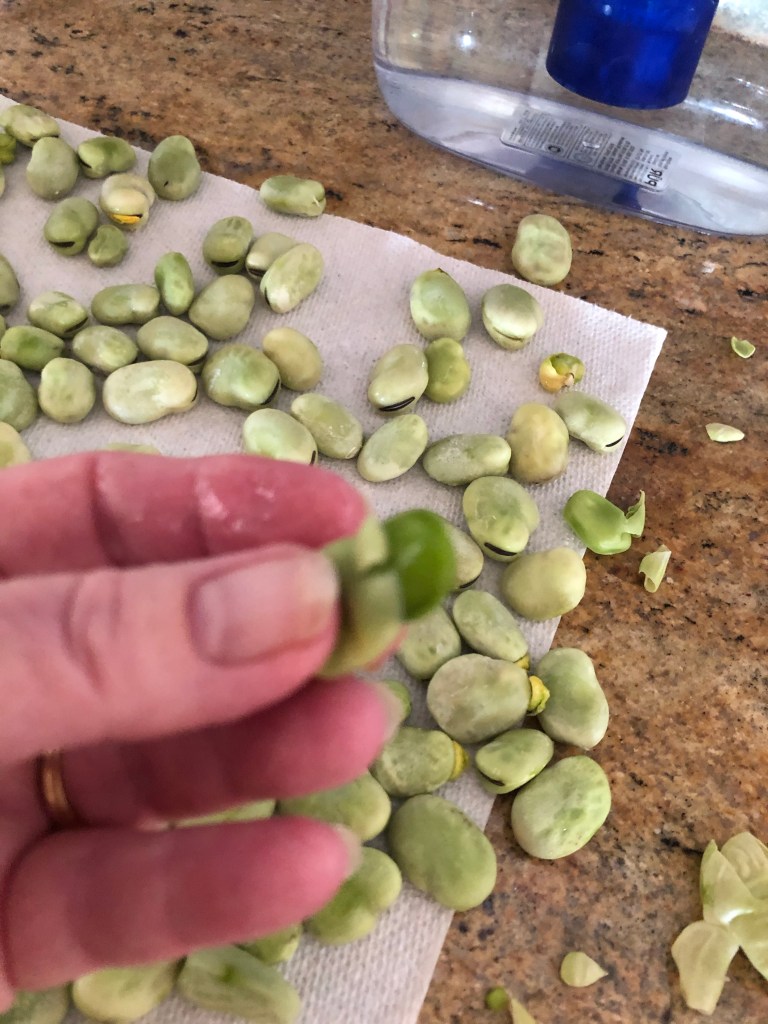
Notice how the beans in this picture look whiter and wrinkled. They were thawing. It actually works! But you really have to wait at least 15 minutes.
It does take time to shell the beans and frankly, I don’t know if my palate is refined enough to really taste the difference. They do feel smoother when I eat them, but taste better? Jack said they tasted different but he wasn’t sure either if it was better. What do you think?
How did I cook them? Hmm – what did I do? We just chopped up bacon and let it sizzle. Then snuck in a little olive oil and a grossly chopped onion. When the onion started to look translucent, I tossed in the beans and enough lamb bone broth to cover them. The usual seasonings were added to the pot – salt, pepper, bay leaf and (please don’t tell my nonna) garlic powder. I also added some thick chunked potatoes. Slowly they cooked.
They were tasty. Coupled with some crusty rye bread, they were dipping great. Would I peel the shells in the future? Hmmm.
When “buffalo” means Buffalo Mozzarella! Who knew that the creamiest of mozzarella cheeses came from a water buffalo? I didn’t. Did I just admit a lack of knowledge on something edible and Italian?
About 20 years ago, Jack, my Aunt Cat and I drove through the valleys of Compania searching for buffalo. Silly me imaging the bison that ruled the plains were nestled in the Sannio Hills. Oooops – classic mistake. Can you imagine milking a two-story tall mammoth bison? Thanks to Martenette Farms, a group of ten farm to table foodies will see the buffalo for themselves.
Fattoria al Tavolo With Martenette Farms*
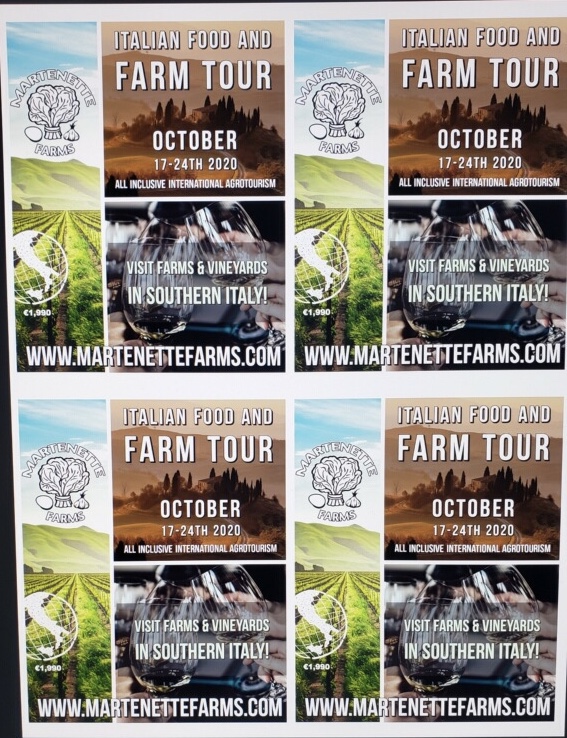
Ace organic farmers Andrea and Tony of Martenette Farms in Hillsborough, New Jersey wanted to share their love of farming and good eating with others. They created a super culinary and farm adventure that takes place in my home town, Pontelandolfo, from October 17 – 24, 2020. Guess what it includes? A visit to a buffalo farm!
Participants will explore, eat and live in a small southern Italian village. Becoming part of village life, they will gain a cultural understanding of what lies behind great Southern Italian dishes. This farm to table experience is for those of you who want to see a part of Italy that is off the crowded tourist trail, see where the local food comes from and taste dishes that go back generations.
For example, the group will eat in private homes and at agriturismos – farms that serve food. Visit working farms, hear lectures on herbs, look for edibles in the Sannio Hills, learn the ancient sport of cheese rolling – La Ruzzula, and of course visit olive groves and taste great wine after trekking through vineyards.
I can’t wait to meet this group of culinary adventurers! Ci vediamo!
*Regretfully, there are no special dietary considerations. Since you will eating in people’s homes, not restaurants, accommodations cannot be made for allergies or preferences. This medieval village has charming cobblestone streets, but it is not handicapped accessible. The adventure and experience in the home of local families requires the ability to climb stairs, walk on uneven streets and feel comfortable in a hilly mountain environment. The calendar of events may change but will be similar.
Molise, the region that is a scant few minutes down the road from Pontelandolfo was listed as number 37. I was leaping around the breakfast table when I read this. Why? Because the New York Times said something about our little piece of Italian heaven that I’ve been saying for years about the Sannio Hills.
Molise, Italy. If you’re in search of untrammeled traditional Italy, you’ve found it.
Jack and I have visited beaches on the Adriatic, driven up to the ski slopes – I stayed in the car with a book, gone out to dinner and enjoyed performing arts events in Campobasso, climbed hills to look at ancient towers – Jack climbed, I went up in the car- all in the region of Molise. All short drives from Pontelandolfo.
The article also mentions Altilia – Saepinum, an archeological site that every guest to our home is required to explore. I also ensure that every culinary or cultural adventurer who registers for our Cooking in the Kitchens of Pontelandolfo programs has a visit to this historic site on their calendar.
The New York Times writer, Ondine Cohane, said of the Roman Settlement Saepinum, that it was “a complex of baths and a forum that rival those in Italy’s capital, but without the crowds.”
Take note of what was written, “without the crowds.” Exactly why Jack and I love Pontelandolfo and neighboring places. It is beautiful, full of culture and off the back packing tourist trail. One can enjoy Italy – Literally Italy.
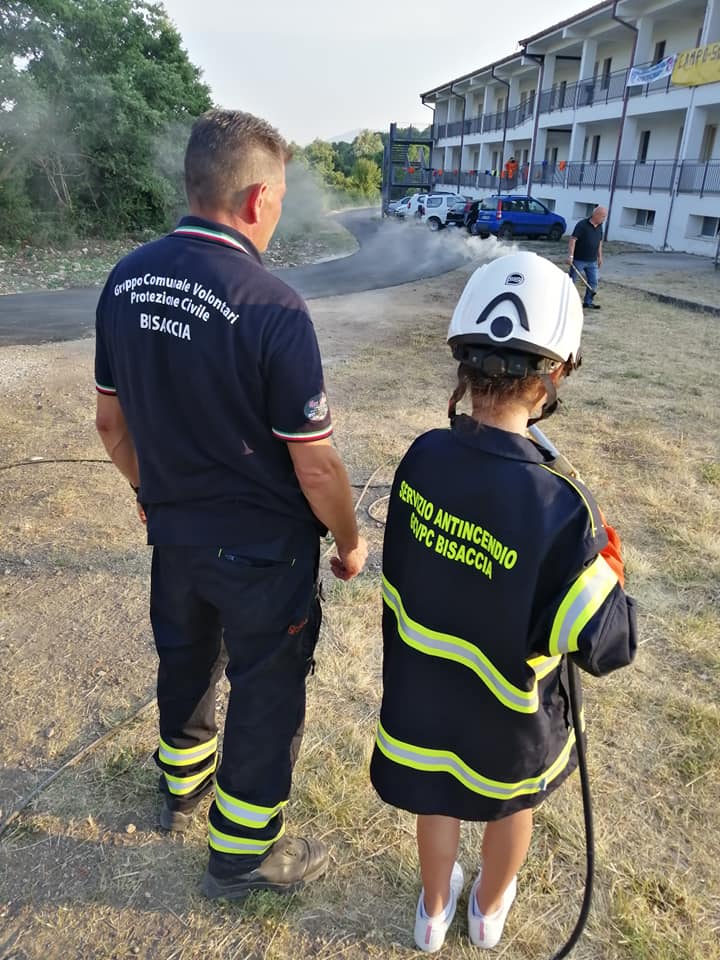
Kids fighting fires. Kids finding lost kids in the woods. Kids rappelling down from a building. Kids assessing environmental risks. KIDS??? Thirty-eight lucky children between the ages of ten and thirteen got to explore exactly what it means to be part of Italy’s volunteer safety net, Protezione Civile. They also got an adrenal rush and I’m sure will consider becoming future volunteers.
Volunteers are a cornerstone of Pontelandolfo life. They organize arts activities, social events, parish festivals and most important of all ensure that Pontelandolfese are safe, secure and assisted in time of need. On call 24 hours a day, Protezione Civile Pontelandolfo, Civil Protection, is an organization of a highly trained and committed residents who are willing to leap into the fray whenever there is an emergency. On the news, you have seen volunteers like them, in their yellow trimmed uniforms, helping with search and rescue after earthquakes, floods etc. In Pontelandolfo, I have watched them do traffic control, handle snow emergencies, guide people to safety, assist the Italian Red Cross and essentially intervene whenever it was necessary. Click here for an example of their role with a 2015 flood and wind that knocked more than our sox off.
Italians have big hearts and have always had a willingness to lend a hand. After citizens mobilized independently to assist with the huge disasters that hit Italy in a fifty-year period, like the floods of Florence in 1966 and the Friuli and Irpinia earthquakes, it was recognized that an organized public system of deployment was necessary. In 1992, Protezione Civile, the National Service of Civil Protection, by law became an integral part of the public system.
This is serious business. The region organizes drills which simulate real risk situations. Since we live in an earthquake zone, our village hosted an earthquake drill.
It is so serious, that future leaders and volunteers are fostered through an annual exceptional week long summer camp. With the support of the National Department of Civil Protection, the Comune of Pontelandolfo and in collaboration with Protezione Civile di Fragneto L’Abate, Gruppo Comunale di Protezione Civile di Bisaccia, and Protezione Civile Irpinia di San Potito Ultra, Stefano Baldini, the head of our local Protezione Civile, and his team of volunteers organized Il Campo Scuola2019.
This coed camp had all the cool out door experiences.
From July 1 through July 7 this year, kids did the usual camp stuff like setting up and sleeping in a tent, they also were immersed in theoretical and practical civil protection training courses. What school in the summer??? Who would want to do that?? These kids certainly did. Besides it wasn’t all work and no play. Some of the work looked pretty exciting. The young trainees had to apply for admittance. The program was totally free! Participants came from Pontelandolfo, Morcone, Fragneto Monforte, Bisaccia, Sant’Angelo A Cupolo, San Potito, Aquilonia and Flumeri. Bringing kids from a variety of towns together makes sense. All of the individual Protezione Civile groups often work with each other. If it is an emergency or a giant festa that needs crowd control, we see uniforms from a variety of places. The kids working together at this age starts the collaboration ball rolling.
I remember being forced to go to Camp Speers ripping my forearm with a bow string and belly crawling with a 22 rifle. I hated every minute of it. If there had been some academic portion or if the firing a rifle was being taught for a real purpose I might not have fought tooth and nail not to go.
Nope, not injured. Just learning how to carry an injured person.
These campers got lots of physical activity and real-world experiences. Here is a quick overview – set up a field operation – yup put up the tents, rig electrical system etc.; over view of the National Civil Protection system; municipal contingency plans – what?? I have to pause here and tell Jack. My husband spent most of his adult career working in emergency preparedness planning. I bet after this camp some of these kids could write better municipal contingency plans than some of the town plans Jack read when he was with the State Police.
OK, back to the grueling week – they had a lesson on cartography ( I had to look the word up – science of drawing maps); figuring out territory orientation; using a map and a single compass figuring out a path through Mountain Cavello to lunch! No one got lost!!! I would have been found weeks later sitting on a log begging to go home. These kids were GREAT!.
How many stories up is this??
After a lesson on the seismic conditions of our region and what to do if an earthquake hits, these kids leaped to another disaster. What do you do if someone is trapped high up on a hill with a broken leg or in a burning building? You use a safety harness, zip wire or rappel.
Team effort of numerous Protezione Civile groups.
I’m exhausted just writing about all that they accomplished. And the list goes on – fire safety and protection, hydroeological risks (looked this up too – distribution and movement of groundwater in the soil and rocks of the Earth’s crust), use of radios for communication, working with canine units, forest fire rescues, searching for missing people, working with people with disabilities and…….
Complimenti! Bravi!
The kids who will be the leaders of tomorrow deserve a big round of applause and so do the volunteers of Protezione Civile Pontelandolfo who give their time, energy and love to our little village.
Ugo Gregoretti died on July 5, 2019 in the city where he began his life. The icon of Italian cinema and film was born on September 28, 1930 in Rome. The death of this pioneer of the new Italian cinema, director, actor, playwright and author was mourned not only by the film and theatre communities but also by the entire Pontelandolfo comunity. Within moments of the announcement of his passing, Pontelandolfesi from around the world paid homage to the man on their Facebook, Twitter and Instagram feeds. Death notice condolences were ordered by individuals, families and community groups. These were posted throughout the village. Here is an example –
A titolo personale e a nome della Redazione del sito www. pontelandolfonews.com porgo sentite condoglianze alla Famiglia Gregoretti per la perdita del caro amico e grande Maestro Ugo Gregoretti.
Renato Rinaldi
Ugo Gregoretti loved Pontelandolfo and Pontelandolfo loved him. As a boy, he spent his summers frolicking in the fields and piazzas of Pontelandolfo.
His father once owned the village’s medieval Tower. Saddened when his mother decided to sell the tower, he was often quoted as saying he wanted to set up a foundation for the property and open it to all.
In 2014, he donated his library to the town so that his personal and professional history could be preserved in the village he loved. The collection of scripts, posters, film memorabilia and personal items is held in the newly renovated Piazza Rinaldi. The Ministry of Heritage, Cultural Activities and Tourism noted its importance.
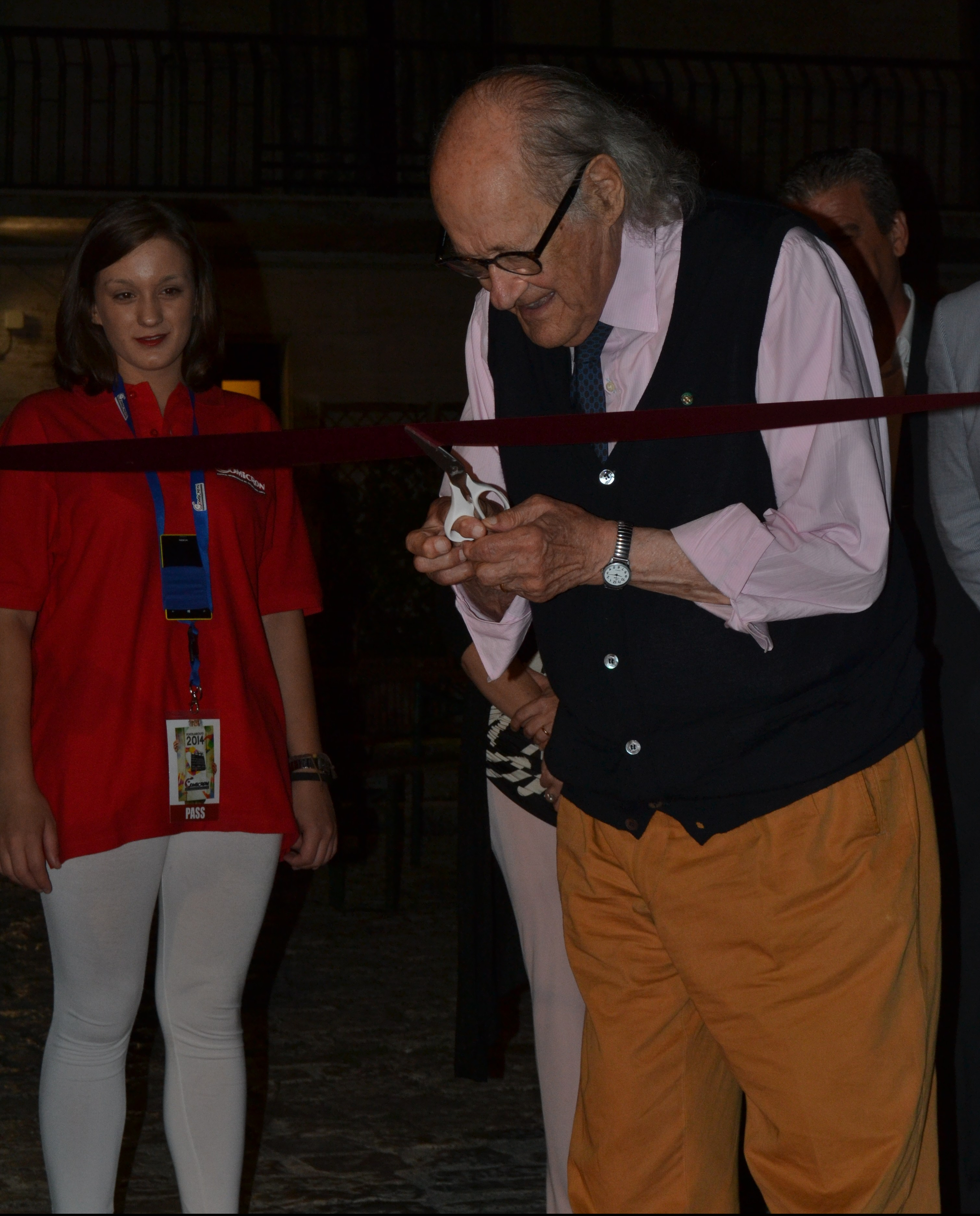
Gregoretti also put his money where his heart was and developed Comicron, an international film festival that is produced in Pontelandolfo.
Comicron, devoted exclusively to one genre – comedy – is a unique experience in the International Festival scene. The films are all shorts and most of the entrants are young filmmakers. Audiences come, watch and leave smiling. Gregoretti’s famous actor and film making pals have also participated which insured that national press covered the event.
Gregoretti could often be seen in Pontelandolfo. He even came to the Club del Libro and entertained us with his tales and writing.
The mayor, members of the city council and citizens went to Rome to say goodbye. His wake was at the famous Casa del Cinema in Rome. On their website they noted:
Noi di Casa del Cinema, insieme a Luca Bergamo, Vicesindaco e Assessore alla Crescita Culturale, ai vertici di Zetema ma soprattutto insieme alla straordinaria platea degli appassionati di cinema, siamo adesso vicini a Orsetta, ai suoi fratelli, alla moglie Fausta, agli amici e compagni di mille avventure. Ciao Ugo, questa rimarrà casa tua.
He will be missed.
Ci vediamo.
(SORRY THE FONTS ARE SQUIRRELLY. WORDPRESS FROM MY IPAD IS HELL TO WORK WITH.)
Spring sprang or is that sprung or had sprung ? Pontelandolfese were springing over hill and dale hunting for spring vegetables. The favorite being wild asparagi! Thin, supple, dancing in the breeze – just like my fantasy of me – these delicious wild asparagus are prized among the gatherers. When I spy a smiling forager, I know that they have filled their baskets with asparagus. Some people just seem to know where to look.
I’ve spotted pokey amounts along the side of the road. Local wisdom has it that you shouldn’t pick stuff close to the roads – unless you’re starving. Makes sense to me – exhaust fumes cough, cough – have coated the wild sprigs. Real gatherers head for the hills. Fresh air, healthy hike and yummy finds make those a great experience.
Did I go? Seriously? It sounds lovely but I had to wash my hair. Actually, having had Lyme Disese twice, I am afraid of ticks and don’t forage in tick land. The other reason I didn’t go was simply, my lovely neighbors and friends fear that since I am always off doing something, Jack will starve. If baskets of greens aren’t dropped near my door, they will find poor Jack on the veranda writhing with hunger. I love this myth!
My friend Nunzia appeared with not only a basket of wild asparagus picked by her charming husband, Amedeo, but also some in bottles covered in oil – sott’olio. Canning to me sounds complicated. I am afraid that I will kill people with tasty botulism or something equally gruesome. What everyone does here is not really canning but oiling. WHAT. Sounds like a spa gone wrong. This is so easy and so right that even I can do it. Folks in Pontelandolfo jar eggplant, asparagus, artichokes, sun dried zucchine and more sott’olio. I asked a couple of people to tell me how they do it. Everyone starts with uber fresh vegetables. I mean picked today or last night. All are washed, cleaned and chopped into little pieces. After talking to my friends and tasting what they jar, I realized there seems to be the only a few differences in the methods.
Thank you Nunzia for the jar of asparagus! Jack scoffed them down – he will not starve this week. Here is how she does it. This technique can be used for a variety of produce including artichokes, eggplant and zucchini. After you have prepped the asparagus, pour one liter of vinegar, half liter of water and a teaspoon of salt into a big pot. Bring it to a boil and dump in the asparagus. Cook them for a scant 4 or 5 minutes. Drain them and them lay them out on a clean dishtowel and thoroughly dry them. When they are dry put them in your recycled but clean jars. Leave a wee bit of room at the top. Cover them completely with olive oil. Then bang the jar – don’t break it – so that the vegetables move and mush down a bit. Or with a clean fork push them down. Make sure they are all totally covered in olive oil. Then put the clean lid back on and put them in the cupboard until you need them.
Cousin Carmella is my go to person for cooking questions. She is one of the home cooks that the culinary adventurers for our September 7 – 14 2019 Cooking in the Kitchens of Pontelandolfo will get to cook, laugh and eat with. Her sott’olio method for asparagus was a little different from Nunzia’s. The prep is the same. In a big pot bring to a boil two parts water and two parts vinegar with enough added salt to your taste. When it is boiling, add the asparagus and push them down to the bottom. They will rise up to the top. When they do push them down to the bottom again. Do this three times and drain them in a colander. When they are cool, put them in a bowl and toss them with olive oil. Next, put them in the jars and push them down lightly before covering them with olive oil. Carmella’s husband Mario forages for mushrooms and she does the same process for them. She noted that mushroom and asparagus cook in just a few minutes. Other types of vegetables need to boil longer. She feels that the vinegar is a better conservation method than using wine. Wine make give it a better taste but you have to eat the items sooner
Besides the fact that we buy wine by the five liter jug, you may be wondering why I asked her about using wine in the process. Another great cook and lover of eating out in new restaurants with me, is my pharmacist pal, Adele. One day she brought over a jar of artichoke hearts sott’olio. Ha! She thought Jack would add them to his lunch time salad. I ate every last one, they were delicious. When the baby artichokes are plentiful in the market, she buys a bunch to put away and use in future dishes. She had us over for her homemade ravioli stuffed with artichokes and we both loved them. Her technique for sott’olio is a different. Remember she makes a huge batch! The first thing I noticed is that she strips away virtually all of the outer part of the artichoke and is left with the small center. Prep for artichokes includes soaking them in water an lemon for at least an hour. This is too keep them looking pale green and lovely. After the lemon soak, place each one upside down on a clean dish towel to drain. Her canning formula mixes 1 liter of vinegar with 1 liter of white wine and a half liter of water. She tosses in some salt and brings it to a boil. When the liquid begins to boil again, time the cooking. Boil the artichokes for only 5 minutes and using an colander promptly drain them. Then put each one upside down on a clean dishtowel so that all of the liquid drains out. Dry them too. When they are completely cold put them in clean, sterilized glass jars and cover them with – not olive – sunflower seed oil! Adele uses sunflower seed oil which makes her process really different. She too uses the same process for different vegetables but alters the time.
I have been so fortunate to have met people who want to feed me. All of the vegetables I have tasted processed like this have been a little crunchy, tangy and wonderful. Try it this summer and let me know how it works out for you!
SPECIAL COOKING IN THE KITCHENS OF PONTELANDOLFO DEAL ALERT!!!!
We have room for two more culinary adventurers for our September 7 – 14, 2019 Cooking in the Kitchens of Pontelandolfo session. I want to see the session filled so I am doing something we have never done – HAVING A SALE! Send me an e-mail ASAP to be one of the two and receive a delightful discount!HOW DELIGHTFUL? 10% OFF DELIGHTFUL! THAT IS A €€€€ SAVING! Contact me to find out just how great it is.
Info@nonnasmulberrytree.com. Do it today and have the cooking time of your life this fall.