Disco Fries and Scenic Drives!

What? Has she gone mad? Disco Fries in Italy? Where? When?
A MYSTERIOUS BOX ARRIVED IN EWING, NJ

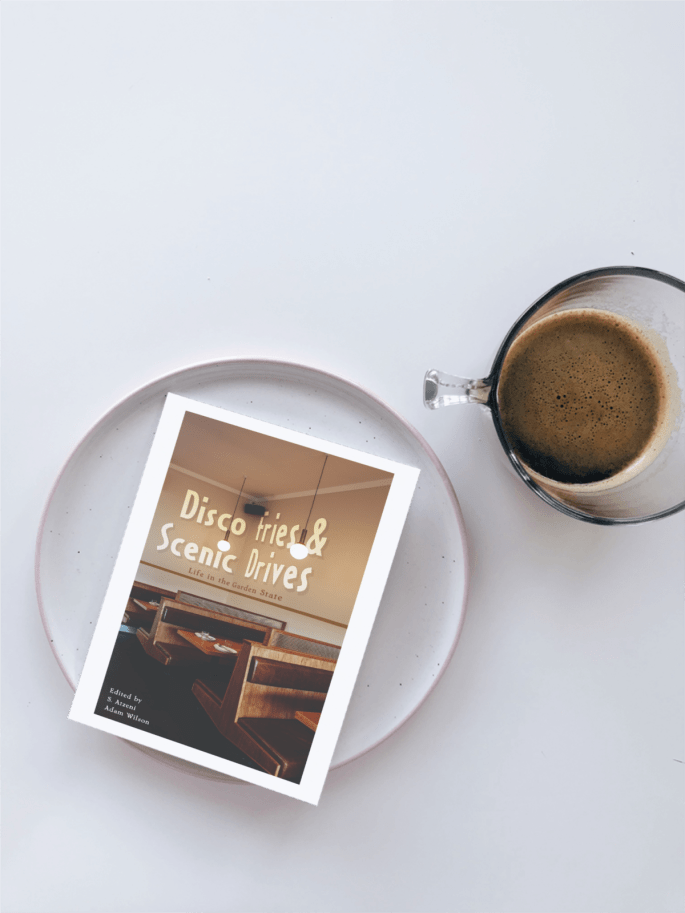
What: A book – a box of books with my name in the table of contents. Where: Disco Fries can be found in Italy or England or Flagtown, NJ or Wherever Books are Sold. When: the anthology of New Jersey based stories, essays, comics, poetry and photographs was launched on October 21st.

I know, I know this blog is all about my escapades in Italy. What do “escapades in Italy” have to do with a book all about New Jersey, USA called Disco Fries & Scenic Drives: Life in the Garden State?

A lot! Those of you who followed our crossing the Atlantic to get to Italy this year know I used the Queen Mary 2 as my personal writer’s retreat. Since I had been comparing our transatlantic adventure with my families journey to America in steerage, the muses compelled me to write about my Aunt Catherine’s journey from Italy to becoming a female postmaster. You know where this is going don’t you? When I got to Italy, I tweaked my tale and sent Postmarked Flagtown NJ 08821 off to independent publisher, Read Furiously.

On August 1, 2025 I got an email from Sam and Adam, the brilliant creative team behind Read Furiously. As I read the email, shrieks bellowed across the Sannio Hills and my neighbors ran over to see what happened.

What happened, I gulped between shouts, What happened? My story about my Aunt Cat was accepted by Read Furiously and would be included in the last book ” of the Life in the Garden State trilogy” about ” the wonderful and interesting moments that make up the New Jersey mythos.”

Then, I told Jack to put his shoes on and off we raced to celebrate in a very unique Italian way – sipping a basil martini at Morcone’s Riohana. A really cool bar with views of the mountain.

Do we look drunk? I think I got drunk – drunk with joy!

As an author, I join twenty-one other contributors to the anthology. Many of the other authors I recognized as folks whose books I’ve read and who also have had works previously published by Read Furiously. We all created tales about different aspects, places and people that make the Garden State a rollicking place to visit and live in.

It is the perfect gift for anyone who lives in New Jersey, is from New Jersey or is an armchair traveler who enjoys experiencing other places while sipping an adult beverage. Each work is a gem unto itself. Being a Jersey Girl, I appreciated each creator’s take on a specific location and point in time. Since the book is a series of shorter works, it is a great book to pop in a purse or briefcase – does any one still have a briefcase – to pick up while waiting for that car, doctor, or meeting.

Jersey maps are embedded in the book as a reference point and the title page for each story. Flagtown was my home town. Seeing that point on the map made my participation in this collection even more special. (Gulp, when I saw the map, I actually got a bit teary eyed and felt my heart chakra blossom.)

Sam and Adam, I hope it was OK for me to snap a photo of this page. Sorry.

Pick up a copy of Disco Fries & Scenic Drives: Life in the Garden State. It is available wherever books are sold – Barnes and Noble, Amazon and of course directly from the publisher Read Furiously! If you purchase a copy from the link to Read Furiously, I got super brownie points from the company. One never knows when they could come in handy.

Speaking of blatant promotion, while you are on the Read Furiously website or visiting your favorite book vender, why not pick up a copy or three of Cars, Castles, Cows and Chaos. My fun filled travel memoir of life in Southern Italy. A cool stocking stuffer for any arm chair traveller.

Have a great week, wherever you are! Happy reading.

Ci Vediamo

Midge

Across the Atlantic

Jack and I are blessed to be able to buzz back and forth between our homes in New Jersey and Pontelandolfo. Travel is never easy. Does anyone love the lines and commedia of any airport? The waiting for late flights. The agony of cancelled flights. It all is horrific. We were packed and ready to head back home to Italy when Newark Airport became a shitshow. Outages in the tower causing traffic controllers to practically faint at the controls. Runway mishaps and construction problems. What?

Then the text from United Airlines came. If we chose to cancel our flight, even though we had nonrefundable tickets, they would be happy to give us our money back. Hmmm. What are they telling us? Next, I heard the CEO say that to keep their passengers safe they were canceling flights. Cripes. I cancelled. (Still waiting for the refund.)

Searching for last minute direct flights through Philadelphia or New York JFK was impossible. Then the gift from the goddesses appeared in my inbox. Cunard’s Queen Mary 2 was having a last minute sale on empty cabins. I looked at Jack and bought two tickets. (What, you thought I’d leave home home alone?) The base price was considerably less than premium economy on any airline.

The fare was $859 each. Add on transportation to Heathrow Airport from South Hampton, Cunard Care Health Insurance, taxes and port fees and the total for two people was $2046.54. That includes food but not adult beverages, Wi-Fi, or the tips. I am not sure what the final bill will be but when I do, you will be the second to know.

One of my creative friends suggested that I was echoing my families immigration experience – in reverse. Is that why I saw the Cunard ad? A message from someone who came before me? Write about the parallels she said. Gulp. Let that challenge begin.

Like my grandma, passport in hand, heading to Napoli to grab a ship, we headed to the Brooklyn Piers.

Our great driver, Al, from Spectrum Limo got us to Brooklyn in record time. It was much easier than the ride to JFK Airport. With three kids in tow, luggage, food and a husband who was already in New Jersey, my grandmother struggled to get to the dock in Naples. Someone from Pontelandolfo got them there. Then she was on her own.

At the Brooklyn Pier, porters grabbed our luggage from the car and free of encumbrances we walked to the terminal. WHAM, then I got the chills. Long lines snaked trough the terminal. As bad as or worse than any airport at Thanksgiving. As we crammed into the que, Aunt Cat’s story of Ellis Island took over my consciousness.

Struggling with bundles, Rosaria and her three children joined the Ellis Island mayhem. Crammed to appear upright between her mom and older brother, polio crippled Catherine was marched through the madness. Children were crying, different accents were heard and the closer they got to the people in charge the more fear built up in Catherine.

Engulfed by a cacophony of accents – mostly British Empire – I could see and feel Aunt Cat. We were squished and prodded through to passport and ticket control. They took our pictures. I asked why. Who is monitoring the pictures? If we don’t look “right” will they refuse to let us disembark or back into the USA? Was Aunt Cat forcing the words out of my mouth. Or was I just a tired Jersey girl?

Little Catherine was right to be afraid. She was pulled from the line, taken from her now crying mother, and placed in quarantine. Her experience disembarking the ship had a lifelong impact.

Daily, my grandmother and grandfather came to check on her. Their lack of the English language and peasant status made the ordeal sad, frustrating and scaring. Obviously, Catherine was ultimately released and they began a life in New Jersey.

Domani o dopo domani I will continue the reverse journey story. The Star Link WiFi sucks. You may or may not get this blog post. Let me know. Please add it to social media for me. The WiFi on the ship – that I spent $240 on – doesn’t let me access social media. Hugs to all of you and all of your journeys.

Ci vediamo

Midge

Can it Really Be 30 Years?

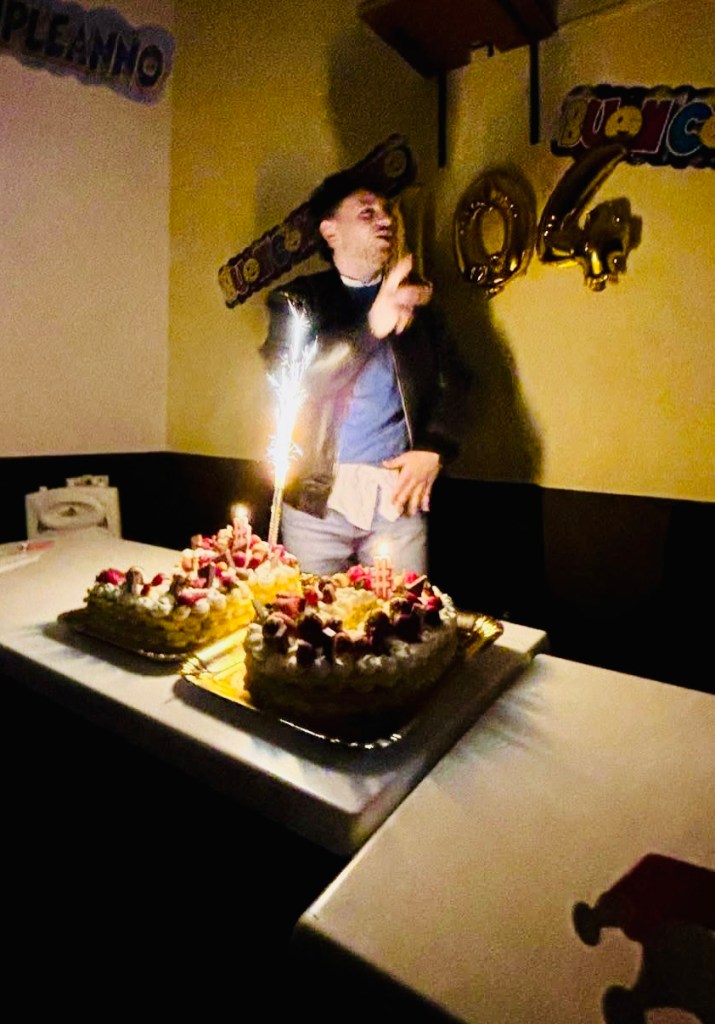
FaceBook sometimes feels like just another chore and then some photo or post will smack me in the face and send my memory cells careening around my brain. On April 15, 2025, my testa dura got smacked hard. Into my otherwise boring feed popped a picture of a handsome young man at his thirtieth birthday celebration. I started to sob. Not because, I wanted to be thirty and at that party – though that thought did enter my mind – but because I first met the now thirty year old Valerio Mancini in 1995. The year that changed our lives.

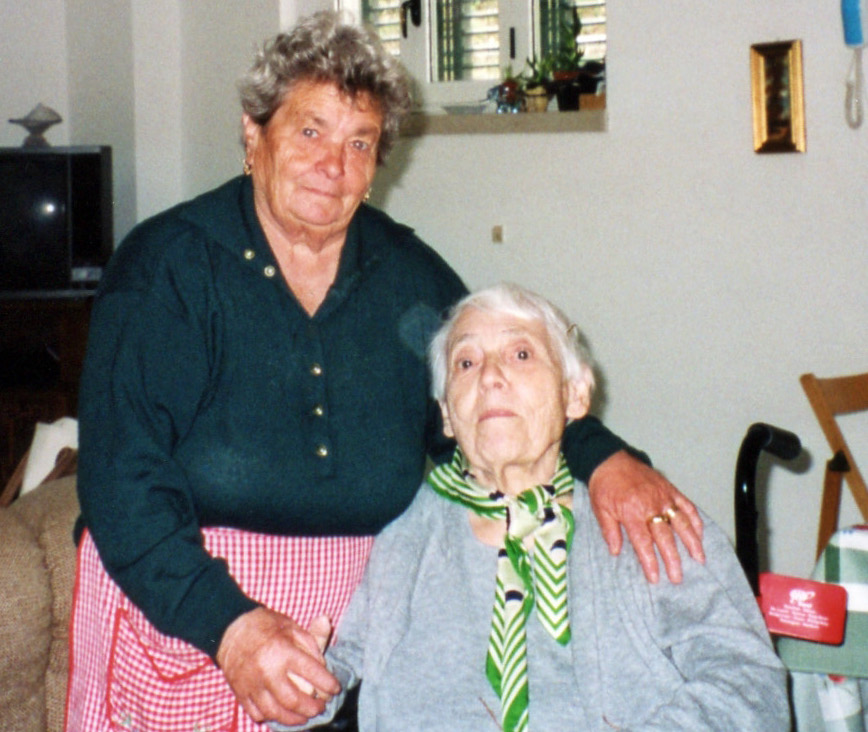
The adorable Valerio Mancini held by his beautiful mom, Carmela Fusco. 1995

1995 –  Jack and I accompanied my Aunt Catherine back the village she was born in, Pontelandolfo, Italy. That year, I had started a family tree and the three of us were on a quest to find more information.

Just to put 1995 in perspective, this is before we had a cell phone with a magic app that did instant translation. We had to get by on Jersey Girl balls and a big smile. Aunt Cat had had polio In Italy and at 80 something smiled like a wee elf sporting a big brace. Jack wheeled her to the municipal building and stopped. There were two flights of stairs to the anagrafe office. No worry, Aunt Cat beamed that magical smile at two local policemen who carried her up two flights of stairs in the chair. (This is what the Italian heart is all about.)

 The woman responsible for vital records spent about three hours with us going through all these old books dating back to the 1860s. Aunt Cat started speaking in an arcane Italian dialect and everybody understood her. Her face lit up. It was like she had just found heaven.  This was a language that was entrenched in her soul. A language that she never spoke at home and suddenly here she is and it’s possible again. We find all kinds of information. Like my Great Grandfather, Salvatore Guerrera, was married to Caterina Guerrera. Italian women keep their own names so my imagination went wild. Did he marry his cousin/sister – euuuch? Is that why I am just a little pazzo? Guerrera, we discovered, is a super common name. I licked my pencil point and kept on writing. We thanked everyone and found our way down the stairs and back to our car.

Now, we have about 6 handwritten pages of family tree and I haven’t the foggiest idea what we’re going to do with it. While staring at each other and standing in the almost empty Piazza Roma another vigile comes up to us. Having lived in Waterbury, Connecticut, He speaks English. Side Note – After World War Two, the lack of jobs and demolished towns were a catalyst for a mass exodus. There are more Pontelandolfese  in Connecticut today than there are in Pontelandolfo. 

Pietro Perugini, sporting his vigile uniform, walked right up to us. Asking if he could see the family tree, he pulled the notes from my hand, stared at them, got into the town police car and left.
 He left with all my notes. He just freaking left.  Three hours’ worth of notes and he gets in his car and he leaves.  What the f*&$?  I threw the biggest hissy fit imaginable.  All that work.  All that time going through the dusty books.  Had I unearthed a horrible town secret?  

The tantrum chock full of English curses started drawing a crowd.  Aunt Cat smacks me with her cane.  I’m thinking, OK OK, maybe like we’re related to really bad people and they don’t want us to know that we’re part of the baddest of bad evil people. Or maybe we’re royalty. That must be it – and and and and and they don’t want us to know because we really own this freaking Piazza.

I swear we waited for 3 ½ or 4 hours. but Jack said it was probably maybe 15 minutes. I don’t know. All that pacing was making me insane.  Officer Perugini finally came back and said, “I think I found your relatives follow me.”

 We get Anne Catherine back in the car and we followed to row houses on a side hilly street.  I found out later that after a devastating earthquake that eradicated homes dating back to the 1600s, this public housing was built.  Since the houses were crammed next to each other, it was tongue in cheek branded as Shanghai.  The vigile and I knocked on a door. A little old lady tentatively opens the door and with a fierce look stares at us. I’m holding the family tree and pointing I say here I am and there you are.  The policeman says it in Italian. Actually, I have no idea what he’s saying but I’m guessing it’s ‘here she is and there you are.’ Bamm, the door was slammed in our faces.

Jack had parked and Aunt Catherine is, with great difficulty, dragging her leg, holding on to Jack and walking toward this house.  I knock on the door again. Again, I’m greeted by a scowling woman, but also a smiling younger woman holding a baby saying “come on in for coffee.” Obviously mother and daughter don’t agree about what to do with these strange Americans. The old woman is essentially saying we know no one in America and we don’t want to. The young woman with an adventuresome gleam in her eye is curious. They see and hear Catherine say in her little voice from the road “are you my cousin?”

The three of us were in the doorway. Aunt Cat asked again, “tu e mia cugina?”   

The old woman replied, Jesu e Maria. Ora e sempre, Caterina Guerrera had recalled the ancient greeting. Both women started to cry and hugged. 

Giuseppina Guerrera and Caterina Guerrera meet.

Suddenly, Giuseppina Guerrera, who we discovered was indeed Aunt Cat’s first cousin, starts to ask her 20 questions. It was better than any of those quiz shows. The million dollar question was – Libero Capporosso. Conosci  libero caparoso? I’m thinking who the hell is Libero Capparoso? A light went off, the audience cheered as Anne Catherine said – “bookie.”   Libero means book in Italian.  He had left the village and come to New Jersey and stayed with our family. Bookie was the magic answer that opened the door to our hearts and love for Pontelandolfo.

That day, we also found another family and first cousin, Carmine Manna. Both families have embraced us. Because of them we became part of the greater Pontelandolfo family.

Thank you Valerio for posting your birthday bash on Facebook. Thank you for being part of our extended family. Thank you for reminding me how blessed we are to have found our roots in Pontelandolfo. That you for being that wee baby boy who smiled and welcomed us home.

Ci Vediamo

Midge

My Slavic Secret

We have all been bombarded with the horror that Putin’s War is promulgating in the Ukraine. Schools, hospitals, apartment buildings razed by bombs. Hundreds of thousands of Ukrainians fleeing for their lives. This atrocity effects each and everyone of us differently. Social media is overflowing with pleas for help and personal stories.

My friend James Martin posted this on Facebook:

My family (all 4 grandparents) left the Ukraine in the early 1900s to save themselves and their offspring from the terrors we see there now. They saw in their early teens that European Countries had been fighting for Centuries over this beautiful land with an abundance of natural resources and agricultural capacity. They anticipated that the wars would continue. They missed the starvation holocaust (they were farmers also), Hitler’s aggression (he was shipping out train loads of the Ukraine black soil), and now Putin. They left behind their families but never lost touch. My parents, my sister and I, owe them everything. Ukrainians never forget 💙💛🇺🇦.” James Martin

“Ukrainians never forget.” That phrase really got to me. His words brought up a well of emotions and maybe even smacked me on the side of the head. Because, I had forgotten. Forgotten that I am fifty-percent of Slavic Descent. Being raised in Flagtown on the Guerrera compound, my Italian family was there everyday and had such a huge impact on me that I have always just said I was an Italo-Americano. The passion I felt for my Italian side masked the other DNA that was floating around. Until I read Jimmy’s piece and saw what was happening to other Slavic people. Then wham – I remembered.

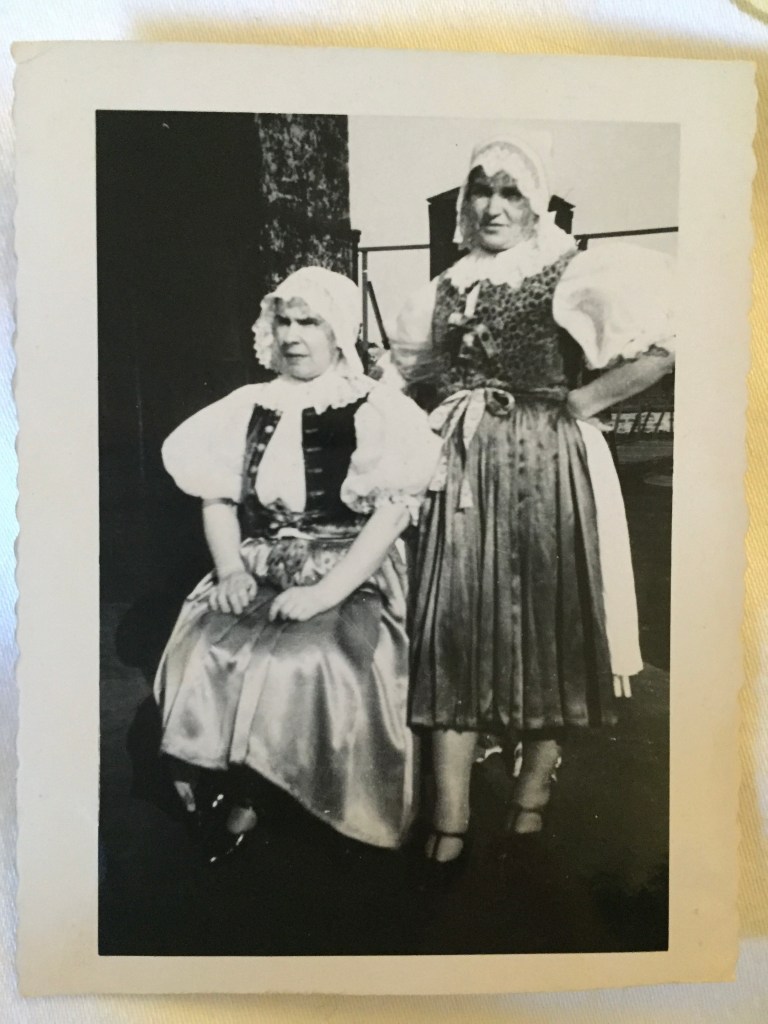
One of these women is my great grandmother, Beta Skok
My maternal grandparents
Valentine Forejtek and Kristina Czerní

Borders changed so often in Eastern Europe that I am not really sure what country my grandparents came from. Was my grandfather born in Kromyerize, Bohemia or Austria-Hungary or Czechoslovakia or Slovakia? Different historic documents list different places. Family lore has it that Valentine was a multi-linguist and a great chef. Both skills served him well in WWI. He could be from wherever it was better to be from. My grandmother, who died when my mother was only nine or ten, was born in Sobotište, Slovakia or was it really Austria Hungary or Czechoslovakia. She was born in 1898 so it was probably Hungary. As Jimmy said, these European countries had been having turf wars for centuries. The resilient people, with incredible conviction maintained their heritage and homelands.

My mom and her mom.

My Slavic genes have probably provided me with my tenacity and as the Italians say, “testa dura,” hard head. I wish I had gotten to know more about that heritage. Time to fill in the other side of my family tree.

A little research and WOW.

Back to Italy. I reached out to Italian pals to see how Italians were feeling about the war and helping refugees. Gabriella Mancini, the best physical therapist in the world, lives in Milan and reports this.

ITALIAN AID TO UKRAINE IN ABSENCE OF HUMANITARIAN CORRIDORS 

More than two weeks after the beginning of the war in Ukraine, Italy’s response has been impressive. Not only in the big cities but also in the smaller ones, thousands of people took action to send humanitarian aid to the population that remained and, also, to welcome the first refugees who landed on Italian territory in the best possible way. Despite the problem of inflation, rising fuel prices and the absence of humanitarian corridors – as a consequence of this conflict incited by Russia, trucks with tons of food, medecines, clothes and basic necessities departed to reach the Ukrainian border. In particular in Milan, we assisted in the creation of numerous non-profit associations, also led by priests and public figures, who have worked (and still continue to do so) to complete the mission of humanitarian aid for Ukrainian citizens and soldiers. Several collection points are scattered throughout the city. This enables every citizen to easily contribute to help people who have remained separated from their families and their belongings. In order to be able to cope with the immediate emergency of the Ukrainian people, the call on social networks is to donate as much as possible to support refugee reception facilities, hospitals and orphanages. Many pharmacies are working to collect medicines for the first aid of war wounded. There are also many Italian families who are trying to host refugee people with the hope that sooner or later this relentless horror will end. Thinking of the fact that we did not even get out of the Covid-19 emergency and we already have to face another one; it sounds really absurd and in some ways this situation could be even more serious than the pandemic. Probably the truth is that man will never learn from the mistakes of the past.” Gabriella Mancini

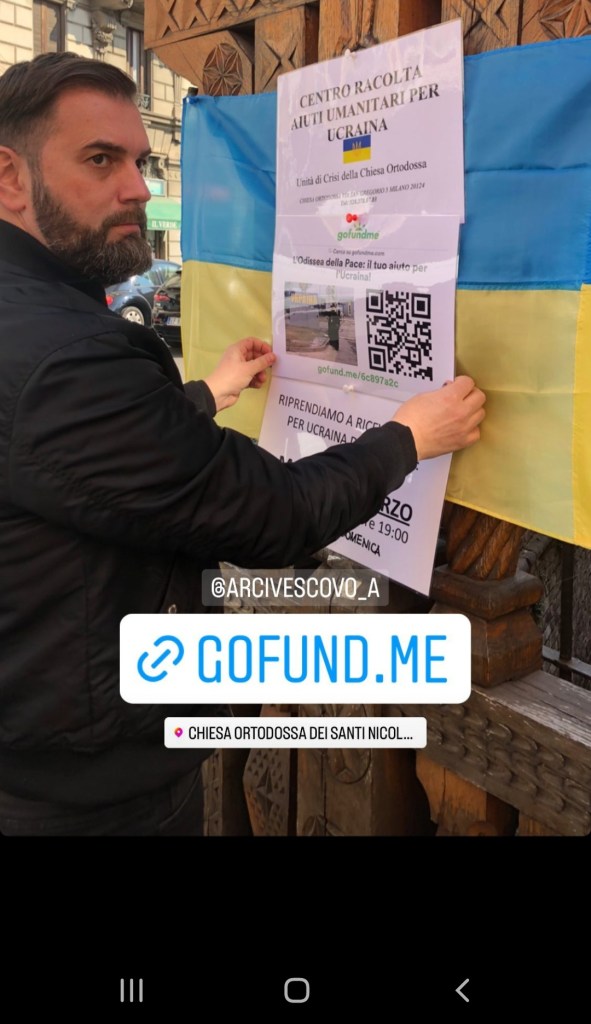
Archbishop Avondios, Vicar of the Archdiocese of Milan
Social Media is full of appeals.

This message raced around WhatsApp:

Stasera alle 20 suoneranno le campane delle chiese. Spegnete le luci delle vostre case finché potete, per dimostrare a Putin che preferiamo stare al buio piuttosto di comprare il suo petrolio o gas. Questa azione si farà in tutta l’Europa allo stesso momento, a Londra(alle 19), Europa Centrale(noi) alle 20, Kyiv(alle 21) e Mosca (alle 22).
Per favore inoltrare questo messaggio.

Translated: Tonight at 8 pm the church bells will ring. Turn off the lights in your homes while you can, to show Putin that we would rather stay in the dark than buy his oil or gas.This action will be done throughout Europe at the same time, in London (at 7 pm), Central Europe (us) at 8 pm, Kyiv (at 9 pm) and Moscow (at 10 pm). Please forward this message.

I don’t know if turning out the lights made Putin think again about his criminal actions but, like singing from the balconies during Covid lockdowns it makes people think a bit about what is happening.

What am I doing? Donating to Doctors Without Borders and allowing my Slavic genes to start talking to the Italian genes. It is time for me to unleash the power of both sides of the Adriatic Sea.

Ci vediamo


“Cars, Castles, Cows and Chaos” takes to the Road! I will be reading excerpts from this, my new book on April 21st at Cafe Brio in Hillsborough, NJ and on April 27th at Rossi’s Bar and Grill in Hamilton, NJ. Reservations a must. E-mail me for details – info@nonnasmulberrytree.com

On May 7th from 2-4pm, the talented illustrator, Janet Cantore Watson, will be representing “Cars, Castles, Cows and Chaos” at the Commonplace Reader in Yardley, PA. I’ll be back in Pontelandolfo with Fernando Fiat plotting more tales.

Our Genealogist on TedX Talks!

Rich Venezia is my favorite genealogist – not just because he is handsome and witty but because he really knows his stuff.  He was researching for clients with roots in Southern Italy and popped into visit Jack and me.  He has been researching Jack’s Irish heritage so they had lots to talk about.  (I hope Jack is from a town that makes fabulous Irish Whiskey.)

While we were having a 4 hour pranzo, Rich casually mentioned he had done a Ted Talk.  WHAT!  I bellowed – did I mention we were eating at Borgo Cerquelle, my favorite agriturismo so lots of folks turned and peered at our table.  What, I said a little gentler.  Rich Roots, his firm, is in Pittsburgh and Rich did a TEDx Talk there.

I watched it and was so caught up in broadcast that I knew I had to share it.  Every generation needs to listen and learn from this –


Researching With Rich

Rich Venezia is a professional genealogist based in Pittsburgh, PA. He specializes in Italian, Irish, and immigrant ancestry, and NJ/NYC and Pittsburgh-area research. He also assists clients with dual citizenship applications. He has worked on two genealogy TV shows (including PBS’ “Genealogy Roadshow”) and is available for client research and speaking engagements.  His website can be found at richroots.net and he can be reached at rich@richroots.net. 

Adventures in Church Archives

Paolo Collection 2 (38)

Whew, the holidays are over and those resolutions are racing around your brain.  A good number of my Italo-Americano pals have said that this year they are committed to researching their families.  I always say the same four words – call genealogist Rich Venezia!  He is cute, works hard and is Italian!  Rich and I were talking about some of our experiences doing research and decided that it was time to suggest that you go back to church – the parish churches of your ancestors.  Through the church archives in Pontelandolfo, I was able to trace my grandmother’s family back to the 1500s!!!  I had a little help from Antimo Albini (link to story)  who told me that the priests were responsible for census and wrote down incredibly interesting details about the parishioners.  My great – grandfather was a hunchback!  Who knew!  Let Rich Venezia tell you how to use the archives to find out more about your family.

richedit2Ciao a tutti!

I’ve been traveling all over these past few months, and Ms. Midge has also been quite busy herself!  Rumor has it her new hip is working just fine. I’m glad to be able to finally sit down and write for our third round of genealogy hints.

Midge asked me to write about church archives, and what a great topic it is! The records held by churches throughout Italy can trace your family back generations upon generations. The main question is access – do they still exist? Where are they held? Will the priest let you look through them?

After the Council of Trent in the 1560s, the pope required all Catholic churches to create registers of vital events in each parishioner’s life – births (baptisms), marriages, and deaths. From 1595 forward, after the papal proclamation (do it or else!), records should exist in most churches in Italy. Of course, there is the occasional fire, flood, or other act of God (see what I did there?) that would render the registers unavailable in present day.

In a lot of cases, these registers remain with the parish church of origin. Whether they are well-preserved in a church archives, stored in the priest’s attic, or tucked away in the sacristan’s garage will differ from parish to parish. Archdiocesan archives also exist, but what will be held at each of these archives will differ greatly: for instance, the archive of the Archdiocese of Sorrento-Castellammare di Stabia in Sorrento only appears to have the church supplements (allegati) for marriages that occurred in that Archdiocese. In the archives of the Archdiocese of Vallo della Lucania, however, the only surviving records for one of my main ancestral churches – San Biagio in Matonti, Laureana Cilento – can be found. (I wish I’d known that before going to the church!) It’s important to know where the records are located before you head across the pond!

If you want to research in the parish registers of your town, do as much research as you can before you go. Genealogically, work backwards to the start of the civil registration records to find as many of your ancestors as you can. Technically, have a good software program to record further generations of ancestors efficiently and accurately.

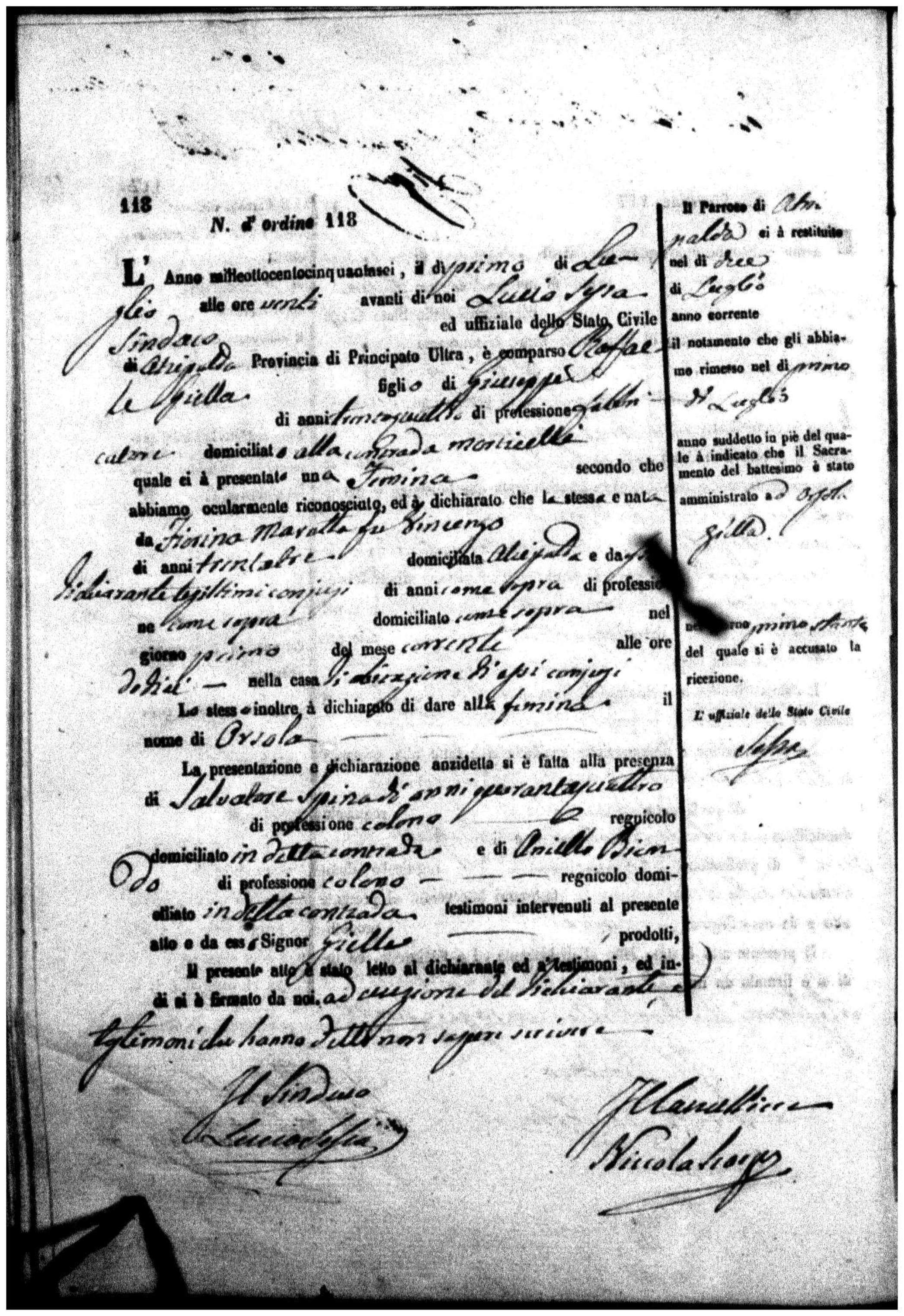
If your ancestor was from a city – or even a big small town – there will be more than one parish church. How to find which one was your ancestor’s place of worship!? Start with the Italian vital records – stato civile. Between 1815 and 1865, there were two columns in the stato civile records – one column was for civil information, the other (right-hand) column for ecclesiastical. The ecclesiastical column will list the parish church in which the baptism or marriage occurred… and voila! You have your parish church. If your ancestor was born after 1865, look for their parents, or even grandparents, in stato civile records. Many families went to the same church for generations, unless they moved to un luogo faraway.   Here is an example –

orsola-giella-nata-1856_001Orsolo Giella – from Family History Library microfilm of Archvio di Stato di Avellino (has name of parish on the right-hand side – it’s the name of the town; there was only one parish at the time of her birth)

Practically, get in touch with the local priest in advance. While you could write to the church in the mail, I’d recommend getting in touch via email (when possible) or the local parish priest by phone (try to find his cell phone number).  If you can’t find a number or address for the church, try to get in touch with Town Hall. Someone there may be able to assist you in getting in touch with the priest. Many town websites include information about the parish.

As you can imagine, to do this, you’ll want to have advanced Italian language skills or a bi-lingual pal – both for the set-up of the meeting and the actual research process, too. (Most records are in Latin, but if you can’t communicate with the priest enough to let you in the door…) If you don’t have a relative or pal, I’d recommend hiring a local translator or guide. (Midge note – I know a few bi-lingual Pontelandolfese if you need someone.) This can also make it much easier when doing the research, as they can help you communicate with the priest and other town officials who you may come across during your local research. Perhaps you have cousins still living in your town? See if they can provide some assistance for you.

Note from Midge – We were lucky in Pontelandolfo that the church archive had been digitized by a parishioner!  It pays to nose around town – local bars are great places to uncover who is who – and ask if there is a local person who has taken on this task.  When I started my research, my Italian was basic Berlitz vacation guide at best.  Everyone was helpful and even sent around for someone to help me who spoke English.

I don’t recommend just showing up at the door of church and expecting to have good results. Especially in small southern towns, priests may work at two or more churches – which means it’s very likely your day in town will be their day in another town.

A very select number of parish records have been filmed by the Mormon Church, so it’s always worth a peek at familysearch.org to see if your town’s records have been filmed. (I see this mainly in Sicily and northern Italy.)

Note from Midge – I went to the link and discovered that they have records from Pontelandolfo!  I also found out that in East Brunswick, NJ Family Search had a Family History Center and I could have the microfiche sent there!  Thanks Rich!!!

Registri dello stato civile di Pontelandolfo (Benevento), 1809-1860

Format:  Manuscript/Manuscript on Film
Language: Italian
Publication: Salt Lake City, Utah : Filmati dalla Genealogical Society of Utah, 1989
Physical: in 11 bobine di microfilm ; 16 mm.

Getting access to these records isn’t always easy, but as you can imagine, the benefits can be very rewarding. Who doesn’t want their family tree traced back to 1595?!

For further information, you may want to look at the following article from ItalianGenealogy.com. (I am not associated with them in any way – I just think it’s a great and detailed article.)

I hope to see you in Italy!  Happy hunting!

Grazie Rich!  Ci vediamo!

Seeing Pontelandolfo for the First Time – Again

It is almost time for us to leave the one place where I can feel my grandmother in every corner – and I am depressed.  This is not an unusual state – every year as I start to close up the house in Pontelandolfo and make arrangements to be picked up at JFK in New York, I get depressed.  Pontelandolfo, village of my grandparents, aunts and uncles resonates to my very soul.

86950-PH-GFB1-034

Maria Rosaria Solla and Francesco Guerrera – Happy Owners of 221 South Branch Road

Why do we leave?  That question smacks my soul at the Mini Market, Marcelleria, Pasticceria, Farmacia – as I tell folks we are about to depart yet again, everyone asks the same question.  Why not just stay here?   Because Flagtown – the village where my Pontelandofese family settled, where my dad was il Sindaco, mayor, and where we even have a street named after my family  – resonates with me too.  The pull in both directions is so very strong that at times I feel my heart being ripped apart. Giusippina Guerrera – my dad’s first cousin – reminded me that 20 years ago I was the first one from America to return and search for those left behind.  She constantly tells me that blood attracts blood – like a magnet finding its way to those who are part of who we are.   Sitting outside of Kaleb’s bar looking out over the Piazza, thinking about Giusippina, my family and friends in the USA and my trips to Italy over the past 40 years made me really think about the first time I saw Pontelandolfo. Saw it, left it quickly, but felt the incredible pull to return.

Twenty-one, knowing everything there was to know in the world – but being far from worldly, I was blessed to have my Aunt Catherine offer to take my younger cousins Bobby, Maryellen and I to Italy for the first time.  Thank God, it was 1971 and I’m glad I was able to score happy pills. We landed in Milano and the first thing I discovered was that no one could understand Aunt Cat’s Italian. Never having heard anyone in my family speak Italian, but knowing that Aunt Cat spent her formative years in Italy, I just figured we’d be OK.  I didn’t realize that she spoke the ancient dialect she grew up with in Pontelandolfo.  Actually, Northern Italians were rude and said things like “we don’t speak Spanish here.”  The official checking passports at the airport said it first.  Aunt Cat’s face dropped and she refused to speak again – until we reached Campania.  Luckily, I had taken a year of Italian at Montclair State, carried a Berlitz phrase book and could get us to the car rental agency and put gas in the car.  Bobby and I drove the car – when we got back we told everyone it was a Ferrari – but I haven’t a clue what it was.  That trip was like a rapid fire slide show –  100 towns in 100 minutes.  Zip there went the Leaning Tower of Pisa. Zap, I think that was the Amalfi Coast – shit – the curves – how did we get here. Wham – Grosetto and a film crew shooting a spaghetti western.

ponte-2-rose-house2.jpg

After the whirl wind but frustrating tour, we got to Pontelandolfo late one morning.  The village looked like a movie set – it was pristine.  We discovered that the powers that be -I think the Communist party was in power then – rehabbed the city to promote tourism.  (Boy, did I hear that line over and over again in the next 30 years.)

On the stone city walls were funeral announcements. A number of them said Guerrera.  That was kind of freaky – realizing that people with my last name really did live and die in this place so far away from Flagtown.  I wondered if my nonna or nonno knew them – had played with them as children – gone to their weddings.

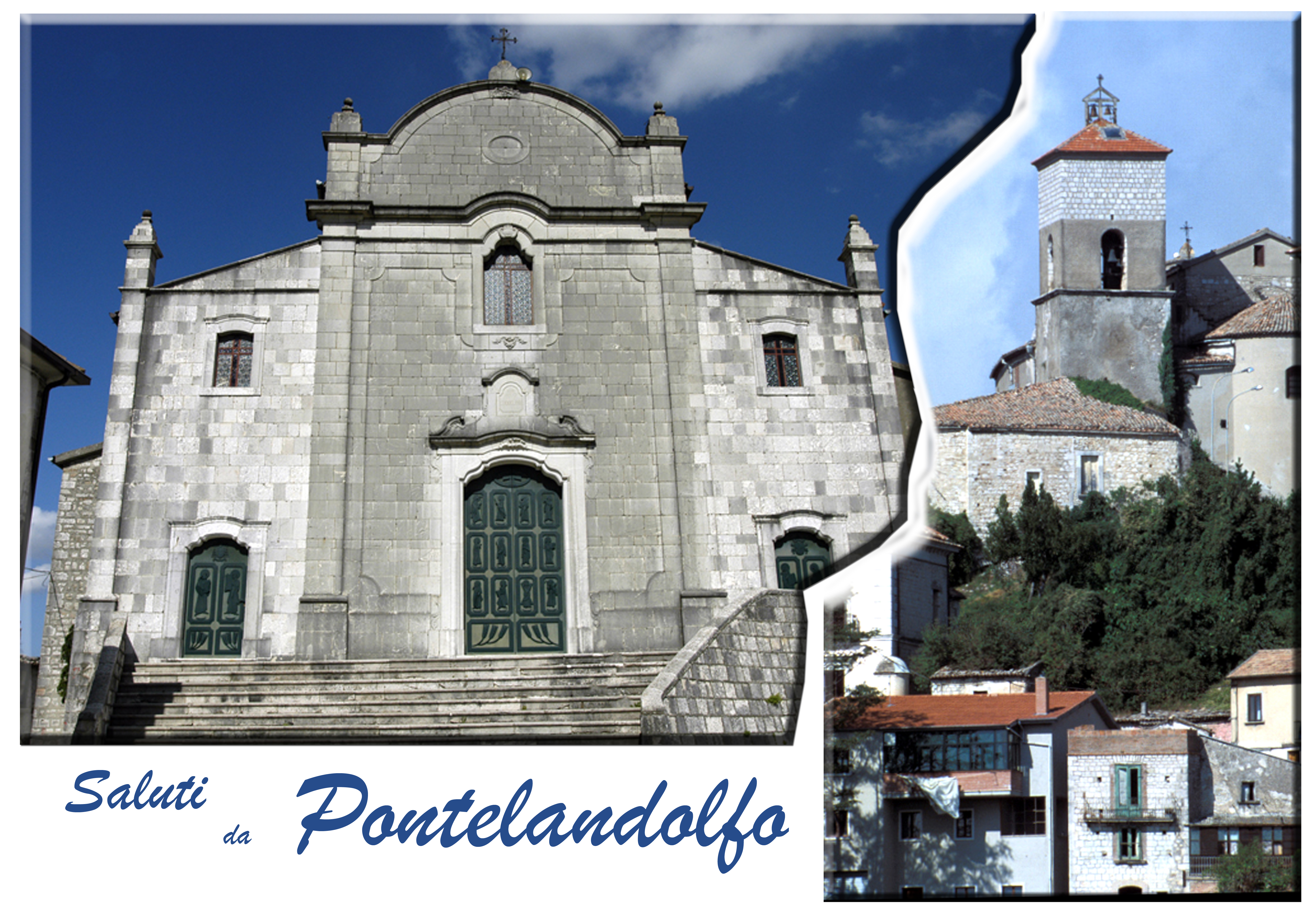
Aunt Cat started acted skittish the moment we got to Piazza Roma and looked at Pontelandolfo’s iconic tower. I didn’t understand why.  (When I was older and wiser I figured it out – she was having flashbacks to being the crippled kid that the local priest kept insisting should be institutionalized.  Here is an earlier blog – Nonna Comes to America.)

As we wandered the tiny medieval streets, Aunt Cat told us tales about coming to the village for market day.  She tried to point out where they lived on a little hill outside the village center.  It had to be a long walk for a little girl with polio.  Coming from modern New Jersey, it was hard to imagine her walking to a communal fountain for water or helping her mom wash clothes in the communal laundry trough. Her grandfather, my bis-nonno Liberantonio Solla, played the concertina in the piazza, for weddings, parties – and often drank his fee away.  After aimlessly wandering and not really talking to anyone – we sure as hell weren’t invisible but must have had a don’t talk to me wall up – we realized we were starving.

Great roasting over an open fire smells spilled onto the piazza.  We followed our noses. There was a beaded doorway and a smiling face beckoning us closer.  No one understood the sign but we figured out it was a tiny osteria – local restaurant.  The three of us went in and ate what ever the owner was serving that day and listened to more of Aunt Cat’s stories.  I don’t remember what we ate but I do remember it triggered a visceral response and my heart got bigger and bigger in my chest.

Leaving the three of them sitting in the sun and digesting lunch, I whipped out the Berlitz, wandered the narrow alleys and tried to introduce myself to older people I met to see if anyone remembered my grandmother or grandfather. One older gent with a gleam in his eye remembered Maria Rosaria Solla!  He took me to meet a woman he said was a relative.  She promptly wanted us to come back for cena later and meet everyone.

Paolo Collection (33)

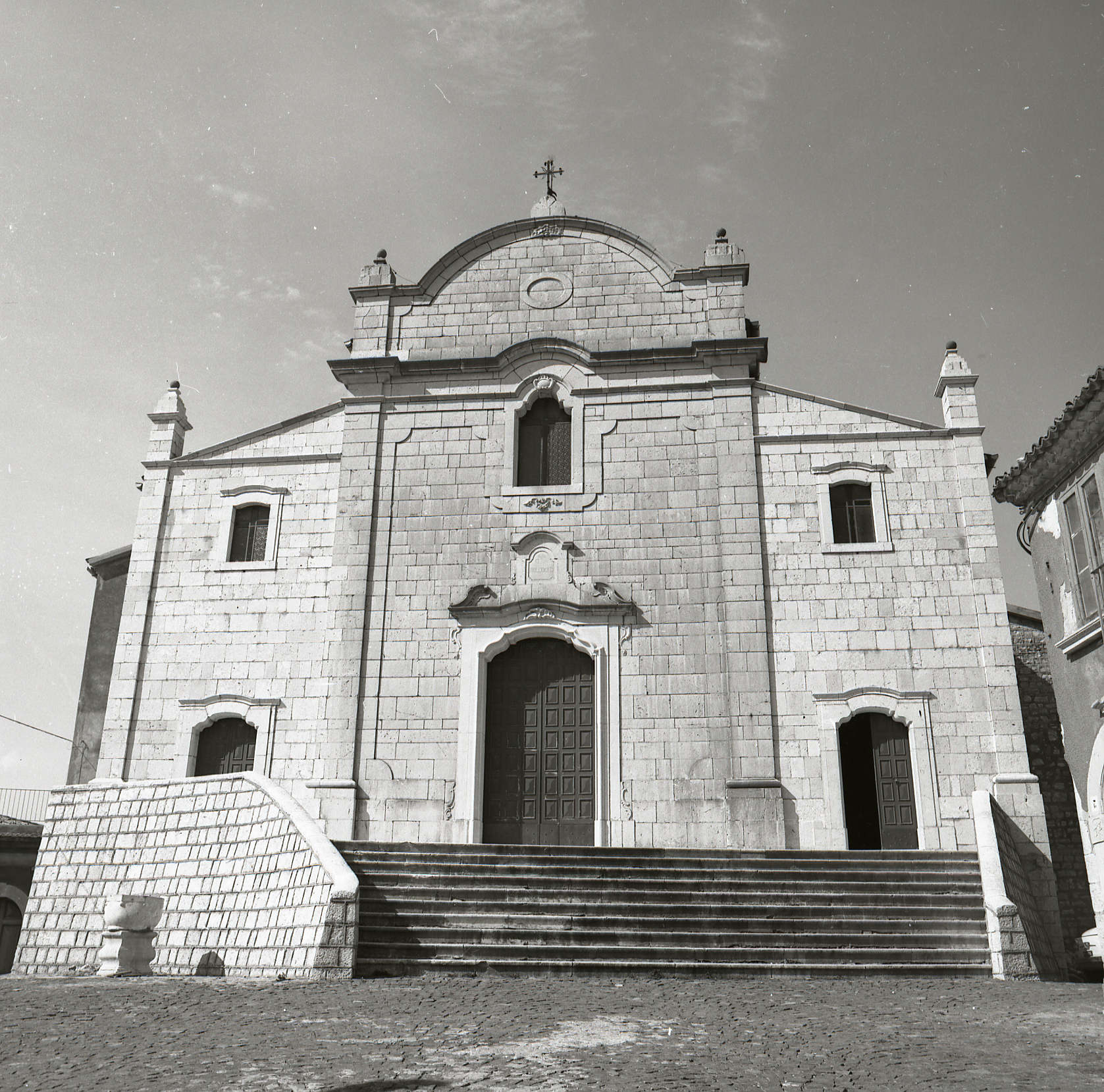
I raced back and told Aunt Cat.  She was horrified.  “Absolutely not! They know we’re  from America and want our money.” Bobby and Maryellen were bored and wanted to go back to civilization.  Being 21 and ornery I stomped off. Not knowing where I was going, I ended walking up a cobblestoned hill to get as far away from my chicken shit family as I could.  I found myself on  the steps of the church where my Grandmother was married, my aunts and uncles were baptized.  High on a hill, I looked out over the alley, popped a happy pill and while tears streamed down my eyes, I vowed to come back.

As long as there is a wind in my sail, I will return.

Ci vediamo.

Genealogy Hints – Naturalization of your Ancestors

richedit2Our resident genealogist, the charming and smart Rich Venezia of Rich Roots Genealogyhas returned with more helpful hints on discovering our individual stories.  Many of you of Italian descent, have e-mailed me about obtaining Italian Citizenship.  Rich is the expert .  Here he talks about the first and most important step – naturalization of your ancestors.

Dear Readers of Nonna’s Mulberry Tree,

This month, we’ll be tackling a question I am asked all the time: How do I know if I qualify for dual citizenship?

While there are lots of rules and regulations – it is the Italian government, after all! The most important question you have to answer is the naturalization question.  Just when did your ancestor become an American Citizen?  If your Italian ascendant (say, your grandfather), naturalized prior to the birth of their child/your American-born ascendant (say, your father) – well, then the Italian bloodline was not passed through, and you’d be ineligible. However, if the Italian ascendant never naturalized, or naturalized after the birth of your American-born ascendant – well, we may be in business!

What?  You don’t get it?  Simple – we’ll use Midge as an example.  Her Grandfather, Francisco Guerrera became a naturalized American Citizen after Midge’s dad, Giovanni Francisco Guerrera, was born.  Even though her dad never understood that he was an Italian citizen until Midge started researching – he was!  The Italians don’t care where you are born if at the time of your birth your parents – or parent  – is an Italian citizen, then you are too!!!  Midge’s story.

So, the first step to citizenship – start looking into your parent’s or grandparent’s (great grandparent’s, etc.) naturalization. Here are some places you can survey –

The best place to start is by searching census records. These are accessible in various places online – notably Ancestry.com (check if your library has a subscription). Censuses starting in 1900 have a citizenship status column, and censuses until 1940 are available. (1950 becomes available in 2023.) If your grandfather immigrated in 1913, you should be able to find him on the 1920 census. Usually, one of four things are listed in the citizenship column:

NA = Naturalized

PA = First papers submitted (usually, a declaration of intent [to become a citizen])

AL = Alien (i.e., unnaturalized)

NR or blank = No record; it’s possible immigrant provided the info or know

Biagio Camperlino - 1920 census - Ancestry.com

Thanks to Ancestry.com – we see the PA and AL on the right.

So – if you find Grandpa in 1920, and he is listed as AL, and then you find him again in 1930, and he listed as NA – you can surmise that he probably became a citizen between 1920 and 1930. (Now – let’s just hope your father was born in 1919!)

The thing about censuses is that they can be very inaccurate, so it is unwise to take this information as completely factual without corroborating with further research. I have seen people go from being listed as “NA” in one census to “AL” in the next census, or people list “PA” for 30 years running! Do use the censuses as a guide, but just a guide! You’ll want to corroborate your information, especially for something as important and complex as obtaining dual citizenship.

World War I draft registration - FamilySearch

World War I Draft Registration from FamilySearch noted he was an alien.

If your male Italian ancestor was here in 1917 and/or 1918, and was “of fighting age” – that is, born between about 1873 and 1900, he should be included in the World War I draft registration card database. Note that all eligible men had to register – these cards don’t just exist for men who served in WWI. These registration cards can be found on websites like Ancestry.com or Fold3, as well as for free on FamilySearch. Most of these cards have a question relating to citizenship status – whether the registrant is a natural-born citizen, a naturalized citizen, an alien, or having declared intention. If your ancestor’s citizenship status matches that on the 1920 census (remember there were 2 or 3 years in between), you are one step closer to the truth.

Now that you have a timeframe in which your ancestor may have naturalized, what do you do next? The age-old answer: It depends. Naturalization records are held at different repositories, and each state and county may hold their records at different places. In New Jersey, most county clerks hold the naturalization records for their county (for instance, Middlesex County and Hudson County records can be found in those counties.). By calling the Office of the County Clerk, you can determine if they hold these records. However, in Monmouth County, for instance, their records are held at their County Archives – which has a searchable database online!  It is worth the phone call to see if you can do the research from the comforts of home!

Michelle Tucker Chubenko of Jersey Roots Genealogy is a colleague and friend of mine. She wrote a blog post that might be helpful on finding records in the NJ district courts.

In Pennsylvania, records are *generally* held at the Prothonotary’s Office, but this differs from county to county.

This is Midge, I had never in my life heard the word “prothonotary.”  What the hell is that?  According to the source for all – Wikipedia: The word prothonotary is recorded in English since 1447, as “principal clerk of a court,” from L.L. prothonotarius (c. 400), from Greek protonotarios “first scribe.”  Who knew?!  

If you are having trouble finding the records, keep in mind that some state archives, local or regional libraries, or genealogical societies may also hold these naturalization records. The New Jersey State Archives, for instance, holds a vast collection of naturalization records – for some counties, into the 1940s and 1950s! (Union or Sussex County ancestors, anyone?)

Another complication is that the naturalization laws changed in 1906 – and a lot of Local Courts lost their ability to naturalize citizens.  Now the search gets a little sticky!  Just what court naturalized our ancestor??

If a US District Court existed in the city or county where your ancestor lived, it’s extremely likely they would have naturalized through this court. In Allegheny County, Pennsylvania, for instance, after 1906, all naturalizations occurred in the US District Court of Western Pennsylvania in Pittsburgh. In New York City, many immigrants would have been naturalized at the US District Court of New York (Southern District) if they were Manhattanites or from the Bronx. Queens, Kings, and Staten Island residents likely naturalized through the US District Court of New York (Eastern District). In New Jersey, there were District Courts in Newark, Camden, and Trenton. The records of the US District Courts are generally held by their regional branch of the National Archives (NARA) – NY and NJ at NARA New York, Pittsburgh and Philadelphia at NARA Philadelphia, Ohio at NARA Chicago, etc.

Citizenship Frank

My nonno was naturalized in a Local Court.

The good news is that a lot of these records can be searched online (at least up to the 1930s or 1940s). Italian Genealogical Group has indexed the records of the NJ and NY District Courts. The Pennsylvania District Courts’ records are on Ancestry.com up till 1930. FamilySearch also has a large amount of naturalization records available online for free – both District Court and Local Court records. You can also order a search with NARA for a nominal fee – National Archives.

If you have lots of time to wait and not a lot of time to do the research – this may be the option for you. It requires a little less detective work but a long waiting period .  Just pay the fee and order an index search from US Citizenship & Immigration Services (USCIS). They hold all naturalization records from 1906 onward. A search can be ordered here: US Citizenship and Immigration Services. The current waiting period to receive the results of the index search is anywhere from 6-8 months.  That doesn’t seem so bad.  However, then factor in another 6-8 months to receive the record if one has been found using the index search. I generally find it a little easier to verify naturalization by other means. However, you should be able to use the results of the index search to determine your eligibility. A date of naturalization is usually listed on the index search, so you can determine whether this was before or after the birth of your American-born ancestor.

A USCIS index search would also come in handy if you believe your ancestor never naturalized. There will likely be an AR-2 (alien registration form) for them if they were alive in 1940. (Midge here -Why is it that alien makes me think of ET Phone Home?)  Even if the USCIS search is negative – no naturalization for grandpa – you may subsequently request a letter certifying the non-existence of a naturalization.  If this were the case for your ancestor, the Italian Consulate would require such a letter for your dual citizenship appointment.

The bottom line is – no matter how you find your ancestor’s naturalization record, the date that they were granted citizenship to America is key. It must be after the date of their child, your American-born ascendant. The concept of dual citizenship jure sanguinis, through bloodline, only works if the bloodline is unbroken – and until 1992, Italian nationals could hold only one citizenship.

In boca al lupo. May your search be swift and uncomplicated, and may you be eligible for a beautiful red passport!

Rich Venezia is a professional genealogist based in Pittsburgh, PA. He specializes in Italian, Irish, and immigrant ancestry, and NJ/NYC and Pittsburgh-area research. He also assists clients with dual citizenship applications. He has worked on two genealogy TV shows (including PBS’ “Genealogy Roadshow”) and is available for client research and speaking engagements.  His website can be found at richroots.net and he can be reached at rich@richroots.net. He adores Midge and her blog, and is so thrilled to be visiting with her regularly. A presto!