La Befana and Me

Every year, the night before Epiphany, La Befana on her souped up broom soars across the winter sky. Which means, every January 5th Italian children across the world hang a stocking, cross their fingers that they’ve been good enough and go to bed keeping one eye open looking for the old woman on a broom who also has a “naughty or nice” list. Nice means candies and gifts are squirreled away in the stocking. Bad – carbone – black coal good only for tossing at the cat – sits there staring at the offender. Snappily dressed in a ratty shawl, babushka, stripped sox and long skirt, the nonnina (tiny nonna) arrives on the Festa dell’Epifania eve. Epiphany is a celebration of the Three Kings visiting the newborn Christ child.

Growing up in Somerset County New Jersey, when there were more horses than houses, I wasn’t surrounded by a neighborhood of Italians. My grandparents loved me, loved their subsistence farm and barely mentioned Italian traditions. I was probably in my fifties when I stumbled upon a magical book in a Morcone bookstore. The grinning, shabbily dressed old woman riding the broom and sporting a huge smile reached into my heart. I bought the book – it was written for six year olds so I could almost follow the Italian – and I became obsessed with La Befana. So obsessed that after midnight one January 6th, determined to see her zoom into our Flagtown farmhouse, I pried my eyelids open with toothpicks.  My SLR camera was ready. Snap! I nailed her. Well not exactly – but this shadow tells the story! 

I guess people on the “nice list” didn’t try to catch La Befana in the act. Not only was there no candy in my stocking, but not even a hunk of coal. I discovered, just a piece of straw from her broom taunting me from my empty scotch glass. That piece of straw reminded me that some mysteries and traditions are best just accepted. Not only accepted but embraced. Did you know that YouTube has hundreds of videos about this charming witchlike old lady? I do! I watched about a bazillion of them. (The WordPress police wouldn’t let me share any with you.)

Some say her name is a riff on the Roman dialect pronunciation of the Italian epifania. The theory I love is that she is really a Christian knockoff of Sabine (also known as “Strenia” and “Bastrina”) a Roman goddess of the new year, new beginnings.

Her back story is wonderful. This is the very short version. Living alone in the woods, she was visited by the lost Three Kings. She invites them to share her meager fare and they invite her to go with them to see the new born king. She bows out to use her handy broom and clean her little cabin. Then it hits her – a new born king! She ought to try to follow the Three Kings and visit the new babe. She doesn’t make it to Bethlehem and instead continues to visit Italian children on that blessed day. She is adored and celebrated everywhere.

Everywhere I go in Italy I see her. Here is La Befana in Sardegna!
Celebrating in Venice!

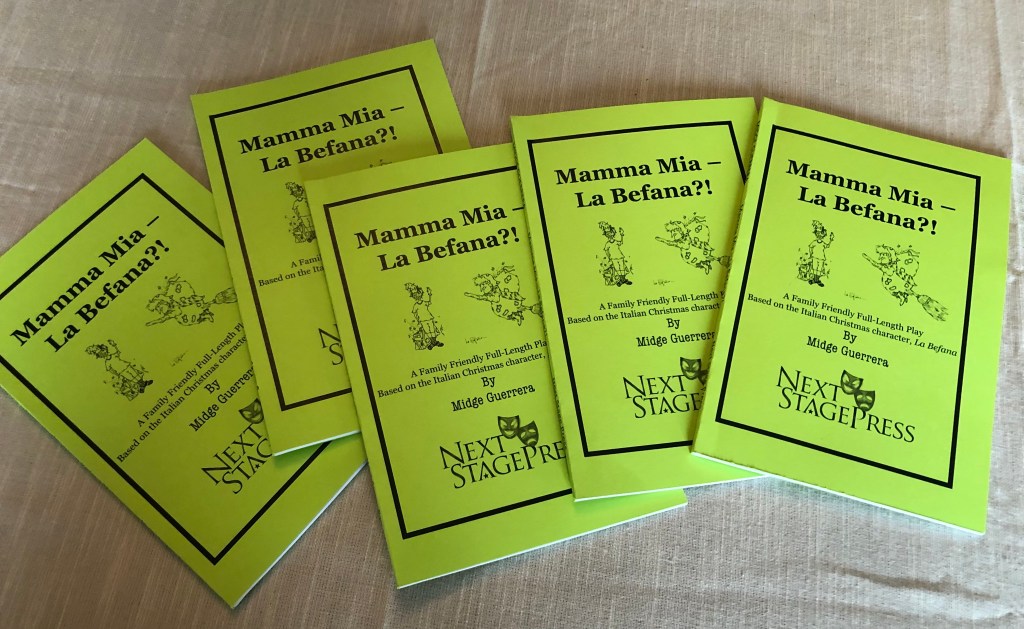
La Befana crept into my psyche and I knew I couldn’t get relief unless I wrote a play that featured her. So I did and Next Stage Press published it last year. (The digital version is only $1. ) The play is looking for a production by a youth friendly theater or school. Give the Christmas Carol a season off and try something – Italian!

Mamma Mia – La Befana?! weaves the ancient Italian Epiphany tale, La Befana, into a contemporary American setting.  Nonna comes to Vermont to spend Christmas with her daughter, Maria, and nipote (granddaughter) Mary.  Arriving first was Nonna’s ancient magical moving and tweaking suitcase – filled, we discover, not with gifts but the ragged costume of La Befana.  

 On the eve of Epiphany, in response to this family crisis, young Mary determined to save the day, rides off to find their senator’s office and appeal for help.  Texting while biking, she loses control and is hurt. With a severely injured leg, Mary drags herself to the San Rocco Church manger scene and keeps warm by burrowing into the straw.  No one knows where she is but the entire town – including her three pals Bethany, Micah and Gaspar who recently played the Three Wise Men in the Christmas Pageant – searches for her.  

Could the fun loving sixty-something Nonna from Florida really be the thousands of years old Italian La Befana? Every January 6th La Befana finds all the Italian children in the world and leaves them gifts.  This January she found one very special Italo-Ameriana, her granddaughter Mary.

Buy a copy and enjoy the story. Then please let your drama teacher pals and theater for youth besties know about this special holiday tale.

Grazie Mille!

Midge


Buon Natale!

“Haul out the holly…”. “Jingle bells, jingle bells…”

Buon Natale and Happy New Year. No need to go “dashing through the snow in a one horse open sleigh” to have a happy holiday. Enjoy your family, friends and most importantly yourself this season. May all your dreams and wishes soar.

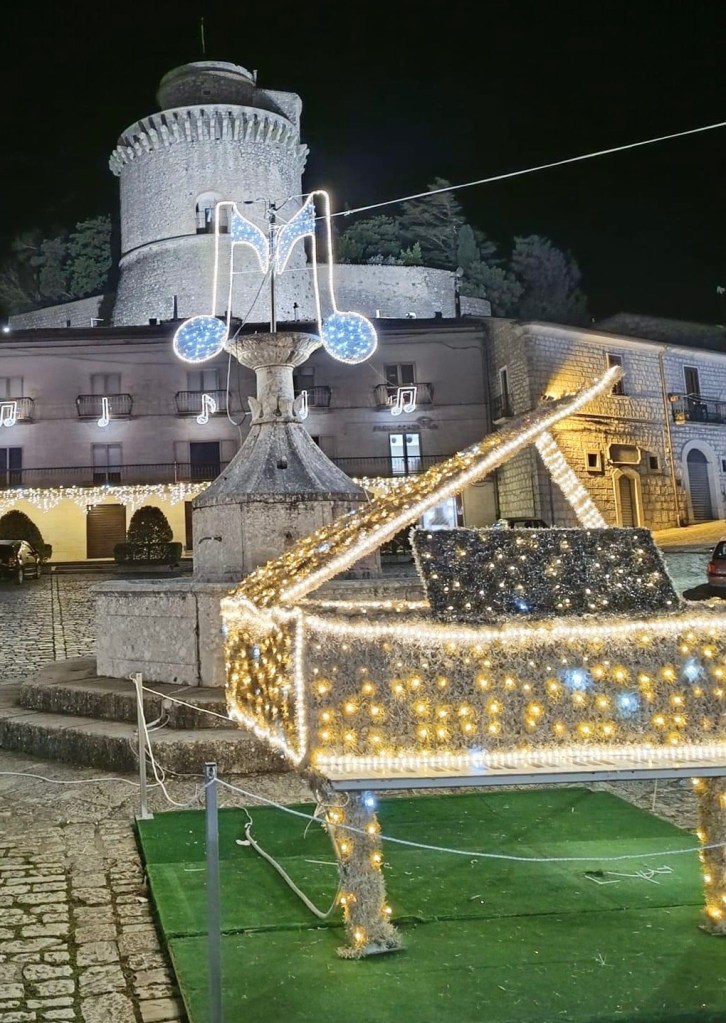
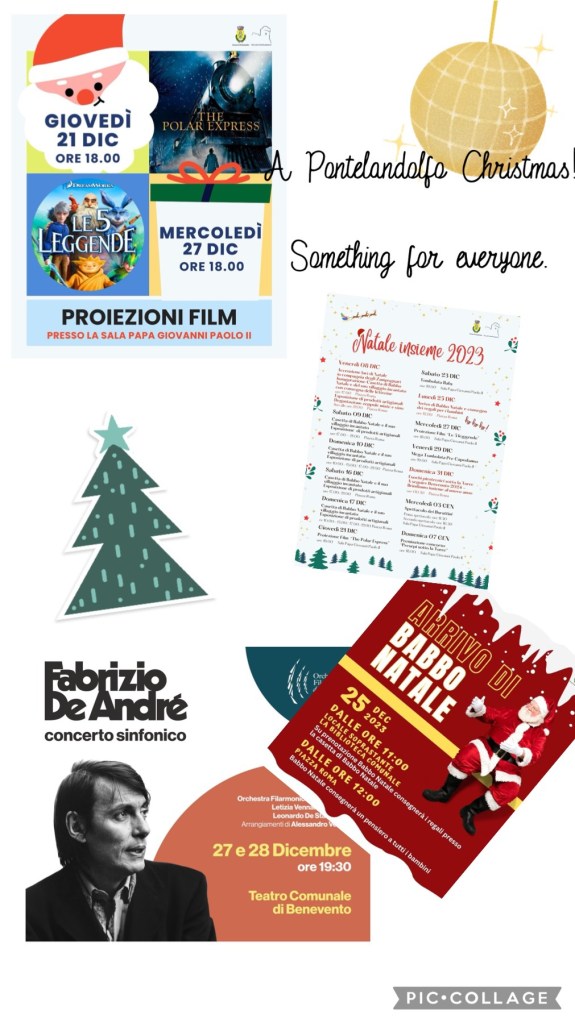
Pontelandolfo and the Sannio hills are magical at Christmas time. Lights twinkle in piazzas and line Benevento’s grand Corso Garibaldi. On January 3rd and 4th Morcone, our neighboring village, produces an amazing community wide Presepe Viventi – living nativity.

Small eyes peer upward searching for Babbo Natale. Santa’s train scoots around Piazza Roma. The crisp mountain air invigorates everyone who walks around the piazza gossiping with friends, looking at the lights and sipping adult beverages at one of our fabulous bars. Baccalà is soaking in kitchens. Nonna’s are kneading dough. Panettone waits on kitchen counters. Laughter and hugs will soon fill homes. Tis the season of family and friends who are like family.

The feeling of the holiday season is so strong that I really believe I can feel it sweeping across the sea.

Benvenuti a Pontelandolfo
Joy for everyone!

Did I mention that the Pontelandolfo spirit of Christmas could be felt across the sea? Not only across the sea, but across the continent. Jack and I are spending our happy holiday season with young Pontelandolfese in Los Angeles. Annalaura Iacovella and Allesandra Rosaria Niedt are hanging out with the elders this Christmas. We send our thoughts of love and good cheer to Pontelandolfese everywhere.

Ci Vediamo

Midge Guerrera

Panettone Enough for All

Deck the halls with boughs of holly. Tis the season to be jolly fa la la la, la la la la. Gorge we now on panettone – – -! What else is a girl to do but gorge! This holiday confection seems to chase her around the store? Well, I could wait and not buy one. Impossible. I could buy a few and not eat every slice. The springy tall cake, liberally speckled with raisons, dried citrus and what ever else someone had in the pantry is impossible to ignore. If you don’t eat it all it starts to get stale. Hmm, not so bad stale either. I imagine, a slightly hard piece of deliciousness, soaked in eggs that have been whisked with vanilla and cinnamon, grilled on my Nonna’s cast iron stove top grill and then bathed in real, honest to God maple syrup. Couple that with crispy bacon and it is orgasmic. OMG. Weight Watcher points be damned that is one fine seasonal breakfast, lunch, dinner or snack.

Antonio Diglio makes the best Panettone!
Cross section of the best panettone in the world – from Diglio Forno!

Made by Antonio Diglio in Pontelandolfo, panettone is light, flavorful and simply fabulous. There is usually none left over unless it gets hidden so I don’t eat it all in one day. Making French Toast, all of those lovely spongy holes fill with egg and a slice cooks up heavenly. Sigh….

Perhaps, I should start at the beginning. Did I enjoy panettone as a child? Not that I can remember. When did I first taste the stale crappy ones sold in supermarkets? That would have been in college. Surrounded by all those Italian American women in my dorm from Italian enclaves like Jersey City, Newark and Hoboken I was introduced to the Italian traditions that New Jersey farm girl Midge never experienced. That is also when I discovered, having imbibed in a bit of Maryjane, how stupendous panettone was doctored with jam, jelly, maple syrup, etc. Luckily, later in life when I had a couple of lira in my pocket, I unearthed panettone that was light, airy, sweet but not gooey and wonderful to eat all by itself. Now, spending holiday time in Pontelandolfo I am binging on the fresh panettone from Diglio Forno and other cakes brought to town from the capital of panettone – Milano.

Diglio Forno makes holiday treats that require self control – no one can eat just one.

Who started this tradition of culinary goodness? What follows is an obvious embellishment of the ancient legend. It was a dark and stormy night, the ides of – wait, wait, wrong legends.

The Legend of Panettone: Tis the season to rock around the great hall. A blowout of a Christmas party was happening at the 15th century Milanese court of Ludovico Il Moro. Servers carried out tray after tray of beautifully prepared food. The dessert, which was to be a surprise and an incredible joy, was slowly cooking in the oven. One young kitchen helper was left to guard the oven and make sure the dessert came out pefectly. For whatever reason, maybe he ran out side to see the snow, maybe Gabriella the serving girl stopped and flirted with him, the reason doesn’t matter – he let the dessert burn to a blackened crisp. Caspita! Desperate, the lad looked around the kitchen and remembered he had made a bread with left over dough. He had tossed in dried fruits, lemon peels and whatever edibles were around. He gulped, put it on a fancy tray, powdered it with sugar, and suggested that the cook serve it. The cook walked incredibly slowly into the great hall. Toni was cowering in the doorway. Slices were served. Compliments were tossed and the party was a success. In summary: Toni, a lowly kitchen helper, made a terrible mistake and fearing he’d be served up roasted, was saved by his quick wit and culinary creation made of leftover stuff. He saved the party and introduced the world to “L’è ‘l pan del Toni,” meaning “It’s Toni’s bread, hence the name panettone. The end.

May your holiday season be bright and filled with scrumptious panettone. If you buy one in an Italian market DO NOT SAVE IT. Why let it get stale – EAT IT TODAY. I googled what one can do with panettone and here are some ideas. Panettone bread pudding – obvious but yummy. Panettone tiramisu – hmm not so obvious. What follows is an easy way to use the bread up. On a griddle heat up slices of panettone. Toast it well on both sides. DO NOT PUT IT IN A TOASTER. I have and it warranted a call to the fire house. Put the slices on a plate and pour some Grand Marnier over it. Imagine all the liquors you could experiment with. Heating up a slice opens the door to the refrigerator and pantry because you can spread it with whatever sweet stuff you like. Or, eat it my way – make French toast and douse it in real maple syrup. Do not leave out the crispy bacon.

Enjoy the season!

Ci Vediamo

Midge Guerrera


BOOKS AND PLAYS MAKE GREAT GIFTS! 

CONSIDER GIFTING A WORK OF MINE. THANKS!


Cooking in the Kitchens of Pontelandolfo!

A few slots are left for the week of June 29th. Message me for information. A week in Pontelandolfo is a great gift for a culinary adventurer.

Cook, Eat, Laugh in Pontelandolfo!

Limited to 8 people!

Cook, Eat, Laugh!

Cook, Eat, Laugh in a small southern Italian village and gain a cultural understanding of what lies behind the great dishes.  Stay in an agriturismo that prides itself on farm to table cooking. This culinary experience is for those of you who want to see a part of Italy that is off the crowded tourist trail and taste dishes that go back generations.

This is not your traditional vacation! Spend mornings not in a restaurant or cooking school kitchen, but in a real family’s kitchen, learning the recipes and menus that have been handed down for generations. During this one-week exploration of the food and culture of Southern Italy, almost everything is included.

Includes –

  • Transportation from the Benevento Train Station
  • 7 nights at Borgo Cerquelle an agriturismo in a centuries old contrada. The double rooms are large with ensuite bathrooms.  All participants will be sharing rooms, so ask a friend to come on the adventure.
  • Welcoming Night Bar Crawl – meet the locals at their favorite hang-outs. 
  • 4 half-day cooking classes with local cooks. After preparing the dishes for pranzo or cena you will sit down and eat multi-courses with the family.  
  • English Speaking Translator for all classes and events.
  • Wine and artesian food tasting at a local vintner
  • Pontelandolfo Day – open air market, tasting of locally produced products, other local activities and light cena.
  • Excursion to Sepino Altilia Roman Ruins    
  • Walking Tour of Historical Pontelandolfo
  • Enjoy traditional folk dancing, cheese tossing and bocci.
  • Last night serata di arriverderci with all the local cooks.
  • Apron
  • Written recipes in English.

Regretfully, there are no special dietary considerations.  Since you will be cooking and eating in people’s homes, not restaurants, accommodations cannot be made for allergies or preferences. This medieval village has charming cobblestone streets but it is not handicapped accessible.  The adventure and experience in the home of local families requires the ability to climb stairs, walk on uneven streets and feel comfortable in a hilly environment.

Visit www.cookinginthekitchensofpontelandolfo.com

Visit our Facebook Page.   Read about Pontelandolfo at www.nonnasmulberrytree.com

Registration materials and financial information will be sent via e-mail to those that want to join the adventure.   info@nonnasmulberrytree.com

Pontelandolfo Hosts International Competition!

Cheese Rolling is an International Sport!

This unusual competition takes strength, precision and a passion for the past. La Ruzzola is an ancient game played in the streets of Italy. Members of a squadra, team, toss wheels of cheese down a course. Originally it was a well aged pecorino cheese. The early players were probably farmers and shepherds – pecorino cheese is made from sheep’s milk. The winner sent the cheese soaring down a path the farthest. Today, the goal is to reach a specific point with the least number of tosses. I heard someone in the crowd watching the day I was there say it reminded them a bit of golf.

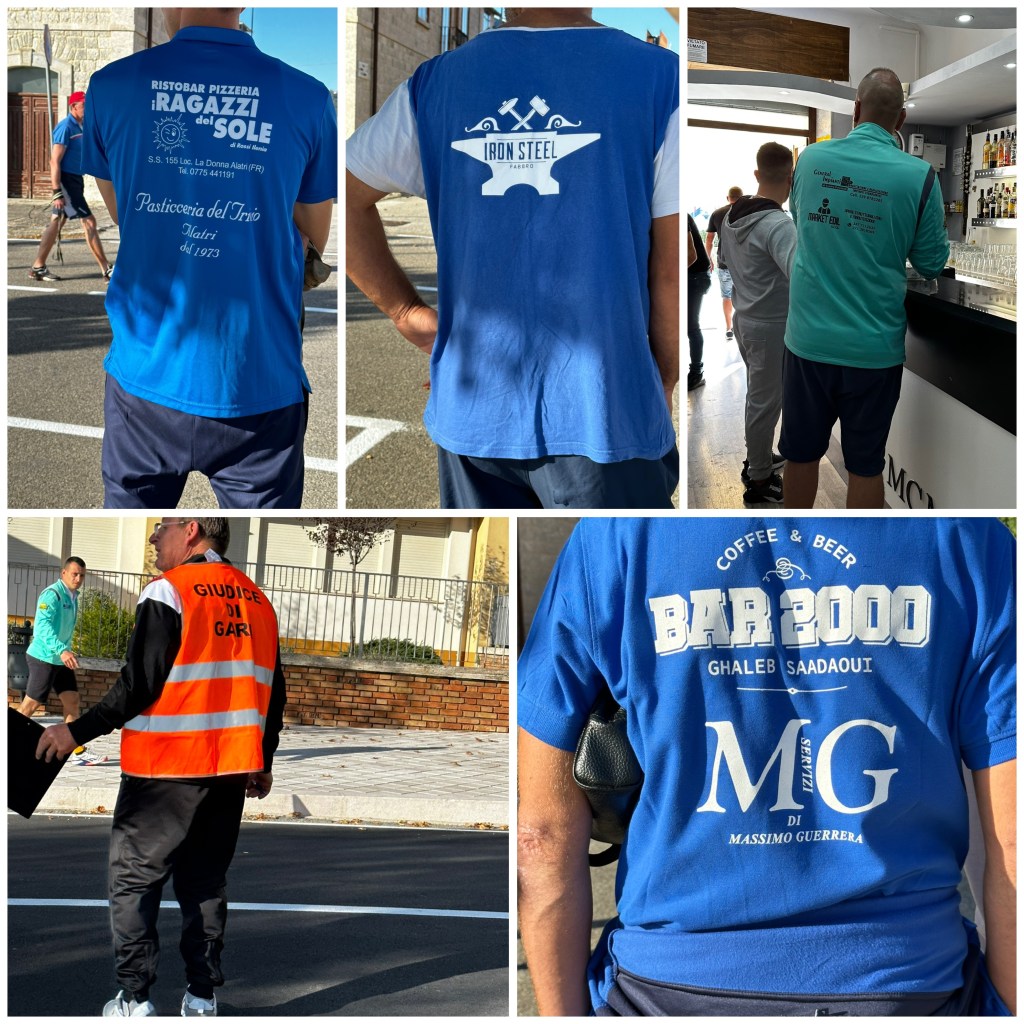
This is a serious sport. Team shirts, buses, fans and all the trappings of a sport were seen in Pontelandolfo this past weekend. Fifty teams from throughout Italy filled the village on Saturday. Some didn’t qualify for Sunday and took their cheese home.

The sport is regulated by the Federazione Italiana Giochi e Sport Tradizionali e dall’European Traditional Sports and Game Association. What is not regulated are the dogs who dashed into the street chasing the rolling cheese. Or the spectator who took a flop when a huge wheel of cheese hit him in the legs. Don’t stand so close!

I could talk about how glorious it was on an October weekend to what happened a sport that is so unique. I could ramble on and on about the feeling of comradeship. Or talk about the fun I had watching out of town guests amble up the street following the action. I could but isn’t it better to watch this –

Enjoy!

See you in Pontelandolfo (BN), the best village in the world of cheese throwing.

Ci vediamo.

Midge

Urban Trekking in Pontelandolfo!

Whaaaaat? You want me to climb up those two thousand year old steps to look at some little thingy that means some rich dude lived here?

Not a rich dude’s crest but the Wind God!

That is exactly what I want you to do! Visit Pontelandolfo and explore the historic center by searching for gli stemmi – crests. The adventure in urban trekking will be fascinating.

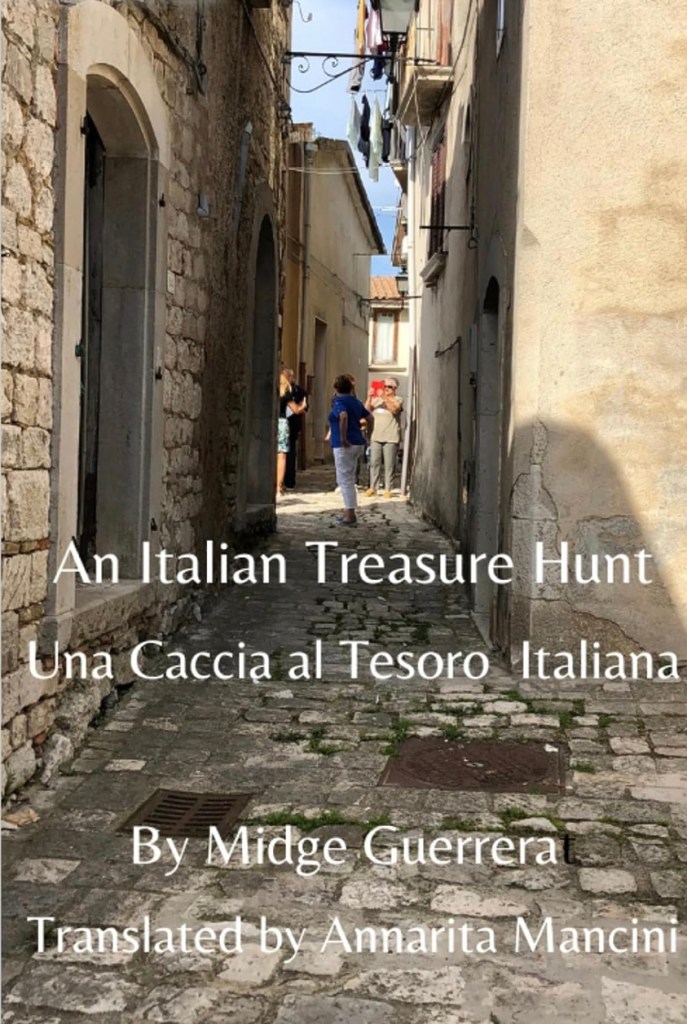
Urban Trekking is happening in cities across the world. Annarita Mancini and I worked together to create a tourism guide for our medieval village that brings urban trekking to a different level. I’m the author and Annarita was the translator. Together we have published An Italian Treasure Hunt; the Quest for the Crests of Pontelandolfo. This guidebook provides readers with clues to unearth tiny pieces of art hidden throughout the village. It can be a team sport with trekkers challenging each other to find the most crests or a slow meditative look and walk.

This is not your typical tour guide. Like I would do something typical – yawn I’m bored thinking about it. You all know I spend a lot of time in Pontelandolfo blogging about life in a small Italian town. Some days I need a reason to get off my butt, leave the office and wend my way through the ancient alleys. My search for the crests was a great incentive to walk through the old part of town and get a sense of what life was like for my ancestors.

Annarita Mancini, who is an exceptional teacher of Italian, noted that having the clues written in both English and Italian not only make the book useful to more people but is an excellent way to explore a new language.

It really took a village to create this book. One day writing in the Pontelandolfo Library, I discovered a stack of faded little blue pamphlets called Stemmi gentilizi a Pontelandolfo written by researchers/authors Litterio Villari and Pia Piacquadio. With a donation to the library, I grabbed a pamphlet and accompanied by Maria Vittoria Albini raced out of the building in search of a crest.

Battista Family

Local historians Carmine Fusco and Antimo Albini assisted in the project by reading the draft and adding bits of local lore. Pontelandolfo residents (and Nonna’s Mulberry Tree subscribers – hint hint) Mariann Prigioni and Jeff Millard had the trekking task of following the clues to see if one could really find all the crests.

Now, local visitors to Pontelandolfo can get a copy of An Italian Treasure Hunt; the Quest for the Crests of Pontelandolfo and also do some urban trekking. It is only an E-book now. Hard cover to follow when I get to formatting it. Yikes, who knew self publishing would be work?

E-readers will follow the clues and photographs of family crests on their phones. Actually, I think this is the best way to use the book. On your phone you can enlarge the photos and refer to the map. This quest for the crests offers a unique and captivating experience that is challenging, fun, creative and exciting! Perfect for adults, children and families. So, grab your camera, walk around beautiful Pontelandolfo, discover the riches of history and unearth hidden ancient traditions.

Book 1 in our Urban Trekking Series – Any town want to hire me to do theirs?

E-book versions of An Italian Treasure Hunt; the Quest for the Crests of Pontelandolfo are currently available on Amazon, Barnes and Noble, Kobo and other retailers.

Ci vediamo in Piazza Roma a Pontelandolfo!

Midge Guerrera

The Passion of the Play and the Players

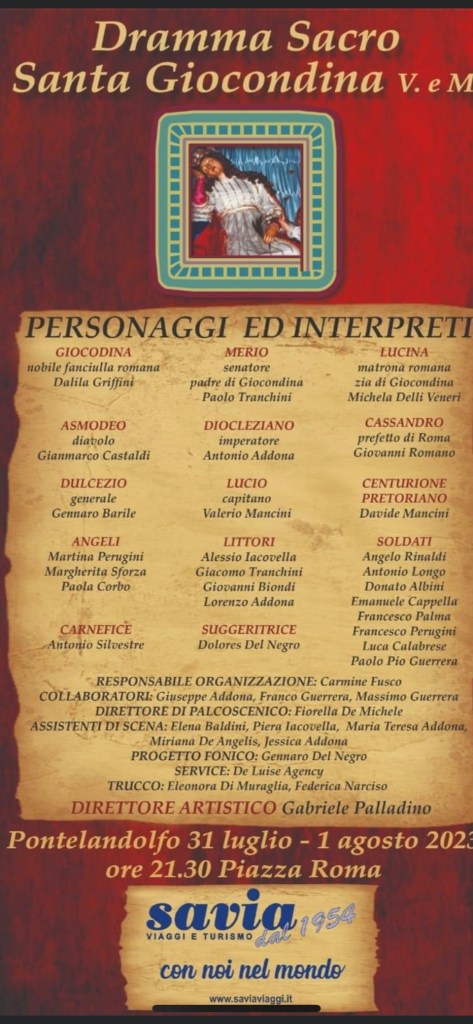
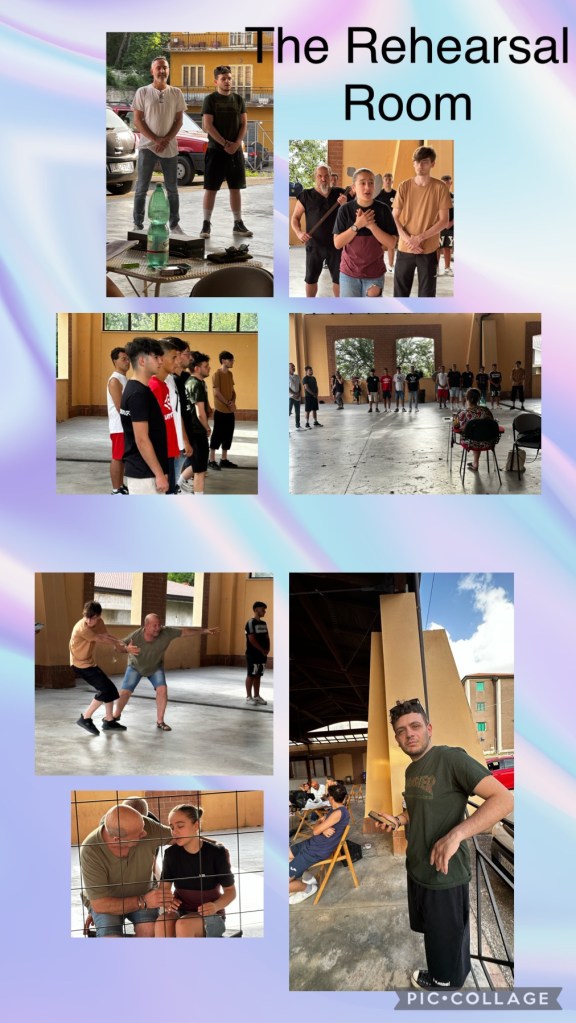
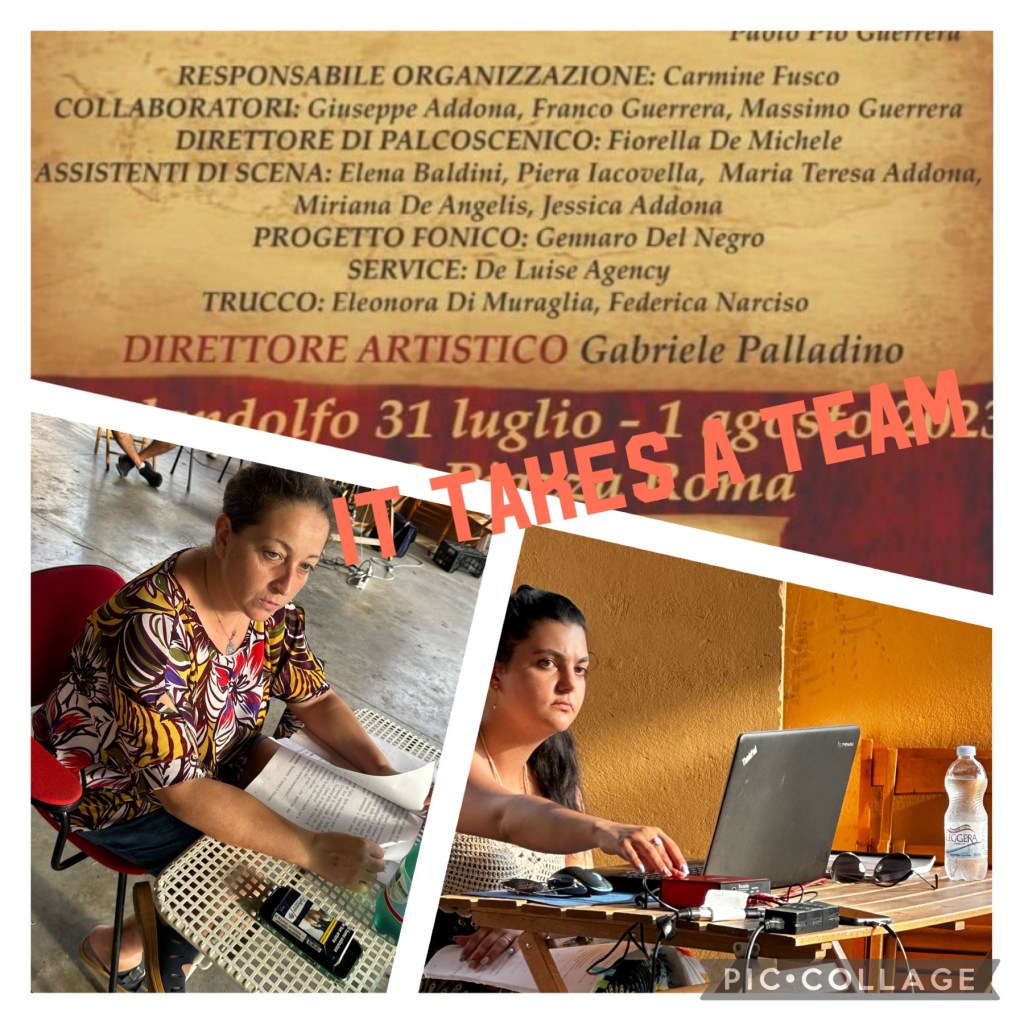
If you are in Italy and anywhere near Pontelandolfo (BN), put July 31st and August 1st on your calendar – immediately. Even if you are not nearby – put it in your calendar and come to Pontelandolfo. At 9:30 PM in Piazza Roma you will be astounded by an incredible theatrical spectacle. It will be worth the ride. I am a theatre kid and it takes a lot to make me gasp. This community wide production of Dramma Sacro Santa Giocandina has done that. This week, I went to a rehearsal and was impressed by the focus and passion this group of players have for the script, rehearsal process and the traditions of their village.

In Pontelandolfo for over one year, a band of community actors, designers, musicians and technicians have been focused on bringing an historic story to life. Their focus and commitment is as powerful as the faith of the play’s heroine, Giocondina. Dramma Sacro Santa Giocandina, the Sacred Drama of Santa Giocondina, has been performed in the Sannio Hills since 1872. Originally, it was produced every seven years, then every four years. It has been seven years since Covid made the four year repetition impossible. Interesting that seven years brings the play full circle to its roots.

The story, of the ultimate sacrifice, is a familiar one. Giocondina, the young daughter of a Roman Senator converts to Christianity. Even though her father and family implore Giocondina, she refuses to abandon her faith. Roman Emperor Diocletian condemns her to be beheaded. Giocondina chooses to save her soul and live on in the kingdom of heaven. Continuing a sacred and socio-community tradition, the role of Giocondina is entrusted to a young woman from Pontelandolfo.

Pontelandolfo Actress Dalila Griffini in rehearsal as Giocondina.

The original script, crafted in 1872 by Ulisse Rinaldi, drew on an ancient tale of unmitigated Christian faith. In 1964, a Priest, Don Nicola D’Addona, revised the original seven act play into four acts. The play that continues to this day is a revision done by Professor Michele Rossi.

Direttore di Palcoscenico, essential the person in charge of all technical aspects, Fiorella De Michele, explained that the presentation of the sacred drama is very important for the Pontelandolfo community. Demonstrating the tradition of the production, the troupe of actors represents the play’s past and present. Many revise roles they have played in the past. Others, new to the show, become part of the future of continuing productions of Dramma Sacro Santa Giocondina.

Actor, Valerio Mancini, my handsome cousin, who has been in a number of independent films told me: “Quella di partecipare è stata una scelta non ponderata, non voluta ma dettata dall’istinto. Da buon Pontelandolfese sento come una responsabilità nei confronti del dramma. Farò di tutto per onorare il mio ruolo. In un mondo in cui regna l’incertezza, ogni piccolo gesto, ogni emozione suscitata, ogni sorriso strappato avrà conseguenze positive nel lungo periodo, in un altro luogo o su altre persone.”

Don’t worry – Valerio translated it for me: “To participate was an unconsidered choice, not wanted but dictated by instinct. As a good Pontelandolfese, I feel a responsibility towards the drama. I will do everything to honor my role. In a world where uncertainty reigns, every small gesture, every emotion aroused, every smile torn will have positive consequences in the long run, in another place or on other people.”

It does take a village to create this work of art, at the helm is Gabriele Palladino. He has been the artistic director of the spectacular a few times. I asked him to tell me about this year.

“The careful study of scenic solutions, delicate theatrical taste, the all-round interaction between the characters and the location, make this year’s drama original and innovative.”

He feels that he is creating an avant-garde theatrical experience, which paints itself with spectacular plays of light and shapes. I will tell you, that based on the rehearsal I saw, the musical mix created by Gennaro Del Nero also became a principal member of the cast. I watched Gabriele bring his arms up and down to cue the sound operator. The music is absolutely cued to the lines of the script.

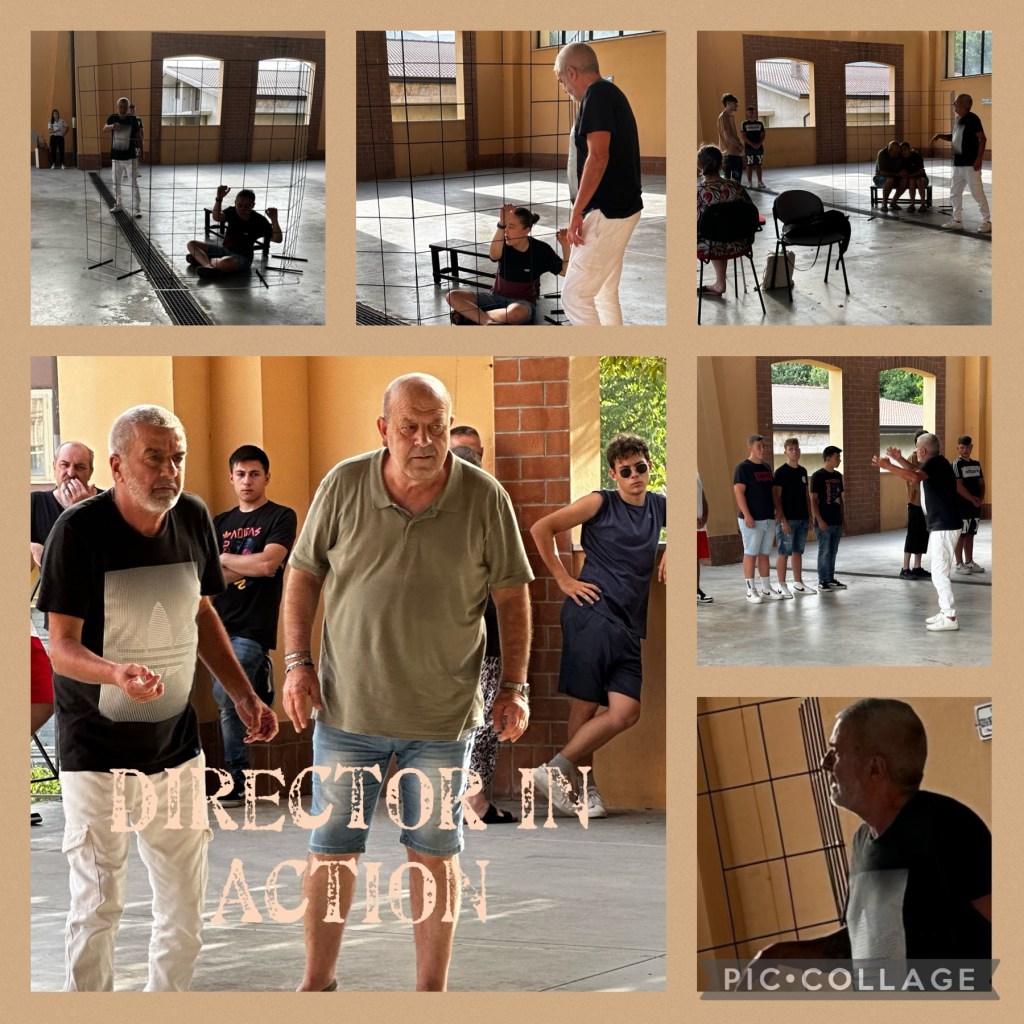
Gabriele feels that the audience for this production has a more participatory and engaging role. He is an interesting director. I watched him join his actors in the rehearsal space, guiding them with words and movement. He traverses the space and becomes one with his performers. Gabrielle is a director, I wished I could have worked under.

Director Palladino said, “Two magical evenings, where the archaic lemmas of great literature, weight of the script and the glittering guise of the advancing new, will combine the past and the modern. The tradition of past centuries melded with a three thousand-year cultural proposal will manifest in a “fusion” of the drama. An intriguing, desired, sought-after, unforced “fusion”, which is the result of a long and passionate work.”

Artistic Director Gabriele Palladino at Work.

The team of Pontelandofese who may not be on stage but absolutely contribute to the event, include the sound, lights, and off-stage crew who make the magic happen. I applaude everyone involved in this production. You can applaud them too, on July 31 and August 1.

Technical women rock!

Ci vediamo July 31 and August 1. Midge

PS. Check out my books and plays at www.midgeguerrera.com

Opera for All

The Sannio Hills are rich with culture. You have often heard me talk about Pontelandolfo’s folkloric dance company, Ri Ualanegli Pontelandolfo. They produce an amazing annual multi-day international folk dance festival – check out some of my older posts. What I haven’t shared with you as often, is how these hills are so “alive with the sound of music.” Occasionally, Jack and I have bumbled upon musical events – look there is a poster for a concert at the Roman Theatre. Oh, it was yesterday. Facebook and Instagram seem to be our province’s village criers. Don’t bother with the daily newspapers – go straight to the digital world. Not wanting to be called a luddite, I friended Orchestra Filarmonica di Benevento on Instagram. Now, we have no excuse not to drag our aging bodies out of comfortable chairs and immerse ourselves in top quality music. Our first adventure kicked off my seventy-fourth birthday! Happy birthday to me – I got to see –

Loved the performances and the venue.

Getting dressed up to sit in fabulous comfortable orchestra seats made me do a happy dance. AND those seats did not cost me the down payment on a Ferrari! Orchestra seats in a jewel box, acoustically perfect theater cost me – wait, wait for it – the incredibly low price of €30 with a €1.80 handling charge! (About $34.) My Arts Admin nose had me looking for who was picking up the tab. Logos on the orchestra’s website made me guess they get underwritten by Ministero Cultura (Italy), Region Campania, Città di Benevento and a few corporations. They didn’t give out programs and the ushers were probably student volunteers – so a bit was saved there. But they did spend a bunch on the production values. More about that later. Benevento’s Teatro Comunale Vittorio Emmanuele is on the grand pedestrian boulevard, Corso Garibaldi. Just strolling down the majestic street and looking at all the high end shops, cafes and museum facades, reminded me how lucky we are to spend so much time in this province. This was our first visit to this theatre. Designed by famous Neapolitan architect, Pasquale Franesconi, the performance space opened in 1862. The interior is rich with all the wedding cake artistic features one expects from that period. Recently updated and refurbished, the theatre even had a handicap bathroom seconds from our orchestra seats. (I mean there was no lock on the door, but I’m not bashful.)

A literal 14 second look at the theater.

When the orchestra, buried below the stage in a real orchestra pit, played the overture, Jack and I looked at each other and grinned. We had seen members of the orchestra dressed in formal funeral attire, carrying interesting instrument cases scurry up the street. The musicians we saw running were young and I thought maybe they might all be students at Benevento’s famous music school, Conservatorio Statale di Musica Nicola Sala di Benevento. When the orchestra was revealed, the focused faces were of all adult generations. Their musical proficiency was evident. They could stand with any symphony we have heard.

Then the curtains opened on a simple yet functional set. The performance space is limited and designer, Luca De Lorenzo, adapted well. His costumes also brought each character to life. The first scene of the Barber of Seville has always felt like a throw away to me, so we didn’t know what to expect. Sadly, we weren’t given programs and I don’t know who were heard sing on May 12th but Figaro was freaking amazing! Not only did he have the musical chops, he was a triple threat. That magical singer, actor, mover combination that rocks the stage. The other triple threat that I kept waiting to enter was Berta, Rosina’s governess/maid (she looked younger than Rosina.) The other performers carried Gioachino Rossini’s score incredibly well too.

I googled the cast list and discovered these singers have performed with opera companies throughout Europe. I am absolutely impressed. Here is the list –

MARCO ALIBRANDO,   director
SERGIO VITALE,  director
MAYA MARTINI, assistant director
LUCA DE LORENZO, sets and costumes
Created by Arte Scenica di Stefano Giaroli
LUCIANO BRANNO,  Chorus Master

Interpreters of the Opera Studio held by Rosa Feola and Sergio Vitale

FIGARO, Francesco Auriemma – Alfonso Michele Ciulla
ROSINA, Federica Foresta – Angela Schisano
THE COUNT OF ALMAVIVA, Francesco Tuppo – Eder Sandoval Guevara
DON BARTOLO, Gabriel Wernick – Hazar Mursitpinar
DON BASILIO, Carlo Feola – Nicola Ciancio
BERTA, Carmen Aurora Bocale – Enrica Musto
FIORELLO, Luca DeLorenzo

The chorus played a variety of roles in different parts of the theatre. When they marched in through the center aisle, the entire audience grinned like kids on Christmas morning. Bravi anche to the Philharmonic Orchestra of Benevento Choir I “Cortesi.”

The Orchestra Filarmonica has an outdoor summer season. The venue, built in the second century by emperor Hadrian, is the Teatro Romano di Benevento. Imagine a town’s important archaeological asset being used for performances! Can’t wait for our next musical treat in the Sannio Hills.

Ci vediamo,

Midge Guerrera

Theatre folks – if you are making your plans for next season consider my work. Grazie! Published plays can be found here –

https://midgeguerrera.com/plays